

Executive Overview
In the highly competitive and perpetually innovative landscape of Japanese fast-food chains, culinary experimentation is par for the course. However, Burger King Japan has once again pushed the boundaries of traditional fast-food marketing and product architecture with the return of an item that is as linguistically baffling as it is culinarily unconventional: On the Beef.
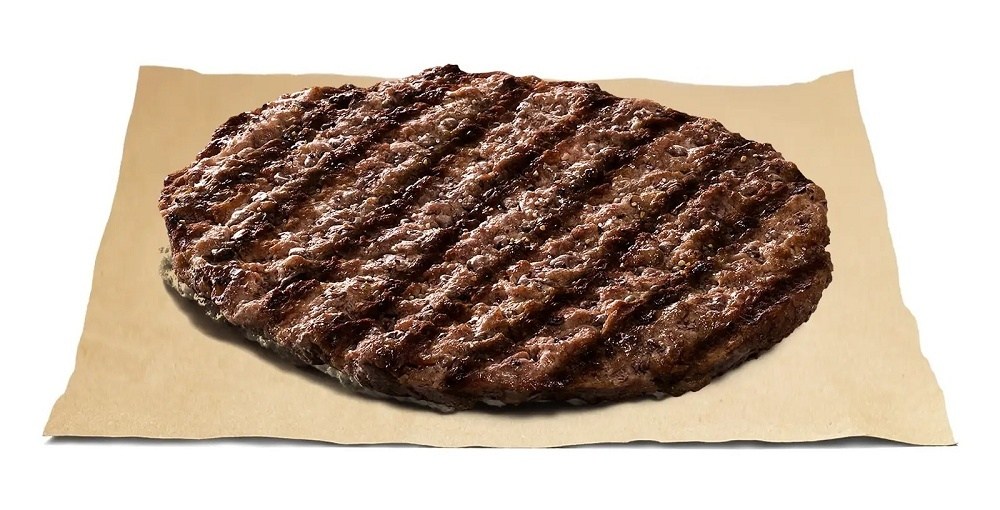
First launched as an irregular seasonal offering, "On the Beef" made its grand return to Japanese menus on October 16, slated for a strictly limited run through October 22. At its core, the product defies the very foundational premise of a hamburger establishment. It is, quite literally, just a beef patty served completely devoid of a bun, lettuce, tomato, onions, or mayonnaise. Enhanced only by a light dash of salt and pepper, this standalone protein offering forces consumers to confront the raw, unadorned component that typically anchors the chain’s signature sandwiches.
Priced at 450 yen (approximately $2.85 USD), the item sits in a peculiar economic and philosophical sweet spot. It is more expensive than Burger King Japan’s cheapest cheeseburger—which retails for 360 yen—yet it utilizes the larger, more substantial beef patty found in the chain’s flagship Whopper line, which normally starts at 690 yen. By stripping away the carbohydrates and garnishes, Burger King offers a unique proposition: a direct, unmediated encounter with its flame-grilled beef.
While Western consumers might view a bunless burger patty sold at a fast-food counter as an ergonomic failure or a depressing dietary compromise, the item aligns surprisingly well with broader Japanese culinary norms regarding standalone hamburger steaks (hamba-gu). Yet, because Burger King does not offer traditional accompaniments like rice or curry, diners are left to navigate the existential and practical dilemma of how to construct a meal out of "On the Beef." This report provides an in-depth investigation into the mechanics, pricing structure, cultural context, and consumer reception of Burger King Japan’s most minimalist menu item.
Detailed Chronology and Product Variations
The genesis of "On the Beef" lies in Burger King Japan’s strategy of keeping menus dynamic and generating viral social media engagement through eccentric product drops. Following earlier 2026 novelties—such as the whimsical "Pickleball Burgers"—the chain brought back "On the Beef" on October 16, establishing a tight, seven-day window that concluded on October 22.
The rollout is characterized by a tier of escalating minimalism and modular pricing, structured to accommodate varying appetites for pure, unadulterated meat:
-
The Base Model ("On the Beef"):
- Price: 450 yen (US$2.85)
- Composition: A single, standard-sized Burger King beef patty seasoned exclusively with a dash of salt and pepper. No bun, no vegetables, and crucially, no sauce.
- Perks: Customers who order the item receive a commemorative sticker, available while supplies last.
-
The Sauce Add-On ("Sauce on the Beef"):
- Price: 550 yen (US$3.48)
- Composition: Because the base version is entirely dry, patrons can opt to upgrade their single patty with a squirt of sauce. Available flavor profiles include spicy tomato jalapeno, smoky barbecue, or traditional teriyaki.
-
The Double Protein ("Beef on the Beef"):
- Price: 900 yen (US$5.70)
- Composition: For those seeking double the volume without the extra garnishes, this variation stacks two salt-and-pepper-seasoned patties directly on top of one another.
-
The Flagship Minimalist ("Sauce on the Double Beef"):
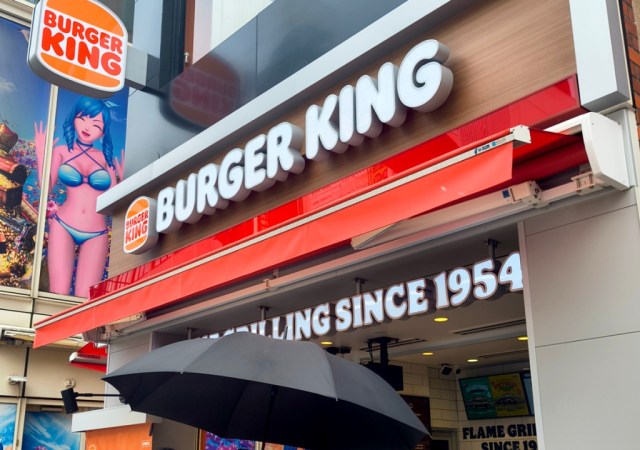
- Price: 1,000 yen (US$6.33)
- Composition: The top-of-the-line offering features two patties combined with a choice of sauce, delivering a high-protein, zero-carb stack that pushes the boundaries of what constitutes a fast-food order.
The linguistic confusion inherent in the product’s naming convention has not gone unnoticed by food critics and consumers alike. As linguistic analysts have pointed out, one cannot physically consume a preposition. While "On the Beef" implies that an additional, unspecified culinary element is resting atop a foundation of beef, the reality is that the item is the beef itself.
Furthermore, the operational reality of the product is delightfully meta: as industry observers have noted, "On the Beef" will theoretically remain available indefinitely—provided a customer is willing to purchase a standard Burger King hamburger and manually extract the patty themselves.
Supporting Context & Metrics
To fully understand the market logic behind "On the Beef," one must examine the broader metrics of Japan’s fast-food ecosystem and consumer behavior patterns.
The Japanese Hamburger Steak (Hamba-gu) Tradition
In Western markets, a hamburger patty is inextricably linked to the hamburger sandwich—a portable meal encased in bread. However, Japan has a long-standing, independent love affair with the hamburger steak (hamba-gu). Introduced widely during the post-war era, the Japanese hamba-gu is treated as a main dish in its own right. It is routinely served on a plate alongside steamed white rice, shredded cabbage, potato salad, and a rich demi-glace or soy-based sauce.
Because the concept of eating a seasoned ground-beef patty without a bun is culturally normative, Japanese consumers do not experience the same cognitive dissonance as Western diners when confronted with a standalone patty. Supermarkets across Japan regularly stock pre-made, ready-to-heat hamburger steaks designed to be paired with home-cooked rice and side dishes.
The Fast-Food Disconnect
Despite the cultural familiarity of the hamba-gu, Burger King Japan’s execution creates a distinct operational challenge. Supermarket patties are purchased as ingredients for home cooking; fast-food outlets, conversely, are typically visited by consumers seeking a complete, ready-to-eat meal.
Because Burger King’s core menu is optimized for sandwiches, the chain does not sell complementary side dishes such as bowls of white rice, curry, or Japanese-style vegetables. Consequently, diners who purchase "On the Beef" must either consume the patties in isolation—resulting in a stark, intensely carnivorous snacking experience—or transport the meat home to integrate it into a domestic meal plan, effectively utilizing a fast-food drive-thru as a butcher shop.
Economic Breakdown
From a financial perspective, "On the Beef" occupies a fascinating tier within Burger King Japan’s pricing matrix:
- Cheeseburger (Complete Sandwich): 360 yen
- "On the Beef" (Single Patty Only): 450 yen
- Whopper (Full Sandwich with Bun and Veggies): 690 yen
At 450 yen, the single patty is paradoxically more expensive than a fully assembled cheeseburger. However, when compared to the Whopper—which utilizes the larger, flame-grilled patty style characteristic of the brand—the consumer saves 240 yen by jettisoning the bun, lettuce, tomato, mayonnaise, and onions. For low-carb dieters, keto enthusiasts, or purists seeking to evaluate the raw quality of Burger King’s meat without the interference of condiments, the pricing structure offers a calculated trade-off.
Official Statements and Corporate Strategy
Burger King Japan has framed "On the Beef" not merely as a gag gift or a viral marketing stunt, but as a deliberate culinary exercise designed to highlight the fundamental quality of its ingredients.
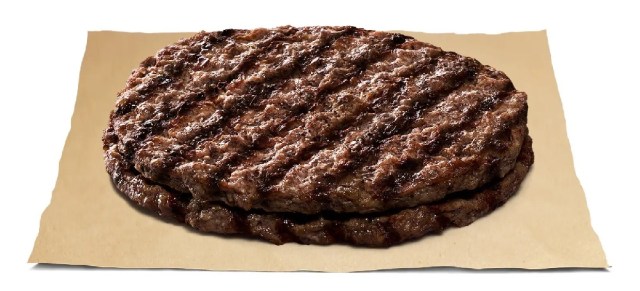
In official promotional materials released via PR Times, corporate representatives emphasized that the primary objective of "On the Beef" is to give loyal customers a direct, unadulterated taste of the 100% beef patties that serve as the foundation of the chain’s entire menu. By removing the masking agents—such as sesame seed buns, heavy sauces, and crisp produce—the chain invites diners to evaluate the flavor profile achieved by its signature flame-grilling process.
Industry analysts suggest that this strategy aligns with a growing global trend toward ingredient transparency and customizable, deconstructed fast food. By letting the meat speak for itself, Burger King leverages consumer curiosity. The limited-time nature of the release—spanning a mere seven days from October 16 to October 22—creates artificial scarcity, driving foot traffic and social media shares as patrons rush to secure the novelty item and its accompanying limited-edition sticker.
Future Outlook
As the fast-food industry in Japan continues to grapple with shifting consumer demographics, rising ingredient costs, and the relentless demand for viral social media marketing, quirky offerings like "On the Beef" are likely to remain a seasonal staple.
While it is statistically improbable that "On the Beef" will permanently replace traditional sandwiches on Burger King’s core menu, its recurring autumn return demonstrates the viability of high-engagement, low-complexity product drops. By leaning into linguistic irony and culinary minimalism, Burger King Japan has successfully transformed a simple beef patty into a cultural talking point.
Whether future iterations will expand to include complementary sides—such as a side of rice or a dedicated dipping sauce station—remains to be seen. For now, "On the Beef" stands as a testament to the fact that in the realm of fast-food innovation, sometimes less is infinitely more, even if it requires a grammar lesson to order.






Belum ada komentar. Jadilah yang pertama berkomentar!