

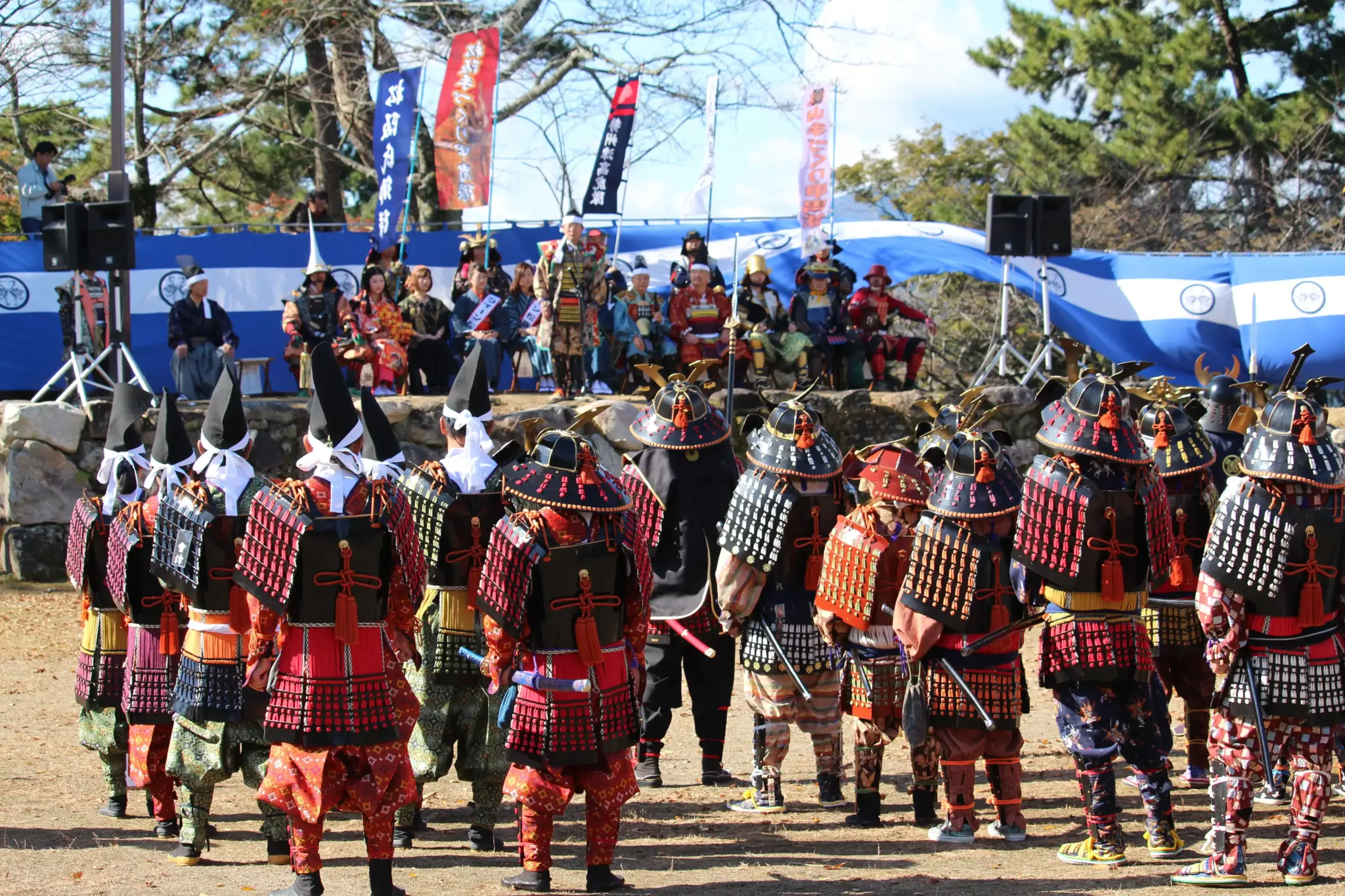
MATSASUKA, MIE — As a crisp November morning burns away the mist curling around the ancient, megalithic stone walls of the Matsusaka Castle Ruins, a sudden, piercing whistle cuts through the autumn air. A ceremonial arrow arcs gracefully overhead, soaring past the gazes of more than two hundred meticulously outfitted samurai assembled in the heart of the historic citadel. This dramatic opening salvo marks the official commencement of the 65th annual Ujisato Festival, a premier cultural anchor for Mie Prefecture that bridges centuries of Japanese history, transforming the modern streets of Matsusaka into a living, breathing Edo-period scroll.
For one day each year—falling on Culture Day (November 3)—the city drops its contemporary pulse to honor Gamo Ujisato (1556–1595), the visionary warrior-lord who carved a strategic, economic powerhouse out of regional swampland in the late 16th century. Featuring thunderous drums, flying banners, the glint of authentic replica armor, and the rich aromas of regional street cuisine, the 2026 iteration of the festival marks a significant milestone. Celebrating its 65th anniversary, this year’s commemoration introduces expanded historical processions, rare civic tea ceremonies inside national cultural treasures, and a vibrant showcase of the culinary and performing arts that define “The City of Rich Merchants.”
Executive Overview: A Milestone Celebration of Feudal Engineering and Civic Identity
The Ujisato Festival is far more than a localized costumed parade; it is an annual cultural reaffirmation of Matsusaka’s unique heritage. Established in 1962 to honor the city’s founding father, the festival has grown over six and a half decades into a major tourism driver and an exercise in community-wide historical preservation.
At its core, the event commemorates Gamo Ujisato’s dual genius: his rapid military fortification of the region and his progressive economic policies. By laying the foundation for Matsusaka Castle in just three short years starting in 1588, and subsequently enticing the nation’s most elite merchants to migrate to his new castle town, Ujisato engineered an economic miracle that reverberated for centuries.
The 2026 milestone festival builds upon this deep historical bedrock. Beyond the traditional highlights—such as the opening archery ceremony and the 200-strong warrior procession—this year introduces a historic expansion: for the first time, three additional legendary lords of Matsusaka will join Gamo Ujisato in full feudal armor, enriching the visual narrative of the grand parade. Blending high-energy stage performances, culinary heritage, and rare public access to Edo-period merchant estates, the 65th Ujisato Festival stands as a masterclass in living history.
Detailed Chronology: The Unfolding of the 2026 Festival Day
The day-long itinerary of the Ujisato Festival is meticulously orchestrated, moving spectators through a sequential journey that mirrors the chronological rise of Matsusaka itself—from battlefield origins to peaceful merchant prosperity.
09:00 AM — The Opening Ceremony at Matsusaka Castle Ruins
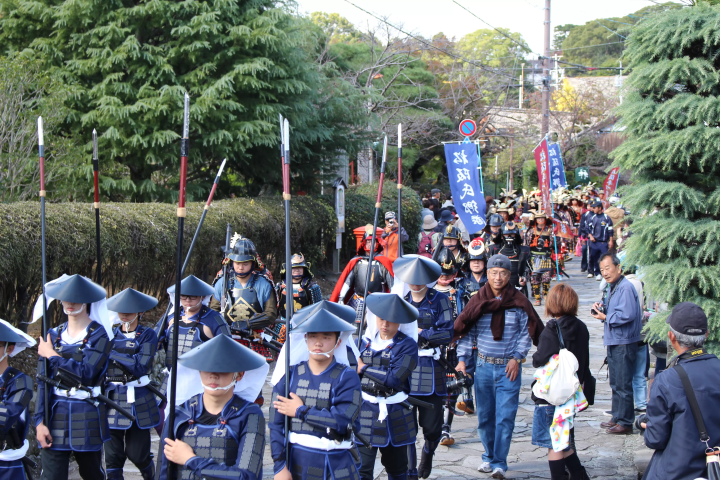
The festivities awaken at the Matsusaka Castle Ruins, a site perched strategically to oversee the surrounding plains. The morning silence is broken by the traditional archery ceremony (yusame), where an archer looses a ceremonial arrow over the assembled ranks of volunteer warriors. This ancient ritual symbolizes purification, protection, and the historical departure for battle. As the arrow lands, the massed ranks of infantry (ashigaru), spear-bearers, and commanders sound a collective shout, signaling the mobilization of the grand procession.
10:00 AM — The Warrior Procession Through Historic Townscapes
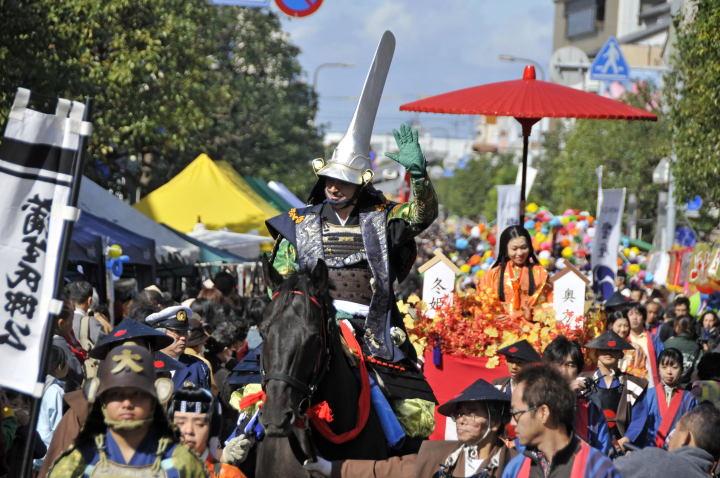
Led by a central figure portraying Gamo Ujisato—distinguished on horseback by his iconic, avant-garde helmet design—the grand procession departs the castle grounds and winds its way through the historic townscape.
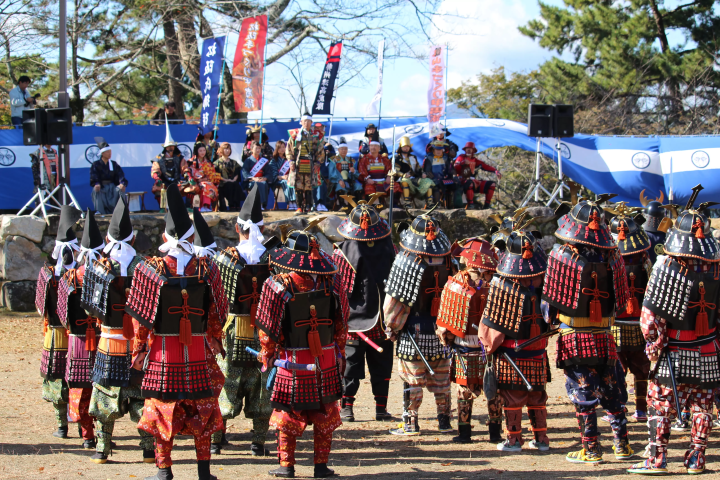
The procession is a visual feast of Sengoku-period (Warring States) military aesthetics. Over two hundred participants, drawn from local volunteer ranks and historical preservation groups, march in authentic replica armor, brandishing matchlock rifle replicas, fluttering clan banners (nobori), and booming war drums (taiko).
Notably, the 65th-anniversary procession features a specialized expansion: three additional historic lords associated with Matsusaka’s lineage join Ujisato in full martial regalia. Close behind the vanguard rides Fuyuhime, Ujisato’s wife, elegantly arrayed in a vibrant, multi-layered kimono atop an ornate ceremonial carriage.
The route takes the column past the Castle Guard Residences—some of the few remaining structures of their kind in Japan where descendants still reside—before pouring into the central shopping district, effectively stitching the city’s feudal past directly into its modern commercial heart.
Midday — Cultural Performances, Traditional Dances, and Culinary Exploration
As the procession reaches the city center, the atmosphere shifts from solemn military pageantry to a bustling festival bazaar. Spectators and participants alike scatter across multiple event zones to engage with the sensory facets of Matsusaka culture:

- Traditional Folk Performances: Spectators are treated to rhythmic local numbers, including the energetic Shongai Solan and the evocative Shongai Song and Dance, alongside the delicate precision of the Matsusaka Suzu Odori (bell dance). These performances are interspersed with modern community acts, ranging from energetic hip-hop routines to festive hula dancing and live musical showcases.
- The Culinary Landscape: The festival grounds overflow with food stalls highlighting Mie Prefecture’s best flavors. Foremost among them is Matsusaka’s signature chicken yakiniku—tender poultry grilled to perfection and slathered in a rich, secret miso-based sauce that contrasts sharply with the region’s world-famous beef by offering a deeply satisfying, populist flavor profile.
- The Ujisato Citizens’ Tea Experience: Stepping away from the street bustle, visitors can partake in a refined matcha tea ceremony hosted within the tranquil confines of the Former Hasegawa Residence and the Former Ozu Residence. These historic estates offer a quiet, contemplative space to sip tea surrounded by stroll-style gardens and centuries-old architectural timber.
Supporting Context & Metrics: The Architecture of an Economic Empire
To truly understand the weight of the Ujisato Festival, one must examine the socio-economic framework established by Gamo Ujisato in the late 16th century—a framework that transformed Matsusaka from a minor provincial cluster into "The City of Rich Merchants."
+-------------------------------------------------------------------------+
                    THE EVOLUTION OF MATSASUKA'S ECONOMY
+-------------------------------------------------------------------------+
  [1588] Gamo Ujisato builds Matsusaka Castle & lays urban grid.
    │
    ▼
  [1590s] Ujisato invites elite merchants from across Japan, offering tax incentives.
    │
    ▼
  [Edo Period: 1603-1867] Matsusaka merchants dominate trade in Edo (Tokyo) & Kyoto.
    │
    ▼
  [Modern Era] Preservation of estates (Hasegawa, Ozu) & birth of the Ujisato Festival (1962).
+-------------------------------------------------------------------------+
The Catalyst: Gamo Ujisato’s Urban Planning
When Ujisato was assigned the region by warlord Oda Nobunaga (and later Toyotomi Hideyoshi), he immediately recognized the geographic potential of Matsusaka. In an astonishingly brief construction window lasting from 1588 to 1591, he erected Matsusaka Castle. However, Ujisato’s vision extended far beyond military defense.
Realizing that a strong castle required a thriving economy, he adopted a revolutionary approach: he extended open invitations to powerful merchant houses from across the country, granting them favorable trading privileges and secure urban zoning. This policy attracted ambitious entrepreneurs who specialized in textiles, cotton, and paper manufacturing.
The Merchant Dynasties: Hasegawa and Ozu
The success of Ujisato’s economic experiment is immortalized in the physical architecture left behind by his merchant elite. Two prime examples, open to the public during the festival and year-round, illustrate this immense wealth:
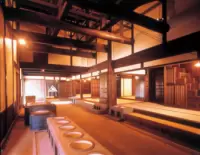
- The Former Hasegawa Residence: Serving as the main family home of Hasegawa Jirobei, an economic titan of the Edo period, this massive compound sprawls across extensive grounds containing over thirty distinct rooms. Visitors navigating the main house, detached structures, traditional storehouses (kura), and sprawling stroll-style gardens can physically trace the scale of domestic luxury achieved by Matsusaka’s merchant class.
- The Former Ozu Residence: Belonging to Ozu Seizaemon—a towering figure in the Edo-Tokyo cotton and paper trade—this estate is highlighted by one of the most striking artifacts of Japanese financial history: the "Manryo-bako." This giant, reinforced money chest symbolizes the staggering fortunes amassed by the Ozu family, serving as a tangible monument to the commercial dominance that earned Matsusaka its national reputation.
Furthermore, the preserved Castle Guard Residences offer a rare sociological window into the period. Unlike many historical military quarters that have been converted entirely into museums, these residences remain living cultural properties where families continue their daily routines, maintaining an unbroken chain of human habitation tethered to the castle’s founding days.
Official Statements and Civic Perspectives
Local leadership and cultural preservation boards view the annual Ujisato Festival not merely as a retrospective look at the past, but as a vital engine for community cohesion and regional revitalization.
"The Ujisato Festival is the heartbeat of our civic identity," noted a representative from the Matsusaka Executive Committee for Tourism and Cultural Exchange during preparations for the 65th anniversary. "When we see two hundred of our citizens donning armor, walking the exact stone pathways laid down over four centuries ago, and welcoming visitors into our historic merchant homes, we are demonstrating that Matsusaka’s history is not locked behind glass. It is alive, shared, and perpetually moving forward."
Cultural historians emphasizing the 2026 expansion—specifically the inclusion of the three additional historical lords—point out that the festival’s ability to evolve while respecting tradition is key to its longevity.
"By broadening the narrative of the parade to include other key figures from our feudal lineage, we provide both returning guests and first-time travelers a richer, more comprehensive educational spectacle," added a local heritage preservation officer. "It reflects our commitment to historical accuracy and theatrical excellence alike."
Future Outlook: Sustaining Heritage in the 21st Century
As the Ujisato Festival successfully crosses its 65-year threshold, city planners and tourism boards are looking toward sustainable models to manage growing international and domestic interest. The integration of modern digital assets—such as limited-edition digital and physical castle stamps collected at festival booths—alongside the meticulous preservation of structural landmarks like the Hasegawa and Ozu residences, ensures that Matsusaka remains a premier destination for cultural tourists.
Looking ahead, the city aims to deepen international engagement with the Sengoku-period enthusiast community, utilizing events like the Ujisato Festival to promote regional gastronomy, historical education, and sustainable heritage tourism. By marrying the indomitable spirit of Gamo Ujisato with the hospitality of its legendary merchant houses, Matsusaka proves that the echoes of the 16th century can resound just as powerfully in the modern era.
Event Fast Facts
- Event Name: The 65th Ujisato Festival
- Date: Tuesday, November 3, 2026 (Culture Day)
- Time: Commencing from 9:00 AM
- Primary Locations: Matsusaka Castle Ruins, Matsusaka Central Shopping District, Former Hasegawa Residence, and Former Ozu Residence.
- Accessibility: All major festival zones are located within a convenient 15-minute walk from Matsusaka Station.
- Key Highlights: 200+ samurai warrior procession, opening archery ceremony (yusame), chicken yakiniku food stalls, traditional Shongai and Suzu Odori dances, and open-house access to historic merchant estates.





Belum ada komentar. Jadilah yang pertama berkomentar!