

Executive Overview
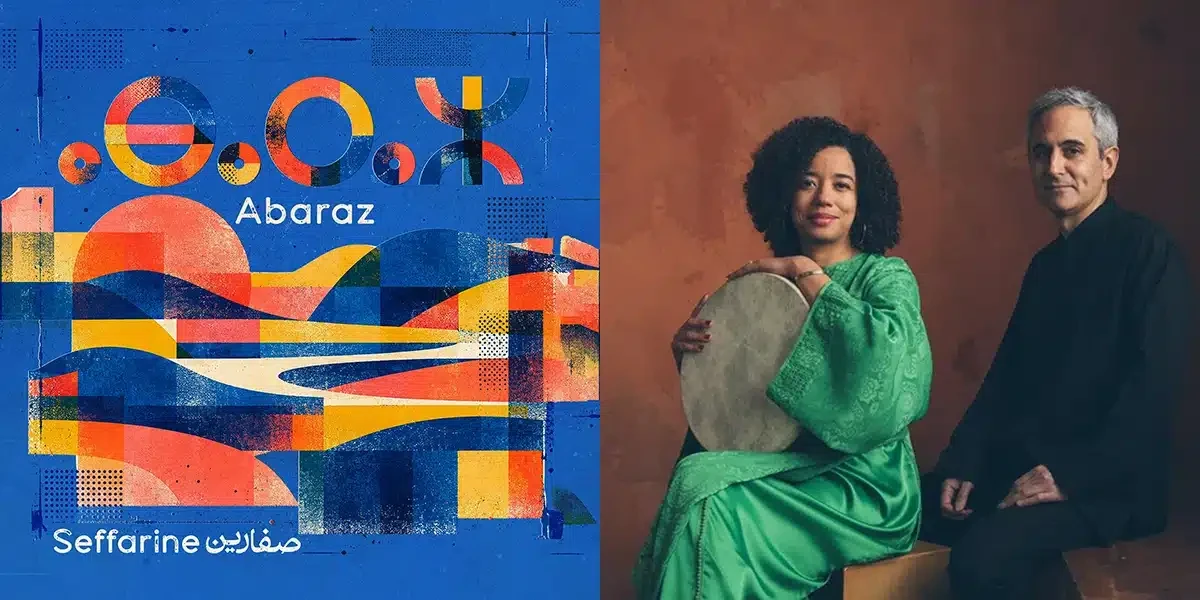
In an era increasingly defined by geopolitical borders, cultural protectionism, and fragmented identities, transcultural musical collaborations serve as vital acts of diplomatic and artistic bridge-building. Enter Abaraz, the breathtaking new studio album from the internationally acclaimed ensemble Seffarine. Released on October 16, 2026, via Seffarine Music, the record stands as a masterclass in intercultural synthesis. At its core, Abaraz is built on the premise that genuine musical innovation does not emerge in isolation, but rather at the bustling crossroads of human contact, shared histories, and cross-border dialogue.
Named after abaraz—a heavily frequented public square and marketplace in Morocco where people, goods, and ideas endlessly intersect—the album captures the vibrant ethos of trans-Saharan and Mediterranean trade routes. Spearheaded by Moroccan vocalist Lamiae Naki, whose heritage extends into West Africa, and multi-instrumentalist, composer, and flamenco-oud specialist Nat Hulskamp, Seffarine has crafted a project that traces the deep, historical networks connecting West Africa, North Africa, and the Iberian Peninsula.
Forged largely during an intensive artistic residency in Morocco, Abaraz effortlessly dissolves modern geopolitical boundaries. It weaves together the ancient, pebble-smooth rhythms of Amazigh culture, the hypnotic polyrhythms of West African griot traditions, the intricate fingerpicking of Spanish flamenco, and the melancholic, smoky introspection of Portuguese fado. Across its tracklist, the album features a formidable roster of guest virtuosos, including Latin Grammy winner Antonio Rey, djeli ngoni master Daouda Mangara, and kamale ngoni player Blaise Traore.
Far more than a passive collection of cross-cultural experiments, Abaraz is an urgent reminder of the profound diversity that has long anchored Mediterranean and Saharan spaces. By honoring ancestral lineages while pushing contemporary acoustic boundaries forward, Seffarine has delivered one of the most intellectually engaging and emotionally resonant world music releases of the decade.
Detailed Chronology
The genesis of Abaraz spans years of physical and sonic travel, culminating in a structured creative period that brought together diverse musical traditions under one roof in North Africa.
The Foundation: The Moroccan Residency
The groundwork for Abaraz was laid during a dedicated artistic residency undertaken by Seffarine in Morocco. Rather than recording in sterile, isolated Western studios, Naki and Hulskamp immersed themselves in the vibrant auditory landscape of North Africa. They sought out master practitioners of traditional instruments—from Gnawa qraqeb players to percussionists wielding the darbuka, bendir, and calabash—to establish a collaborative environment. This residency served as the modern equivalent of the ancient marketplaces after which the album is named: a physical space where diverse musical dialects could meet, converse, and ultimately fuse into a singular, cohesive language.
Opening Horizons: Tracing Amazigh Roots
The chronological journey of the album begins fittingly with its opening track, “Ah Ya Liyyam.” Serving as the record’s foundational anchor, the song plunges the listener deep into Amazigh culture, a civilization with a continuous presence in North Africa dating back to the Stone Age. The track opens with the gentle, evocative strumming of Hulskamp’s guitar, underscored by rolling handclaps that immediately evoke the signature guitar styles heard across the modern Sahara. Naki’s silvery, translucent vocals introduce an earthy tenderness, before the arrangement expands. The introduction of Daouda Mangara on the West African djeli ngoni alongside a battery of North African percussionists—including Aziz Ozouss, Hecham Jaa, and Sofian Jaa on qraqeb, Yahya Guenni on darbuka and bendir, and Rachid Berazougui on calabash—transforms the track into a masterclass in roots music enrichment.
Andalusian Exchanges and Iberian Interludes
As the album progresses through its midsection, the sonic palette widens to encompass the deep historical ties shared between North Africa and the Iberian Peninsula, echoing the legacy of Al-Andalus.
On “Shahal Min Merrah,” Hulskamp shares guitar duties with Pau Figueres, guiding listeners into a flamenco-infused reverie. Naki responds with melismatic Moroccan Arabic vocal ornamentations, vividly demonstrating the historical cross-pollination of Moorish and Spanish musical forms. This transatlantic dialogue reaches a fever pitch on “Al Qithara,” which showcases the blistering, fiery fretboard work of Latin Grammy winner Antonio Rey alongside Hulskamp.
The pacing shifts dynamically as the album moves forward. The playful, introductory flourishes of “Entaha” rapidly evolve into an infectious, swaying rhythm that commands physical movement. Conversely, the mood turns introspective on tracks like “Moshattatoun,” where delicate, classical-leaning guitar contours provide a somber backdrop. Here, Naki stretches her vocal delivery, dipping into fado-adjacent phrasing that imbues the song with a shadowy, smoky atmosphere.
The Trans-Saharan Dialogue
The latter half of Abaraz deepens the conversation between West and North African traditions. “Ma Bqali Hal” places Daouda Mangara’s virtuosic ngoni front and center, locked in a delicate dance with Hulskamp’s dual performance on acoustic guitar and oud. Naki delivers some of her most euphoric, sunlit vocal performances of the album here.
The momentum peaks with “Jitu Lina,” arguably the most propulsive and driving track on the record. The song introduces Blaise Traore on the larger kamale ngoni, whose jaw-dropping solo displays an astonishing level of physical nimbleness and rhythmic complexity, locking the ensemble into an entrancing, hypnotic groove.
The Grand Finale
The album concludes with “Yeddiha,” a triumphant summation of Maghrebi influences that manages to sound entirely forward-thinking. Supported by a backing chorus featuring Houda Moukiza, Hanane Madan, and Aziz Ozouss, Naki unleashes a final, dynamic burst of vocal power. The supporting instrumental ensemble—comprising oud, guitars, bass, darbuka, bendir, and qraqeb—locks into a relentlessly tight groove. It is an ideal curtain call, encapsulating Seffarine’s core mission: collaborative, boundary-pushing artistic communion.

Supporting Context & Metrics
To fully appreciate the cultural and artistic weight of Abaraz, one must examine the socio-musical architecture that supports Seffarine’s work. The band’s name itself is a deliberate nod to historical geography—derived from Seffarin, a historic square in Fez, Morocco, famous for its coppersmiths hammering out intricate metalwork. Just as those artisans shape raw metal into resonant vessels, Seffarine hammers disparate musical elements into unified sonic sculptures.
The Geocultural Matrix of Abaraz
- North African Foundations: Anchored by Amazigh, Moroccan Arabic, and Gnawa traditions. The inclusion of Gnawa qraqeb (iron castanets) and percussion instruments like the darbuka and bendir grounds the music in centuries-old spiritual and secular performance practices tied to healing and celebration.
- West African Lineages: Represented by the djeli ngoni and kamale ngoni, stringed instruments historically played by West African griots (oral historians, musicians, and storytellers). This inclusion highlights the ancient, trans-Saharan trade routes that moved not only physical commodities like gold and salt, but also poetry, rhythms, and spiritual philosophies.
- Iberian Connections: Reflected through the idioms of flamenco and classical Spanish guitar, as well as touches of Portuguese fado. These styles are not tacked on as exotic embellishments; rather, they are treated as close historical cousins to North African modalities, tracing their lineage back to the shared medieval history of Al-Andalus.
Personnel and Collaborative Metrics
Abaraz relies on a constellation of elite international talent, reflecting an unprecedented level of cross-continental networking:
- Lamiae Naki: Lead vocals, drawing from Moroccan, West African, and pan-Mediterranean vocal techniques.
- Nat Hulskamp: Composition, flamenco guitar, acoustic guitar, and oud.
- Antonio Rey: Guest flamenco guitar (Latin Grammy Award-winning virtuoso).
- Daouda Mangara: Djeli ngoni master.
- Blaise Traore: Kamale ngoni virtuoso.
- Pau Figueres: Supporting flamenco and classical guitar.
- Percussion & Rhythm Section: Aziz Ozouss, Hecham Jaa, Sofian Jaa (Gnawa qraqeb); Yahya Guenni (darbuka, bendir); Rachid Berazougui (calabash).
- Vocal Chorus: Houda Moukiza, Hanane Madan, Aziz Ozouss.
Official Statements
While traditional press releases often rely on hyperbole, the conceptual foundation of Abaraz speaks directly to the philosophy held by its creators. Although formal interview soundbites from the studio sessions remain closely held within the Seffarine Music camp, the underlying ethos of the project has been articulated through production notes and critical reception.
In various institutional summaries surrounding the release, the group’s mission statement emphasizes that "musical innovation does not occur in a vacuum, but is born from intercultural contact." This core belief dictates every arrangement on the album.
Reflecting on the album’s thematic dedication to the Moroccan marketplace, a spokesperson for Seffarine Music noted:
"Just as the physical abaraz is a space where strangers become neighbors through the exchange of goods and stories, our music is designed to be a sonic marketplace. We are stripping away artificial borders to show that the musical languages of the Sahara, North Africa, West Africa, and the Mediterranean have always been in deep, unceasing conversation with one another."
Furthermore, critics and ethnomusicologists monitoring the project have praised the album’s refusal to pander to Western pop sensibilities, opting instead for uncompromising acoustic authenticity. As one cultural arts reviewer remarked following the October 16 drop:
"Seffarine does not engage in superficial genre-blending. They honor the historical gravity of the ngoni, the oud, and the flamenco guitar, allowing these instruments to speak their native dialects while discovering a breathtaking, unified grammar."
Future Outlook
The release of Abaraz on October 16, 2026, marks a watershed moment for Seffarine, signaling an expansive new chapter in their ongoing exploration of transcultural music. As the album circulates globally, several key developments are projected to shape the ensemble’s trajectory in the coming years.
International Touring and Live Ensembles
Translating the complex, multi-instrumental architecture of Abaraz to the live stage presents both a logistical challenge and an immense artistic opportunity. Industry insiders anticipate that Seffarine will mount a major international tour throughout 2027, bringing together a rotating cast of guest virtuosos—potentially including select contributors from the album’s recording sessions—to recreate the communal atmosphere of the Moroccan residency. Venues specializing in world music, international jazz festivals, and cultural heritage centers across Europe, North America, and North Africa are expected to serve as primary hosts.
Educational and Cultural Diplomacy Initiatives
Given the academic and historical depth embedded within Abaraz, Seffarine is uniquely positioned to bridge the gap between performance art and cultural education. Plans are reportedly underway to develop masterclasses, university residency programs, and lecture-demonstrations focusing on the historical trade routes between West Africa, the Maghreb, and Andalusia. By demonstrating how string and percussion instruments evolved across these regions, the ensemble hopes to inspire a new generation of musicians to view cultural exchange not as cultural appropriation or dilution, but as an essential form of artistic enrichment.
Long-Term Impact on World Music Paradigms
In a broader industry context, Abaraz arrives at a time when listeners are increasingly fatigued by hyper-digitized, algorithmically generated pop music. The organic warmth, acoustic precision, and deep historical consciousness of Seffarine’s latest work offer a compelling alternative. By proving that critically acclaimed, commercially viable music can be built on the bedrock of cooperative, cross-border artistry, Seffarine sets a high benchmark for the global music community.
As the world continues to grapple with division, records like Abaraz provide a vital roadmap forward: a reminder that when diverse cultural traditions meet with open ears and mutual respect, the result is nothing short of transcendent.




Belum ada komentar. Jadilah yang pertama berkomentar!