

Executive Overview
In The Velvet Underground’s haunting 1968 composition "Stephanie Says," a nameless woman measures the contours of her existence against the people who have consumed it. The song offers no clear address for her anger, nor does it map a functional route out of her circumscribed situation. As generations of listeners age—most notably the cohort defined as Generation X, entering their late-40s to early-60s—such quiet lives of alienation sound less like private eccentricities and more like a profound cultural interrogation of care: Who must give it? Who is permitted to withdraw from it? And who notices when the room has grown too small to breathe in?
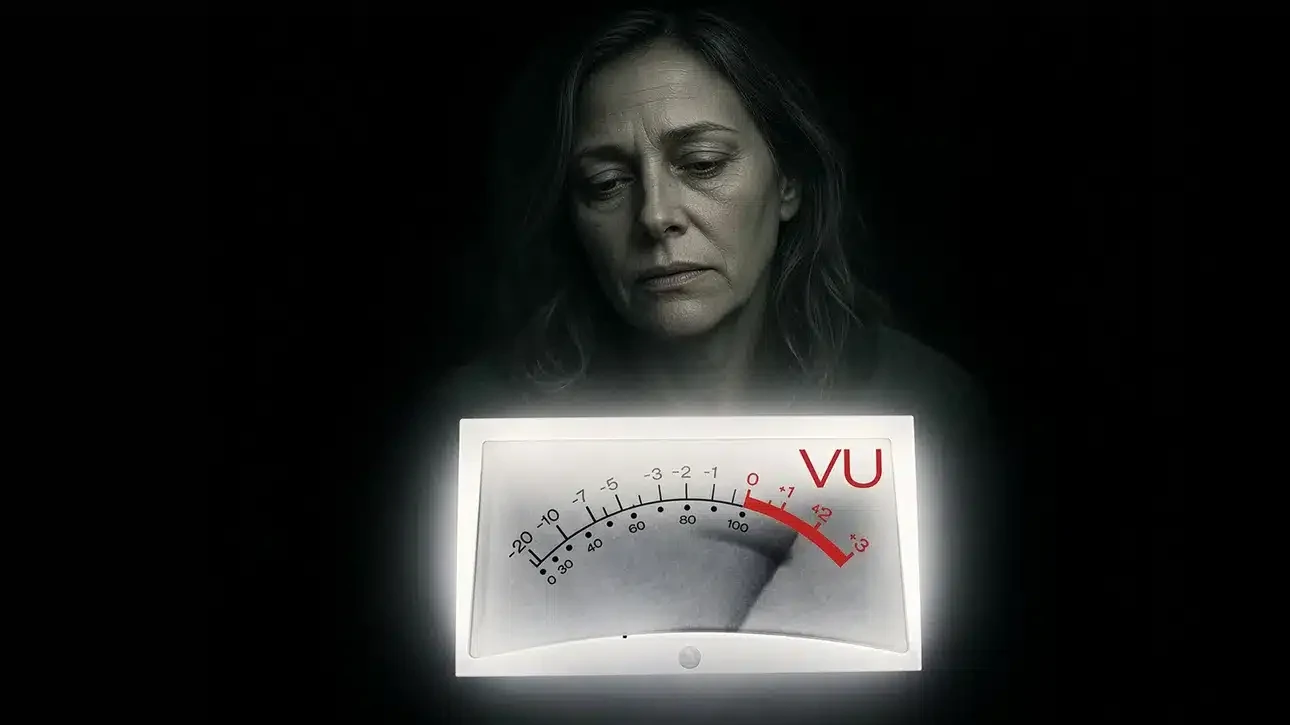
Recorded in 1968 but languishing in the vaults until its official release on Verve Records’ 1985 archival collection VU, "Stephanie Says" occupies a strange, displaced temporal space. It bridges the late-1960 experimental rock era of Lou Reed and John Cale with the retrospective melancholy of the mid-1980s, only to land with stark resonance in the mid-2020s. As its original audiences and subsequent generations navigate the complex crosscurrents of aging parents, dependent adult children, demanding workplaces, and shrinking social safety nets, the song’s central themes have transformed. What once felt like abstract artistic alienation is now recognized as a documentary-like tracing of invisible labor, emotional exhaustion, and the quiet trap of forced independence.
This investigative cultural analysis explores the architecture of care through the lens of Lou Reed’s songwriting, the realities of modern caregiving burdens, and the structural silences surrounding women’s lives. By weaving together musicology, sociological frameworks, and real-world accounts of domestic strain, this article examines how songs like "Stephanie Says," "Candy Says," and "Caroline Says II" expose the cracks in modern social structures—and why the demand for shared, institutional care remains more urgent than ever.
Detailed Chronology: From the Factory Floor to the Vaults
To understand the enduring weight of "Stephanie Says," one must trace the timeline of its creation, its delayed arrival into public consciousness, and its subsequent artistic transformations.
- 1968 (Recording): The Velvet Underground—consisting of Lou Reed, John Cale, Sterling Morrison, and Maureen Tucker—enters the studio during a period of rapid transition. John Cale’s tenure with the band is drawing to a close, and the abrasive, avant-garde noise of their earlier work is giving way to a more melancholic, melodic introspection. During these sessions, the band records "Stephanie Says," featuring Cale’s mournful viola lines and Reed’s detached, gentle vocal delivery.
- 1969 ("Candy Says"): Following Cale’s departure, the band releases their self-titled third studio album, The Velvet Underground. Opening the record is "Candy Says," a track structurally and emotionally linked to "Stephanie Says." Sung by bassist Doug Yule and inspired by Andy Warhol superstar Candy Darling, the track explores the heavy burden of bodily image, gender identity, and the desire to disown one’s physical form.
- 1973 (Berlin and "Caroline Says II"): Lou Reed revisits the DNA of "Stephanie Says" for his dark, cinematic solo concept album Berlin. Transforming the melodic melancholy into something brutal and explicit, Reed records "Caroline Says II." Following the track "Oh, Jim," "Caroline Says II" thrusts domestic violence, addiction, and emotional abuse directly into the foreground. The earlier mystery of Stephanie is replaced by the harrowing reality of Caroline, whose silence is no longer a poetic canvas, but a survival tactic amid systemic cruelty.
- 1985 (VU Release): Verve Records compiles and releases VU, an album of previously unreleased studio recordings made between 1968 and 1969. "Stephanie Says" finally reaches a commercial audience nearly two decades after its creation. Entering a vastly different cultural and political landscape—one dominated by late-Cold War anxieties and shifting economic models—the song takes on a retrospective aura. It no longer speaks merely for the counterculture of the late 1960s; it addresses a generation learning that artistic and personal independence often translates into the solitary management of crisis.
- The 2026 Milestone: As the demographic cohort designated as Generation X (born 1965–1980, spanning ages 46 to 61) moves deeper into mid-life and early elderhood, "Stephanie Says" undergoes a profound cultural reappraisal. The myth of the "latchkey kid"—long celebrated as a badge of rugged self-reliance—collapses under the weight of simultaneous caregiving responsibilities for aging parents and struggling adult children. The song’s return offers a durable, haunting bond: an old recording that changes shape as its listeners accumulate years and learn how easily independence morphs into isolation.
Supporting Context & Metrics: The Hidden Economics of Care
The interpretive weight of "Stephanie Says" rests on a stark sociological reality: care is unevenly distributed, culturally unacknowledged, and structurally unsupported.
The Generational Architecture of Gen X
Pew Research Center demographic definitions place Generation X squarely in the middle years of life in 2026. Unlike cohorts that experience historical milestones in unison, Gen X members do not reach later life together. Instead, they are fragmented by profound economic inequality, geographic displacement, and diverging health outcomes. However, a unifying thread across this generation is the "sandwich generation" crisis—being caught between the financial and physical care of aging baby boomer parents and the prolonged support required by younger generations facing housing crises, economic instability, and public health challenges.
The Domestic Toll and Invisible Labor
Modern sociological reports and investigative accounts highlight the physical and psychological toll of this invisible labor:
- The Driveway Pause: A common, unmeasured micro-phenomenon involves caregivers sitting in parked cars in their driveways for 10 to 15 minutes before entering their homes, turning off the ignition, and leaving their phones face down. With no emergency announced, the car becomes the sole physical space belonging exclusively to them—a pause taken in the one location least likely to generate an immediate demand.
- The Bedroom Door Barrier: In more extreme domestic scenarios, documented accounts from community mental health reports reveal parents forced to push heavy furniture—such as a bedroom chair—against their doors at night. This desperate measure is often necessitated by co-habitating family members struggling with severe substance use disorders (such as methamphetamine addiction), where parents fear that calling emergency services could result in eviction, incarceration, or fatal outcomes. Care remains active and fierce, but institutional protection is entirely absent.
Workplaces and Structural Neglect
Labor statistics and workplace studies consistently demonstrate that corporate cultures reward uninterrupted availability while treating caregiving responsibilities as personal inconveniences. While societal narratives praise the dependable individual who keeps household and institutional machinery running, they swiftly penalize or pathologize that same individual when burnout forces them to stop. Families, and women in particular, disproportionately bear the time, financial cost, and emotional risk of sustaining these care networks.
Official Statements & Expert Perspectives
Cultural critics, musicologists, and community advocates have long grappled with the implications of Lou Reed’s songwriting and the broader systemic failures of community care.
Hilton Als on the Struggle to Be Seen:
Writing in The New Yorker regarding Warhol superstar Candy Darling and the Velvet Underground’s lineage of character portraits, critic Hilton Als noted that the emotional core of these songs lies in "the fight to be seen." The mediation of identity—where women like Stephanie and Candy are sung about by men, narrated rather than speaking for themselves—creates an intentional distance. As Als and other literary observers point out, this artistic distance mirrors social reality: a person can be spoken about, watched, observed, and even loved, without ever being fully heard or recognized in their interiority.
Rick Cole on the Vision of Shared Community:
In recent community mental health and urban policy discussions, former Pasadena official Rick Cole articulated a foundational definition of a healthy society:
"Community is a place where they notice when you’re born and care when you die."
Advocates utilizing Cole’s framework argue that modern societies have dangerously individualized the burden of existence. When the nuclear family or the individual mother becomes the sole barrier between a vulnerable loved one and catastrophic harm, the social contract has failed. Shared care requires an infrastructure that notices distress before a crisis makes intervention a matter of emergency triage.
Musicological Analysis (Apple Music & AllMusic):
Reviewers assessing the sparse arrangement of VU emphasize John Cale’s lonely viola lines and the understated, almost clinical delivery of Stephanie’s alienation. Music critic Mark Deming notes that Reed’s refusal to provide a narrative resolution leaves the listener suspended. The sweetness of the melody matches the tragedy of the stasis—like a light burning in an empty room where no one enters to turn it off.
Future Outlook: Reimagining Boundaries and Shared Care
As we look toward the future of an aging population, the questions posed by "Stephanie Says" and the lived experiences of modern caregivers demand systemic transformation rather than romanticized endurance.
1. Dismantling the Myth of Rugged Individualism
The cultural fable of the self-sufficient individual—born from the "latchkey" ethos of the late 20th century—must be dismantled. Competence should not be weaponized as a trap that ensures the person who always manages crisis is perpetually denied help. Public policy must recognize that resilience is finite and that self-reliance without a safety net is merely systemic abandonment.
2. Expanding the Infrastructure of Care
Moving beyond the model where families bear the entire weight of addiction, disability, and aging requires robust public investment. Community mental health programs, subsidized caregiving infrastructure, and accessible housing initiatives must replace the isolation of the domestic sphere. As Rick Cole’s vision suggests, care must be institutionalized as a collective communal responsibility, not left as a private war fought behind a barricaded bedroom door.
3. Redefining Love and Boundaries
On an interpersonal level, the future of caregiving requires a cultural shift in how boundaries are understood. Families and communities must learn to love without demanding self-annihilation. As the song’s final notes fade into open silence, it invites listeners to ponder a crucial question: Can love hold a boundary without mistaking it for abandonment?
The room remains. The light burns under the door. Beyond it, the song continues—a threshold that opens both ways, demanding that we finally look inside, listen, and share the weight before the room grows too small to survive.







Belum ada komentar. Jadilah yang pertama berkomentar!