

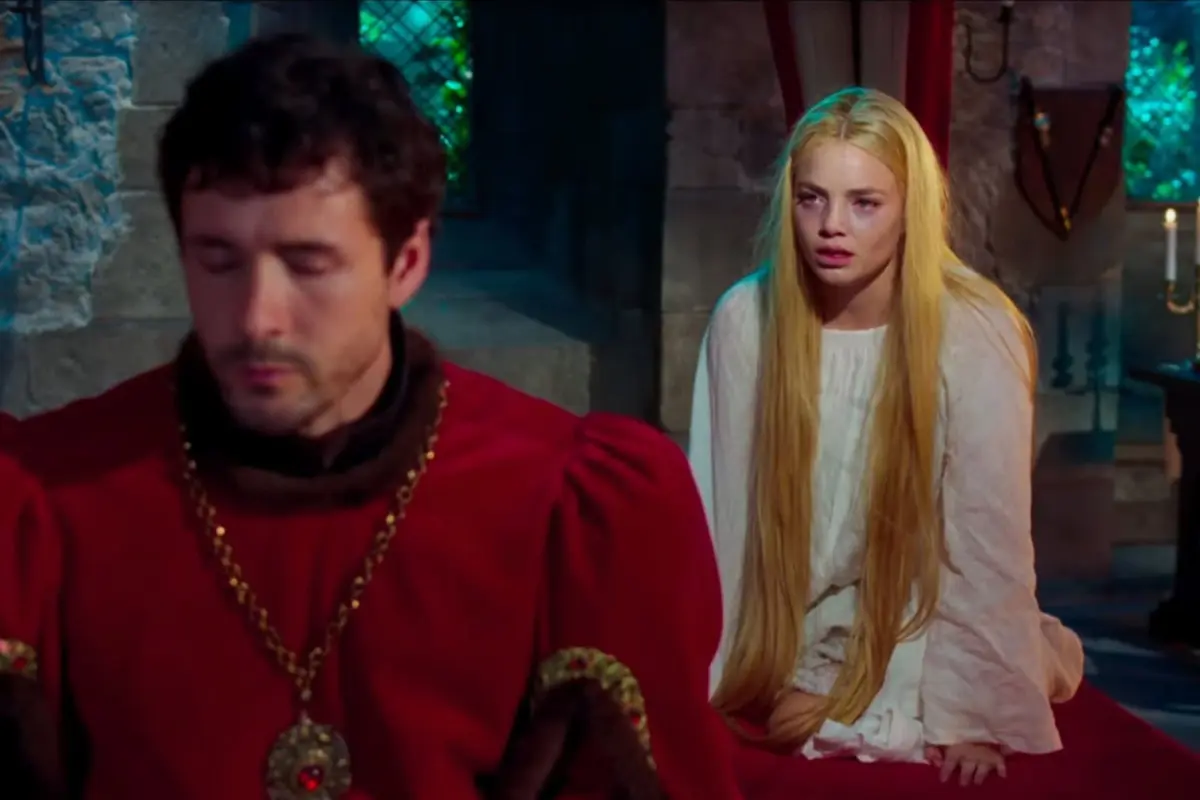
In the ever-evolving landscape of contemporary genre cinema, few auteurs command a distinct aesthetic universe quite like writer-director Anna Biller. Following her critically acclaimed, stylized masterclasses in retro pastiche, Biller returns with The Face of Horror (2026), an ambitious, blood-soaked stylistic odyssey. Premiering to considerable buzz, the film reimagines the legendary 1825 Japanese Kabuki ghost story Yotsuya Kaidan, transplanting its themes of betrayal, spectral vengeance, and societal cruelty into the muddy, unforgiving landscape of 14th-century medieval England.
Boasting an ensemble cast featuring Jonah Hauer-King, Kristine Froseth, Leo Suter, Ellie Bamber, Bella Heathcote, and Ben Radcliffe, The Face of Horror functions as an explicit, high-concept pastiche of classic Technicolor horror aesthetics. It channels the rich, saturated lighting, theatrical staging, and gothic theatricality popularized by British institutions like Hammer Productions.
Yet, for all its visual opulence and atmospheric bravura, the film emerges as a paradox. It marries breathtaking set design, brilliant 35mm cinematography, and committed performances with a bloated runtime and pacing hurdles that test the endurance of even the most dedicated horror aficionado. Clocking in at over two hours, the film offers a mesmerizing, gloopy journey into historical macabre, though its structural weight occasionally threatens to swallow its narrative momentum whole.
Detailed Chronology and Narrative Mechanics
The thematic and stylistic blueprint of The Face of Horror establishes its cards right from the opening frames. The movie opens with a sequence designed to test audience allegiance within the first ten minutes: Edward (Jonah Hauer-King) and his ruthless squire, Richard (Leo Suter), are seen pillaging a defenseless medieval village. The sequence deploys over-the-top sword slashes, exaggerated practical gore, and dismemberments that intentionally mimic the stagebound artificiality of mid-20th-century shockers.
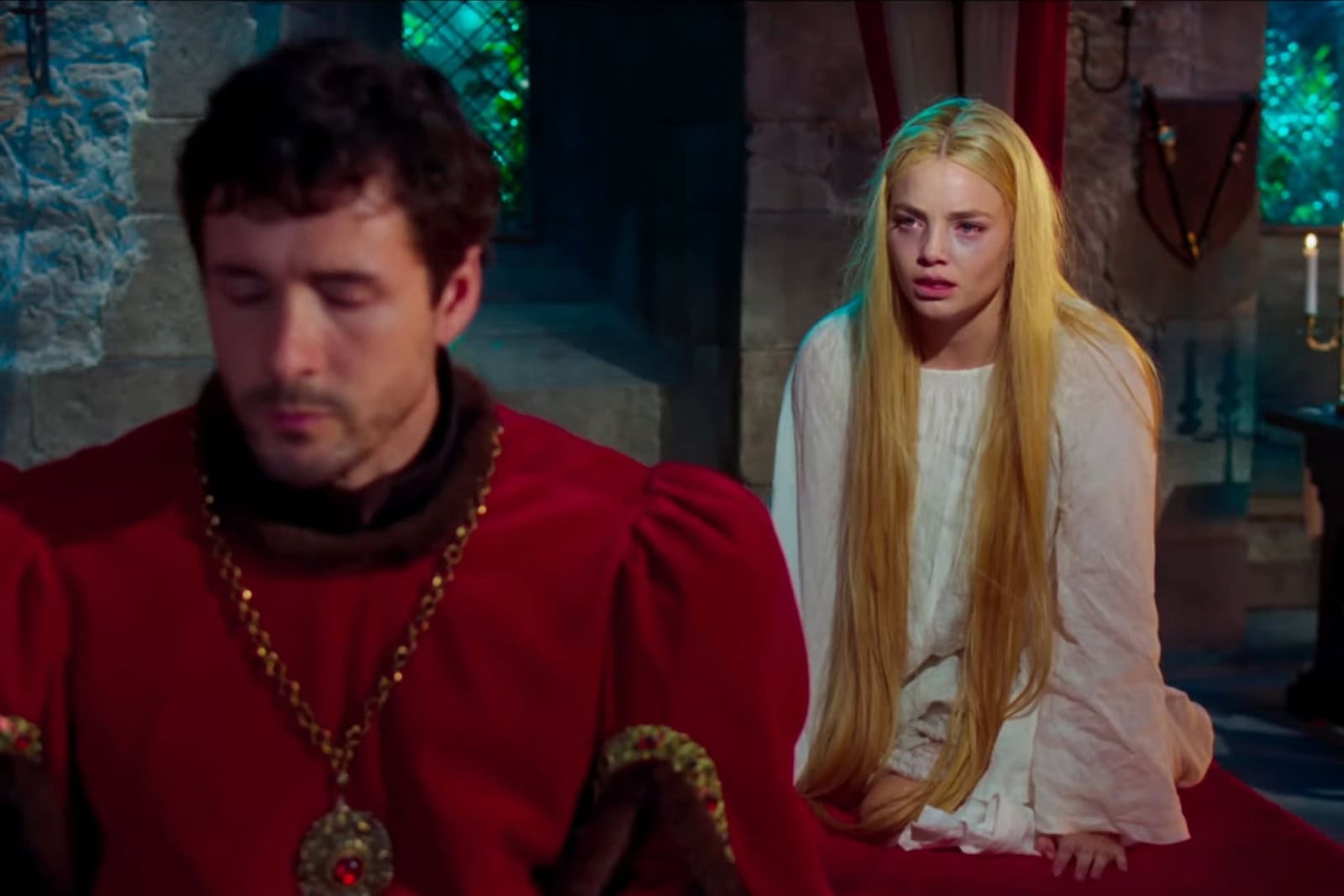
The dialogue throughout these early sequences is delivered with a deliberate, ham-fisted rigidity. For viewers willing to surrender to Biller’s unique cadence, this stylized delivery forms the bedrock of the picture’s campy charm. However, those failing to sync with its rhythmic artificiality risk alienation early on.
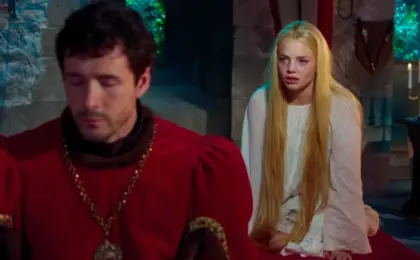
As the narrative develops, the tragedy of Isabel (Bella Heathcote) takes center stage. Isabel is portrayed as a naive yet fundamentally innocent young woman whose worldview is systematically shattered by the man she believes to be her ideal partner. That man is Edward Carnifex, brought to life with a deliciously wicked zeal by Hauer-King. Carnifex embodies the archetypal 14th-century patriarch—a figure consumed by raw ambition, territorial hunger, and a demand for absolute female subservience.
Following the initial village raids and the psychological erosion of Isabel, the narrative pivots into its supernatural core: the wronged heroine rises from her damp, medieval grave as a vengeful ghoul. The transition from psychological tragedy to physical retribution mirrors the trajectory of the original Yotsuya Kaidan, yet the execution trades Japanese theatrical motifs for visceral Western horror tropes.
Unfortunately, this is where the chronology of the viewing experience begins to fracture. Once the narrative destination becomes clear—the systematic haunting and dispatching of Edward—the film stalls. Stretched past the two-hour mark, the middle acts meander, offering repetitive sequences that fail to justify the expansive runtime. By the time the screen erupts into the long-promised, blood-soaked carnage of the grand finale, the impact is somewhat blunted, leaving critics and audiences feeling that the payoff arrived as too little, too late.

Supporting Context, Aesthetics, and Production Metrics
To evaluate The Face of Horror solely on its narrative pacing is to miss the staggering artisanal craftsmanship that elevates the project. Aesthetically, Anna Biller has crafted a visual tour de force that ranks among the most striking genre releases of the decade.
The Visual Framework
The film’s uncanny, period-accurate atmosphere is anchored by the brilliant set design of Lukas Jakobek. Jakobek constructs medieval interiors and exterior faux-natural spaces that feel simultaneously authentic to the 14th-century setting and entirely stylized as a theatrical soundstage. This is complemented by Biller’s own costume design—a riot of rich, saturated color choices that intentionally evoke the 3-strip Technicolor palettes of 1960s horror.
Bringing these elements to celluloid life is cinematographer M. David Mullen. Utilizing authentic 35mm film stock, Mullen captures every drop of synthetic blood, velvet drapery, and candlelit shadow with breathtaking fidelity. The resulting imagery is deeply textural, bypassing the digital sheen of modern studio horror in favor of a warm, grain-heavy tactile grain.
The Thematic Missed Opportunity: Kabuki’s Ghost
A fascinating point of discussion surrounding the production is its relationship to its source material. While The Face of Horror draws its narrative structure directly from Tsuruya Nanboku IV’s 1825 Kabuki masterwork Yotsuya Kaidan, it refrains from fully engaging with the performance traditions of the art form. Traditionally, classic Kabuki theatre featured casts composed entirely of male actors—a convention utilized to heighten the theatrical artifice.
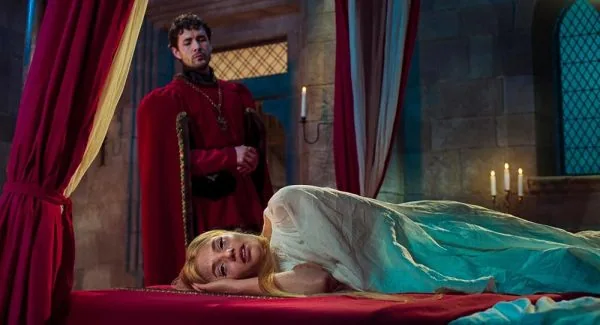
While Biller’s mixed-gender ensemble (featuring standout turns from Kristine Froseth, Leo Suter, Ellie Bamber, and Ben Radcliffe) delivers exceptional work, critics have noted a lingering curiosity regarding what an all-male or all-female casting mandate might have achieved. Given the relative scarcity of mainstream cinematic explorations of Kabuki—with only a handful of films, such as Kokuho, touching upon the subject in recent years—adopting this structural theatricality could have provided an even sharper conceptual edge to Biller’s critique of patriarchal power structures.
Official Statements and Critical Reception
The festival circuit reception for The Face of Horror highlights the polarized reactions often elicited by uncompromising auteur-driven genre cinema. Industry analysts and festival programmers have praised Biller’s unwavering commitment to her artistic vision, noting that very few directors working today possess the technical precision required to pull off this level of high-camp pastiche.
In critical reviews emerging from the festival circuit, consensus generally splits the film down the middle regarding its technical mastery versus its editorial restraint. Reviewers have lauded Bella Heathcote’s grounded yet tragic portrayal of Isabel, noting that her emotional grounding prevents the film from collapsing entirely into pure farce. Conversely, Jonah Hauer-King’s performance has been singled out for praise as a masterclass in unapologetic, mustache-twirling villainy, anchoring the film’s exploration of historical misogyny.
However, the primary point of contention in official critical dialogue remains the film’s runtime. Reviewers have universally noted that a tighter, more ruthless editorial pass in the editing suite could have trimmed 20 to 30 minutes of narrative fat, transforming a lumbering two-hour-plus experience into a lean, razor-sharp midnight movie classic.

Future Outlook
As The Face of Horror prepares for its broader commercial distribution rollout following its festival runs, its trajectory in the marketplace will be closely monitored by genre distributors and cinephiles alike. Anna Biller has cemented her reputation as a singular voice in contemporary cinema—a filmmaker who refuses to pounce on modern horror trends, choosing instead to excavate, deconstruct, and celebrate the forgotten stylistic strata of cinema history.
Market Viability and Cult Appeal
While the film’s expansive runtime and deliberate pacing may present hurdles for mainstream multiplex audiences seeking instant gratification, its prospects in the arthouse and cult-film circuits remain extraordinarily high. Midnight screenings, repertory cinema retrospectives, and physical media collectors (particularly boutique labels specializing in 35mm restorations and genre obscurities) are expected to embrace the film with open arms.
The Face of Horror may not be a flawless cinematic artifact, but its intoxicating blend of gorgeous 35mm photography, bold feminist subtext, theatrical set design, and gloopy, unapologetic practical gore ensures that it will be analyzed, debated, and re-watched for years to come. Anna Biller has once again delivered a work that defies easy categorization—proving that even when a cinematic experiment overstays its welcome, the journey through its terrifying, technicolor dreamscape is impossible to turn away from.






Belum ada komentar. Jadilah yang pertama berkomentar!