

Executive Overview
In the Velvet Underground’s understated 1968 composition "Stephanie Says," a nameless woman measures the coordinates of her existence against the people who have consumed it. The song offers no explicit map out of her circumstances, nor does it direct a clear target for her quiet frustration. Instead, as the decades pass, Stephanie’s stillness ceases to read as mere private alienation and transforms into a deeper, more urgent question about the mechanics of human care: Who is obligated to give it? Who is permitted to withdraw it? And who notices when the room has grown too small to breathe in?
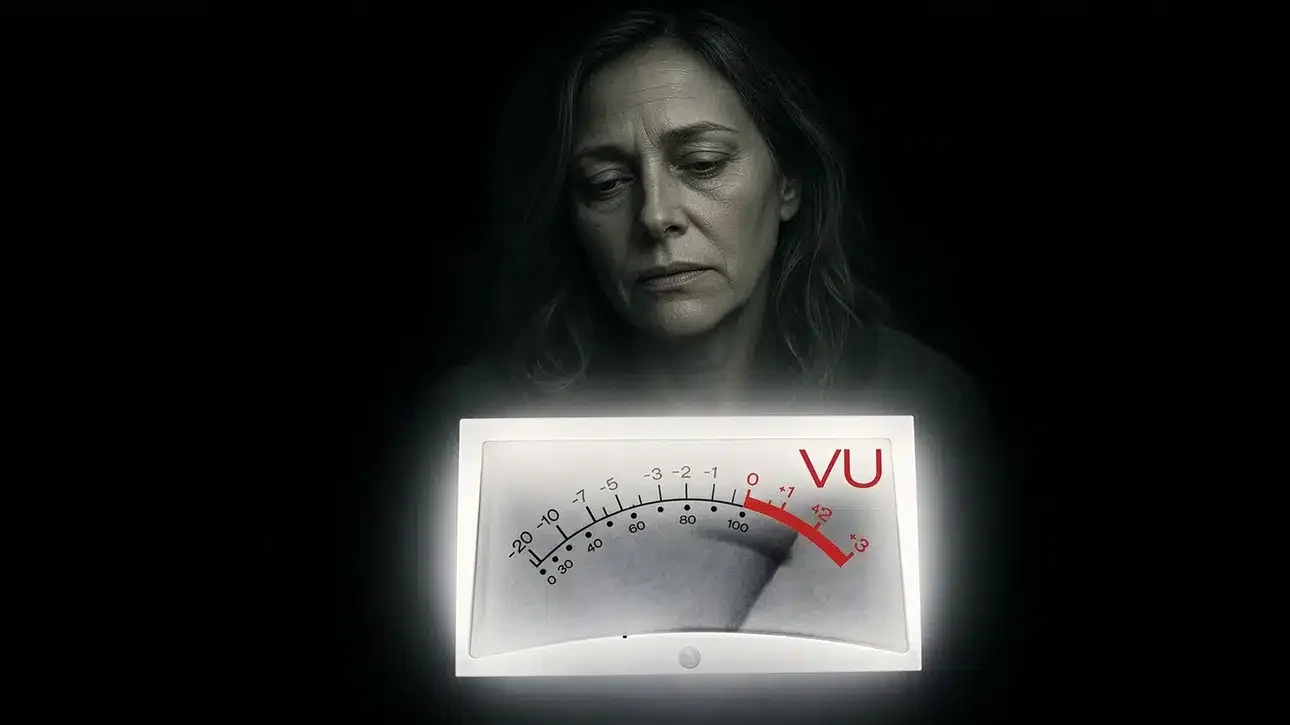
Recorded during the height of the band’s avant-garde explorations and later released on the 1985 archival collection VU, the track carries its original 1960s ethos forward into an entirely different cultural landscape. For generations of listeners—particularly the aging cohort of Generation X, who face the simultaneous pressures of raising children, navigating precarious labor markets, and caring for aging parents—the song acts as a sonic mirror. It reflects a universal modern exhaustion: the point at which lifelong self-reliance hardens into a demand to manage crisis entirely alone.
This article investigates the cultural durability of "Stephanie Says," examining how its themes of withheld interiority and displaced voice intersect with the systemic burdens of caregiving, domestic violence, addiction, and institutional neglect. By bridging the gap between underground rock history and contemporary sociological realities, we explore how the invisible labor of care continues to contract the lives of women, and why modern society urgently requires a broader architecture of shared responsibility.
Detailed Chronology: From the Factory Floor to the Archival Revival
To understand the resonance of "Stephanie Says," one must trace the winding trajectory of its creation, distribution, and subsequent cultural reinterpretations across four decades of rock history.
1968–1969: The Velvet Underground’s Studio Sessions
During the volatile sessions that yielded some of the band’s most fragile and enduring work, the Velvet Underground recorded "Stephanie Says." Featuring Lou Reed’s deadpan yet tender vocal delivery and John Cale’s mournful, lonesome viola lines, the track captured a distinct mood of suspended animation. Unlike the aggressive proto-punk noise of "Heroin" or "White Light/White Heat," this recording relied on descending harmonies that drifted rather than resolved, leaving the listener suspended in a state of unresolved empathy.
Around the same period, the band explored similar territory with "Candy Says," featured on their self-titled 1969 studio album. Drawing inspiration from the life of Warhol superstar Candy Darling and sung by Doug Yule, "Candy Says" similarly displaced its subject, allowing a male vocalist to narrate a woman’s profound alienation. Both songs established a distinct stylistic pattern: the female subject is viewed from a measured distance, creating a poetic tension between intimacy and exclusion.
1973: The Darker Shadow of Berlin
Lou Reed’s solo career brought the latent violence of his earlier writing into stark relief. On his 1973 concept album Berlin, Reed reworked the musical and thematic DNA of "Stephanie Says" into "Caroline Says II." Positioned directly after the harrowing track "Oh, Jim," "Caroline Says II" plunges the listener into a world where domestic abuse, addiction, and profound emotional loss are laid bare on the surface.
While "Stephanie Says" maintains a haunting distance, keeping its central figure wrapped in an enigmatic silence, "Caroline Says II" strips away the mystery. It demonstrates how a woman’s quiet endurance can mask environments of extreme danger, throwing a retrospective shadow backward over Reed’s earlier composition.
1985: The Release of VU and Cultural Translation
Verve Records officially released "Stephanie Says" in 1985 on VU, an album carefully curated from previously unreleased material recorded two decades prior. This temporal delay fundamentally altered how the song was received. Entering a cultural moment vastly different from the late 1960s counterculture, the track resonated with a generation of listeners who were themselves accumulating years, failures, and complex domestic obligations. The recording crossed generational boundaries, proving that great art changes shape as its audience learns the heavy cost of independence.
Supporting Context & Metrics: The Anatomy of Invisible Labor
The thematic architecture of "Stephanie Says" opens outward into the sociology of modern labor, gender, and caregiving. The song presents Stephanie as a figure who reaches the listener only through another person’s speech—her desires, fears, and imagined flights are mediated by a narrator. This dynamic mirrors the systemic invisibility of care work in contemporary society.
The Mathematics of Care and the Generation X Burden
According to demographic markers established by the Pew Research Center, Generation X—spanning those born from 1965 to 1980—occupies the fragile middle ground of modern society. In 2026, this cohort spans ages 46 to 61, a life stage defined by peak professional pressures colliding with acute domestic demands.
Sociological data consistently demonstrates that caregiving responsibilities are distributed unevenly across gender lines. Women shoulder the vast majority of unpaid care work, encompassing everything from managing chronic childhood illnesses and eldercare to maintaining household logistics.
- The "Sandwich Generation" Squeeze: Millions of adults find themselves simultaneously supporting adolescent or adult children (often navigating mental health crises or substance use disorders) while managing the medical decline of aging parents.
- The Economic Penalty: The U.S. Bureau of Labor Statistics and various labor institutes note that women are significantly more likely to exit the workforce, reduce hours, or pass up promotions to manage caregiving crises, leading to lifelong economic vulnerability.
The Door That Opens Both Ways: Domestic Realities
Consider the micro-moments of modern exhaustion: a mother sitting in her car in the driveway for eleven minutes with the engine off and her phone face-down, delaying the transition back into a home where her emotional labor is constantly in demand. This familiar pause—taken in the one space unlikely to generate an immediate request—highlights the shrinking perimeter of personal freedom.
In more extreme circumstances, this contraction of space becomes perilous. Published accounts from community mental health reports document the harrowing reality of parents forced to push heavy furniture against their bedroom doors at night to protect themselves from adult children suffering from severe, untreated substance use addictions, such as methamphetamine dependency. Fearing that calling emergency services could result in eviction, incarceration, or fatal outcomes, these parents bear the burden in absolute silence.
This "death by shame"—the terrifying isolation born of social stigma and institutional abandonment—darkens the margins of songs like "Stephanie Says." It proves that love and danger can comfortably inhabit the same roof, upending sentimental narratives that neatly categorize families as either safe refuges or total failures.
Official Statements & Expert Perspectives
Cultural critics, sociologists, and urban planners have increasingly turned their attention to the structural failures of modern support systems, advocating for a fundamental redesign of how communities handle human vulnerability.
Hilton Als, writing in The New Yorker on the artistic lineage of Warhol superstars and the fierce, often tragic fight to be seen, noted the vital importance of giving voice to those who have been relegated to the status of passive images. Similarly, music critics reviewing the sonic architecture of VU have frequently highlighted how John Cale’s viola and Lou Reed’s detached lyricism mimic the emotional detachment required to survive chronic institutional and interpersonal neglect.
On a civic level, urban thinkers have begun articulating new frameworks for communal survival. Pasadena community leader and advocate Rick Cole famously summarized a holistic vision of public welfare:
"Community is a place where they notice when you’re born and care when you die."
This philosophy challenges the atomized nuclear family model, arguing that human well-being should never depend entirely on a single overworked mother acting as the sole barrier between a loved one and total catastrophe. Experts in public mental health argue that true systemic care requires proactive institutional infrastructure—systems that intervene and offer support long before a crisis makes human need undeniable.
Future Outlook: Reimagining Care in an Aging Society
As Generation X moves firmly into later life, the cultural questions raised by the Velvet Underground in 1968 take on renewed urgency. The mythology of the "latchkey kid"—long celebrated as a badge of rugged independence—has revealed its darker shadow: the reality that early self-reliance often paves the way for a lifetime of unassisted crisis management.
The Shift Toward Shared Institutional Care
Looking ahead, policymakers, healthcare advocates, and community organizers face a monumental challenge. Relying on unpaid family members to absorb the costs of an aging population and a mental health epidemic is no longer economically or morally sustainable. Future resilience demands:
- Universal Respite Infrastructure: Expanding subsidized, accessible respite care programs for family caregivers to prevent burnout and systemic collapse within households.
- De-stigmatizing Addiction and Mental Health: Creating non-punitive, community-based intervention networks that allow families to seek help without fear of criminalization, homelessness, or social ostracization.
- Redefining Workplace Flexibility: Transitioning from treating caregiving as an "individual inconvenience" to embedding robust, institutional support mechanisms directly into the modern economy.
The Unresolved Chord
In the final analysis, "Stephanie Says" refuses to offer a neat Hollywood resolution. No rescue arrives in the fading chords of the song; no definitive summer arrives to settle the existential account. When the music fades, the silence remains wide open, inviting listeners to project their own accumulated years into the space left behind.
Stephanie remains an enigma—a figure suspended between the domestic rooms that demand her labor and the distant, snowed-in fantasies of absolute solitude (such as the far northern expanse of Alaska, where distance promises both shelter and lethal isolation).
Yet, within that unresolved tension lies a powerful directive for the future. As modern society confronts the realities of aging, chronic stress, and fractured support systems, the fundamental question remains: Can we build communities capable of holding strong boundaries without mistaking them for abandonment? Until we answer that call, the light under the door will stay on, reminding us that care must be shared, and that no human being should have to manage the winter of their life entirely alone.







Belum ada komentar. Jadilah yang pertama berkomentar!