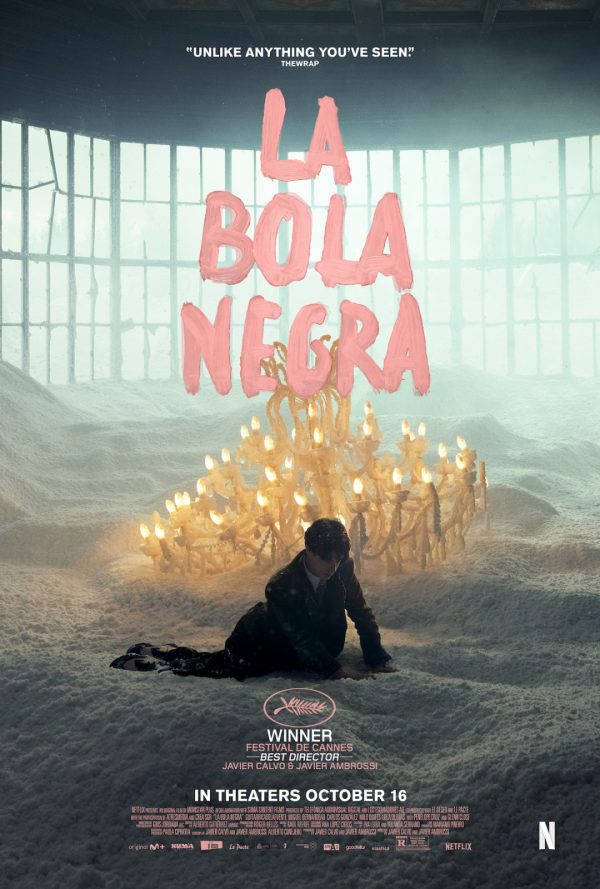
In the sweeping landscape of contemporary European cinema, few creative partnerships command the fervent anticipation of Spain’s Javier Ambrossi and Javier Calvo—collectively known to global audiences as "Los Javis." With their 2026 feature film La Bola Negra (The Black Ball), the visionary writer-director duo has delivered what many critics are already hailing as their most structurally audacious, emotionally devastating, and conceptually rich work to date.
Rooted in the tragic execution of legendary Spanish poet and playwright Federico García Lorca in 1936—an atrocity that left his manuscript for a play titled La Bola Negra permanently unfinished—the film expands outward from four surviving pages of text into a sprawling, multi-generational epic. Blending historical fact with speculative fiction, magical realism, and deeply personal examinations of queer identity, the film bridges distinct epochs. It travels from the oppressive social hierarchies of pre-Civil War Spain through the violent chaos of the frontlines, all the way to the ostensibly modern, yet emotionally fractured, landscape of 2017.
Boasting an enormous, star-studded ensemble cast that features breakthrough performances alongside international icons—including a surprising, multilingual cameo by Glenn Close—La Bola Negra is an artistic triumph that defies traditional narrative constraints. Supported by Roger Bellés’s meticulously researched production design and Gris Jordana’s breathtaking cinematography, the film explores what it means to live, love, and suffer as a gay man across a century of societal shifts. While the film demands patience during its deliberately paced opening acts, its explosive, cross-cut final hour solidifies its status as a landmark achievement in queer cinema and a towering monument to recovered histories.
Detailed Chronology: Weaving Three Existences Across a Century
La Bola Negra derives its narrative momentum from an intricate, multi-layered structure that juxtaposes three distinct historical and contemporary periods. Edited with remarkable clarity by Alberto Gutiérrez, the film utilizes a daring four-scenario framework—incorporating striking black-and-white photography for specific narrative shifts—to keep viewers grounded as it maneuvers fluidly across time.
1932: The Tyranny of the Black Ball
The earliest chronological narrative thread transports audiences to 1932, a volatile prelude to the Spanish Civil War. Here, we meet Carlos, a sensitive, deeply closeted young man portrayed with fragile intensity by Milo Quifes. Carlos finds himself at a harrowing crossroads, paralyzed by the realization that rumors of his sexuality are leaking into the upper echelons of his father’s elite, conservative society club.
The club’s secretive governance relies on a literal ritual of judgment: members cast white and black balls into a tube to grant or deny approval, respectively. The "bola negra" (black ball) serves as both the film’s title and a devastating visual metaphor for institutional rejection, systemic homophobia, and the societal impulse to eradicate non-normative identities. Carlos’s desperate internal struggle maps the silent panic experienced by countless individuals forced to bury their truths beneath layers of bourgeois respectability.
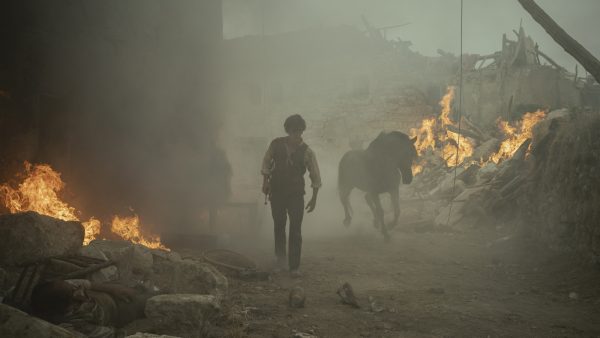
As Spain plunges into the catastrophic bloodshed of the Civil War, the narrative shifts to Sebastián, an aspiring trumpet player and musician portrayed in a striking acting debut by singer-songwriter Guitarricadelafuente. Following the devastating bombing of his home village by forces presumed to be allies, Sebastián is conscripted into the Republican army.
Assigned to guard wounded rebel soldiers, Sebastián’s life intersects with Rafael Rodríguez Rapún (Miguel Bernardeau)—a historical figure and actor-turned-soldier whose plausible relationship with Federico García Lorca forms the historical bedrock of the project. Sebastián’s foggy, repressed understanding of his own sexual identity begins to clear during a hypnotic, transgressive sequence at a clandestine underground nightclub. There, he encounters Nené Romero, a provocative dance performer brought to life with fierce elegance by Penélope Cruz. In a quiet, devastatingly wise private encounter, Nené delivers a thematic thesis for the film: “Transvestism is the fantasy of possibility, where war is the opposite.” Amidst the ash of marble rubble and falling statues, Sebastián’s journey transforms into an awakening of desire amid total destruction.
2017: The Modern Reckoning and the Weight of Inheritance
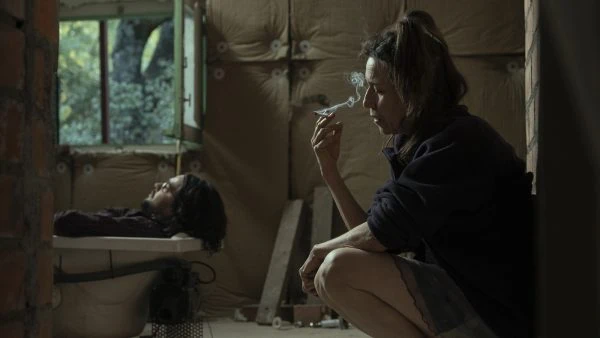
Leaping forward into the contemporary era, the film introduces Alberto (Carlos González), an openly gay, deeply cynical playwright and historian. Battling professional stagnation and a contentious relationship with his mother—a troubled addict brilliantly realized by Lola Dueñas—Alberto receives sudden, life-altering news: his estranged grandfather, long believed dead, has passed away and left him a mysterious will.
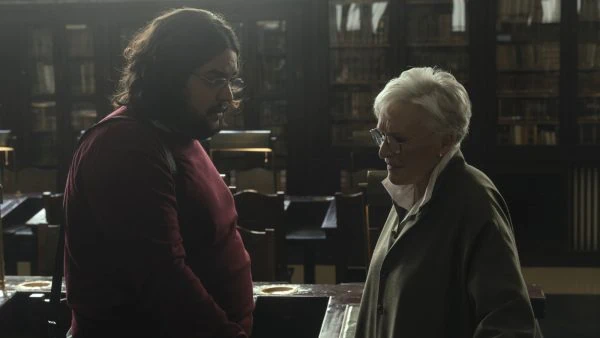
Embarking on a reluctant journey to uncover his family’s hidden past, Alberto crosses paths with an enigmatic researcher portrayed by Hollywood legend Glenn Close. While Close’s late-film, Spanish-speaking cameo borders on the jarring, her presence serves as a narrative catalyst, unlocking a web of generational trauma and unresolved grief. Alberto’s contemporary storyline contrasts sharply with the visceral brutality of the 1930s sequences, emphasizing that while legal freedoms have evolved, the psychological inheritance of historical suppression still weighs heavily on modern queer descendants.
Supporting Context & Metrics: Production, Adaptation, and Distribution
The genesis of La Bola Negra is as fascinating as the film itself. Operating with only four surviving pages of García Lorca’s unfinished manuscript, Los Javis collaborated conceptually with playwright Alberto Conejero, whose theatrical works have similarly explored Lorca’s romantic and creative entanglements with Rafael Rodríguez Rapún. While Conejero’s stage play laid vital groundwork, the cinematic adaptation expands the source material exponentially, venturing far into the past and future to construct a cinematic universe three times the scope of the original theatrical concept.
Technical and Artistic Metrics
Directorial Vision: Written and directed by Javier Ambrossi and Javier Calvo (Los Javis).
Cinematography: Shot by Gris Jordana, whose sweeping, poetic framing elevates both intimate romantic encounters and the jarring devastation of wartime bombings.
Production Design: Directed by Roger Bellés, capturing the ornate claustrophobia of 1930s upper-class salons and the desolate grit of Republican frontlines with equal historical rigor.
Editing: Managed by Alberto Gutiérrez, whose deft handling of a complex, multi-era timeline prevents structural collapse, particularly during the breathless cross-cutting of the film’s final hour.
Ensemble Cast: A monumental assembly of Spanish cinema royalty and emerging talent, featuring Guitarricadelafuente, Miguel Bernardeau, Carlos González, Milo Quifes, Lola Dueñas, Penélope Cruz, Glenn Close, Lorenzo Zurzolo, Julio Torres, Alberto Cortés, María Morales, Antonio de la Torre, Hugo Welzel, Yenesi, Natalia de Molina, Alex Pastrana, Javier Butler, Mona Martínez, Nuria Mencía, Mateo Medina, Albert Pla, Teo Lucadamo, Antonio Dechent, and Daniel Ibáñez.
Financing and Festival Reception
Despite its undeniable visual splendor and the heavy-hitting roster of talent involved, La Bola Negra faced initial skepticism regarding its commercial viability due to its avant-garde structure. However, following its triumphant premiere on the international festival circuit—including enthusiastic notices at the Reeling Film Festival—the project sparked a fierce bidding war among major buyers. Netflix ultimately secured distribution rights in a high-profile acquisition out of the Cannes Film Market, ensuring that this deeply idiosyncratic, culturally specific Spanish epic will reach a vast global audience.
Official Statements and Creative Insights
Speaking on the immense responsibility of adapting fragments of Spain’s most revered and tragically silenced literary icon, co-directors Javier Ambrossi and Javier Calvo have emphasized the film’s role as an act of cultural reclamation.
"We weren’t just interested in finishing a play that Lorca left behind," Los Javis shared in a joint statement during the film’s press rollout. "We wanted to chase the ghosts of everyone who was forced to bury their true selves in the exact same shallow graves as our artists. ‘La Bola Negra’ is about what happens when those secrets refuse to stay underground. It is a monument to the love stories that history forgot to write down."
Penélope Cruz, reflecting on her transformative role as the transgressive performer Nené Romero, highlighted the thematic resonance of art as resistance against authoritarianism:
"Nené represents a space where freedom is still possible even when the world is literally burning down around you. Working with Javier and Javier is always an exercise in total emotional exposure, but this film asked us to look at the historical wounds of our country through a lens of profound tenderness and theatrical audacity."
First-time actor Guitarricadelafuente echoed the intense physical and emotional demands of bringing Sebastián to life:
"Moving from music to acting in an epic of this scale was terrifying, but Sebastián’s journey through the trumpet and the war felt deeply musical from the very beginning. His silence is a form of music that finally finds its voice."
Future Outlook and Cultural Legacy
As La Bola Negra prepares for its broader streaming and theatrical rollout via Netflix following its acclaimed festival run, its cultural footprint is already expanding well beyond the bounds of traditional cinema. The film arrives at a critical cultural juncture where international interest in historical revisionism, queer historiography, and the preservation of suppressed archives is at an all-time high.
By fusing avant-garde speculative fiction with rigorous historical inquiry, Los Javis have established a new benchmark for what queer biographical and historical cinema can achieve. While minor structural critiques—such as the slightly clinical pacing of the 2017 research segments and the initial friction required to settle into the narrative’s vast scope—have been noted by critics, they pale in comparison to the film’s soaring ambitions.
La Bola Negra transcends the boundaries of standard historical tragedy. It functions not merely as an elegy for Federico García Lorca and the countless nameless individuals who faced the black ball of societal rejection, but as a vibrant, breathing testament to the enduring power of art to rewrite the past, illuminate the present, and liberate the future.











Belum ada komentar. Jadilah yang pertama berkomentar!