


EXECUTIVE OVERVIEW
The sudden closure of BioWare—the legendary role-playing game (RPG) studio responsible for industry-defining franchises such as Mass Effect and Dragon Age—has sent seismic shockwaves through the global gaming landscape. Coming in the wake of Electronic Arts’ (EA) historic $55 billion acquisition, the shuttering of the studio marks a grim milestone in modern corporate consolidation. Long plagued by shifting executive visions, tumultuous development cycles, and the pressures of chasing fleeting live-service goldrushes, BioWare ultimately fell victim to a macroeconomic juggernaut: the systematic mechanics of leveraged private equity.
While public companies have long proven capable of catastrophic mismanagement—typified by EA’s historic missteps in forcing traditional single-player studios into live-service models and Microsoft’s relentless pursuit of short-term shareholder value—private equity acquisitions introduce a distinctly predatory cadence. By utilizing the assets of the acquired company as collateral for massive, multi-billion-dollar loans, private equity firms can extract unprecedented wealth while insulating their primary investors from the ultimate financial fallout.
In the wake of BioWare’s demise and the concurrent elimination of some 400 positions across EA, the industry is forced to confront an uncomfortable reality. The corporate architecture that enabled this closure is not an isolated anomaly, but part of a well-documented playbook that has already devastated retail chains, digital media, local journalism, and healthcare infrastructure. As major publishers buckle under astronomical development costs and new ownership groups assume control, the future of mid-to-high-tier creative risk-taking in video games hangs in the balance.
DETAILED CHRONOLOGY: FROM DEVELOPMENT MAYHEM TO THE AXIS OF ACQUISITION
The writing had been on the wall for BioWare long before the ink dried on EA’s record-breaking buyout. For years, the studio existed in a state of chronic reinvention, lurching from one creative crisis to another. Internal reports detailed a turbulent pipeline for Dragon Age: The Veilguard, characterized by endless live-service flip-flops, sweeping structural rewrites, and bitter creative conflicts regarding its alignment with the studio’s legacy properties.
Despite cultivating a fiercely loyal, LGBTQ-inclusive community and defining the modern cinematic RPG, BioWare struggled to adapt its deliberate, narrative-driven development style to a marketplace increasingly dominated by loot boxes, microtransactions, and infinite monetization loops. Its games—frequently praised for deep character writing and intricate branching narratives—were fundamentally incompatible with the aggressive, recurring-revenue mandates demanded by modern corporate portfolios.
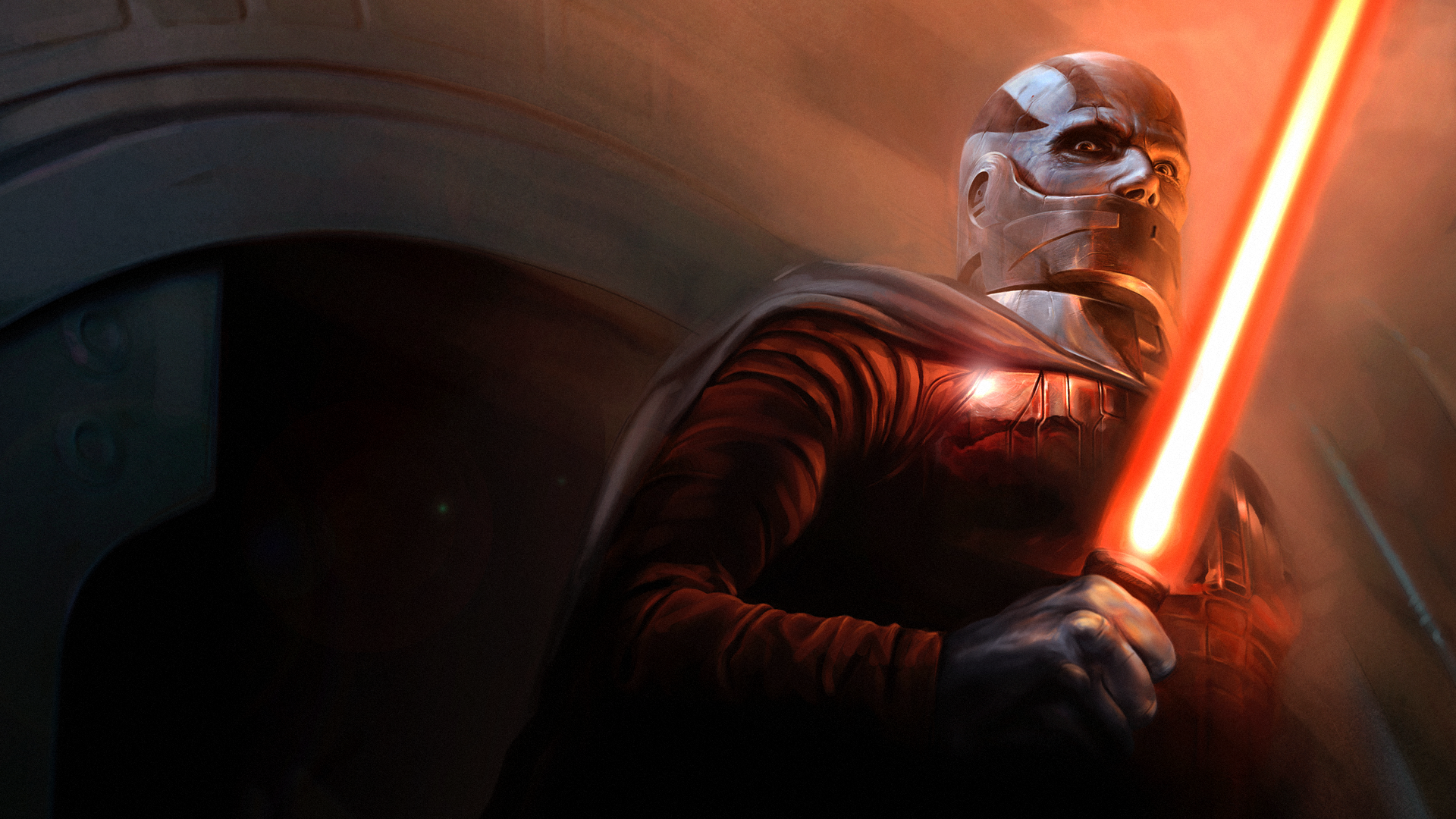
The vulnerability culminated when EA itself became the target of the largest leveraged buyout in private equity history, valued at a staggering $55 billion, backed significantly by international sovereign wealth and private capital networks. Employees at BioWare began updating their resumes the moment the acquisition was announced, openly acknowledging that the studio’s artistic ethos and high operating costs made it an immediate target for downsizing.
That premonition proved correct. Within months of the deal closing, EA announced sweeping restructurings that resulted in 400 layoffs and the outright cancellation of several in-development projects, most notably the next installment in the critically acclaimed Mass Effect franchise. What began as internal development friction metastasized into corporate execution, sealing the fate of a studio that had shaped the medium for three decades.
SUPPORTING CONTEXT & METRICS: THE MECHANICS OF THE LEVERAGED BUYOUT
To understand why BioWare’s closure was almost mathematically predetermined, one must examine the specific financial mechanisms governing modern private equity. Ostensibly, private equity firms pitch their acquisitions as long-term optimizations designed to unlock underutilized potential—such as scaling mobile gaming divisions or streamlining operational overhead. In practice, however, firms frequently rely on a counter-intuitive strategy: cannibalizing their own acquisitions to extract maximum short-term value at the direct expense of the acquired company’s workforce, intellectual property, and long-term viability.
This process invariably begins with the leveraged buyout (LBO). As Kiplinger senior investing editor Karee Venema explained to industry analysts:
"A leveraged buyout just means the company is bought using a combination of borrowed money, or debt, and private equity. The purchased company’s balance sheet is used as collateral against the loans taken out to purchase it."
The critical danger of this structure lies in where the liability rests. While the private equity firm negotiates the terms of the acquisition—such as EA’s massive $20 billion loan secured through financial institutions like JPMorgan—the legal and financial responsibility for repaying that debt falls entirely upon the acquired company. The private equity investors limit their own capital exposure and shield themselves from total financial ruin should the debt prove insurmountable, while positioning the target company to shoulder the burden.
The Value-Extraction Playbook
Once a company is saddled with acquisition-generated debt, private equity firms deploy a series of extraction methods that prioritize immediate capital generation over sustainable growth:
- Workforce Hollowing & Price Inflation: Companies are systematically streamlined. Staffing levels are aggressively cut to trim immediate operational expenses, while consumer-facing prices are hiked to push profit margins to unsustainable heights—all before the resulting decline in product quality damages consumer sentiment.
- Asset Liquidation: Real estate holdings, subsidiary studios, and prized intellectual properties are frequently sold off to provide immediate cash returns to the private equity firm’s investors.
- Sale-Leaseback Agreements: In these arrangements, a company is forced to sell its own real estate assets, pocketing a temporary cash injection only to immediately begin paying exorbitant rent to continue operating out of its own workspace.
- Extractive Management Fees: Firms routinely impose steep annual management fees (such as standard "2-and-20" terms taking 2% of assets and 20% of profits above target margins), alongside supplementary monitoring and transaction fees that further drain corporate liquidity.
The empirical data tracking this phenomenon is stark. According to a comprehensive report utilizing S&P Global data compiled by the Private Equity Stakeholder Project, private equity-backed companies accounted for more than 10% of all corporate bankruptcies and an astonishing over 50% of bankruptcies involving liabilities exceeding $500 million. Crucially, the report highlighted that despite directly precipitating these financial collapses, private equity firms routinely emerge from the wreckage entirely unscathed.
While historical success stories do exist—such as Blackstone’s profitable 2007 acquisition and eventual divestment of Hilton, or Dell’s rebound following its 2013 buyout—the pattern across consumer-facing industries is one of systemic devastation. Private equity has previously dismantled retail icons like Toys "R" Us and Party City, gutted digital media conglomerates, accelerated the collapse of local journalism across the United States, and compromised institutional infrastructure in healthcare and elder care.
Within the gaming sector, the fallout is accelerating. Concurrent with BioWare’s closure, developer Gamepires announced deep layoffs just months after being acquired by the Emona Capital-backed Splash Damage Group—a company that had itself performed major layoffs merely two months after its own private equity acquisition.
OFFICIAL STATEMENTS & INDUSTRY REACTIONS
The collapse of BioWare and the restructuring of EA have triggered widespread panic and condemnation across the global games development community, drawing sharp contrasts between corporate survival strategies and artistic integrity.
Industry trade unions and labor advocates have pointed to the EA buyout as a cautionary tale of unchecked financialization. In internal memos and public statements, developer advocacy groups have emphasized that the modern triple-A gaming ecosystem has become hostile to creative risk, where human capital is treated as a disposable line item rather than the foundational asset of artistic creation.

While EA leadership has sought to reassure shareholders that core revenue drivers remain untouched, developers who worked closely within the ecosystem have expressed profound grief over the loss of institutional knowledge. The erasure of decades of specialized narrative design expertise at BioWare has been universally characterized by peers as an irreparable cultural loss for the interactive medium.
FUTURE OUTLOOK: EA’S UNCERTAIN HORIZON AND THE SHADOW OF NEW OWNERSHIP
As the dust settles on the largest leveraged buyout in corporate history, the immediate future of Electronic Arts remains both secure in its cash-flow staples and deeply precarious in its creative scope.
EA’s heavy-hitting sports franchises (such as EA Sports FC and Madden NFL) along with live-service juggernauts like Apex Legends and the upcoming Battlefield 6, are entirely insulated from immediate cancellation. Furthermore, EA has confirmed that production will continue on several high-profile licensed properties, including Marvel’s Iron Man, the next entry in the Star Wars Jedi series, and a collaborative project between Respawn Entertainment and DICE widely rumored to be a new Star Wars Battlefront title. Additionally, life-simulation fans await word on "Project Evergreen," the codename for the next major Sims iteration.
However, beneath these marquee titles lies an atmosphere of profound anxiety. With new ownership groups exercising direct ideological and financial oversight, the creative freedoms that once birthed groundbreaking, boundary-pushing narrative RPGs are being systematically choked out. The closure of BioWare signals that any studio operating outside of hyper-monetizable, low-risk mainstream categories is operating on borrowed time.
Ultimately, the downfall of BioWare serves as a grim cautionary tale for the trajectory of the interactive entertainment industry. As private equity continues to sink its teeth into digital media and software development, the question facing developers and players alike is no longer whether great studios are vulnerable to the corporate machine, but which legendary name will be fed into the gears next.







Belum ada komentar. Jadilah yang pertama berkomentar!