

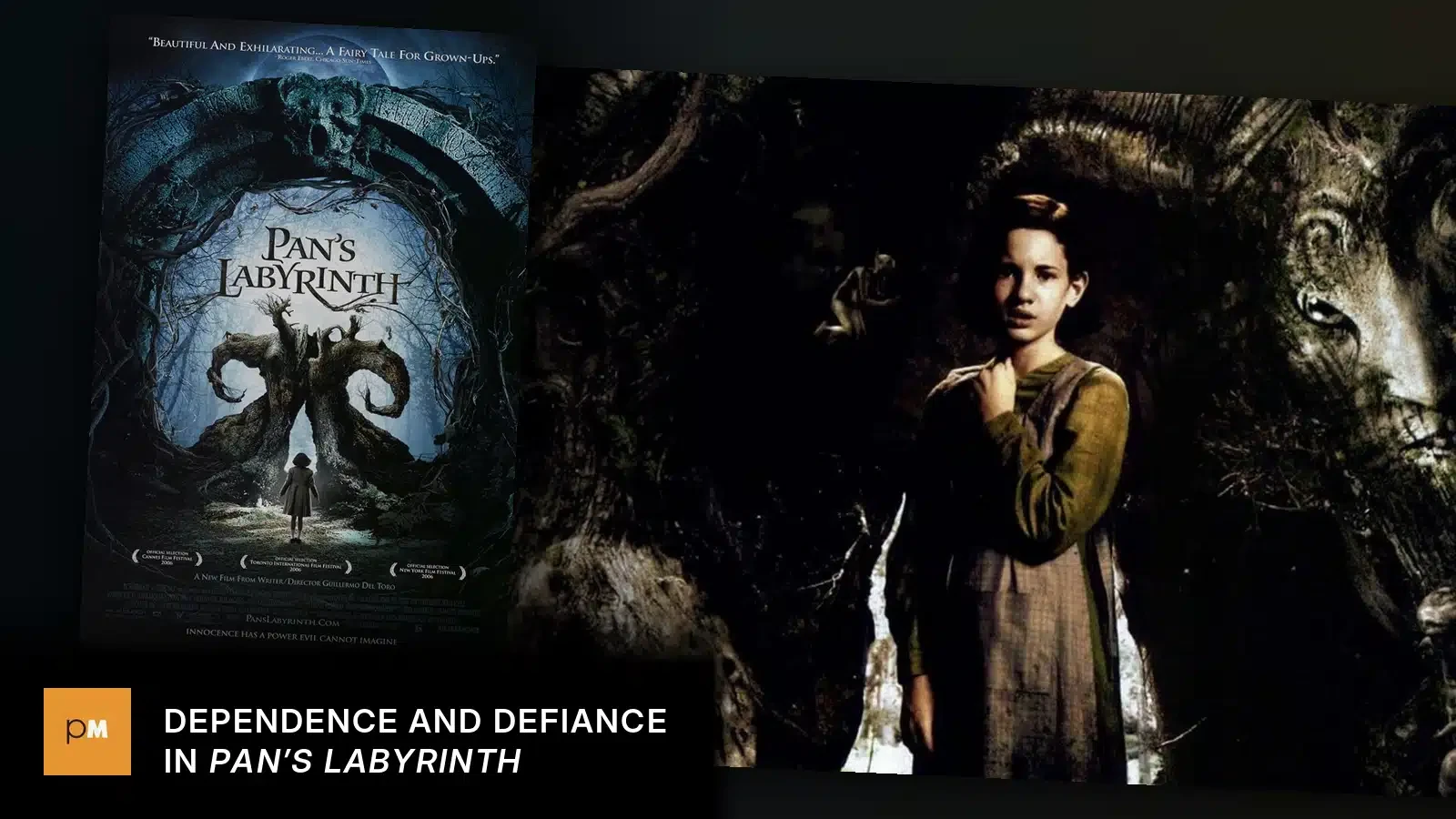
Executive Overview
Two decades after its initial theatrical run, Guillermo del Toro’s dark fantasy masterpiece Pan’s Labyrinth (El laberinto del fauno, 2006) continues to demand rigorous critical re-evaluation. Returning to the Cannes Film Festival for a specialized retrospective restoration, the film transcends its genre constraints—seamlessly blending historical fiction with magical realism—to function as an acute sociological and political study. Set in 1944 Francoist Spain, the narrative maps the mechanics of fascism not merely as a macro-political state apparatus, but as an intimate domestic reality governed by coercion, surveillance, and structural violence.
Through the lenses of sociological frameworks—specifically Evan Stark’s model of coercive control and Ignacio Martín-Baró’s liberation psychology—this analysis unpacks how the autocratic rule of Captain Vidal manifests within the private sphere. The film illustrates that authoritarian sovereignty is inherently parasitic, relying entirely on the subjugated labor, bodies, and compliance of women and marginalized individuals. Yet, alongside this systemic oppression, Pan’s Labyrinth articulates a profound counter-narrative of resistance. Through the distinct trajectories of Mercedes, Doctor Ferreiro, and young Ofelia, the film demonstrates that institutional terror can be met with varied, deliberate acts of defiance—whether through covert subversion, open declaration, or the preservation of historical memory.
Detailed Chronology: The Microcosm of the Mill
The journey into the Francoist hinterlands begins with a stark visual and sensory overture. Ofelia clutches her book to her chest while Carmen grips her pregnant belly, their car ascending a winding road toward a desolate mill. The film establishes its thematic stakes immediately: a dying girl, a trail of fading blood, and a fragile, haunting lullaby. Director Guillermo del Toro prioritizes the sensory experience of power long before explaining its ideological architecture. Captain Vidal’s ticking pocket watch, the crisp strike of his polished boots, and the metallic sheen of his tightly buttoned uniform imbue his authority with a rigid, inescapable surface.
[Arrival at the Mill]
       │
       ├──> Captain Vidal: Establishes patriarchal & regime-based surveillance (The Ticking Watch)
       ├──> Carmen: Subjugated to reproductive entrapment & physical decline
       └──> Mercedes: Navigates domestic spaces to covertly aid the Maquis
Vidal’s Hold on Time and Space
Set in the immediate aftermath of the Spanish Civil War, the year 1944 represents a fractured transition where official combat has ceased, but ideological pacification remains total. Vidal arrives at the remote mill embodying the fascist obsession with absolute control over time and legacy. He constantly tends to his pocket watch, an inherited timepiece intended to be passed down to the son he demands Carmen will bear. This mechanical ticking imposes a future claimed by the father before the child is even born.
The architecture of the mill mirrors this totalizing worldview. Its rooms are stripped of warmth, rendered in austere blues and grays, with straight lines and unyielding furniture that visually anchor Vidal’s authoritarian rule. In the context of liberation psychology—a field pioneered by scholar Ignacio Martín-Baró—this environment exemplifies how an unjust sociopolitical order can harden into normalized habit, silencing the very imagination of alternative realities.
The Forest as a Counter-Site
In stark contrast to the rigid, geometric confines of the mill, the surrounding forest refuses stasis. Its tangled branches, uneven paths, and damp, moss-covered earth present an organic labyrinth that resists containment. While Vidal’s authority relies on total visibility and institutional surveillance, the forest offers passage through obscurity.
Crucially, the fantastical elements within the film—embodied by the Faun and the underground trials—do not merely serve as an escapist fantasy from political reality. Instead, they function as a mirror and a counterpoint, restoring agency and the capacity for moral choice to Ofelia in a world systematically stripped of autonomous decision-making.
Supporting Context & Metrics: Coercive Control and Labor Exploitation
The domestic space of the mill operates as a textbook case of coercive control, a sociological term coined by Evan Stark to describe the systematic regulation of daily life, liberty, and resources within intimate relationships. Vidal meticulously dictates provisions, spatial mobility, speech, and the bodily future of his wife.
The Parasitic Nature of Fascist Power
Although Vidal projects an image of absolute sovereignty, the film meticulously exposes his deep structural dependency on those he subjugates:
- Carmen’s Body: Required to produce the male heir to secure his lineage.
- Mercedes’ Labor: Essential for the daily operational survival of the household and the management of provisions.
- Doctor Ferreiro’s Skill: Necessary to maintain the health of the household and patch up injured military personnel.
- His Father’s Watch: A psychological anchor attempting to legitimize his violent present through a fabricated historical destiny.
Vidal routinely converts these fundamental dependencies into entitlements. When subordinates fail to meet his exacting demands, he reinterprets their human limitations as active disobedience, justifying lethal retribution. This dynamic reflects the broader systemic reality of Francoism: the regime feeds on the labor of the subordinate while disguising systemic extraction as benevolent order.
The Spectrum of Resistance
The human cost of this regime is mapped across three distinct figures within the household, each representing a different response to oppression:
- Mercedes (The Covert Strategist): Moving fluidly between the kitchen and the storeroom, Mercedes uses her routine domestic labor as a cover for subversion. She supplies the anti-Francoist guerrillas (maquis) in the hills with provisions and intelligence. Her resistance is practical and calculated until her fateful confrontation with Vidal, where she strips away concealment to declare her absolute lack of fear, shattering the regime’s reliance on psychological intimidation.
- Doctor Ferreiro (The Moral Declarator): Operating within the belly of the beast, Ferreiro offers medical care to both the military and tortured prisoners. When a broken prisoner begs for release from agony, Ferreiro makes a conscious, public choice to end his suffering. Unlike Mercedes, his defiance is overt and uncompromising, resulting in his immediate execution by Vidal.
- Ofelia (The Imaginative Dissenter): Through her navigation of the labyrinth and her ultimate refusal to sacrifice her infant brother to the Faun, Ofelia embodies the ultimate narrative defiance. Her refusal shatters the cycle of blood and inheritance demanded by the patriarchal and fascist systems alike.
Official Statements and Retrospective Analysis
Speaking at the 20th-anniversary restoration screening of Pan’s Labyrinth at the Cannes Film Festival, critics and film historians emphasized the enduring contemporary relevance of del Toro’s socio-political allegory.
"Del Toro constructs a universe where the monstrous is never purely fantastic; it is an institutionalized extension of real-world violence. The horror of the Pale Man and the brutality of Vidal stem from the same root: a ravenous appetite for the vulnerable disguised as sovereign right."
— Festival de Cannes Retrospective Notes
Scholarly consensus, drawing from Jennifer Orme’s literary analyses and Irene Gómez-Castellano’s work on postmemory, highlights how the film utilizes artistic motifs—such as the recurring, wordless lullaby—to preserve historical memory. Gómez-Castellano notes that the lullaby acts as an auditory monument, persisting long after the characters who sang it have been consumed by state violence. It bridges the gap between intimate, tender care and the collective trauma of the Spanish Civil War.
Furthermore, film archivist notes from the Yale Film Archive emphasize that del Toro’s refusal to provide a neat, redemptive Hollywood ending underscores the grim historical reality of the Francoist transition. The death of Carmen in childbirth, the execution of Doctor Ferreiro, and the tragic end of Ofelia reinforce the heavy toll paid by those who dared to imagine an alternative to fascism.
Future Outlook: The Legacy of Pan’s Labyrinth in Modern Cinema
As Pan’s Labyrinth enters its third decade since release, its influence on contemporary dark fantasy and political filmmaking remains profound. The film established a vital cinematic language for exploring historical trauma through the lens of fabulism—a technique later echoed in international cinema dealing with post-conflict reconciliation and authoritarian revivals.
- Re-evaluating Genre Boundaries: The film permanently shifted industry perceptions regarding fantasy cinema, proving that genre tropes can successfully engage with complex sociological frameworks, trauma studies, and political history without diluting artistic integrity.
- Academic Integration: The integration of Evan Stark’s coercive control theory and Ignacio Martín-Baró’s liberation psychology into film studies—as demonstrated by ongoing retrospectives—cements Pan’s Labyrinth as a primary text for sociological media analysis.
- The Persistence of Memory: In an era marked by rising authoritarianisms globally, the film’s central thesis—that institutionalized cruelty depends on forced compliance, and that true resistance often begins with the simple, dangerous act of saying "no"—resonates with renewed urgency.
Ultimately, Pan’s Labyrinth begins with blood flowing backward toward an irretrievable past and ends with a song moving forward into an uncertain future. Through the collective acts of refusal enacted by Mercedes, Ferreiro, and Ofelia, the film ensures that the memory of resistance outlives the regimes designed to crush it.






Belum ada komentar. Jadilah yang pertama berkomentar!