

Executive Overview
October 2026 arrived draped in a familiar, yet uniquely sharpened, shroud of anxiety. In the United States, the atmosphere leading up to the midterm elections was suffocatingly tense, weighted down by the compounding pressures of stubborn inflation, persistent global conflicts, and an unstable macroeconomic baseline. This convergence of political precarity and cultural dread transformed the traditional "spooky season" from a playful seasonal celebration into a stark reflection of real-world instability.
Yet, against this turbulent sociopolitical backdrop, the global electronic music community did not retreat into silence. Instead, October 2026 delivered one of the most intellectually ambitious, stylistically diverse, and emotionally resonant release schedules in recent memory. Rather than buckling under the weight of the "troubled psychic soup," contemporary producers, avant-garde sound designers, and institutional veterans responded with work that felt remarkably unbothered by—or fiercely defiant of—the ambient chaos.
From the sweat-drenched euphoria of post-pandemic club culture to the academic rigor of modular synthesis and the bone-rattling reclamation of dormant genres, this month’s output functioned as both an escape hatch and a mirror. This report offers a comprehensive examination of October 2026’s defining releases, analyzing the technical craftsmanship, thematic undercurrents, and institutional shifts driving the vanguard of electronic music forward.
Detailed Chronology: Key Releases of October 2026
The release calendar for October was defined by a striking dichotomy: hyper-aggressive, cathartic punk-electronic hybrids sat comfortably alongside pristine, minimalist soundscapes and sprawling archival projects.
The Resurrection of Big Beat: Alchemical Sisters – Alchemical Sisters (Interdimensional Transmissions)
For years, the big beat genre of the late 1990s—typified by the stadium-sized antics of The Prodigy, The Chemical Brothers, and Fatboy Slim—was treated as a relic of a bygone, commercialized era, unfairly dismissed for its maximalist jock-jam tendencies. Trans producers Octo Octa and Eris Drew sought to rehabilitate and radically reshape this maligned lineage on their self-titled debut. By injecting 10ccs of raw acid house and a generous dusting of lo-fi warmth into the proceedings, the duo successfully resurrected big beat, transforming it into a squelchy, bleary-eyed vehicle for modern dancefloor hedonism.
Modular Alchemy and Academic Rigor: Civilistjivel! – Älvgång (Six of Swords)
Electronic music criticism has long attempted to cleave the medium into two distinct factions: the visceral, populist sweat of club culture (house, techno, jungle) and the cerebral, airy abstraction of academic classical music. Stockholm-based producer Thomas Bodén obliterated this artificial binary on Älvgång. Recorded at Stockholm’s legendary EMS Studio, Bodén utilized vintage Serge and Buchla modular synthesizer systems to generate organic clicks, chirps, and hums, weaving them seamlessly with processed field recordings of gongs, bells, and Georgian chanting. The result is a magnificent, chilling artifact—sounding akin to Autechre remixing Nik Colk Void inside an abandoned, echoing warehouse.
Maximum Density: CZN – Parallel Commutator (Orator)
Marking the inaugural release on the newly minted Orator label, Parallel Commutator is a masterclass in sheer sonic audacity. A collaborative effort between Moin percussionist Valentina Magaletti, sculptor/percussionist João Pais Filipe, and producer Leon Parks, the record plays like a seismic collision between a Boredoms drum orchestra and a traditional Ghanaian drum circle, masterfully spliced by a tape-op mindset. Featuring two gargantuan tracks clocking in at 30 minutes apiece, the EP functions as a relentless juggernaut of intricate machinery before abruptly dropping the listener into an unpredictable free-fall.
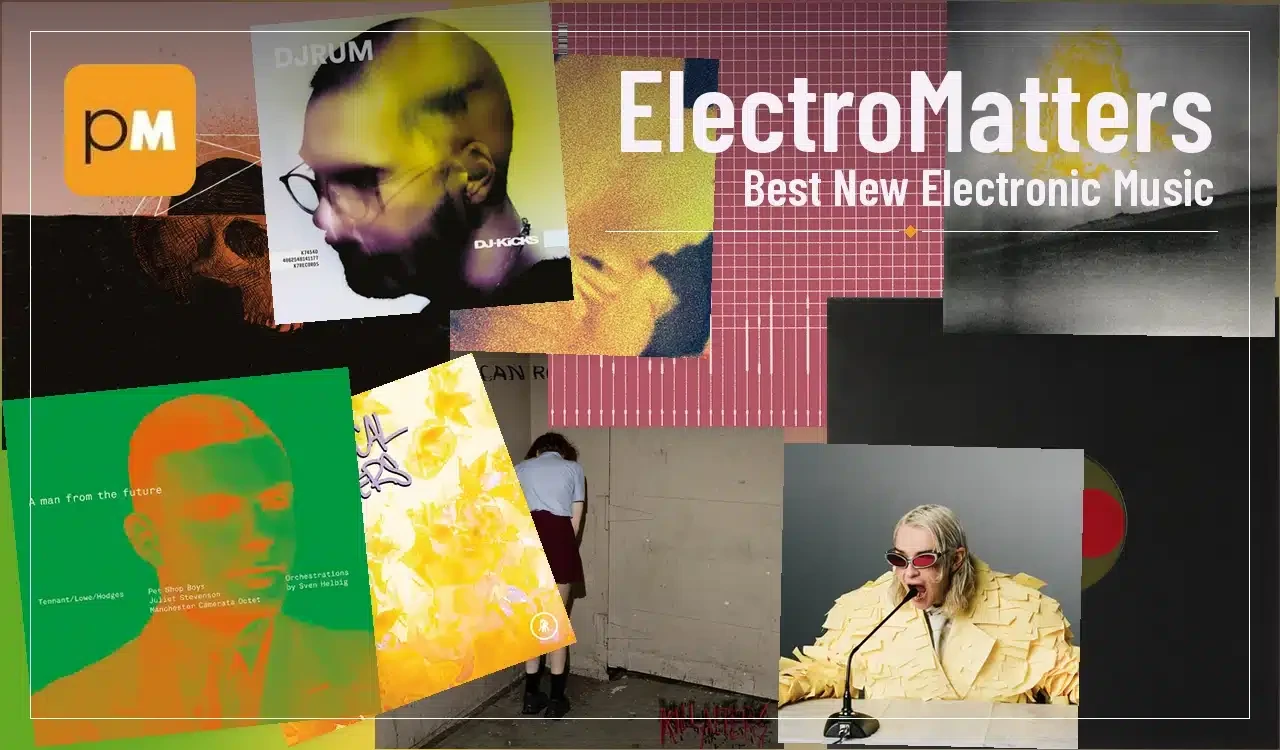
The Archival Masterclass: Djrum – DJ-Kicks (DJ-Kicks)
Few artists command the genre-agnostic reverence of Djrum (pronounced "drum"), whose DJ sets famously dissolve the borders between techno, house, jungle, IDM, and ambient music. His contribution to the storied DJ-Kicks mix series stands as a crowning achievement for both the artist and the imprint. Spanning nearly four hours, the mix traverses the post-industrial wreckage of Venetian Snares and atmospheric electronica before casually incorporating authentic whale songs. It is a sprawling, cinematic journey that captures the breadth of contemporary sound system culture.
The Manifesto of Movement: HAAi – Digitise (Mute)
Hot on the heels of her critically acclaimed 2025 release Humanise, Australian producer HAAi returned with Digitise, a pointed rejection of the sterile segmentation of digital life. The album serves as a triumphant ode to club culture, marrying the euphoric, towering builds reminiscent of The Chemical Brothers with the intricate, unpredictable micro-editing of Autechre. It is precise engineering disguised as raw, sweaty abandon, cementing HAAi’s status on the contemporary touring and production circuit.
Miniature Masterpieces: Jabu – Where You Run To (Six of Swords)
In an industry hyper-focused on the rollout cycle of full-length LPs and promotional singles, Bristol trio Jabu offered a masterclass in low-stakes experimentation with Where You Run To. Merging reverbed beats, post-punk guitar textures, and retrofuturist oscillator lines with the hazy, spectral R&B vocals of fellow Bristolian Memotone (evoking comparisons to Joanne Robertson), the release provided a vital breathing space for the Young Echo collective orbit to test the atmospheric limits of mutant R&B.
The Electroclash Inferno: Kill Alters – We Can Rot Together (Hausu Mountain)
Visually anchored by artwork that merges the sterile geometry of internet "Backrooms" creepypastas with The Blair Witch Project, Kill Alters’ third album for Hausu Mountain is an unrelenting sensory assault. Driven by hyper-frenetic drum machine rhythms, mangled vocal performances, and acerbic synth work helmed by ringleader Bonnie Baxter, We Can Rot Together makes classic electroclash acts sound tame by comparison. It is an anarchic, nightmarish parade that pushes industrial noise to its absolute limits.
Precision Engineering: Loidis – From the Toolkit of Lovers (Incienso)
Brian Leeds’ second full-length under the Loidis moniker is a masterclass in quiet dominance. Eschewing flashy drops, guest vocalists, and extravagant packaging, From the Toolkit of Lovers glides like an alien hovercraft across sonic planes. Leeds transitions with breathtaking fluidity between stark minimalist two-step, incandescent microhouse, and gauzy dub techno, crafting a work of such pristine precision that it stands as one of the definitive electronic statements of the year.
The Emotional Spectrum of Techno: nthng – Last Light of the Sun (topo2)
Jurriaan Terpstra’s latest exploration under the nthng moniker challenges the persistent misconception that techno is an inherently cold, mechanical medium. Last Light of the Sun bridges the gap between steely drum & bass foundations and gossamer ambient soundscapes. The album’s defining emotional anchor occurs midway through, when a tear-streaked vocal fragment cuts through the mix like sunlight piercing through an overcast winter sky—providing warmth, clarity, and poignant vulnerability.
Conceptual Futurism: Pet Shop Boys – The Man From the Future (Parlophone)
Few veteran pop acts possess the conceptual audacity of the Pet Shop Boys. Their ambitious electronic concept album tracking the life and legacy of foundational computer scientist and futurist Alan Turing pushes synthpop into the realm of modern opera. Bolstered by the sensitive, authoritative spoken-word delivery of actor Juliette Stevenson—and backed by a secondary disc featuring Neil Tennant and Chris Lowe’s pristine, bleep-heavy instrumental arrangements—the release successfully marries avant-garde minimalism with queer disco history.
Spectral Romantics: Andy Stott – Late Loop (Modern Love)
Returning with his first full-length in four years, Andy Stott stripped away any remaining accessible club signifiers to deliver Late Loop. Clocking in at a concise 35 minutes, the record leans further into ghostly, disembodied territories than previous works like Faith in Strangers. Beneath the hazy, murmuring vocal performances—which feel like transmissions from an eternal, 1980s-inflected astral plane—lies intricate, glistening drum programming that remains hypnotic, chilling, and utterly singular.
Folk Deconstruction: Shovel Dance Collective – Everything in Readiness (Glitterbeat)
Addressing the shifting definition of folk music in the digital age, London’s Shovel Dance Collective refract traditional Celtic structures through a contemporary, experimental lens. Echoing the droning, hypnotic weight of Dublin’s Lankum while injecting the intricate, progressive arrangements of acts like Squarepusher and Black Country, New Road, the collective proves that acoustic traditions and digital-era noise can coexist in startling harmony.
Archival Horror: Various Artists – Skeletons (Dustopian Frequencies)
Capitalizing on the peak of October’s seasonal aesthetic, label Dustopian Frequencies corralled an astonishing 40 producers to interpret the singular prompt of "skeletons." The resulting compilation, Skeletons, avoids the pitfalls of disjointed VA releases through immaculate sequencing. Seamlessly transitioning from pummeling techno to ominous dark ambient and abrasive noise, the release cements Dustopian Frequencies as one of the most consistently innovative micro-labels operating today.
Supporting Context & Metrics: The Macro-Landscape of 2026 Audio Production
To fully contextualize the output of October 2026, one must examine the underlying structural shifts within the independent music economy. Industry data from the fourth quarter indicates several notable trends:
- Vinyl Manufacturing Bottlenecks Easing: Independent imprints, particularly those specializing in micro-run ambient, noise, and specialized club 12-inches (such as Six of Swords and Hausu Mountain), reported a stabilization in pressing plant turnaround times. This operational relief directly contributed to the density and timeliness of experimental releases hitting the market during the late-year push.
- The Rise of Extended-Play Interstitials: As noted by cultural critics and platforms like RateYourMusic regarding releases like Jabu’s Where You Run To, artists are increasingly utilizing non-album EPs as creative safety valves. These projects allow creators to bypass the grueling promotional machinery of traditional LP rollouts, leading to a measurable increase in cross-genre experimentation.
- Geographic Clusters of Innovation: Production hubs in 2026 continue to decentralize, though distinct regional scenes remain vital. Bristol’s post-industrial R&B networks, Stockholm’s institutional electronic spaces (EMS Studio), and London’s cross-pollinated folk-noise circuits account for a disproportionate percentage of critical acclaim, proving that physical creative communities remain vital in an increasingly remote digital workflow.
Official Statements & Industry Perspectives
The creative philosophy underpinning October’s releases reflects a broader cultural weariness with algorithmically driven, hyper-sanitized pop production.
Speaking on the motivations behind the rehabilitation of big beat, producers Octo Octa and Eris Drew noted in recent promotional ephemera:
"The rigidity of modern club categorization has spent the last two decades trying to sand down the edges of dance music’s most ecstatic, unruly iterations. Big beat didn’t die of natural causes; it was murdered by industry stratification. Returning to those heavy, acid-drenched rhythms isn’t about nostalgia—it’s about reclaiming uninhibited physical joy when the cultural climate demands our numbness."
Similarly, Thomas Bodén of Civilistjivel! emphasized the necessity of bridging academic sound design with raw visceral impact:
"We spend too much time building walls between the laboratory and the warehouse. The frequencies generated by a vintage Serge synthesizer carry the same emotional weight whether they are piped through a university quadraphonic speaker system or vibrating the concrete floor of a illegal basement rave. Sound is agnostic to our bureaucratic divisions."
Future Outlook
As the music industry looks beyond the turbulence of late 2026 toward the horizon of the coming year, the October release cycle offers a clear roadmap for where electronic music is heading.
The successful re-contextualization of dormant genres—exemplified by the acid-fueled reinvention of big beat and the acoustic-digital synthesis of modern folk—demonstrates that artists are no longer content simply iterating on established sub-genres. Instead, the vanguard is engaged in an aggressive process of stylistic cross-pollination.
Furthermore, the embrace of emotional vulnerability within traditionally stoic genres like techno (as heard on nthng’s Last Light of the Sun) and the uncompromising abstraction of Loidis and Andy Stott signal a maturing listener base. Audiences are actively seeking out music that acknowledges the psychological weight of the contemporary moment while offering spaces for genuine transcendence.
If October 2026 proved anything, it is that electronic music remains our most adaptive and resilient cultural technology—capable of absorbing the shocks of an unstable world and transforming them into a profound, unifying pulse.






Belum ada komentar. Jadilah yang pertama berkomentar!