

Executive Overview
When Editors first materialized from the creative crucible of the English Midlands in 2002, the musical landscape was entirely dominated by the visceral electricity of guitar bands. It was an era when Oasis were still basking in the prolonged victory lap of their imperial phase, Blur were successfully executing their pivot from keyboard-driven Britpop melodies to gritty, lo-fi six-string arrangements, The Darkness were injecting unapologetic theatricality back into stadium rock, and the Arctic Monkeys were waiting in the wings to ignite a seismic indie-rock revolution.
Fast forward to 2026, and the sonic terrain looks radically different. The ubiquitous guitar-driven ensemble has retreated from the vanguard of pop culture, largely eclipsed by electronic production, algorithmic streaming trends, and beat-driven minimalism. It is against this backdrop of commercial homogenization that the arrival of Surface, Echo & Sound—Editors’ eighth studio album—feels like an unexpected, melodically rich revelation.
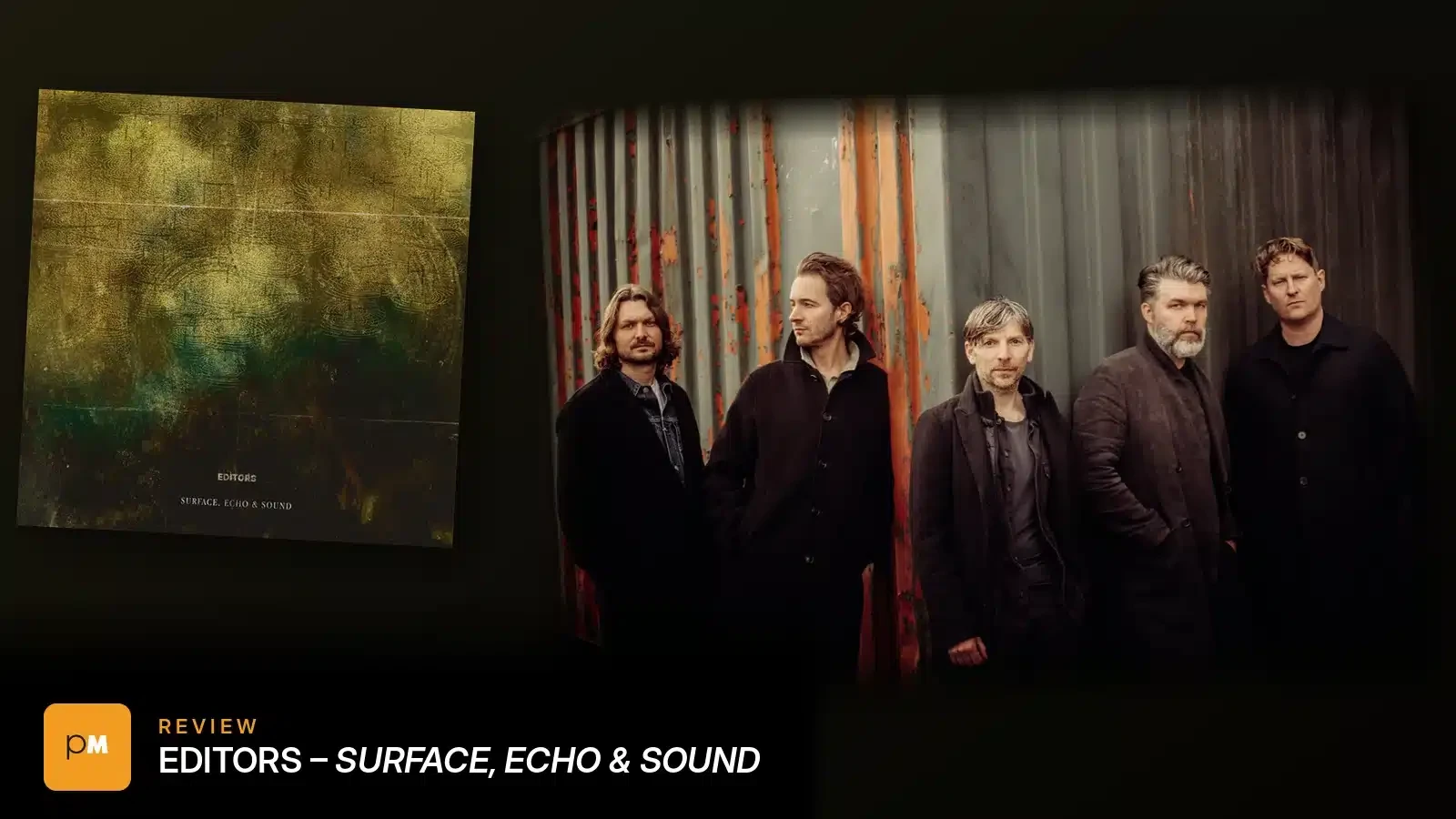
Rather than chasing fleeting digital trends, Editors have doubled down on the very instruments that forged their identity over two decades ago. The record expertly marries the atmospheric post-punk anxieties of their early career with a newfound sense of emotional liberation and harmonic sophistication. From the chiming, percussive onslaught of tracks like "The Rush" to the devastating, stripped-back vulnerability of the title track, Surface, Echo & Sound proves that the traditional rock band configuration—when handled by seasoned veterans—still possesses a vital, earth-shaking resonance.
Detailed Chronology
Retracing the Path: From 2002 to 2026
To fully understand the artistic triumph of Surface, Echo & Sound, one must trace the trajectory of Editors across more than two decades of shifting musical tides. Formed in Stafford by university friends—initially under names like Pilot, Snowfield, and Orlando—the core lineup eventually solidified around vocalist and rhythm guitarist Tom Smith, lead guitarist Justin Lockey, bassist Russell Leetch, and drummer Ed Lay, later augmented by multi-instrumentalist Elliott Williams.
Their early releases, notably 2005’s Mercury Prize-shortlisted The Back Room and 2007’s chart-topping An End Has a Start, established them alongside bands like Interpol and The Killers as standard-bearers for a dark, brooding indie-rock revival. However, as the 2010s progressed, Editors refused to remain static. They embraced synthesizers, industrial textures, and electronic body music (EBM) elements, most notably on their polarizing 2022 release. While that stylistic detour demonstrated their willingness to take risks, it also alienated segments of their fanbase who craved the organic interplay of guitars.
By 2025 and into 2026, however, a broader cultural recalibration was underway. The high-profile reunion of Oasis reminded the public of the enduring, visceral power of multi-guitar lineups, while contemporaries like The Darkness proved with their 2025 LP Dreams on Toast that veteran rock acts could age with grace, humor, and technical brilliance.
Seizing this moment of cultural realignment, Editors retreated to the studio to craft Surface, Echo & Sound. Eschewing the heavy reliance on samplers that defined their previous era, the band rediscovered the kinetic joy of playing live instruments in a room together. The resulting record is not merely a nostalgic retreat, but a forward-thinking masterclass in dynamic, guitar-driven composition.
Supporting Context & Metrics
Musical Architecture and Instrumentation
A forensic examination of Surface, Echo & Sound reveals a band operating at the absolute peak of their technical and creative powers. The instrumentation across the album’s tracklist showcases a meticulous attention to texture, rhythm, and emotional pacing.
- The Guitar Triad: Justin Lockey, sharing guitar duties with Elliott Williams and Tom Smith, constructs a towering wall of sound. On tracks like "The Rush," the instrumentation barrels forward in a chiming barrage, heavily reminiscent of The Smiths’ intricate jangle-pop arrangements—though tempered by Tom Smith’s remarkably giddier and less morose vocal delivery. Conversely, on "Rescue," the band unleashes a torrent of major chords and soaring vocal leaps, gently propelled by a yearning countermelody that evokes The Edge’s iconic delay-drenched work on U2’s How to Dismantle an Atomic Bomb.
- Rhythmic Foundations: Bassist Russell Leetch plays with economic precision throughout the record, serving as the emotional anchor for Smith’s lovelorn lyricism. On "Call It In," Leetch constructs a tense, driving frenzy that mirrors the chaos of the song’s subject matter. Yet, on "The Rush," he completely shifts gears, channeling the legendary funk sensibilities of Chic’s Bernard Edwards to inject a danceable groove into the mix. Meanwhile, drummer Ed Lay delivers career-best performances, battering his kit on "The Rush" like a boxer preparing for a title fight, while maintaining a masterclass in tom-tom command on the brooding rocker "Real."
- Textural Surprises: The album is peppered with unconventional sonic choices that elevate it above standard indie-rock tropes. "Happiness" introduces a disconcerting, ironic mandolin line that dances over a dreamy, melancholic backdrop. Later, "Seriously" tips its hat to the Americana-infused folk-rock of the Traveling Wilburys through a brilliantly executed slide guitar arpeggio, before the album pivots to the stark, acoustic-driven blues of its title track.
Lyrical Vulnerability and Human Connection
Beyond the technical wizardry, the defining characteristic of Surface, Echo & Sound is its radical emotional honesty. In an era where contemporary pop lyrics are frequently labyrinthine, cryptic, or ironic, Tom Smith’s writing on this record leaps directly from the gut.
On tracks like "Butterfly Wings" and "Real," Smith confronts uncomfortable, deeply personal memories, utilizing melody as a vehicle for self-forgiveness and absolution. When he sings lines like "Serendipity burns"—demanding that a dysfunctional relationship be definitively declared "over"—the weight of experience is palpable.
The band, particularly Smith, demonstrates a courageous willingness to sound vulnerable, even when paired with aggressive, stadium-sized instrumentation. This emotional rawness transforms Surface, Echo & Sound from a mere collection of well-crafted songs into a deeply human, resonant listening experience that speaks directly to the trials of long-term survival, heartbreak, and personal renewal.
Official Statements
While Editors have historically preferred to let their music speak for itself, the creative philosophy behind Surface, Echo & Sound points to a profound psychological shift within the camp. In recent press reflections surrounding the album’s rollout, the band members have expressed a renewed sense of ownership over their musical identity.
Tom Smith has noted that the recording process for this LP felt like returning to the lane where the band naturally belongs. Freed from the pressures of chasing electronic trends or proving their forward-thinking credentials via digital soundscapes, Smith and his bandmates have embraced the realization that they alone dictate their speed, velocity, and tempo.
Industry observers have drawn parallels between Editors’ current creative liberation and the wider resurgence of classic rock configurations in the mid-2020s. With heritage acts and modern bands alike remembering the visceral impact of organic musicianship, Editors have positioned themselves not as legacy acts resting on past laurels, but as active participants in the ongoing evolution of guitar-based music.
Future Outlook
As Surface, Echo & Sound makes its definitive mark on the 2026 musical landscape, the future for Editors appears remarkably bright and unencumbered. The album’s standout tracks—particularly the impossibly infectious, radio-ready single "Seriously" and the festival-ready, jangle-driven "Much Love"—hint at a sustained commercial and critical renaissance.
Furthermore, the triumphant closer "The Hills We Died Upon," complete with its emotionally charged, quirky guitar solo, demonstrates that Editors have successfully bridged the gap between their youthful post-punk origins and mature compositional artistry.
In a modern music market increasingly saturated by automated beats and ephemeral digital content, Editors have charted a course back to the beating heart of human performance. By shedding the uncertainties of their mid-career stylistic experiments and leaning into the peerless chemistry of their multi-guitar, rhythm-heavy lineup, Editors have not only secured their own legacy—they have provided a masterclass in how a rock band can evolve, endure, and ultimately conquer the future on their own terms.






Belum ada komentar. Jadilah yang pertama berkomentar!