

Executive Overview
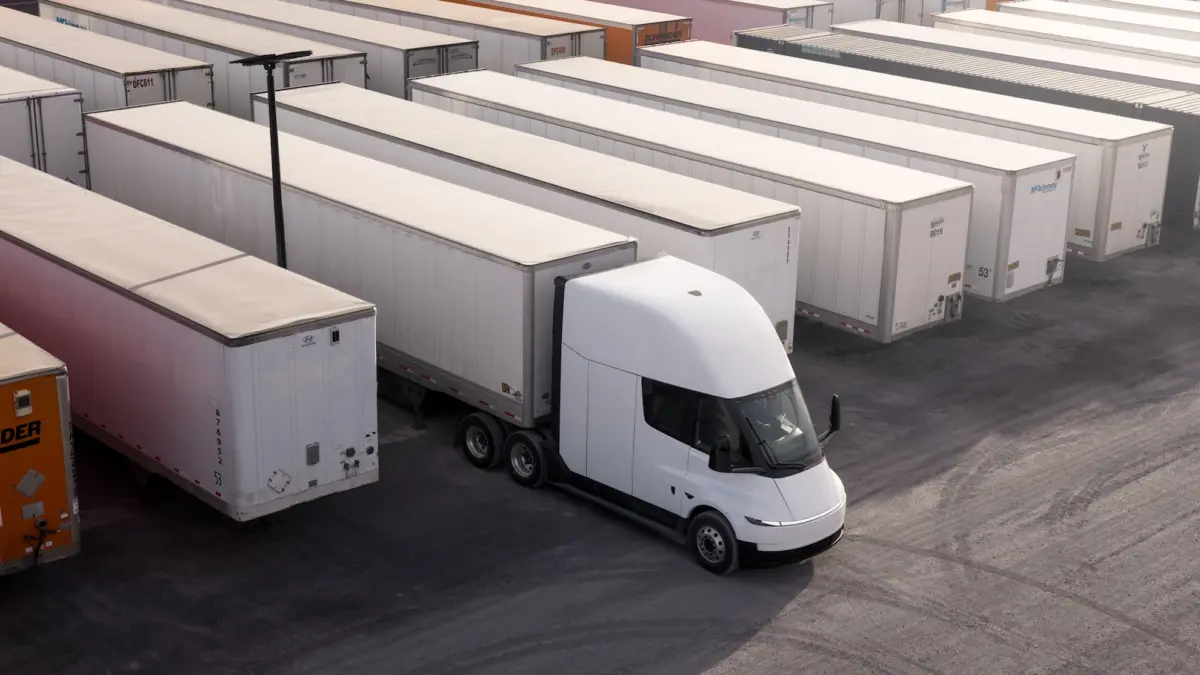
In a landmark transaction that promises to redefine the landscape of commercial zero-emission freight, Swedish autonomous and electric trucking pioneer Einride has announced its intention to acquire 500 Tesla Semi trucks. This massive deployment is set to roll out in carefully orchestrated phases over the next 24 months, with the initial phase slated to hit North American highways as early as September. By integrating these high-capacity Class 8 battery-electric big rigs into its existing operations, Einride aims to make state-of-the-art electric freight directly accessible to industry giants, including retail behemoth Amazon and various other enterprise-scale shippers.
Rather than taking on the heavy financial liabilities and complex logistical hurdles traditionally associated with owning and maintaining a proprietary electric fleet, Einride’s enterprise clients will leverage the Tesla Semis through the company’s proprietary Saga AI software. This advanced fleet management platform functions as the digital neural network of Einride’s operations. Saga AI orchestrates everything from route optimization and real-time telematics to smart vehicle charging schedules, ensuring that cargo moves seamlessly across critical logistics corridors without putting operational burdens onto the shippers themselves.
For Einride, which officially went public in June following a decade of deliberate research, development, and market positioning, this agreement represents an exponential leap forward. The introduction of 500 Tesla Semis will instantly triple the physical size of Einride’s current heavy-duty electric vehicle fleet. More importantly, it serves as a massive commercial catalyst, designed to help convert approximately $800 million in potential long-term, annual recurring revenue—currently tied up in preliminary joint business plans with major shippers—into concrete, realized enterprise revenue.
Yet, this high-stakes partnership hinges heavily on one fundamental variable: Tesla’s ability to successfully scale manufacturing and conquer the persistent supply chain bottlenecks that have plagued the Semi program since its initial concept unveiling nearly a decade ago.
Detailed Chronology: From 2017 Concept to 2026 Production Realities
The road to this historic 500-truck agreement has been paved with profound engineering challenges, repeated delays, and gradual milestones that trace the turbulent evolution of the modern commercial electric vehicle (EV) market. Understanding the significance of Einride’s multi-phase deployment requires examining the timeline of the Tesla Semi itself, alongside Einride’s own methodical ascent.
The Long, Winding Road of the Tesla Semi
- November 2017: Tesla first pulls back the curtain on the Tesla Semi concept during a high-profile launch event, promising staggering performance metrics, a 500-mile range on a single charge, and an aggressive production timeline targeting 2019.
- 2019–2021: The initial production targets quietly slip. The onset of the COVID-19 pandemic, coupled with a crippling global semiconductor shortage and unprecedented supply chain disruptions, forces Tesla to repeatedly postpone manufacturing timelines.
- December 2022: Five years after the initial concept reveal, Tesla finally delivers its very first batch of Semi trucks to early pioneering customers, notably food and beverage conglomerate PepsiCo, during an event at its Nevada Gigafactory. However, these initial deployments remain limited to low-volume, regional pilot runs rather than true mass production.
- April 2026: A critical manufacturing milestone is achieved as the first Tesla Semi officially rolls off the newly minted high-volume production line at the Nevada facility. Despite this physical proof of progress, Tesla’s executive leadership signals caution regarding aggressive growth curves.
- Mid-2026: In its second-quarter shareholder letter and accompanying earnings call, Tesla scales back certain forward-looking promises regarding immediate "volume production" for the latter half of 2026. The company clarifies that its primary operational bottleneck centers on ramping up internal battery cell manufacturing—specifically focusing on the complex chemistry and production lines for its proprietary 4680 battery cell. Securing a steady, high-volume output of 4680 cells remains the absolute prerequisite for scaling production of both the Tesla Semi and the upcoming autonomous Cybercab.
Einride’s Decade-Long Ascent
- 2016–2025: Founded a decade ago, Einride spends its formative years designing, testing, and iterating across multiple pillars of the future freight ecosystem. The company builds a dual-track strategy: developing traditional heavy-duty electric trucks retrofitted for smart logistics, alongside futuristic, cab-less autonomous "pods" designed for closed-campus and specific line-haul operations.
- June 2026: Einride achieves a major corporate milestone by officially transitioning into a publicly traded entity, bolstering its balance sheet and setting the stage for aggressive global expansion.
- July 2026: In a strategic move to secure its energy supply chain and service offerings, Einride acquires EV charging infrastructure company Flipturn for $38 million. This acquisition equips Einride with the proprietary software and operational framework needed to manage heavy-duty charging depots effectively.
- Summer 2026: Einride secures a major logistics contract with Amazon, deploying 75 heavy-duty electric trucks onto Amazon’s Relay freight network and establishing dedicated charging infrastructure across five strategic locations in the United States.
- Fall 2026 and Beyond: Einride announces its monumental agreement to acquire 500 Tesla Semis, positioning the company to rapidly expand its physical footprint across key North American shipping corridors in California, Georgia, New Jersey, and Texas.
Supporting Context & Metrics: Economics, Software, and Infrastructure
The Einride-Tesla agreement is not merely a purchase order for trucks; it is a masterclass in modern logistics architecture, blending third-party project financing, sophisticated artificial intelligence, and physical energy infrastructure.
Financial Engineering and Third-Party Backing
Purchasing 500 Class 8 battery-electric commercial trucks represents an immense capital expenditure. Recognizing the massive balance sheet pressures of upfront fleet acquisition, Einride has structured the deal using a third-party financing partner. This financial mechanism insulates Einride from direct liquidity drain while allowing the company to rapidly secure the physical assets.
By utilizing this financing model, Einride can scale its asset base without taking on crippling debt service obligations. This financial agility directly supports the conversion of an estimated $800 million in potential long-term, annual recurring revenue (ARR) tied up in joint business plans with enterprise shippers. When enterprise clients see that the physical capacity—the 500 Tesla Semis—is fully funded, scheduled, and managed via software, preliminary agreements easily transition into signed, active contracts.
The Power of Saga AI
Hardware alone cannot solve the complex operational matrix of modern freight logistics. Electric trucks introduce distinct operational variables: State of Charge (SoC) degradation, variable charging station availability, payload weights, thermal management, and dynamic electricity pricing across different regional grids.
Einride solves this through Saga AI, its proprietary fleet management software platform. Saga AI acts as the centralized brain for the entire operation. It continuously analyzes traffic patterns, weather conditions, driver hours-of-service regulations, and grid capacities to dynamically optimize routing and charging schedules.
By layering the incoming Tesla Semis into the Saga AI ecosystem, Einride offers its clients a turnkey solution. Shippers gain all the environmental, regulatory, and branding benefits of operating zero-emission heavy-duty trucks, entirely stripped of the logistical headaches, capital depreciation risks, and charging orchestration complexities that typically discourage fleet electrification.
Charging Infrastructure and the Flipturn Integration
Trucks cannot haul freight if they are sitting uncharged in a depot. Recognizing that energy management is the ultimate bottleneck for commercial EV fleets, Einride’s recent $38 million acquisition of EV charging software company Flipturn plays a critical operational role in this expansion.
The integration of Flipturn’s software capabilities allows Einride to offer an end-to-end service package. From the physical Class 8 trucks to the high-power megawatt charging depots and the intelligent software algorithms dictating when and how those vehicles draw power, Einride controls the entire energy value chain. This infrastructure rollout will initially focus on vital freight corridors in California, Georgia, New Jersey, and Texas—regions characterized by heavy container drayage, extensive distribution hubs, and progressive zero-emission vehicle mandates.
Official Statements and Industry Perspective
The scale and ambition of the deployment have drawn sharp focus from industry analysts and corporate leadership alike.
In an official statement regarding the transaction, Einride CEO Roozbeh Charli emphasized the operational readiness of his organization, noting:
"This deployment is yet another proof point that we can execute at the scale our customers demand."
Charli’s comments underscore a broader narrative within the commercial transport sector: enterprise shippers are no longer interested in small-scale, experimental pilot programs. Armed with net-zero carbon pledges and facing tightening municipal and federal environmental regulations, companies like Amazon, PepsiCo, and Heineken are demanding gigawatt-scale decarbonization solutions that can plug seamlessly into existing supply chains without sacrificing delivery velocity or cost-efficiency.
Industry observers, however, maintain a cautiously optimistic perspective. Kirsten Korosec, a veteran transportation journalist and editor, notes that while Einride’s software-first, asset-light financing model is brilliantly designed to mitigate risk, the ultimate success of the 500-truck rollout remains inextricably tied to Tesla’s manufacturing velocity.
With Tesla openly admitting to production constraints surrounding its 4680 battery cells—the vital chemical heart of the Semi’s long-range architecture—fulfillment timelines will require close coordination between Tesla’s engineering teams in Nevada and Einride’s deployment schedulers.
Future Outlook: The Road Ahead for Autonomous and Electric Freight
As the commercial transportation sector barrels toward an increasingly electrified and automated future, the partnership between Einride and Tesla signals a profound shift in how heavy freight will be managed over the next decade.
For Einride, successfully integrating 500 Tesla Semis into its platform will validate its business model on a global stage. By tripling its operational fleet overnight, the company moves past its startup roots and cements its status as a premier global freight forwarder and technology provider. The ability to seamlessly blend third-party heavy-duty hardware (like Tesla Semis), proprietary autonomous pods, and intelligent software orchestration (Saga AI) creates a formidable competitive moat.
Yet, significant hurdles remain on the horizon. The broader commercial EV ecosystem must continue to advocate for and invest in ultra-fast, megawatt-scale public charging infrastructure capable of turning around Class 8 trucks in minutes rather than hours. Furthermore, electrical grids across key states like California, Texas, and Georgia must adapt to the massive localized power draws demanded by concentrated fleet charging depots.
Ultimately, September marks the beginning of a high-stakes proving ground. If Einride and Tesla can successfully navigate manufacturing timelines, battery supply constraints, and complex infrastructural demands, this 500-truck deployment will not only revolutionize Einride’s balance sheet—it will serve as the definitive blueprint for the decarbonization of global supply chains.








Belum ada komentar. Jadilah yang pertama berkomentar!