


Executive Overview
When cinematic history reflects upon the science fiction landscape of the 1980s, the cultural memory is invariably dominated by high-gloss studio blockbusters. This was the golden age of multi-million-dollar visual effects spectacles, generation-defining franchises, and household-name IPs. Iconic works such as Steven Spielberg’s E.T. the Extra-Terrestrial, Robert Zemeckis’s Back to the Future, James Cameron’s Aliens, and John McTiernan’s Predator commanded global box offices. Meanwhile, institutional titans like Star Wars and Star Trek maintained absolute hegemony over multiplex screens, establishing a visual and narrative template for the genre that persists to this day.
However, looking past the mainstream studio apparatus reveals a parallel cinematic renaissance. Away from the comfort of limitless budgets and board-approved risk mitigation, independent filmmakers operated with sparse resources, guerrilla production tactics, and unbridled creative freedom. These indie auteurs blended science fiction with biting social satire, surreal expressionism, body horror, and existential philosophy.
Curated by film critic Casey Chong, this retrospective examines ten essential independent science-fiction motion pictures released during the 1980s. Far from serving as mere footnotes to studio triumphs, these productions often anticipated contemporary anxieties regarding consumerism, artificial intelligence, alienation, and media saturation—all while operating on shoestring budgets that demanded radical ingenuity.

Detailed Chronology: Ten Masterpieces of the Indie Sci-Fi Underground
1. Liquid Sky (1982)
Directed by Slava Tsukerman on a meager budget of $500,000, Liquid Sky remains one of the most eccentric visual experiments of the decade. The premise centers on a dinner-plate-sized flying saucer touching down on a Manhattan rooftop. The extraterrestrials onboard—depicted almost exclusively through disorienting, thermal-style point-of-view shots—arrive on Earth seeking heroin, only to discover that human endorphins and pheromones yield a far more potent high.
The narrative fixates on Margaret (Anne Carlisle), a drug-addicted fashion model whose sexual encounters provide the aliens with a rich harvest of brain chemicals before vaporizing their victims. While some audiences found the film polarizing due to flat acting, deliberately robotic line delivery, and a gratingly repetitive synthesizer score, Liquid Sky captured the vibrant, Day-Glo expressionism of 1980s New York City’s New Wave subculture. Carlisle’s brilliant dual performance as both the bisexual Margaret and the cisgender Jimmy cemented the film’s status as a countercultural touchstone, eventually tripling its production costs to gross $1.7 million during its theatrical run.
2. Battle Beyond the Stars (1980)
Produced by Roger Corman’s legendary New World Pictures, Battle Beyond the Stars took the classic structural blueprint of Akira Kurosawa’s Seven Samurai (and John Sturges’s The Magnificent Seven) and transposed it into a deep-space adventure. The plot follows Shad (Richard Thomas), a young farmer from the peaceful planet of Akir, who embarks on an intergalactic quest to recruit a ragtag team of mercenaries to save his home from the tyrannical warlord Sador (played with scenery-chewing glee by John Saxon).

Penned by seasoned genre writer John Sayles, the screenplay cleverly balances tongue-in-cheek pulpiness with sardonic humor and memorable character dynamics, introducing distinct mercenaries such as Robert Vaughn’s stoic assassin Gelt and George Peppard’s laid-back "Space Cowboy from Earth." Crucially, the production served as a critical training ground for future Hollywood legends: a young James Cameron cut his teeth managing the film’s impressive art direction and miniature special effects, while composer James Horner delivered a soaring, career-launching orchestral score.
3. Scanners (1981)
Canadian auteur David Cronenberg pushed the cinematic boundaries of telepathy, transforming it from a standard genre trope into a visceral canvas for biological body horror. In Scanners, psychic superpowers function as lethal, mind-controlling weapons. This is most vividly embodied by Michael Ironside’s chillingly detached antagonist, Darryl Revok, who brutally weaponizes his abilities against a rival participant in a scene that literalizes cranial explosion.
A triumph of practical effects, the iconic exploding head sequence was executed using a life-sized gelatine-and-latex casting filled with fake blood and visceral matter, detonated via a hidden 12-gauge shotgun blast and reverse-editing techniques. Cronenberg’s characteristically clinical direction framed the narrative as a biting allegory for pharmaceutical overreach and institutional paranoia, spawning multiple sequels and cementing the director’s status as a master of speculative horror.

4. Galaxy of Terror (1981)
Another key entry from Roger Corman’s New World stable, Galaxy of Terror explicitly capitalized on the monumental success of Ridley Scott’s Alien. Directed by Bruce D. Clark, who co-wrote the screenplay with Marc Siegler, the film follows a stressed-out, working-class space crew—featuring Edward Albert, Erin Moran, and a pre-Nightmare on Elm Street Robert Englund—investigating a dangerously desolate planet.
Rather than relying on a traditional monster, the film pivots into surreal psychological horror. The crew encounters a mysterious, monolithic pyramid that reads their minds, manifesting their deepest personal fears into tangible, lethal weapons. Much like Battle Beyond the Stars, Galaxy of Terror served as an early showcase for James Cameron, who acted as production designer and second-unit director, establishing the atmospheric, industrial visual grammar that would later define The Terminator and Aliens.
5. Android (1982)
Released the exact same year as Ridley Scott’s monumental Blade Runner, Aaron Lipstadt’s Android offered an intimate, chamber-drama exploration of artificial intelligence. Eschewing grand urban scale for claustrophobic tension, the story focuses on Max 404 (Don Keith Opper)—an innocent, wide-eyed android serving as the lonely assistant to the cold, calculating mad scientist Dr. Daniel (portrayed with icy precision by Klaus Kinski).

Max’s routine existence is upended when three escaped convicts (Brie Howard, Norbert Weisser, and Crofton Hardester) commandeer the space station. Triggered by a developing attraction to one of the fugitives, Max undergoes a poignant technological and emotional awakening. Co-written by Opper himself, Android utilizes a deliberate slow-burn pace that prioritizes philosophical inquiry before culminating in a tense, morally ambiguous standoff.
6. The Brother from Another Planet (1984)
John Sayles returned to the genre with The Brother from Another Planet, a poignant sci-fi dramedy centering on an unnamed, mute alien protagonist portrayed by Joe Morton. Crash-landing on Earth at Ellis Island, the visitor looks human—minus a chic mini-afro and webbed, three-toed feet. Rather than functioning as a formidable invader, the Brother is depicted as a harmless, vulnerable interstellar refugee navigating the alien terrain of New York City.
Relying entirely on physical body language and expressive facial work due to his character’s muteness, Morton delivers a masterclass in silent performance. Sayles weaves a rich allegorical tapestry exploring marginalization, racism, and the immigrant experience. Balancing fish-out-of-water comedy with sharp social commentary, the film also features hilariously deadpan supporting performances by Sayles and David Strathairn as intergalactic "Men in Black" tasked with hunting the protagonist down.

7. Xtro (1983)
Embracing the Cronenberg-esque "video nasty" aesthetic of visceral body horror, British writer-director Harry Bromley Davenport delivered Xtro, a mean-spirited and surreal extraterrestrial nightmare. The plot revolves around Sam (Philip Sayer), a father who was abducted years prior and returns home thoroughly corrupted—his human vessel co-opted by an alien entity designed to psychologically dismantle his family.
Sam instigates a toxic dynamic with his guilt-ridden wife (Bernice Stegers) and systematically poisons the mind of his young son, Tony (Simon Nash), transforming the innocent boy into a cold-blooded murderer through a supernatural bite. Notable for its controversial alien birth scene and inventive practical effects utilizing mime-like physical performance and forced perspective, Xtro stands as a singular, deeply unsettling artifact of early-80s indie horror.
8. Repo Man (1984)
Alex Cox’s satirical masterpiece Repo Man remains the definitive cinematic time capsule of 1980s Reagan-era sociopolitical anxiety, fusing punk rock counterculture, consumerist critique, and nuclear paranoia. The narrative tracks Otto (Emilio Estevez), a disillusioned young punk who stumbles into a gritty, morally bankrupt vocation as a car repossession agent under the mentorship of veteran repo man Bud (Harry Dean Stanton).

Beneath its coming-of-age surface and blistering punk soundtrack, the film plunges headfirst into high-concept science fiction. A dazed nuclear scientist (Fox Harris) traverses Los Angeles in a vintage Chevrolet Malibu carrying a volatile, radioactive MacGuffin in the trunk that instantly vaporizes anyone unfortunate enough to open it. Cox’s cynical yet wildly entertaining vision brilliantly weaponized low-budget constraints to construct an anarchic cult classic.
9. The Quiet Earth (1985)
Hailing from New Zealand, Geoff Murphy’s The Quiet Earth subverts conventional post-apocalyptic tropes in favor of a deeply contemplative, minimalist existential study. The narrative focuses on Zac Hobson (Bruno Lawrence), a scientist who awakens to discover that a catastrophic global experiment has seemingly vaporized the entirety of the human population, leaving him as the apparent "last man on Earth."
Operating on a modest budget, Murphy maximized his resources by guerrilla-filming the empty streets of Auckland and Hamilton during the early morning hours to achieve an authentic sense of sprawling desolation. Lawrence carries the narrative almost entirely on his shoulders, delivering a tour-de-force solo performance marked by profound psychological deterioration and rediscovery.

10. Bad Taste (1987)
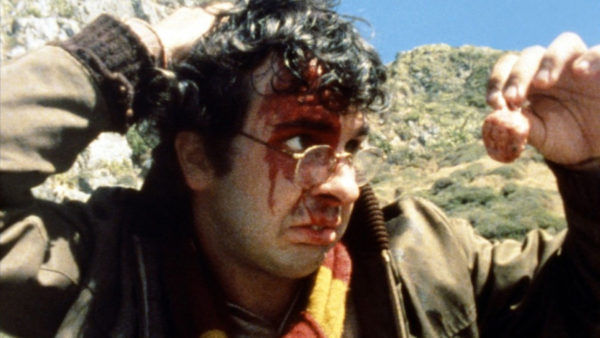
Long before helming blockbuster fantasy epics in Middle-earth, New Zealand auteur Peter Jackson announced his arrival to international cinema with an ultra-low-budget gorefest. Bad Taste is a gleefully chaotic multi-genre hybrid merging science fiction, splatter horror, and slapstick dark comedy. The premise involves extraterrestrials disguised as humans arriving in a small coastal town not to conquer the planet, but to harvest humanity for an interstellar fast-food franchise.
Earth’s defense falls to a thoroughly incompetent quartet of Astro Investigation and Defence Service (AIDS) agents, played by Jackson and his friends, who function as literal punching bags for chaotic visual gags. Operating on a legendary DIY ethos, Jackson designed his own practical effects—baking liquid latex alien masks in his mother’s kitchen oven—and constructed makeshift camera dollies from household goods. The result is an astonishing testament to resourcefulness and unbridled cinematic passion.
Supporting Context & Metrics: Production Realities and Financial Performance
Examining these ten features through a quantitative lens highlights the staggering disparity between studio interventions and independent resourcefulness during the 1980s.

| Film Title | Release Year | Estimated Budget | Estimated Box Office / Financial Milestone |
|---|---|---|---|
| Liquid Sky | 1982 | $500,000 | $1.7 Million (Theatrical Run) |
| Battle Beyond the Stars | 1980 | $2 Million | Moderate Box Office Hit / 5 Saturn Nominations |
| Scanners | 1981 | $4.1 Million (CAD) | Significant International Box Office Success |
| Galaxy of Terror | 1981 | Low-Budget B-Movie Tier | Profitable New World Pictures Release |
| Android | 1982 | Low-Budget Independent | Cult Following / Critical Acclaim |
| The Brother from Another Planet | 1984 | Low-Budget Independent | Critical Acclaim / Arthouse Hit |
| Xtro | 1983 | Low-Budget Independent | Profitable Cult / Video Market Success |
| Repo Man | 1984 | $1.5 Million | Cult Phenomenon / Independent Success |
| The Quiet Earth | 1985 | Low-Budget Independent | International Critical Acclaim |
| Bad Taste | 1987 | ~$25,000 NZD | Global Midnight Movie Phenomenon |
The operational constraints faced by these creators forced technological innovations that permanently altered the trajectory of the film industry. Special effects wizards and directors alike were required to innovate. For instance, James Cameron’s foundational work on Battle Beyond the Stars and Galaxy of Terror directly informed the mechanical precision he later applied to studio properties like The Terminator (1984). Similarly, Peter Jackson’s kitchen-oven latex techniques on Bad Taste laid the technical foundation for the splatter comedies (Braindead) that defined his early career before transitioning to mainstream prestige filmmaking.
Official Statements and Critical Legacy
Retrospective commentary from film historians and participating creators frequently underscores the liberating nature of independent science fiction during this decade. Without studio interference, filmmakers could lean into politically subversive themes that major studios routinely sanitized.
Reflecting on the satirical underpinnings of Repo Man, director Alex Cox noted in interviews that the film was conceived as a direct reaction against the complacency of the Reagan era, noting that science fiction provided the ideal Trojan horse for political satire.
Similarly, John Sayles has frequently emphasized that speculative fiction and fantasy offer accessible entry points for complex discussions regarding systemic racism, immigration, and alienation. By disguising social commentary within genre trappings, works like The Brother from Another Planet bypassed traditional political resistance, communicating directly with audiences through empathy and absurdist humor.
Future Outlook: The Enduring Legacy of 1980s Indie Sci-Fi
As contemporary cinema continues to grapple with homogenization, corporate risk aversion, and an over-reliance on established intellectual property, the lessons of the 1980s indie sci-fi movement remain profoundly relevant.
These ten films demonstrate that narrative resonance, thematic depth, and visual innovation do not require nine-figure production budgets. Instead, they require distinct authorial voices, practical ingenuity, and a willingness to embrace narrative risks. Today, as digital filmmaking democratization lowers the barriers to entry for modern independent creators, the spirit of these 1980s underground classics—where a kitchen-oven alien mask or a borrowed street corner could birth a cinematic milestone—continues to inspire the next generation of visionary storytellers.









Belum ada komentar. Jadilah yang pertama berkomentar!