

Executive Overview
The mobile gaming landscape has long occupied a unique middle ground in the broader interactive entertainment industry. While smartphones have evolved to possess raw processing power capable of rivaling dedicated consoles, physical ergonomics and thermal management have consistently presented bottlenecks for competitive players. Enter Infinix, a brand historically celebrated for delivering performance-centric smartphones at aggressive price points. With the official rollout of the GT NX Controller and the GT NX Station, Infinix is aggressively pivoting from device manufacturing to comprehensive ecosystem development.
Announced for the Malaysian market, this hardware duo is engineered to radically transform a compatible smartphone into either a portable handheld console or a fully fledged desktop battle station. By tackling two of the most persistent hurdles in mobile gaming—tactile input precision and thermal throttling—Infinix aims to bridge the chasm between mobile convenience and desktop-grade immersion.
The strategy is clear: capture the burgeoning demographic of competitive mobile gamers who demand desktop levels of control and performance without sacrificing the flexibility of a pocket-sized computer. Available initially via major online storefronts in Malaysia with physical retail availability slated for early October 2026, these accessories signal a mature evolution for Infinix’s specialized GT gaming sub-brand. However, beneath the glossy marketing materials and futuristic RGB lighting lies a complex web of technical specifications, hardware architectures, and crucial compatibility caveats that consumers must navigate before hitting the pre-order button.
Detailed Chronology of the GT Ecosystem Expansion
The genesis of Infinix’s GT series began as an affordable alternative for mobile enthusiasts seeking high refresh rates and aggressive cyber-inspired aesthetics. Over successive generations, the sub-brand cultivated a loyal following, prompting company leadership to look outward toward hardware peripherals. The conceptualization of the GT NX ecosystem represents months of ergonomic research and thermal engineering designed to address user feedback directly from mobile esports communities.
Phase One: Online Pre-Orders and Promotional Launches
The initial rollout commenced in Malaysia, where Infinix positioned the GT NX Controller and GT NX Station as standalone modular units or as a unified ecosystem package.
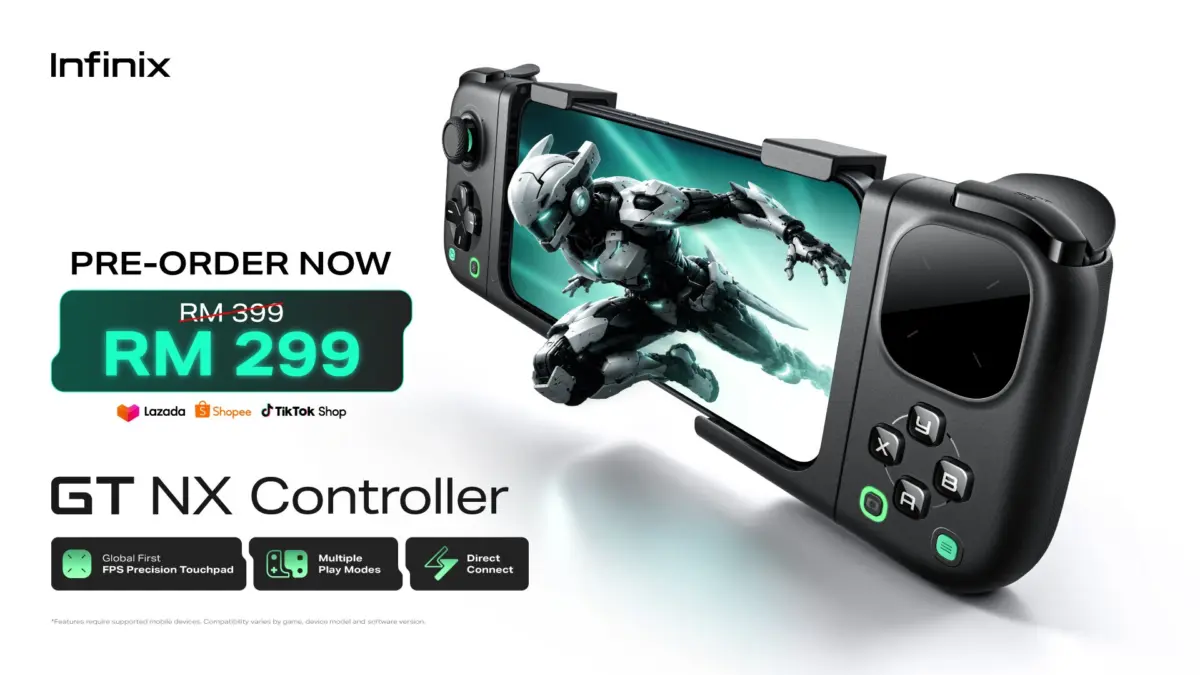
- Individual Pricing: Both the GT NX Controller and the GT NX Station carry a recommended retail price (RRP) of RM399. However, to incentivize early adopters, Infinix introduced an introductory promotional price of RM299 for each unit.
- The Bundle Package: For consumers eager to experience the full breadth of the ecosystem, the GT NX Bundle—housing both accessories—was made available for online pre-orders starting from RM549.
- Digital Storefront Presence: The initial pre-order phase was deployed strictly across dominant Southeast Asian e-commerce channels, specifically Infinix’s official Shopee, Lazada, and TikTok Shop flagships.
Phase Two: Nationwide Retail Penetration
Following the initial digital-first wave, Infinix has scheduled a physical retail expansion. As of early October 2026, both accessories are slated to hit physical brand stores nationwide. This omnichannel strategy ensures that tactile consumers—those who prefer to test ergonomics and build quality in person before purchasing—can evaluate the gear firsthand. Availability remains tied to stock limitations, setting up a potentially high-demand scenario given the aggressive introductory pricing tier.
Deep Dive: The Hardware Engineering
A closer examination of the GT NX Controller and the GT NX Station reveals a sophisticated approach to accessory design, separating these products from generic, white-label mobile gamepads and docks flooding the current market.
The GT NX Controller: Redefining Mobile Inputs
Mobile first-person shooters (FPS) like PUBG Mobile, Call of Duty: Mobile, and Apex Legends Mobile have historically suffered from the "glass ceiling" phenomenon—the literal limitation of flat glass touchscreens lacking physical feedback. While standard clip-on gamepads introduce analogue sticks and shoulder triggers, they often fail to solve the precision-aiming problem inherent in touch-based camera control.
Infinix addresses this through several defining structural and technical pillars:
- The Glass Touchpad: The standout feature of the GT NX Controller is its integration of a large, high-sensitivity glass touchpad on the right handle. Marketed as a "pixel-level FPS precision touchpad," it can seamlessly switch between swipe controls and a dedicated mouse mode. This grants players a hybrid control scheme where fine camera adjustments and flick-shots can be executed with mouse-like fluidity while movement remains anchored to traditional analogue hardware.
- Tri-Chip Architecture: Input latency is the absolute enemy of competitive gaming. To combat lag across a split-gamepad layout, Infinix implemented a robust three-chip architecture that independently processes inputs from both controller halves and the central data bridge, ensuring near-instantaneous register times.
- Four-Zone Independent Mapping: Recognizing that many mobile titles stubbornly refuse to include native controller support, the companion software offers four-zone independent mapping. This allows users to map physical inputs to virtually any touch area on the screen, opening up unsupported games to physical controls.
- Modular Configurations: Flexibility is baked into the chassis design. The controller supports phone-clamp configurations for handheld play, desktop setups when paired with an external display, and even single-hand configurations for casual or multi-tasking scenarios.
- Endurance and Advanced Haptics: Powered by an internal battery rated for over 22 hours of continuous gameplay, the controller minimizes charging anxiety. Furthermore, the XArena software suite delivers three distinct haptic intensity levels. In supported FPS titles, the mapping mode can generate dynamic vibration cues tailored to in-game events—such as extended rumble feedback during a parachute drop or aircraft take-off, transitioning to brief, sharp pulses as the play zone rapidly shrinks.
+-----------------------------------------------------------------+
|                  GT NX Controller Architecture                  |
+--------------------------+--------------------------------------+
| Core Feature             | Technical Benefit                    |
+--------------------------+--------------------------------------+
| Glass Touchpad           | Mouse-mode precision for FPS aiming  |
| Tri-Chip Architecture    | Ultra-low latency split-input sync   |
| 4-Zone Mapping           | Native support for non-gamepad apps  |
| 22+ Hour Battery         | Extended marathon gaming sessions    |
| Contextual Haptics       | Dynamic vibration cues via XArena    |
+--------------------------+--------------------------------------+
The GT NX Station: Desktop Transformation and Thermal Mastery
Transforming a smartphone into a desktop workstation or gaming rig requires more than just mirroring a screen; it demands robust power delivery, stable networking, and—most importantly—aggressive thermal dissipation. Mobile processors running intense 3D titles inevitably throttle their clock speeds within minutes due to heat accumulation.
The GT NX Station tackles these challenges as a foldable 9-in-1 dock wrapped in gamer-centric RGB lighting:
- Comprehensive I/O Array: The station consolidates an HDMI port for external monitors, a Gigabit Ethernet port for lag-free wired networking, two USB-A ports, a USB-C host cable, an auxiliary USB-C port, a USB-C Power Delivery (PD) input, a microSD card slot, and a classic 3.5mm audio jack.
- Active Thermoelectric Cooling: Unlike passive metal heatsinks, the GT NX Station features a built-in thermoelectric (Peltier) cooling module. This active cooling fan physically draws heat away from the rear chassis of the mounted phone, working to eliminate thermal throttling and sustain peak frame rates during extended gaming marathons.
- Advanced Display Modes: The dock goes beyond simple screen mirroring by supporting an extended-display mode. Users can project their game onto a large television or monitor while keeping the smartphone screen active for secondary tasks, such as checking a wiki guide, monitoring Discord, or replying to text messages. Alternatively, the phone display can be completely powered down while docked to conserve energy and minimize localized heat generation.
Compatibility Realities and Technical Caveats
Despite Infinix’s broad marketing terminology referencing a "universal" experience, prospective buyers must exercise caution regarding hardware compatibility. The seamless integration advertised is heavily dependent on specific software environments and hardware standards.
The USB-C and DisplayPort Dilemma
Not all USB-C ports are created equal. While many modern smartphones feature USB-C connections, many budget and mid-range devices wire these ports strictly for USB 2.0 data transfer and charging, omitting the DisplayPort Alt Mode necessary to transmit video signals to external monitors.
- Infinix Ecosystem Requirements: Extend and Mirror modes are fully guaranteed only when using selected Infinix models running XOS 16.3 or newer.
- Cross-Brand Support: Devices outside the Infinix ecosystem—including various Android phones and Apple iOS devices—must provide native DisplayPort output over USB-C to utilize the video-out functionality.
- Workarounds and Hardware Limits: Certain Android devices lacking native video-out capabilities may require proprietary drivers supplied through the dock software. Furthermore, utilizing the desktop setup fundamentally requires an external monitor or television equipped with a standard HDMI input. Consumers are strongly advised to verify their specific smartphone’s technical specifications before finalizing a pre-order.
Official Statements and Industry Context
While Infinix has maintained a calculated silence regarding international rollout dates outside of Malaysia, company product representatives have emphasized that the GT NX accessories represent a philosophical shift for the brand.
"We are no longer just building tools for communication; we are architecting ecosystems for digital entertainment," notes internal product messaging surrounding the GT launch. "Mobile gamers are no longer casual consumers. They demand hardware that respects their competitive drive, whether they are gaming on a cramped bus ride or sitting at a custom desk setup at home."
Industry analysts view this launch as part of a wider industry trend where smartphone manufacturers seek to capture higher-margin peripheral sales. As mobile processors increasingly plateau in generational performance leaps, brands must differentiate themselves through ecosystem lock-in and quality-of-life accessories. By offering advanced cooling and desktop-class input peripherals, Infinix is directly challenging established gaming phone ecosystems historically dominated by niche brands like ASUS ROG and Black Shark.
Future Outlook: What the GT NX Ecosystem Signals for Mobile Gaming
The debut of the GT NX Controller and GT NX Station points toward a fascinating future for portable entertainment. As cloud gaming services (such as Xbox Cloud Gaming and NVIDIA GeForce NOW) continue to mature alongside natively rendered mobile masterpieces, the traditional boundaries separating mobile, console, and PC gaming are blurring beyond recognition.
For Infinix, the success of this accessory line will likely dictate the roadmap for future smartphone iterations. If consumer adoption in Malaysia and subsequent regional rollouts prove robust, expect future Infinix GT smartphones to feature deeper native hardware integrations with the NX ecosystem—perhaps introducing proprietary pogo-pin data connections, advanced software-level cooling synchronization, and expanded XArena customization suites.
Ultimately, the GT NX series demonstrates that the future of mobile gaming may not lie in a better standalone phone, but in a modular ecosystem that adapts dynamically to wherever the gamer happens to be. Whether battling on a touchscreen with split-controller haptics or dominating a desktop match via an active cooling dock, Infinix has firmly signaled its intent to lead the charge into the next era of mobile esports.






Belum ada komentar. Jadilah yang pertama berkomentar!