

Executive Overview
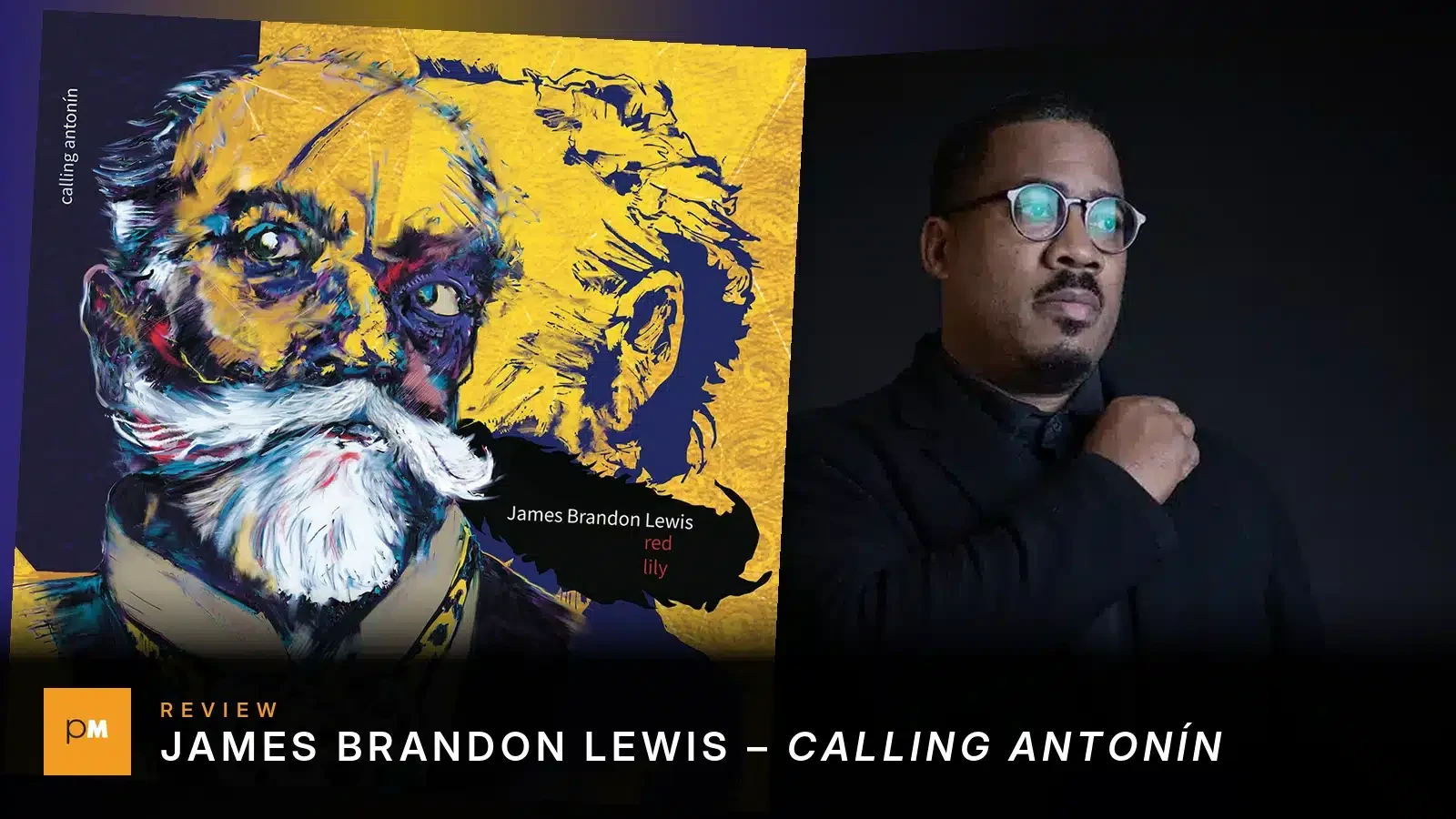
In the contemporary landscape of creative improvised music, few figures match the sheer creative output and thematic ambition of tenor saxophonist and composer James Brandon Lewis. Over the past several years, Lewis has established himself as an indispensable voice in modern jazz, balancing high-concept historical projects with a relentless touring and recording schedule. While his traditional piano-quartet and his high-profile collaborations with the punk-jazz trio The Messthetics showcase his versatility, his most daring and idiosyncratic vehicle remains the Red Lily Band.
Originally conceived as a thematic quintet, the Red Lily group has dedicated itself to interrogating the American historical and sonic tapestry through monumental concept albums. Following their acclaimed 2021 release Jesup Wagon—which drew inspiration from the life and scientific legacy of George Washington Carver—and 2023’s For Mahalia with Love, a soulful meditation on gospel icon Mahalia Jackson, Lewis and his ensemble have returned with an even grander vision.
Their latest release, Calling Antonín, expands the group into a sextet with the addition of a violin, setting its sights on the profound American legacy of Czech composer Antonín Dvořák. Rather than retreating into stiff academic curation, Lewis and the Red Lily Band synthesize Dvořák’s historic American philosophies with the foundational idioms of Black American music—specifically jazz improvisation, polyrhythmic drive, spirituals, and folk traditions. The resulting nine compositions are neither European classical pastiche nor standard post-bop workouts; they represent a vibrant, emotionally charged synthesis of the avant-garde and the deeply traditional, cementing Lewis’s status as a vital architect of modern American sound.
Detailed Chronology: From Carnegie Hall to the Red Lily Expansion
To understand the intellectual architecture of Calling Antonín, one must trace a historical arc that spans over a century, connecting 19th-century classical Romanticism to the free-jazz vanguard of the 21st century.
The Dvořák Blueprint (1892–1895)
Between 1892 and 1895, Antonín Dvořák lived and worked in the United States as the director of the National Conservatory of Music in New York City. During this pivotal tenure, he composed his celebrated Symphony No. 9 in E minor, "From the New World," which premiered triumphantly at Carnegie Hall. Crucially, Dvořák immersed himself in the indigenous sonic landscapes of the nation, hiring African-American baritone and composer Harry T. Burleigh as a student and assistant.
Dvořák famously predicted that the future of original American classical music depended entirely on its composers embracing the authentic folk melodies of Black and Native Americans—much as he had drawn upon the folk idioms of his native Bohemia. His "New World Symphony" served as a direct realization of this philosophy, embedding the cadence of spirituals and plantation songs into symphonic structures.
The Lineage Unfolds: Ellington, Bernstein, and Parker
Dvořák’s ideological seeds did not vanish with the 19th century; they wove their way through the fabric of American music via figures like Duke Ellington, Leonard Bernstein, and later generations of avant-garde masters. This direct lineage came into sharp focus for James Brandon Lewis when bass luminary William Parker invited him to compose for and participate in a production by the Czechoslovak-American Marionette Theater Company.
Through this theatrical collaboration, Lewis recognized how deeply the Dvořák legacy bled into the DNA of jazz royalty like Ellington and Charles Mingus. Inspired by these historical intersections, Lewis began drafting the blueprints for what would become Calling Antonín, enlisting the Red Lily Band to translate these complex socio-musical currents into sound.
The Evolution of the Red Lily Band
The Red Lily Quintet—featuring Lewis on tenor saxophone, Kirk Knuffke on cornet, William Parker (or, on later iterations, Joshua Abrams) on bass, and Chad Taylor on drums—has always functioned as a cohesive organism capable of monumental conceptual heavy lifting. For Calling Antonín, the ensemble expanded into a sextet with the addition of violinist Melanie Dyer, joining cellist Tomeka Reid (who frequently anchors related string configurations) to form an integrated front line of strings and horns.
This expanded lineup allowed Lewis to move effortlessly between chamber music rigor and explosive, collective jazz improvisation across the nine tracks recorded for the project.
Supporting Context & Metrics: The Anatomy of Calling Antonín
The musical architecture of Calling Antonín defies easy categorization. While the inclusion of a violin, viola/cello textures, and acoustic bass might suggest a chamber jazz crossover, the execution is unmistakably rooted in the fire and freedom of Black American improvised music.
Bridging Classical Form and Improvised Freedom
The album opens with "Spirit of the Living God," a piece that immediately establishes the ensemble’s dual citizenship in classical form and jazz vernacular. The track begins with a strict, two-minute through-composed introduction where the violin, cello, and bass bow in common time alongside the horns. Yet, the distinct, highly personal timbre of Kirk Knuffke’s cornet prevents the ensemble from ever sounding like a sterile chamber orchestra. Once the two-minute mark passes, bass and drums drop into a swinging triple-meter groove, sparking improvisational flights from Knuffke, Dyer, and Lewis before the quasi-chamber framing returns.
Similarly, the title track, "Calling Antonín," initiates with a formal 4/4 string introduction in a chamber style before Joshua Abrams and Chad Taylor break open a buoyant 5/4 groove. Here, tenor saxophone and cornet weave intricate contrapuntal melodies while the strings supply harmonic padding traditionally handled by a guitar or piano.
Channeling the Masters: Coltrane, Mingus, and Ayler
Lewis’s stylistic homages throughout the record are both reverent and transformative. On "I Want Jesus to Walk With Me," the band tackles a traditional spiritual through a lens heavily indebted to John Coltrane’s tumultuous late-period masterwork Ascension. Clocking in at a tight five minutes, the track features Lewis stating a soaring gospel melody above a turbulent rhythmic sea engineered by Chad Taylor, complete with shimmering string drones and Knuffke’s loose, conversational cornet counterpoint.
For a more earthly, swinging sense of freedom, "Dilemma of the Hearts" evokes the spirit of Charles Mingus. Built on an ambling 6/8 time signature with a stark harmonic foundation, the tune showcases Knuffke channeling Mingus’s favored brass players—musicians capable of balancing Ellingtonian elegance with modern edge. As Lewis launches into a blistering solo reminiscent of Albert Ayler or George Adams, the rhythm section cracks open, grounding the performance somewhere between the golden jazz eras of 1960 and 1975.
Poetic Interludes and Vocal Textures
One of the album’s most striking innovations is the integration of wordless vocals and spoken word. On "Ode to P.L.D.," harmonized human voices state a rising three-note theme while the horns weave a playful counter-melody. This leads directly into the emotional zenith of Calling Antonín: a controlled, highly melodic collective improvisation where all six members invent simultaneously without sacrificing harmonic clarity. As the track fades, Lewis reads the closing lines of Paul Laurence Dunbar’s civil war poem, "The Colored Soldiers," honoring the collection’s primary dedicatee with profound emotional gravity.
Official Statements & Artistic Vision
James Brandon Lewis has frequently articulated his artistic philosophy as one rooted in empathy, historical consciousness, and community. In interviews surrounding his conceptual trilogies (Jesup Wagon, For Mahalia with Love, and now Calling Antonín), Lewis emphasizes that exploring historical figures is not an exercise in historical reenactment, but rather an act of living dialogue.
"When you look at the lineage of American music—from Dvořák’s observations down to Ellington, Coltrane, and Mingus—you realize that the borders we draw between ‘classical’ and ‘jazz’ are entirely artificial," Lewis noted in a recent artist statement regarding the compositional process behind Calling Antonín. "The music was always asking for us to look deeper, to listen across genres, and to find the shared human heartbeat in the folk traditions of this land."
Critics and collaborators alike have praised Lewis’s ability to lead his ensembles with a rare combination of structural rigor and emotional generosity. Bassist William Parker, a foundational architect of the Red Lily sound, has noted that Lewis possesses a unique talent for creating musical spaces where individual freedom and collective responsibility exist in absolute equilibrium.
"James doesn’t just write charts; he builds communities," Parker observed. "Every musician on that stage brings their entire lived experience to the composition, and James conducts that energy with the grace of a master storyteller."
Future Outlook: The Indelible Legacy of Creative Music
As Calling Antonín makes its mark on the international jazz and contemporary music scenes, it serves as a milestone not only for James Brandon Lewis, but for the entire ecosystem of creative improvised music. In an industry increasingly pressured by algorithmic homogenization and short-form content, Lewis’s sprawling, deeply researched, and emotionally vulnerable concept albums offer a radical alternative: art that demands time, reflection, and intellectual engagement.
Looking ahead, Lewis shows no signs of slowing down. With a touring schedule that bridges intimate downtown jazz clubs, prestigious European concert halls, and interdisciplinary theater spaces, the saxophonist continues to expand his footprint. The success of the Red Lily Band—evolving seamlessly from a driving quintet into an expansive sextet incorporating classical string textures—proves that Lewis’s compositional voice is infinitely malleable.
Whether he is tearing through fiery post-bop cadenzas with his traditional quartet, exploring punk-jazz intersections with The Messthetics, or summoning the ghosts of Antonín Dvořák and Paul Laurence Dunbar alongside the Red Lily Band, James Brandon Lewis operates with an expansive, fearless heart. Calling Antonín is not merely a retrospective nod to a 19th-century European visitor; it is a vital, living declaration that the American musical experiment is still unfolding—and that its truest chapters are written by those daring enough to listen across boundaries.






Belum ada komentar. Jadilah yang pertama berkomentar!