

Executive Overview
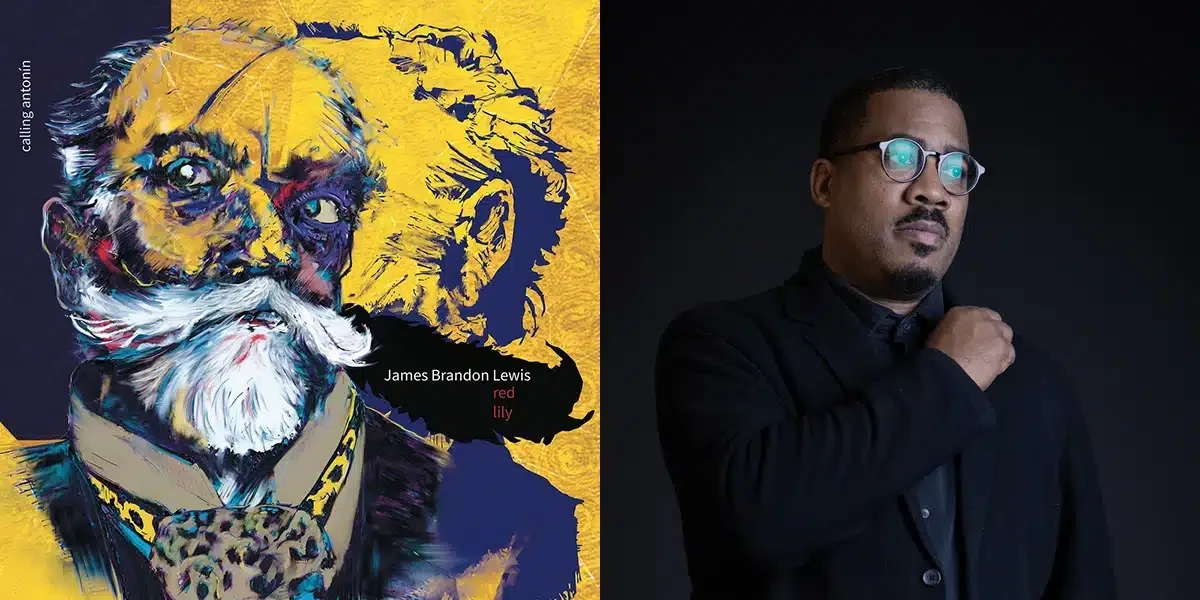
In the contemporary landscape of creative music, few figures match the staggering productivity and conceptual ambition of tenor saxophonist and composer James Brandon Lewis. Renowned for his rich, room-filling tone and unyielding emotional candor, Lewis has cultivated a multifaceted career that moves seamlessly across stylistic boundaries. Whether driving his classic piano-bass-drums quartet, collaborating with the DC-based punk-jazz trio The Messthetics alongside guitarist Anthony Pirog, or steering his adventurous Red Lily ensemble, Lewis treats music as a continuum of Black American expressive culture.
His latest masterwork, Calling Antonín, marks a bold expansion of the Red Lily group. Originally a tight-knit quartet, the ensemble has now integrated a violin into its ranks to investigate the deep-rooted musical legacy of Czech composer Antonín Dvořák in America. Spanning nine original compositions, Calling Antonín is neither a dry historical exercise nor a literal interpretation of European classical forms. Instead, it serves as a vibrant, highly charged dialogue between Dvořák’s visionary 19th-century American sojourn, the foundational idioms of jazz, the structural discipline of chamber music, and the soulful urgency of the Black church.
Through pieces that reference spirituals, civil rights poetry, and folk idioms, Lewis and the Red Lily Band—featuring bassist Joshua Abrams, drummer Chad Taylor, cornetist Kirk Knuffke, cellist Tomeka Reid, and violinist Melanie Dyer—deliver an album that is intellectually rigorous yet immediately accessible. It stands as a defining statement from an artist whose technical mastery is consistently matched by a profound, unifying generosity of spirit.
Detailed Chronology
To understand the conceptual weight of Calling Antonín, one must trace the evolutionary arc of the Red Lily Quintet, a band designed specifically for grand, historically resonant song cycles.
The Historical Foundations: Jesup Wagon and For Mahalia with Love
Lewis first introduced the Red Lily group as a vehicle for ambitious, narrative-driven projects. In 2021, the band released Jesup Wagon, a critically acclaimed suite inspired by the life, intellect, and agricultural innovations of George Washington Carver. Carver, born into slavery, revolutionized Southern agriculture and utilized science to uplift marginalized communities. Lewis’s compositions for Jesup Wagon translated Carver’s meticulous methodology and profound connection to the earth into a fluid, swinging jazz vernacular.
Following this, Lewis turned his focus to the sacred power of voice and spirit with For Mahalia with Love (2023). Dedicated to the legendary gospel singer Mahalia Jackson, the album captured the ecstatic, weeping, and soaring dimensions of the gospel tradition. It positioned the tenor saxophone as a surrogate human voice, channeling the historic weight of the civil rights movement and the unbridled joy of spiritual liberation.
The Dvořák Connection and the Catalyst of Collaboration
The genesis of Calling Antonín began to take shape when master bassist William Parker—a towering figure in creative music—invited Lewis to compose for and participate in a production by the Czechoslovak-American Marionette Theater Company. Through this theatrical immersion, Lewis discovered the historical chain connecting Antonín Dvořák’s time in America directly to modern jazz lineage through titans like Duke Ellington and Leonard Bernstein.
Dvořák lived and worked in the United States from 1892 to 1895, serving as the director of the National Conservatory of Music in New York City. During his tenure, he famously hired Harry T. Burleigh, an African-American baritone singer and student whose mastery of spirituals profoundly influenced the Czech composer. Dvořák made the prophetic public prediction that the future of American classical music lay in the rich, unmined folk melodies of Black and Native Americans. His own Symphony No. 9 in E minor, the “New World Symphony,” premiered to massive acclaim at Carnegie Hall, embodying the very synthesis he championed.
Inspired by this cross-cultural blueprint, Lewis set about crafting a song cycle that would honor Dvořák’s vision while forcefully asserting his own contemporary jazz sensibilities.
The Nine-Part Suite: Anatomy of Calling Antonín
Recorded with meticulous attention to dynamic interplay, the nine tracks of Calling Antonín chart a journey through structural sophistication and unbridled improvisational freedom.
The album opens with "Spirit of the Living God," introducing the expanded ensemble through the rich, textured bowing of violin, cello, and bass, joined by horns in common time. For two full minutes, the piece functions almost as a contemporary classical chamber work, though the distinct, human sonority of Kirk Knuffke’s cornet prevents it from sounding academic. Slowly, a triple-meter groove established by bass and drums breaks the formal tension, paving the way for soaring improvisations before the quasi-chamber sound returns.
On the title track, "Calling Antonín," the strings establish a 4/4 chamber introduction before Abrams and Taylor lock into a bouncing 5/4 groove. Tenor saxophone and cornet trade counterpoint melodies while the violin and cello supply harmonic padding akin to a guitar or piano.
The emotional centerpieces of the album, however, pull heavily from the lineage of John Coltrane and Charles Mingus. "I Want Jesus to Walk With Me" acts as a compressed, five-minute spiritual exploration reminiscent of Coltrane’s dense ensemble journeys like Ascension. Lewis states the spiritual’s melody before launching into a breathtaking departure, backed by Chad Taylor’s shifting polyrhythms, string drones, and Knuffke’s loose cornet counterpoint. Conversely, "Dilemma of the Hearts" channels Mingus through an ambling 6/8 time signature, marrying straightforward harmonic anchoring with wild, free-wheeling solos that bridge the gap between 1960 and 1975 jazz modernism.
Supporting Context & Metrics
Personnel and Instrumentation
The success of Calling Antonín rests squarely on the telepathic chemistry of its six members. The ensemble unites seasoned improvisers who command equal authority in avant-garde jazz and structured composition:
- James Brandon Lewis: Tenor saxophone, composer, and poet.
- Kirk Knuffke: Cornet, providing a uniquely personal, vocalized brass timbre.
- Joshua Abrams: Acoustic bass, anchoring the rhythmic and harmonic foundations.
- Chad Taylor: Drums and percussion, supplying elastic, non-linear time feels.
- Tomeka Reid: Cello, bridging classical string textures with adventurous jazz elasticity.
- Melanie Dyer: Violin, expanding the Red Lily palette into new harmonic dimensions.
Production and Compositional Metrics
- Total Tracks: 9 original compositions penned by James Brandon Lewis.
- Historical Span Referenced: 1892 (Dvořák’s arrival in the US) to the present day.
- Core Influences: Antonín Dvořák, Harry T. Burleigh, Duke Ellington, Charles Mingus, John Coltrane, Albert Ayler, and Paul Laurence Dunbar.
- Track Length Range: Varies from concise, tightly wound statements to expansive, multi-movement improvisational suites.
Official Statements
Reflecting on his continuous exploration of American musical roots, James Brandon Lewis emphasizes that his engagement with historical figures is an act of active listening and cultural reclamation rather than historical reenactment.
In interviews surrounding the release of his suite-based projects, Lewis has consistently noted:
"We are not trying to recreate the past; we are living inside the continuum of it. The folk music of this land—whether it’s spirituals, blues, or indigenous expressions—holds a universal frequency. Dvořák heard it, Ellington heard it, Coltrane lived it. Our job as modern artists is to open the door wider so everyone else can walk through it."
Discussing the integration of string instrumentation into a historically jazz-centric context, participating musicians have highlighted the porous boundaries between genres. As the ensemble approaches works like "Ode to P.L.D."—which features wordless harmonized vocals and a reading of Paul Laurence Dunbar’s civil war poem The Colored Soldiers—the focus remains squarely on emotional honesty.
The album concludes with "O’ Rebicku," wherein the band performs a plainsong in unison, allowing each instrumentalist to offer a personal confession. It is a moment that encapsulates the Red Lily ethos: humility, deep listening, and unvarnished emotional truth.
Future Outlook
With Calling Antonín, James Brandon Lewis has cemented his status as one of the most vital architects of 21st-century creative music. By successfully connecting the 19th-century classical aspirations of Antonín Dvořák to the revolutionary fire of mid-century jazz and contemporary avant-garde improvisation, Lewis has opened a new chapter for large-ensemble jazz composition.
Looking ahead, Lewis shows no signs of slowing down his relentless creative output. The blueprint established by the Red Lily Quintet—moving seamlessly from Carver to Mahalia Jackson, and now to Dvořák—suggests an ongoing, multi-volume exploration of the architects of American culture. As critics and audiences alike digest the intricate harmonies and visceral grooves of Calling Antonín, the jazz world waits eagerly to see which historical crossroads Lewis will illuminate next.
One thing remains certain: wherever James Brandon Lewis directs his horn, he brings a big heart, an uncompromising intellect, and an absolute dedication to the unifying power of music.








Belum ada komentar. Jadilah yang pertama berkomentar!