

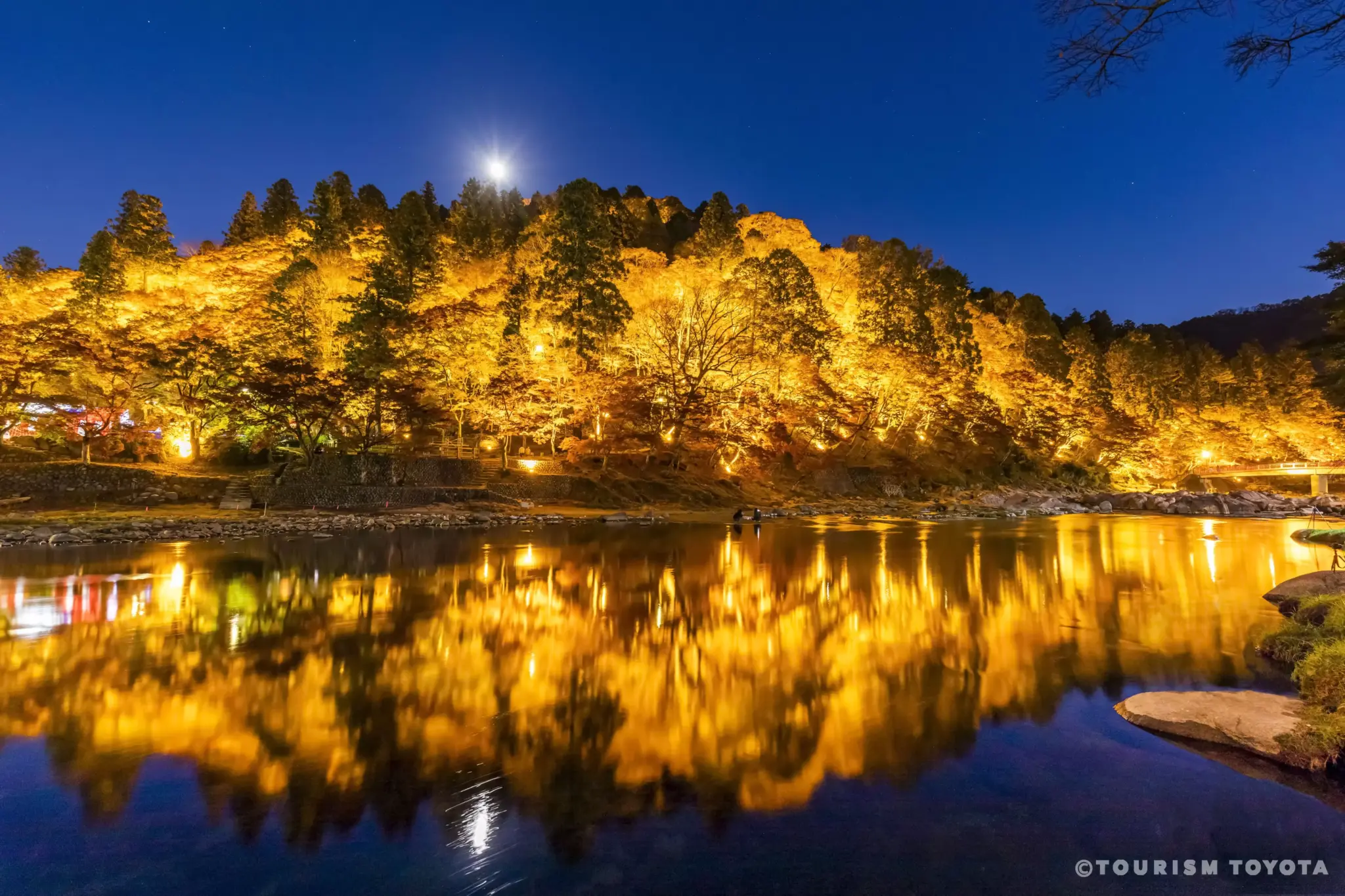
NAGOYA, JAPAN — As the searing heat of summer cedes to the crisp, crystalline air of late autumn, the Chubu region of Japan prepares for one of its most breathtaking natural phenomena. For a brief, magical window every November, nature orchestrates a rare simultaneous display: the fiery crimson blaze of ancient autumn maples and the delicate, spring-like blush of rare four-season cherry blossoms (Shikizakura).
At the epicentre of this seasonal convergence are two world-class destinations: the legendary Korankei Gorge, universally hailed as one of Japan’s top 100 autumn foliage spots, and Hara Village in the Kawami district of Obara, Toyota City. Navigating these rural sanctuaries has historically presented logistical hurdles for international visitors—ranging from convoluted public transport transfers to congested rural roadways during peak festival weeks.
However, for the upcoming autumn season running daily from November 17 to November 30, 2026, a streamlined, direct day-trip bus tour departing from Nagoya offers an authoritative, stress-free solution. Complete with multi-lingual tour support, this carefully curated excursion promises travelers seamless access to golden-hour sunsets, steaming local street food, and ethereal nighttime illuminations.
Executive Overview: A Rare Symphony of Fall Foliage and Cherry Blossoms
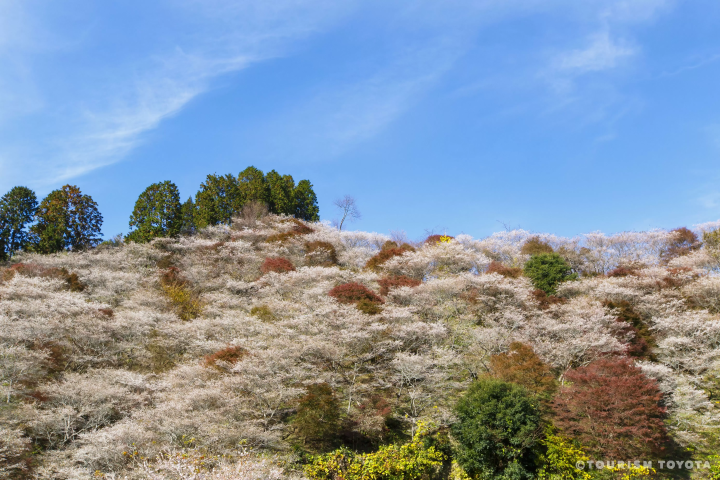
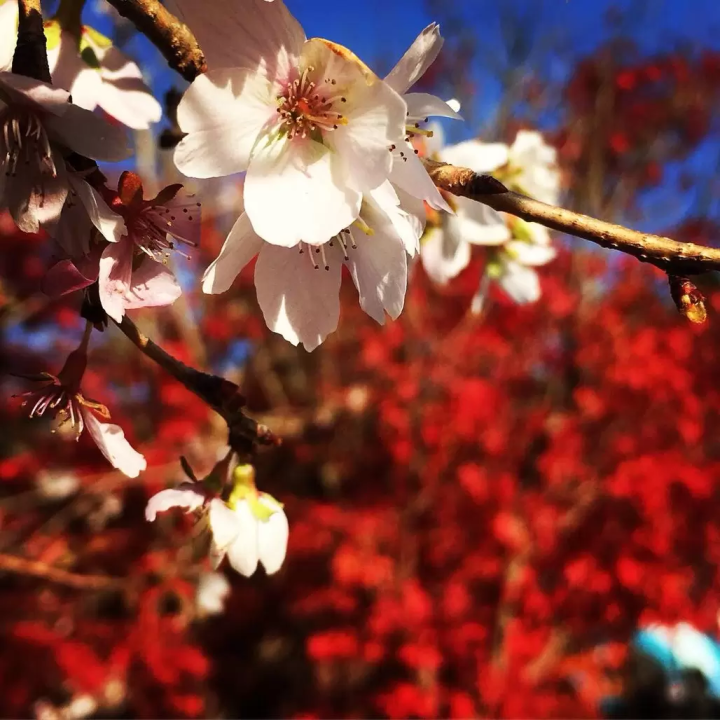
The core appeal of the late-November travel window in Aichi Prefecture lies in a rare visual paradox. While typical itineraries force travelers to choose between the fiery russets of autumn and the ethereal pastels of sakura season, the Kawami district of Obara-cho offers an unprecedented juxtaposition. Here, over 10,000 Shikizakura (four-season cherry trees) burst into bloom concurrently with the changing maple leaves.
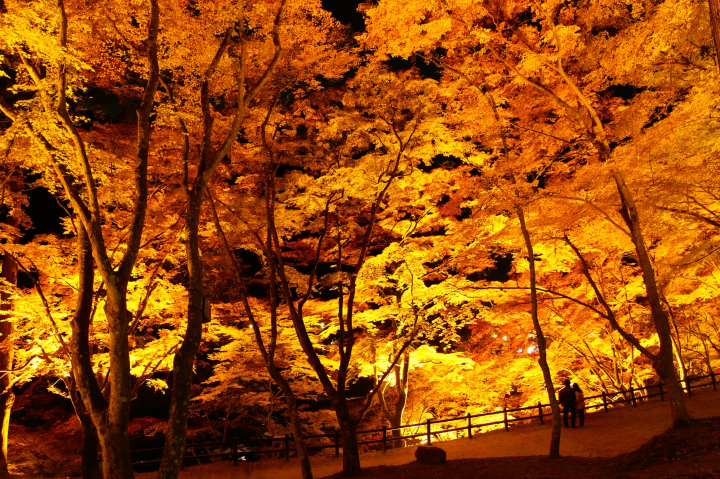
The resulting landscape defies standard seasonal categorizations. Vibrant ruby-red and burnt-orange canopies intermingle with soft, pale-pink cherry blossoms against rural farmhouses and terraced hillsides. It is an aesthetic triumph that feels less like a natural occurrence and more like a classical Japanese painting brought to life.
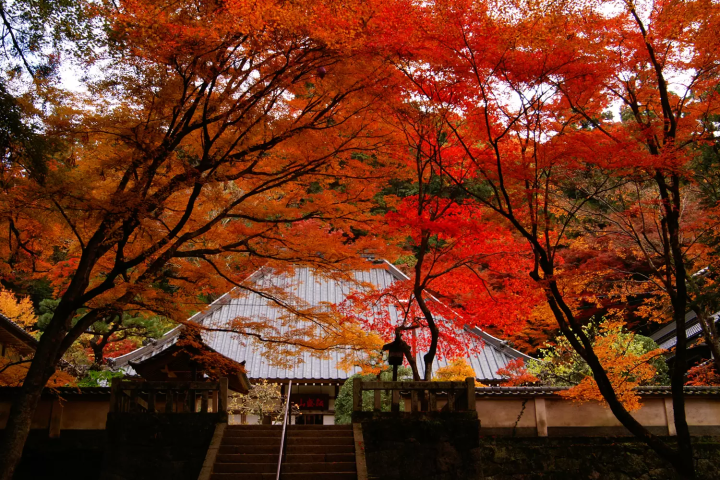
Just a short distance away lies Korankei Gorge, an absolute heavyweight in Japan’s seasonal tourism landscape. Flanking the clear waters of the Tomoe River, the gorge boasts an estimated 4,000 maple trees across roughly 20 distinct varieties, planted centuries ago by the head priest of the local Kohanji Temple. When peak foliage hits in late November, the gorge transforms into a tunnel of incandescent crimson, culminating in a dazzling nightly illumination event that draws shutterbugs and nature lovers from across the globe.
Despite their breathtaking allure, both locations present significant infrastructural challenges for unguided tourists. Korankei’s famed Maple Festival routinely triggers heavy traffic gridlock along surrounding mountain roads, while limited parking infrastructure can lead to hours of frustration for motorists. For international travelers navigating unfamiliar driving laws, or those unfamiliar with regional train and bus connections, the journey can easily transform from a relaxing holiday into a logistical headache.
The direct day-trip bus tour departing from Nagoya Station provides an authoritative answer to these challenges. By bundling highway tolls, direct transit, and multi-lingual coordination into a single package starting from 11,400 yen, the program removes the friction of independent travel, allowing visitors to focus entirely on the sensory richness of the region.
Detailed Chronology: The 2026 Direct Bus Tour Itinerary
Designed to maximize daylight hours while capturing the transitional beauty of dusk and evening illuminations, the 2026 tour operates on a precise, well-paced schedule. Running daily from November 17 through November 30, the itinerary is structured as follows:
12:30 PM — Departure from Nagoya Station
Participants convene at the iconic Nagoya Station Taiko-do Exit, specifically locating the tour bus counter situated within the ESCA underground shopping mall adjacent to the Shinkansen exit. Check-in procedures are streamlined to accommodate international travelers, with English- and Chinese-speaking guides on hand to verify bookings and direct guests to their coaches. Prompt departure at 12:30 PM ensures optimal pacing for the afternoon’s adventures.
1:30 PM (Approx.) — Hara Village Kawami Shikizakura no Sato
Following a comfortable highway transit northward into the verdant hills of Toyota City, the bus arrives at Hara Village’s Kawami district. Guests are granted an unhurried 40-minute window to explore the Shikizakura no Sato (Four-Season Cherry Blossom Village).
During this stop, visitors can stroll leisurely along rural paths flanked by blooming pink cherry blossoms and striking autumn maples. Because this segment emphasizes independent exploration, travelers are free to frame their own photographs, wander past pastoral stone walls, and absorb the tranquil atmosphere of the Aichi countryside at their own pace.
3:00 PM (Approx.) — Arrival at Korankei Gorge
Re-boarding the coach, the tour proceeds toward the crown jewel of the itinerary: Korankei Gorge. Guests are afforded an extensive 120-minute stay, strategically timed to capture the gorge’s dramatic transformation from golden daylight through sunset and into its world-renowned night illumination phase.
The approach to Taigetsukyo Bridge—the iconic wooden pedestrian bridge arching gracefully over the Tomoe River—features a soaring canopy of maples that creates a natural tunnel of light and shadow. As dusk settles, the forest canopy deepens into a rich, velvety crimson.
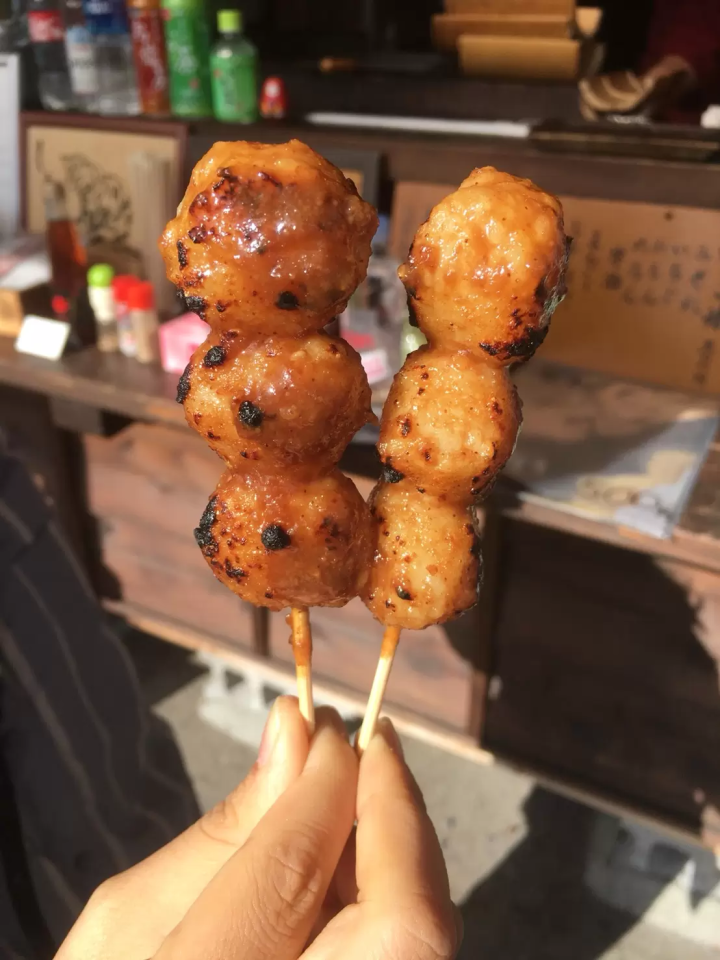
During the annual Korankei Maple Festival, the path comes alive with local vendors serving steaming regional delicacies. Travelers are encouraged to sample traditional goheimochi (skewered, rice-cake patties brushed with a sweet, savory walnut-miso paste) and piping-hot soba noodles to ward off the evening chill.
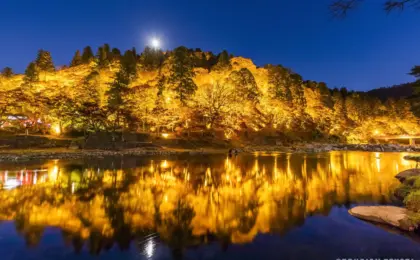
As true darkness falls, industrial-grade floodlights strategically positioned along the gorge ignite. The resulting night illumination casts a dramatic, theatrical glow over the ravine, mirroring blazing reds and golds flawlessly onto the glassy surface of the Tomoe River.
7:40 PM — Return to Nagoya Station
Departing Korankei Gorge, the air-conditioned coach transports passengers safely back to the heart of Nagoya. The tour concludes at approximately 7:40 PM right at Nagoya Station, allowing participants easy access to local dining, subway connections, or their downtown hotels. (Note: Return times are subject to variance depending on seasonal weekend traffic congestion along regional mountain corridors).
Supporting Context & Metrics: Navigating the Logistics
To fully appreciate the value of this direct bus tour, one must examine the logistical parameters governing autumn tourism in Aichi Prefecture.
- Pricing Structure: Tour pricing starts at an accessible 11,400 yen per person. This fee comprehensively covers round-trip bus transportation and all associated highway tolls. Meals are intentionally excluded from the package price, granting travelers the freedom to sample street food stalls at Korankei Gorge or dine independently upon returning to Nagoya.
- Inclusivity & Linguistic Support: Recognizing the influx of global travelers, the tour features dedicated tour guides fluent in both English and Chinese. While these professionals do not provide deep historical lectures or guided walking tours—leaving guests free to explore independently—they provide vital logistical support, emergency coordination, and check-in assistance from departure to return.
- Accessibility and Comfort: The tour is specifically tailored to mitigate the challenges highlighted in official transit advisories. Renting a car in Japan during late November exposes tourists to unfamiliar left-hand traffic, steep mountain grades, and aggressive parking scarcity. Similarly, relying on public buses requires multiple transfers between Nagoya, Toyotashi Station, and regional bus lines, which can easily add hours of transit time and increase the risk of missed connections.
- Environmental Considerations: Late November in the Chubu hill country brings a sharp drop in ambient temperature, particularly after the sun dips below the canyon ridges. Organizers strongly advise participants to pack a warm, wind-resistant jacket or layers to remain comfortable during the two-hour evening illumination stretch at Korankei Gorge.
Official Guidelines and Advisory Metrics
Travelers planning to participate in the 2026 Korankei and Obara Shikizakura tour should take note of the following operational advisories issued by tour management and regional tourism boards:
- Weather Dependency: Both maple coloration (koyo) and cherry blossom blooming cycles (shikizakura) are biological processes highly sensitive to annual meteorological shifts. While mid-to-late November represents the historical peak for this overlapping window, unseasonable warmth or sudden frosts may subtly shift optimal viewing conditions.
- Traffic Volatility: Weekend operations during the peak of the Korankei Maple Festival are notoriously susceptible to vehicular bottlenecks. While the direct bus utilizes optimized routing, passengers should anticipate potential minor delays on the return leg during peak Saturday and Sunday departures.
- Reservation Protocols: Due to the strictly limited two-week operating window (November 17–30, 2026) and high global demand, advance booking via authorized platforms such as Klook is mandatory. Walk-up reservations on the day of departure are generally unavailable.
Future Outlook: The Growing Demand for Seamless Regional Tourism
The success of direct seasonal transit models like the Nagoya-to-Korankei bus tour signals a broader shift in how regional Japanese tourism boards cater to international visitors. As Japan’s tourism strategy increasingly emphasizes regional dispersion—urging travelers to venture beyond major urban hubs like Tokyo and Kyoto—infrastructure must evolve to bridge the gap between world-class attractions and rural accessibility.
Aichi Prefecture, anchored by the industrial powerhouse of Nagoya, possesses an embarrassment of cultural and natural riches that have historically remained under-visited by short-term international tourists due to transit complexity. Initiatives that bundle transportation, multi-lingual support, and high-demand seasonal events into friction-free single-day packages represent the gold standard of modern travel logistics.
Looking ahead toward future seasons, tourism analysts anticipate an expansion of similar direct transit corridors across the Chubu region, linking urban economic centers directly to remote mountain gorges, heritage villages, and coastal marvels. For travelers experiencing Aichi in November 2026, however, the future is already here: a perfectly orchestrated day where pink sakura petals whisper against a roaring canopy of crimson fire, accessible without a single transferred train or congested parking lot.
Tour Summary at a Glance
- Operation Dates: Daily, November 17 – November 30, 2026
- Departure Point: Nagoya Station Taiko-do Exit (ESCA underground shopping mall, Shinkansen exit tour bus counter)
- Departure Time: 12:30 PM (Return approx. 7:40 PM)
- Base Price: From 11,400 JPY (Includes bus fare and highway tolls; meals excluded)
- Key Stops: Hara Village Kawami Shikizakura no Sato (40 mins) & Korankei Gorge Sunset/Illuminations (120 mins)
- Support: English- and Chinese-speaking tour coordinator on site
- Reservations: Available via official booking portals (e.g., Klook Reservation Page)





Belum ada komentar. Jadilah yang pertama berkomentar!