

Executive Overview
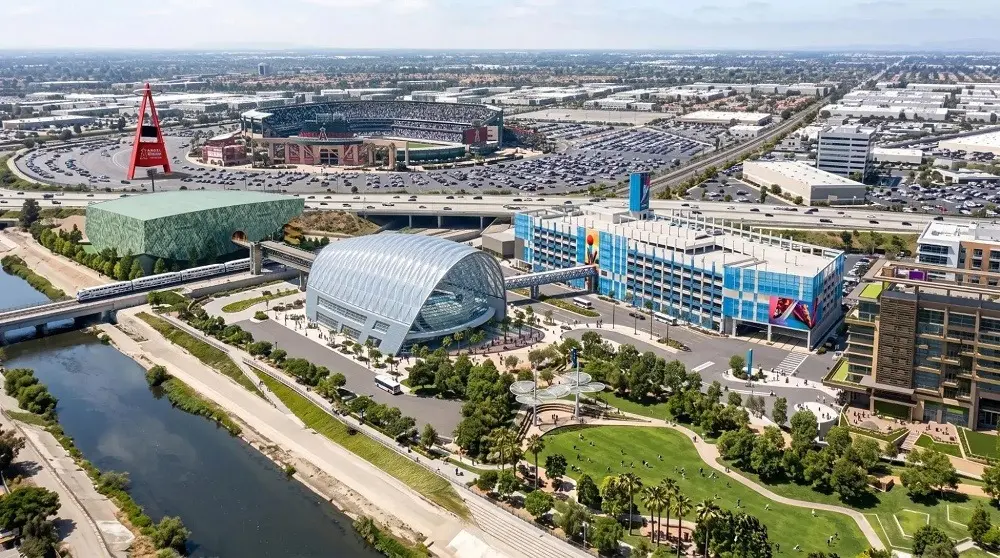
The renowned Japanese interdisciplinary art collective teamLab has officially announced plans to establish its very first permanent, large-scale museum in the United States. Set to rise in sunny Southern California, the new cultural institution will find its home within Anaheim’s ambitious, master-planned OCVIBE complex—a sprawling, multi-use development that seamlessly blends entertainment, sports, green spaces, residential zones, and commercial offices just a short distance from the iconic Disneyland Resort.
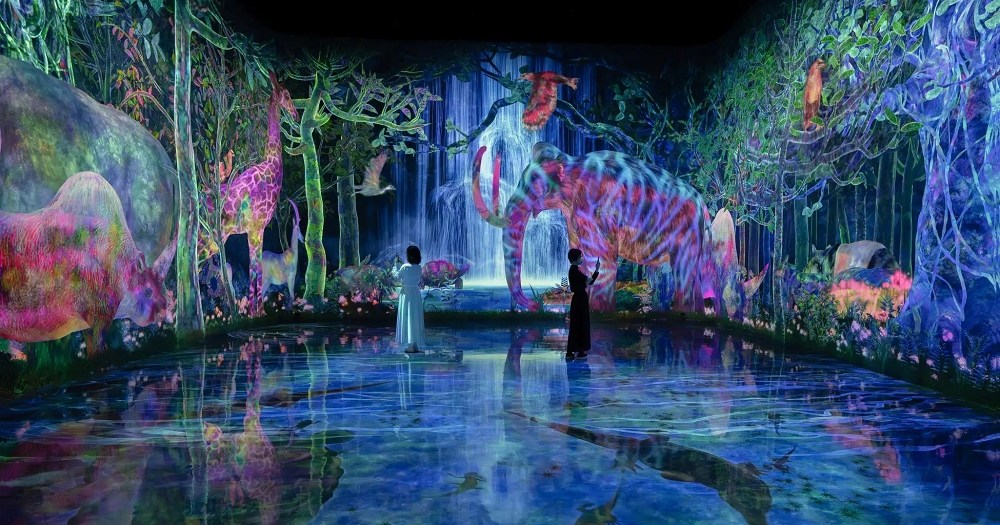
Tentatively named the teamLab Museum Anaheim, the facility is projected to span an impressive 10,000 square meters (approximately 110,000 square feet). This monumental undertaking marks a massive milestone for the collective, which has steadily grown from a relatively obscure group of technological visionaries into a global powerhouse of experiential digital art. Known for their mind-bending, interactive exhibits in Tokyo and around the world—such as teamLab Borderless and teamLab Planets—the collective uses cutting-edge software, digital light projections, and ethereal soundscapes to dissolve the traditional boundaries between artwork and viewer.
While the broader OCVIBE district is slated to open in phased rollouts beginning as early as next spring, the teamLab Museum Anaheim has a projected grand opening window of 2030. Despite the wait, art enthusiasts, tech innovators, and travelers alike are already celebrating the news. This venture not only establishes a permanent U.S. flagship for the group but also signals a transformative shift in how North American audiences will experience contemporary, immersive art at the intersection of technology, architecture, and human connection.
Detailed Chronology: From Tokyo Roots to a Global Phenomenon
To understand the magnitude of teamLab’s expansion to Anaheim, it is crucial to trace the trajectory of the collective. Founded in 2001 in Tokyo by Toshiyuki Inoko alongside a group of programmers, engineers, CG animators, mathematicians, and architects, teamLab set out to break free from the physical constraints of traditional galleries. They envisioned art that could exist outside the frame, respond to human presence, and evolve continuously over time.
For years, the collective operated largely behind the scenes, creating digital installations for corporate clients and temporary exhibitions. However, a major turning point occurred in the late 2010s with the opening of permanent and semi-permanent venues in Tokyo.
- 2018: The launch of teamLab Borderless in Odaiba, Tokyo, changed the landscape of modern museums. Billed as a "museum without a map," the exhibition featured artworks that moved freely out of rooms, communicated with other pieces, and even merged with one another. It quickly became an international sensation, drawing millions of visitors from across the globe and winning numerous design and tourism accolades.
- Also in 2018: The opening of teamLab Planets in Toyosu introduced a sensory, barefoot experience where visitors waded through knee-deep water surrounded by digital koi fish and wandered through infinite crystal universes.
- Subsequent Years: teamLab expanded its footprint with temporary and long-term exhibitions in cities such as Shanghai, New York, London, Paris, Singapore, and Macao. Each iteration pushed the boundaries of computational rendering and interactive design.
- Late 2020s (Current Era): The collective continues to scale up its ambitions. In addition to the newly announced Anaheim project, teamLab recently revealed plans for an even larger, record-breaking museum in Tokyo, slated to be their biggest venture to date.
The announcement of the Anaheim facility represents the natural evolution of this journey—taking their distinct blend of Japanese aesthetic sensibility and high-tech wizardry and embedding it permanently into the cultural fabric of North America.
Supporting Context & Metrics: Inside the OCVIBE Development
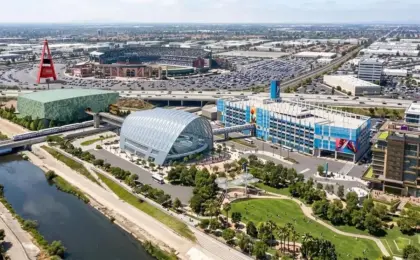
The choice of Anaheim as the home for teamLab’s U.S. flagship is no accident. The museum will anchor itself inside OCVIBE (Orange County Vibe), a massive, multi-billion-dollar mixed-use urban district designed to transform the area surrounding the Honda Center. Developed by Henry Samueli and his team, OCVIBE is conceptualized as a vibrant cultural town square where locals and tourists can live, work, and play.
Key Metrics and Facility Highlights:
- Total Museum Footprint: Approximately 10,000 square meters (110,000 square feet) of dedicated interactive exhibition space.
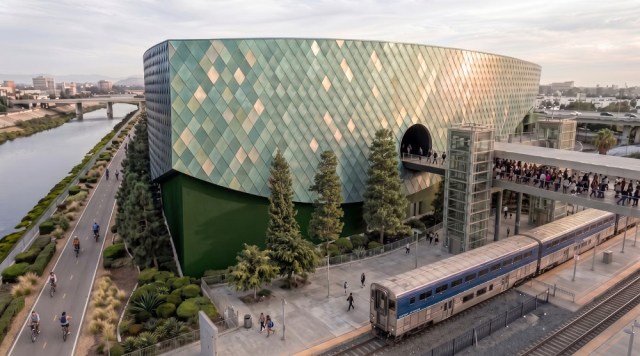
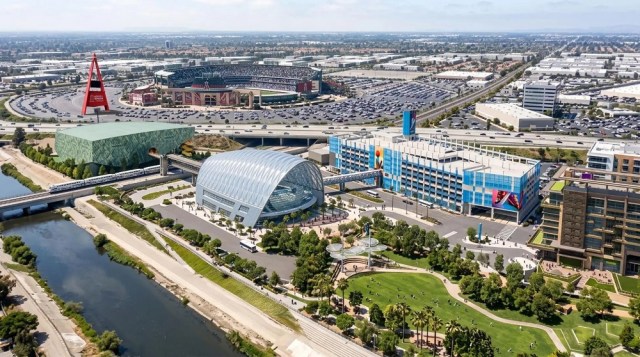
- Architectural Integration: Early architectural preview renderings depict a striking, futuristic structure featuring a shimmering sea-green exterior. The building is designed to be fully integrated with public transit, connecting directly via a pedestrian bridge to the Anaheim Regional Transportation Intermodal Center (ARTIC) rail station.
- Strategic Location: Situated strategically across the 57 Freeway from Angel Stadium and just down the road from the Disneyland Resort, the museum places itself squarely in the center of Southern California’s premier tourism and entertainment corridor.
- Phased Rollout: OCVIBE’s development is structured in stages. The initial phase—featuring an outdoor amphitheater, dynamic dining options, and expansive green parks—is set to debut as early as next spring. Meanwhile, the teamLab museum project is slated to officially open its doors in 2030, allowing ample time for meticulous architectural engineering and digital design tailored specifically to the Anaheim site.
This integration into OCVIBE aligns perfectly with teamLab’s philosophy of creating spaces that function as living ecosystems rather than static viewing galleries.
Official Statements and Artistic Philosophy
The announcement of the Anaheim museum brought forth passionate commentary from the collective’s leadership, emphasizing the deeper philosophical goals driving their work.
Toshiyuki Inoko, co-founder and director of teamLab, shared his enthusiasm and vision for the U.S. expansion in an official statement:
"I am filled with happiness that we will be opening teamLab’s first large-scale museum in America at OCVIBE in Anaheim. Through art, teamLab seeks to explore the nature of consciousness and existence. Our exhibits change through the existence of people, with visitors themselves becoming part of the piece. By becoming immersed in the artwork, visitors are connected, without boundaries, to both the installation and the world. By gathering and placing ourselves alongside others in this location where sports, music, and culture intersect, we will come to perceive the world in new ways and share those perceptions with others."
Inoko’s words underscore the core pillar of teamLab’s artistic methodology: interactivity and decentralization. Unlike classical art, where touching the canvas is strictly forbidden and the perspective is singular, teamLab’s installations rely entirely on human interaction. When a visitor walks through a digital waterfall, the water alters its flow to move around them. When someone touches a floating orb of light, its color ripples outward, transforming the environment for everyone in the room.
By placing this immersive experience within a bustling cultural hub like OCVIBE—where visitors transition seamlessly from sports arenas and live music venues into digital dreamscapes—teamLab aims to foster a collective sense of wonder and shared humanity.
Future Outlook: What to Expect Before 2030
As the countdown to 2030 begins, anticipation will undoubtedly build across the art and tech worlds. While a six-year development horizon might seem lengthy, experts note that creating a permanent teamLab museum is a complex, highly technical undertaking. Each exhibition requires custom-built projection mapping systems, thousands of synchronized computers, proprietary software development, and intricate acoustic engineering to ensure that light and sound merge seamlessly across massive physical spaces.
Furthermore, the timeline positions the Anaheim museum strategically ahead of other upcoming global projects, yet slightly behind their record-breaking Tokyo expansion plans announced recently. This gives the collective valuable breathing room to test new concepts, refine their interactive mechanics, and tailor the Southern California experience to local cultural tastes while maintaining their signature global aesthetic.
For Southern California residents and international travelers alike, the coming years will serve as a period of eager observation. When the teamLab Museum Anaheim finally flings open its shimmering sea-green doors in 2030, it promises to redefine what a museum can be—shifting the paradigm from passive observation to active, boundary-shattering participation. Until then, the promise of a digital wonderland rising just minutes from Mickey Mouse and major league baseball serves as one of the most exciting cultural developments on the American horizon.







Belum ada komentar. Jadilah yang pertama berkomentar!