

Executive Overview
As the crisp autumn air heralds the arrival of Halloween, popular culture inevitably turns toward the macabre, celebrating the undead, ghouls, and hypothetical global collapses. While Western cinematic depictions of zombie outbreaks typically feature a heavy-handed, militarized response—where armed forces utilize overwhelming kinetic force to eradicate infected waves—the reality of such an event in nations with strictly regulated military frameworks presents a fascinating constitutional paradox.
In Japan, this paradox is magnified. Unlike militaries operating under the general doctrine that "anything shy of a war crime is fair game," Japan’s Self-Defense Forces (JSDF) are bound by rigorous constitutional limitations, pacifist statutes, and stringent criteria before they can deploy kinetic force.
Recent legal analyses, notably featured in the YouTube series Legal Insight by Tonari no Bengoshi Hosokyoku, have attempted to apply Japanese jurisprudence to a domestic zombie outbreak. Their conclusions suggest that zombies might legally be classified as corpses—and therefore inanimate "objects"—allowing the military to neutralize them under disaster-relief paradigms or laws governing dangerous wild animals.
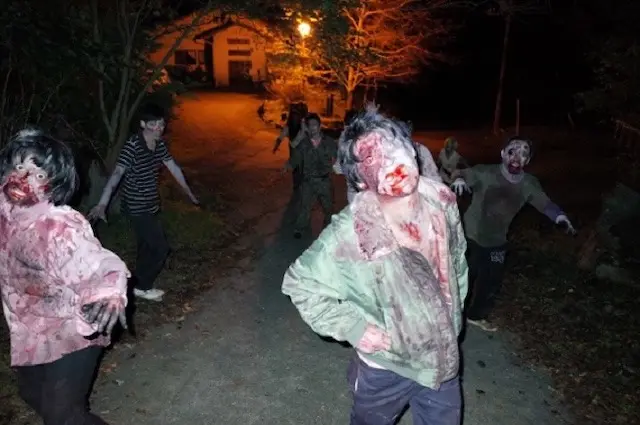
However, a closer, highly critical examination of medical science, constitutional precedent, and pop-culture pathology reveals a profound flaw in this legal consensus. Under Japan’s strict medical and legal criteria for death—specifically the shi no sanchoko (the "three signs of death")—zombies fail to qualify as deceased. Instead, whether shuffling slowly through neighborhoods or sprinting with terrifying agility, zombies retain physiological markers of life. Consequently, they would likely be classified under Japanese law as living human beings possessing legal rights.
This article provides an exhaustive, authoritative investigation into the legal, military, and constitutional implications of a zombie outbreak in Japan, structured through detailed legal analysis, operational constraints, and expert counter-arguments.
Detailed Chronology: From First Bite to Constitutional Paralysis
To understand how Japan’s legal and defense apparatus would respond to a sudden undead uprising, it is necessary to trace the hypothetical escalation of an outbreak through the lens of Japanese administrative and penal law.
Phase One: The Initial Outbreak and Police Jurisdiction
The earliest stages of a viral or parasitic outbreak—be it rooted in a rabies-like pathogen, a fungal mutation, or an unknown contagion—would naturally fall under the jurisdiction of local prefectural police forces and the National Police Agency (NPA).
Under standard operating procedures, police are authorized to use necessary and proportionate force to protect civilians from imminent danger. However, the legal threshold for lethal force in Japan is exceptionally high. Police officers may only discharge firearms in extreme cases of self-defense or the defense of others when no other means of stopping an attacker are available.
If an infected individual—frequently referred to colloquially as a zombie—begins attacking citizens, police intervention is legally required to mirror responses to any violent assailant. Officers cannot simply execute the suspect; they must attempt apprehension, utilizing non-lethal restraint techniques or targeted immobilization.
Phase Two: Systemic Collapse and the Invocation of Disaster Relief
As infection rates scale exponentially, local police forces would inevitably become overwhelmed. At this juncture, the central government would likely look to the Japan Self-Defense Forces.
Under Article 83 of the Self-Defense Forces Act, the Prime Minister can dispatch the JSDF for disaster relief operations upon receiving a request from a prefectural governor. Historically, this mechanism has been deployed during catastrophic earthquakes, tsunami responses, and nuclear emergencies.
In a zombie scenario, the JSDF could legally be mobilized under this disaster-relief framework. Troops could construct barricades, manage civilian evacuations, distribute medical supplies, and secure quarantine zones. Furthermore, individual soldiers—much like ordinary citizens or police officers—retain the inherent right of self-defense and defense of others. If a zombie lunges at a soldier, that soldier is legally permitted to fight back to preserve human life.
Phase Three: The Offensive Prohibition and the Foreign Aggressor Exception
Crucially, disaster relief deployment does not grant the JSDF a mandate to hunt down, engage in offensive sweeps, or conduct extermination campaigns against domestic threats.
The single legal exception to this defensive bottleneck is if the zombie outbreak is classified as an armed attack by a foreign entity. Under Article 5 of the Act on Security Situations, if a foreign government or external hostile force weaponizes and unleashes the pathogen upon Japan, the situation shifts from a domestic emergency to an "Armed Attack Situation" (buryoku koutai jitai).
This distinction mirrors Japan’s theoretical legal stance on Kaiju attacks, as established in prior constitutional analyses. Just as Godzilla—a natural, domestic anomaly of nature—cannot legally be targeted as an enemy combatant (unless directed by hostile extraterrestrials, as with King Ghidorah from Planet X), homegrown zombies resulting from a natural mutation or domestic lab leak cannot be treated as invading enemy combatants. Consequently, the JSDF’s offensive weapons systems—tanks, artillery, and attack helicopters—remain legally shackled.
Supporting Context & Metrics: The Legal Status of the Undead
The crux of the legal debate centers on a fundamental ontological question: Are zombies legally considered "people" or "corpses"?
+-------------------------------------------------------------------+
                   THE LEGAL CLASSIFICATION DILEMMA
+-------------------------------------------------------------------+
                                  |
            +---------------------+---------------------+
            |                                           |
    [ LIVING PERSON ]                           [ DECEASED CORPSE ]
            |                                           |
    - Killing = Murder                          - Corpse = "Object"
    - Strict self-defense limits                - Treated like dangerous wildlife
    - Full constitutional rights                - SDF can neutralize as "tools"
The Legal Insight Hypothesis: Corpses as Objects
The legal scholars behind Tonari no Bengoshi Hosokyoku initially posited that zombies would be legally categorized as corpses. Under Japanese criminal law:
- If a zombie is a living person, terminating its existence constitutes murder under Penal Code Article 199.
- Conversely, if it is a corpse, shooting or destroying it could technically trigger charges of desecration of a corpse under Penal Code Article 190.
However, the Legal Insight analysis argued that the urgent necessity to protect public safety would outweigh desecration charges—comparable to how authorities might scuttle an abandoned, drifting ship to prevent maritime disasters, causing property damage of lesser legal value than the lives saved. Under this interpretation, zombies become "objects" akin to aggressive wild bears or rabid dogs, permitting the JSDF to utilize firearms as "tools" to neutralize the hazard.
The Counter-Analysis: The "Three Signs of Death"
Challenging this assertion requires examining Japan’s strict medical-legal framework for determining mortality. In Japanese jurisprudence and medical practice, the determination of death relies on the "three signs of death" (shi no sanchoko):
- Cardiac Arrest: Permanent cessation of heartbeat and pulse.
- Respiratory Arrest: Permanent cessation of spontaneous breathing.
- Brainstem Death / Loss of Reflexes: Irreversible cessation of all brainstem functions, including pupillary light reflexes and corneal reflexes.
For a legal entity to be designated a corpse, all three conditions must be present simultaneously and deemed irreversible.
The counter-argument asserts that zombies—regardless of whether they belong to the slow-moving Night of the Living Dead archetype or the hyper-aggressive, sprinting variety seen in 28 Days Later—fail to satisfy these criteria.
1. Cardiac Function and Arterial Pressure
In numerous depictions across horror media (exemplified by arterial spray mechanics in games like Resident Evil), zombies bleed when traumatized. Blood spurting from wounds demonstrates measurable arterial blood pressure, which is physically impossible without a functioning, pressurized circulatory system driven by a beating heart. Even if the heart’s function is degraded or anomalous, the presence of blood circulation directly violates the absolute requirement for cardiac arrest.
2. Respiratory Function
Zombies actively emit vocalizations—ranging from guttural groans to aggressive snarls. Generating auditory vocalizations requires air expelled from the lungs across the vocal cords, proving active respiratory function.
3. Neurological and Brainstem Reflexes
Zombies exhibit complex behavioral mechanics: they track movement visually, respond to auditory stimuli, pursue prey, and execute biting attacks. These behaviors are controlled entirely by the brainstem and peripheral nervous system. Far from exhibiting the cessation of brainstem reflexes, zombies are hyper-reliant on basic neurological reflexes to coordinate movement and predation.
Official Statements and Legal Precedent
While no official government advisory board has convened to draft legislation concerning the undead, constitutional scholars and legal commentators draw parallels from existing statutes governing animal control, maritime emergencies, and the Self-Defense Forces Act.
- Ministry of Defense Position (Hypothetical): Spokespersons for defense policy traditionally emphasize that the JSDF cannot operate outside the strict parameters authorized by the Diet. Any deployment lacking a clear legal basis under disaster relief or armed attack provisions would violate Article 9 of the Japanese Constitution and the foundational principles of civilian control over the military.
- National Police Agency (NPA) Guidelines: Current use-of-force doctrines dictate that firearms are strictly tools of last resort. Officers are trained to evaluate proportionality. If an attacker is categorized as a living human—even one suffering from a severe neurological or psychological affliction—the use of lethal force is restricted to defense against imminent loss of life or grievous bodily harm. Wholesale pre-emptive eradication remains legally untenable.
Future Outlook: Constitutional Resilience vs. Practical Realities
The intersection of Japanese constitutional law and zombie fiction ultimately leads to an absurd yet legally coherent conclusion: If a zombie outbreak were to occur in Japan strictly adhering to current legal frameworks, the undead would retain legal rights as living humans.
The operational consequences of this reality are profound:
- The Police Bind: Law enforcement officers could face criminal prosecution for unlawful use of force or manslaughter if they open fire on approaching zombies prematurely.
- The Military Paralysis: The JSDF would be legally restricted from conducting offensive sweeps, leaving soldiers unable to clear infected zones proactively. Defense actions would be limited strictly to immediate self-defense—effectively reducing military engagement to close-quarters hand-to-hand survival or tactical retreat.
- Civilian Liability: Drivers attempting to flee an infested urban center who strike zombies with their vehicles could theoretically face charges of property damage, assault, or vehicular negligence if the courts deem the victims to be living individuals.
Of course, these rigorous legal constraints highlight the ultimate truth of the zombie genre: when civilization faces a totalizing biological collapse, institutional legal structures rapidly disintegrate. As panic spreads, emergency declarations are expanded, martial law is whispered about, and statutory restrictions give way to the raw imperative of survival.
Until that hypothetical day arrives, Japan’s legal scholars can rest easy knowing that even in the face of an apocalypse, the rule of law—however impractical—remains fiercely defended.








Belum ada komentar. Jadilah yang pertama berkomentar!