


Executive Overview
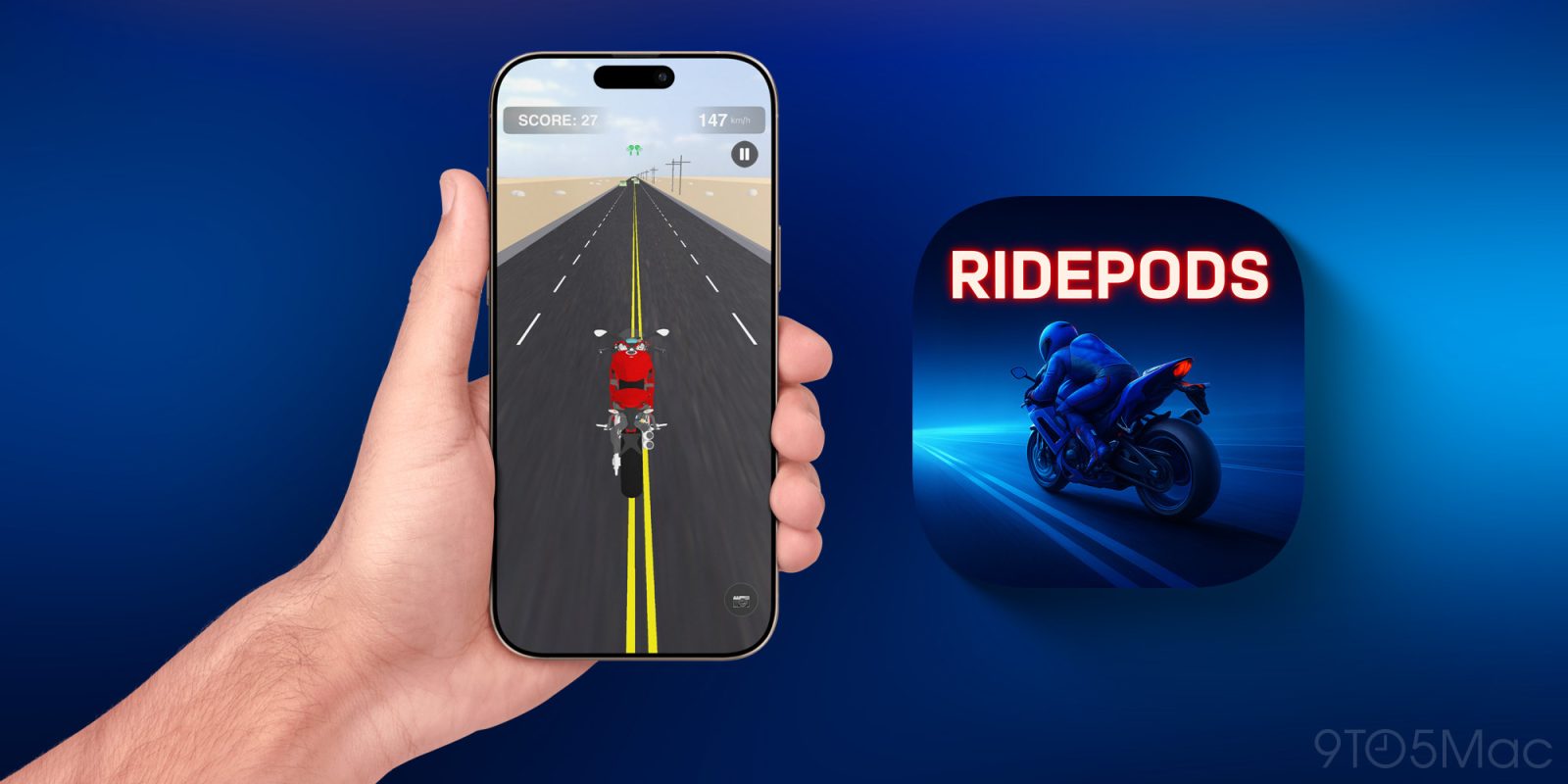
The intersection of wearable technology and mobile gaming has always been defined by physical controllers, touchscreen interfaces, and, occasionally, augmented reality overlays. However, a clever new application on the Apple App Store is challenging these conventional paradigms by repurposing a ubiquitous audio accessory into a dynamic motion controller. Titled RidePods, this novel racing title leverages the internal hardware sensors of Apple’s AirPods to create a completely hands-free gaming experience.
Rather than requiring a Bluetooth gamepad, an external controller clip, or frantic finger-tapping on an iPhone screen, RidePods invites players to control an on-screen motorcycle purely through physical head movements. By harnessing the sophisticated spatial audio and dynamic head-tracking capabilities originally designed for immersive media consumption, the game transforms everyday earbuds into responsive inertial navigation units.
While the concept of motion-controlled gaming is hardly revolutionary—dating back to the Nintendo Wii era and appearing frequently in modern VR headsets—its implementation within consumer-grade true wireless stereo (TWS) earbuds represents a fascinating evolution in micro-hardware utility. This development highlights a broader industry trend: developers and engineers are looking inward at existing device ecosystems to extract novel functionalities far beyond their original design specifications. As mobile platforms continue to mature, innovations like RidePods offer a compelling glimpse into how software cleverness can unlock hidden potential in hardware consumers already own.
Detailed Chronology
The emergence of RidePods as a viral talking point within the iOS development and enthusiast communities did not happen in a vacuum. It represents the convergence of progressive hardware updates by Apple and independent app development.
The Evolution of AirPods Tracking Technology
To understand how RidePods functions, it is necessary to examine the architectural foundation laid by Apple over several hardware generations. When Apple first introduced Spatial Audio with dynamic head tracking, the primary goal was to anchor multi-channel sound fields to a user’s physical environment. If a wearer turned their head to the left, the audio channels would shift dynamically to ensure the virtual sound source appeared to remain stationary in front of them.
Achieving this required packing sophisticated internal components into an exceptionally small form factor:
- High-G Accelerometers: Custom-built silicon sensors capable of measuring sudden linear accelerations and tilts.
- Custom Gyroscopes: Miniature angular velocity sensors that track rotational movement around multiple axes with sub-millimeter precision.
- Onboard Processing Chips: Dedicated chips (such as the H1, H2, or specialized variants) capable of processing sensor fusion algorithms locally with ultra-low latency before transmitting spatial orientation data to the host iPhone, iPad, or Mac.
Over successive iOS iterations—culminating in recent feature rollouts—Apple has gradually refined these low-level APIs, opening up more precise access to motion data for third-party developers.
The Conception and Release of RidePods
Recognizing the untapped potential of these low-latency orientation streams, independent developers set out to test the limits of the framework. The result was the creation and subsequent App Store launch of RidePods, a specialized racing game where players pilot a virtual motorcycle.
The application quickly caught the attention of major tech publications, most notably The Verge, which highlighted its unique input mechanism. Instead of touching the stem of the AirPod—a control scheme that would likely induce physical fatigue or accidental dislodgement—the game requires no physical contact with the earbuds during active gameplay.
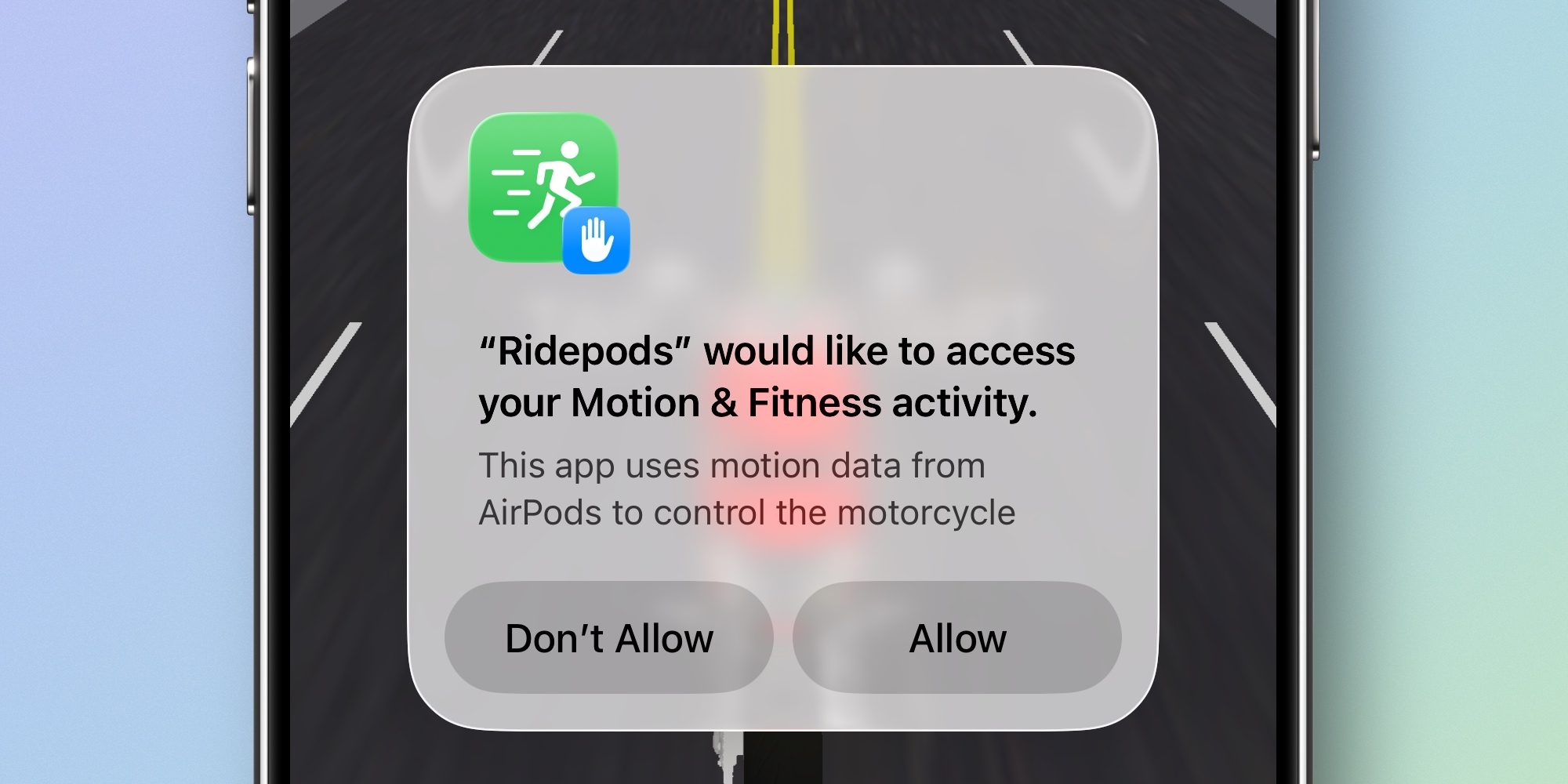
Upon launching the application and calibrating the connection, the game reads the real-time pitch, yaw, and roll data streamed from the AirPods. When a player tilts their head to the left or right, the software translates those angular changes into directional steering commands for the motorcycle. Early adopters and reviewers have praised the game for its intuitive onboarding process and its uncanny ability to make simple head tilts feel like natural leaning motions on a two-wheeled vehicle.
Supporting Context & Metrics
To appreciate the significance of RidePods, one must analyze the broader market metrics of the mobile gaming sector, the ubiquitous penetration of AirPods, and the technical mechanics of spatial sensor fusion.
The Scale of the Ecosystem
Apple’s AirPods line commands a staggering market share within the global true wireless stereo (TWS) landscape. Industry estimates suggest that Apple routinely ships tens of millions of units annually, maintaining a dominant position in the premium audio segment. This means that hundreds of millions of consumers globally already possess hardware equipped with the exact inertial measurement units (IMUs) required to run games like RidePods.
By designing a game that utilizes pre-existing consumer hardware, developers bypass one of the greatest friction points in modern gaming: the hardware barrier to entry. While specialized VR headsets or high-end motion-tracking peripherals require substantial financial investments, an application that works with hardware a user already wears while commuting or working opens up an immediate, massive addressable market.
Technical Breakdown: How Head Tracking Becomes Steering
The mechanics behind the illusion of hands-free steering rely on complex mathematical filtering:
- Calibration and Baseline Setting: When a race begins, the game establishes a "neutral" baseline based on the user’s natural forward-facing head position.
- Vector Mapping: As the user rotates their head, the gyroscopes and accelerometers measure the delta (change) from the baseline vector.
- Smoothing Algorithms: Raw sensor data is notoriously prone to jitter and micro-movements caused by breathing, talking, or walking. RidePods applies proprietary smoothing algorithms to filter out extraneous noise, ensuring that intentional steering inputs translate into smooth, predictable vehicular motion while ignoring minor physical adjustments.
- Latency Optimization: For a game to feel responsive, input-to-photon latency must remain under strict thresholds (ideally under 50 milliseconds). Because Apple’s proprietary audio-routing and sensor-fusion pipelines prioritize real-time performance, the delay between a physical head turn and the on-screen reaction is virtually imperceptible to the human eye and inner ear.
Compatibility Landscape
Naturally, this novel input method relies entirely on hardware capabilities. RidePods supports any Apple AirPods model equipped with native spatial audio and dynamic head-tracking capabilities. This generally includes:

- AirPods (3rd generation and later)
- AirPods Pro (1st and 2nd generations)
- AirPods Max
Older standard AirPods models lacking internal motion sensors are naturally excluded from participating in this specific genre of gameplay.
Official Statements & Industry Reception
The release of RidePods has sparked lively conversations across developer forums, Reddit communities, and tech journalism circles regarding the future of unconventional human-computer interfaces (HCI).
While independent developers view the app as a triumph of creative problem-solving, traditional gamers and accessibility advocates are looking at the release through a different lens. Early user reviews and community commentary emphasize both the novelty and the ergonomic limitations of the medium.
"While finding a brand new way to interact with a mobile screen is genuinely thrilling, the physical reality of head-tracking gaming imposes its own boundaries," noted one early reviewer. "It’s an absolute blast for short, energetic bursts, but nobody is looking to spend a three-hour gaming marathon swivelling their neck back and forth."
Accessibility experts, meanwhile, have pointed out the potential implications for alternative input systems. Although RidePods is explicitly marketed as an entertaining racing game, the underlying technology—mapping minor physical gestures or head orientations to digital actions—shares conceptual DNA with accessibility tools designed for users with limited upper-body mobility. While full accessibility integration requires rigorous design considerations beyond a standard entertainment app, the underlying concept demonstrates how ambient wearable sensors can democratize interaction methods.

Apple itself has maintained its characteristic silence regarding third-party apps utilizing standard system APIs for creative purposes, though the company’s ongoing expansion of developer frameworks suggests tacit support for innovative API utilization.
Future Outlook
The launch of RidePods serves as a micro-case study for what could become a broader trend in mobile app design. As wearable devices become increasingly sensor-dense, the barrier between audio reproduction, biometric monitoring, and spatial input continues to blur.
Where Do We Go From Here?
- Genre Expansion: While racing games are a natural fit for head-tracking (mirroring the physical act of looking into a turn), other genres could benefit. Flight simulators, first-person exploration games where looking around controls the camera view independently of movement, and rhythm games could all theoretically leverage earbud telemetry.
- Ergonomic and Health Considerations: As developers experiment with prolonged physical inputs via the neck and head, ergonomics will become paramount. Software designers will need to implement strict session-length recommendations or subtle calibration pauses to prevent muscle strain, fatigue, or motion sickness—a phenomenon well-documented in early virtual reality implementations.
- Deeper Ecosystem Integration: Future hardware iterations from Apple and competitors may incorporate even more advanced biometric and inertial sensors. Imagine earbuds capable of tracking subtle jaw clenches, facial expressions, or micro-nods to execute secondary gaming commands, turning a simple listening device into a multi-modal control interface.
Conclusion
RidePods may not single-handedly dethrone traditional controllers or touchscreens, and it is unlikely to replace dedicated gaming hardware for prolonged sessions. However, its arrival on the App Store is a refreshing reminder of the ingenuity living within the independent development community. By transforming high-end acoustic earbuds into steering wheels, it challenges our assumptions about what everyday tech accessories can accomplish when viewed through a creative lens.
For users eager to test out this novel form of digital navigation, RidePods is currently available as a free download on the iOS App Store. Whether this trend sparks a wave of motion-controlled audio accessories or remains a brilliant, highly specific novelty, it has successfully pushed the boundaries of how we play on the go.








Belum ada komentar. Jadilah yang pertama berkomentar!