

Executive Summary | October 30, 2026
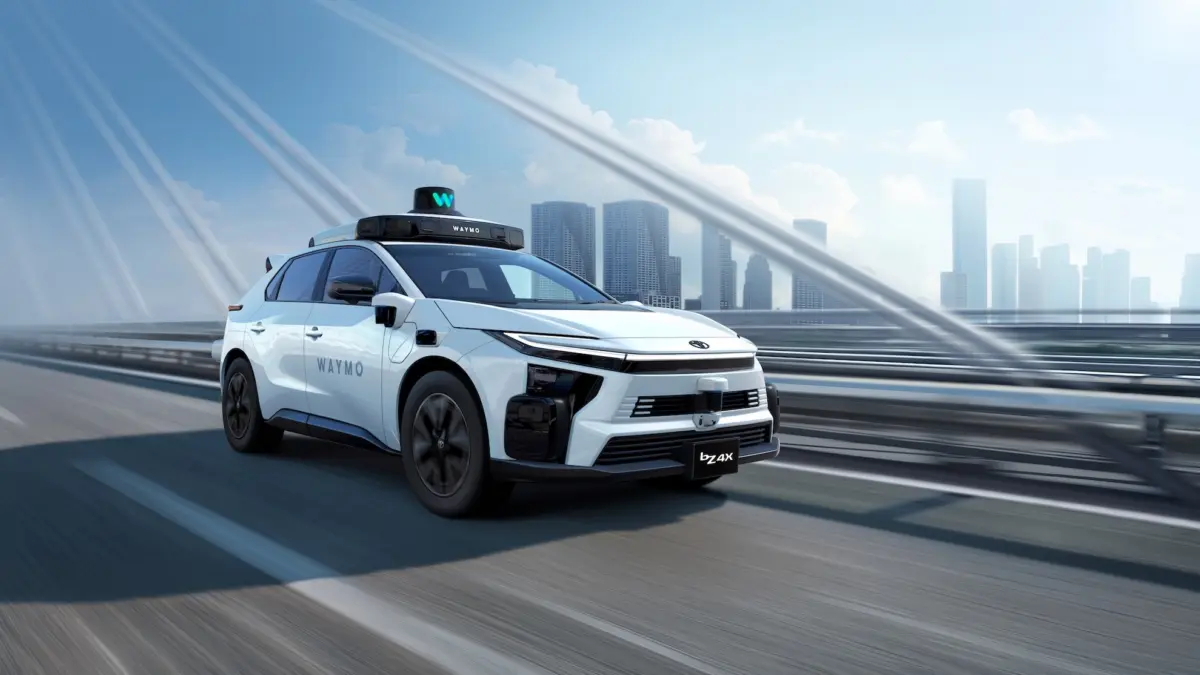
In a landmark convergence of Silicon Valley autonomy and Japanese automotive engineering, Waymo and Toyota Motor Corporation have officially locked in a definitive partnership to manufacture, test, and deploy self-driving electric vehicles internationally. Beginning next year, Waymo will kick off on-road testing of autonomous Toyota bZ4X crossovers in Japan, laying the groundwork for a broader, multi-region commercial rollout.
The agreement, announced early Friday morning, transitions a tentative preliminary pact signed 18 months ago into a formal commercial and technological union. Under the current framework, Toyota will manufacture the 2027 bZ4X models—marketed simply as the "BZ" across North America—and directly integrate the Waymo Driver hardware-software stack right off the assembly line at its Takaoka factory in Japan.
While initial trials will take place on home turf in Japan with the ultimate goal of launching a fully commercial robotaxi service, the strategic blueprint extends far beyond Asia. The vehicles are uniquely suited for right-hand-drive international markets, including the United Kingdom, where Waymo has quietly spent months gathering data and testing its autonomous Jaguar I-Pace fleet in London.
Beyond robotaxis, the partnership opens the door to future consumer applications, with both companies actively examining how Waymo’s autonomous technology might eventually be integrated into personally owned Toyota vehicles. As the autonomous vehicle (AV) industry matures past early-stage experimentation, this alliance signals a definitive shift: autonomous technology is moving from bespoke retrofits to mass-production scale.
Detailed Chronology: From Casual Dating to a Definitive Pact
To understand the weight of this announcement, one must look backward at the evolution of the relationship between two of the most influential entities in global mobility.
The 2025 Prelude: A Trial Relationship
Eighteen months prior to this definitive agreement, in April 2025, industry insiders raised eyebrows when Waymo and Toyota signed a loose preliminary framework. At the time, the memorandum of understanding was widely categorized by analysts as a "let’s see what happens" venture. The wording of the initial announcement was deliberately vague, leaving ample room for interpretation as to whether Toyota would build a dedicated purpose-built autonomous vehicle (AV) or if Waymo would simply adopt an existing Toyota platform.
For much of 2025, Waymo dominated headlines with its scaling efforts in U.S. metropolitan hubs like San Francisco, Phoenix, Los Angeles, and Austin, relying primarily on its tried-and-true Jaguar I-Pace fleet and growing numbers of modified fifth- and sixth-generation hardware platforms. Meanwhile, Toyota was methodfully refining its electric vehicle (EV) architectures, notably the bZ series, while keeping a watchful eye on the exploding, albeit capital-intensive, autonomous ride-hailing sector.
The October 2026 Breakthrough
The tone shifted dramatically in late October 2026. What began as exploratory discussions matured into a concrete manufacturing and operational strategy. Rather than forcing Waymo to retrofit vehicles post-factory—a costly, time-consuming process that has historically bottlenecked AV scaling—Toyota will build the autonomous bZ4X models directly at its Takaoka manufacturing facility.
By integrating the Waymo Driver stack during the primary manufacturing lifecycle, the partnership achieves a holy grail of autonomous vehicle development: factory-grade integration. This ensures tighter sensor calibration, improved vehicle durability, and a streamlined supply chain capable of supporting volume production for international deployment.
Global Strategy and Regional Rollouts: Japan, the UK, and Beyond
The selection of the Toyota bZ4X is strategic, driven heavily by geographic and regulatory demands. Specifically, the vehicle configuration natively supports right-hand-drive (RHD) markets, immediately opening up lucrative regions that have thus far been underserved by major Western robotaxi operators.
Conquering Japan
Waymo’s immediate testing phase will take place in Japan, a nation characterized by dense urban landscapes, complex pedestrian flows, and rigorous regulatory standards. Toyota’s home market serves as the ultimate proving ground. Successfully navigating Tokyo, Osaka, or regional Japanese cities will validate the adaptability of the Waymo Driver outside of North America. Waymo has made it clear that these initial trials are the direct precursor to establishing a commercial robotaxi network in Japan.
Expanding to the United Kingdom
Beyond Asia, the strategic compass points squarely at the United Kingdom. Waymo has spent the better part of a year quietly testing its autonomous Jaguar I-Pace vehicles on the streets of London, gathering critical behavioral datasets regarding UK traffic patterns, roundabouts, and narrow urban corridors.
However, scaling an I-Pace fleet indefinitely presented logistical ceilings. The introduction of the factory-built, right-hand-drive Toyota bZ4X provides Waymo with the exact vehicle architecture required to commercialize its London operations once local regulatory bodies grant the necessary public-road deployment permits.
Beyond Robotaxis: Consumer Vehicles and Infrastructure Integration
While the immediate economic engine of the Waymo-Toyota partnership is commercial ride-hailing, the broader scope of the agreement hints at a profound paradigm shift for consumer automotive markets and smart-city infrastructure.
Personally Owned Autonomous Toyotas
During the briefing, executives from both companies confirmed that the scope of collaboration is not restricted to commercial fleets. Toyota and Waymo have agreed to actively explore pathways to bring Waymo’s autonomous driving capabilities to personally owned Toyota passenger vehicles.
If successful, this would mark a major disruption in the consumer AV market. While competitors have struggled to deliver scalable, Level 4 autonomy to retail buyers, marrying Waymo’s software prowess with Toyota’s massive global manufacturing footprint could eventually democratize true self-driving technology for everyday car owners.
Smart Infrastructure and Real-World Safety Analytics
Another pillar of the agreement involves leveraging insights harvested from Waymo’s real-world commercial operations to enhance global road safety. While exact technical details remain tightly guarded, the initiative aims to feed real-time perception and traffic data back into broader safety frameworks.
Hiroki Nakajima, Executive Vice President and Board Member at Toyota, shed light on this vision during the announcement:
"This collaboration will help scale that technology and bring it to customers in Japan and beyond through Waymo’s ride-hailing service, and in parallel, Toyota will continue to explore how integrating vehicles with traffic infrastructure can make those roads safer still."
This statement suggests a dual-pronged approach: deploying autonomous vehicles while simultaneously using the high-definition telemetry of the Waymo fleet to inform Toyota’s vehicle-to-everything (V2X) infrastructure research. By coupling Waymo’s machine learning models with Toyota’s vehicular ecosystem, the partnership hopes to influence municipal planning and accident-reduction initiatives globally.
Market Implications: A New Era for the Autonomous Industry
The Waymo-Toyota alliance arrives at a pivotal juncture for the autonomous vehicle sector. For years, the industry was bifurcated: tech giants attempted to build autonomous systems from scratch or rely on fragile retrofitting partnerships, while legacy automakers struggled to develop competitive full-stack AI autonomy in-house.
By pooling their respective superpowers—Waymo’s world-class artificial intelligence and autonomous software stack, combined with Toyota’s legendary manufacturing scale, supply chain mastery, and global distribution network—the two companies have established a new gold standard for industry collaboration.
As testing kicks off in Japan next year, all eyes will be on the Takaoka factory floor and the streets of London and Tokyo. If the bZ4X rollout proceeds smoothly, it will not only cement Waymo’s status as a truly global autonomous operator but also validate Toyota’s strategic pivot toward software-defined mobility. The autonomous future is no longer a localized Silicon Valley experiment; it is officially scaling worldwide.







Belum ada komentar. Jadilah yang pertama berkomentar!