

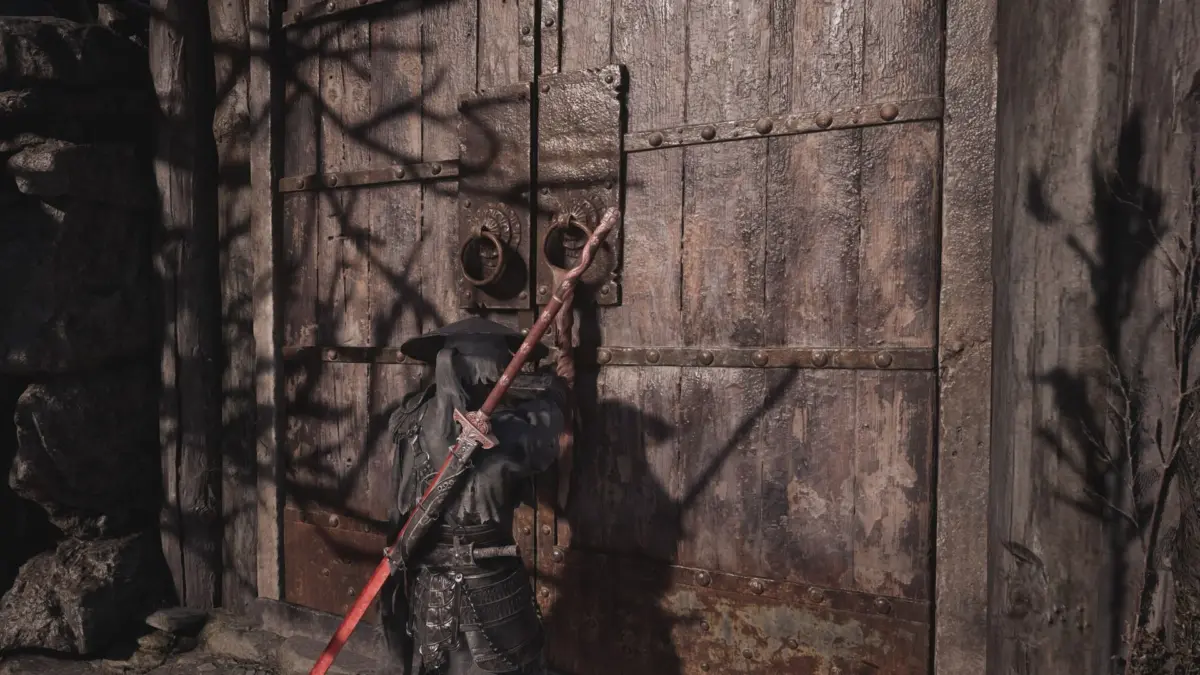
As Phantom Blade Zero continues to captivate the action-RPG community with its blistering martial arts combat and labyrinthine world design, players are increasingly running into complex navigation puzzles and misleading environment cues. Among the most prominent early-to-mid-game stumbling blocks is the elusive Backstreet Courtyard Key—an item that has sent countless players down a frustrating rabbit hole of false assumptions, wasted exploration hours, and dead-end theories.
For many, the initial instinct is to hunt down the Backstreet Courtyard Key under the conviction that it serves as the master pass to open the tightly guarded, locked gates leading toward Old Man Gen’s house and the third acolyte scarecrow. However, exhaustive community testing and developer-aligned progression routes reveal a common misconception: that gate is entirely unrelated to the key. Pursuing it for that purpose leads to a dead end.
Instead, navigating Phantom Blade Zero‘s densely layered zones requires a meticulous understanding of regional mechanics, boss-drop abilities, and multi-tiered side quests. This comprehensive investigative guide breaks down the true purpose of the Backstreet Courtyard Key, untangles the alternate routes required to reach Old Man Gen’s house, and provides a step-by-step walkthrough for players looking to untangle S-Game Studios’ intricate spatial design.
Detailed Chronology: Untangling the Backstreet Courtyard Key Mystery
To fully appreciate why so many players have lost hours scouring the cobblestones of Phantom Blade Zero for the Backstreet Courtyard Key, it is necessary to examine the chronological progression loop that triggers this widespread confusion.
Phase 1: The False Lead and the Locked Gate
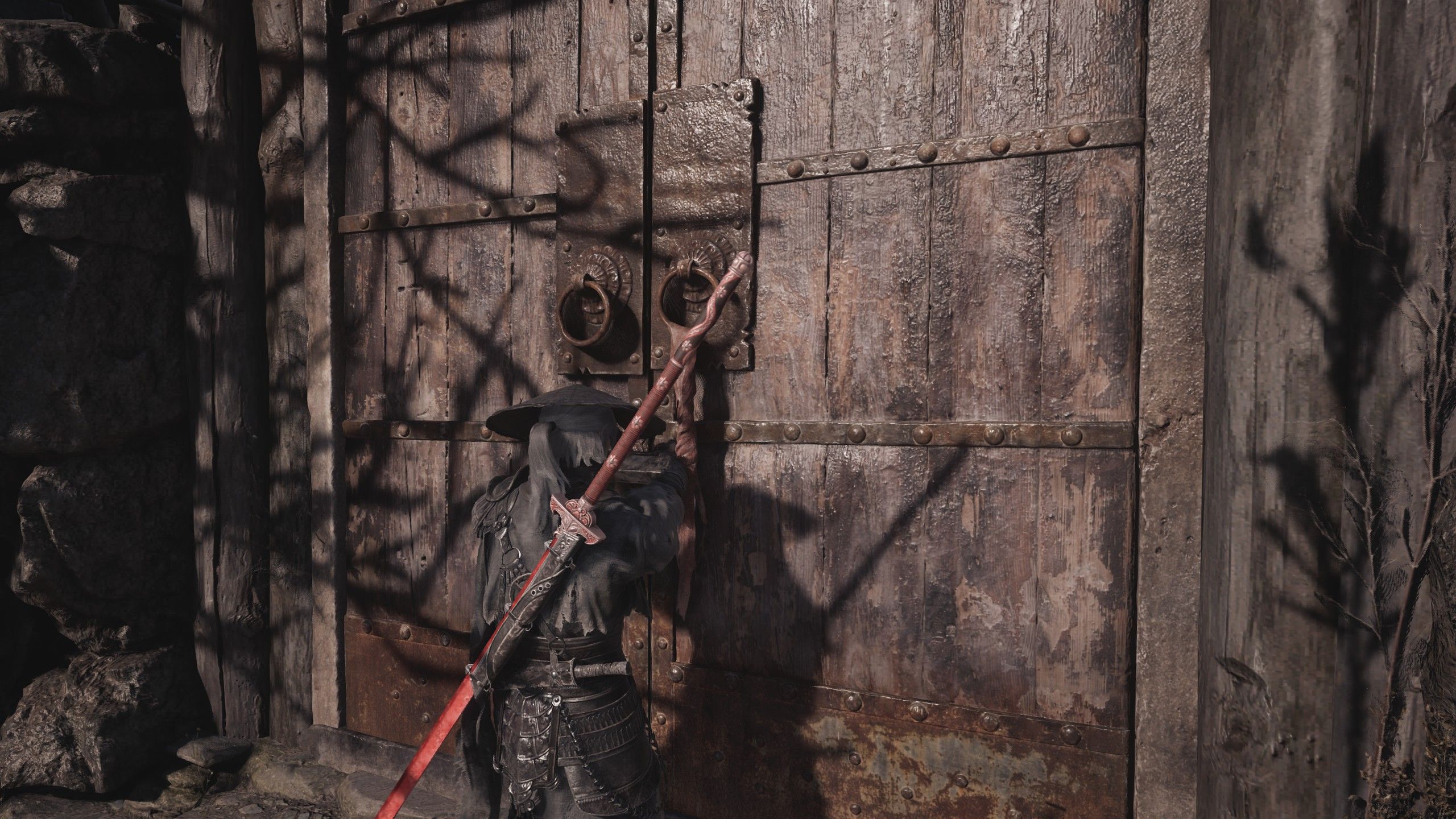
Early in the exploration phase, players frequently stumble across a prominent, locked gate that appears to block the path directly to Old Man Gen’s house and a mysterious third acolyte scarecrow. The proximity of this barrier naturally creates a psychological objective: find the key that opens this door.
Naturally, players scour the immediate vicinity, talk to passing NPCs, and look for hidden wall openings or vertical traversal points. When no obvious key presents itself locally, the hunt expands outward, planting the seed that a specific item—dubbed in community circles as the Backstreet Courtyard Key—must be the skeleton key to this specific blockade.
Phase 2: The Real Route to Old Man Gen’s House
As it turns out, the locked gate near Old Man Gen’s domain is a red herring regarding the key itself. Gaining access to this restricted area and tracking down the third acolyte scarecrow requires an entirely different set of tools:
- Defeat the Region Boss: Progression demands that you face down and conquer the region’s main boss to secure a vital drop: the Flaming Mane phantom edge.
- Repair with Lei Dang: Once acquired, take the Flaming Mane to Lei Dang and advance the main questline to have it repaired and attuned for use.
- Burn the Barrier: Return to the vicinity of the Pond of Fading Song bell—the haunting arena where you previously clashed with Gu Wanyue, The Wailing Wraith. Use the newly operational Flaming Mane to burn away the organic barrier obstructing the path.
- Flank the Obstacle: This ignition clears a route that leads around the back of the blockade, finally granting you seamless access to both Old Man Gen’s house and the elusive third acolyte scarecrow.
Phase 3: The True Nature of the Backstreet Courtyard Key
So, what does the Backstreet Courtyard Key actually do? If your goal is strictly related to Old Man Gen, you are chasing the wrong item. The true acquisition of the Backstreet Courtyard Key is tied to a completely separate, narrative-driven side quest chain deep within a later zone.
- Advance to the Mountain of Imprisonment: You cannot even begin this sequence until you have fought your way through the preceding chapters and successfully unlocked the Mountain of Imprisonment region. (Crucially, entering this zone requires the prior completion of the notoriously tricky Illusory Pipa questline).
- Engage the Shrine Outer Gate Couple: Upon arriving at the Mountain of Imprisonment, locate and converse with the tragic couple stationed near the Shrine Outer Gate.
- Uncover the Ledger of Atonement: Delve into the treacherous, shadowy cave systems situated directly beneath the shrine area. Scour the subterranean depths to locate the Ledger of Atonement quest item.
- Initiate the Bai Xue Quest: Return the ledger to the woman waiting at the site. Handing over the item triggers the Bai Xue questline, which ultimately rewards the player with the authentic Backstreet Courtyard Key.
Despite its high-profile name and the lengthy prerequisites required to claim it, the key’s utility is strictly localized to the Bai Xue narrative arc. It holds virtually no overarching value for breaking open early-game shortcuts or bypassing major environmental barriers elsewhere in the world.
Supporting Context & Metrics: World Design and Player Friction
The confusion surrounding the Backstreet Courtyard Key is a textbook example of modern action-RPG spatial design colliding with player expectations. Phantom Blade Zero, developed by S-Game Studios, leans heavily into "Metroidvania"-style backtracking, conditional environmental interactions, and secrets tucked behind multi-layered side quests.
Environmental Psychology in Level Design
Game directors often utilize locked gates and impassable vistas as psychological waypoints. When a player sees a destination (such as Old Man Gen’s house) but is physically barred from entering it, the human brain seeks an immediate, linear cause-and-effect solution: Gate = Locked, therefore Key = Needed nearby.
S-Game Studios subverts this expectation by separating spatial blockades into different categories:
- Physical Locks: Opened via traditional keys found through specific questlines (like the Backstreet Courtyard Key).
- Elemental/Ability Gates: Opened via combat rewards and structural upgrades (like the Flaming Mane phantom edge burning away barriers).
- Narrative Gates: Locked behind overarching world states, such as the completion of the Illusory Pipa quest to access the Mountain of Imprisonment.
When these design philosophies overlap without explicit signposting, player friction spikes. Forums, Reddit threads, and search engines quickly become flooded with queries from bewildered players trying to force square pegs into round holes.
Key Progression Milestones at a Glance
| Objective / Item | Primary Requirement | Associated Reward / Result |
|---|---|---|
| Old Man Gen’s House Access | Defeat Region Boss + Lei Dang Quest | Acquires Flaming Mane to burn barrier by Pond of Fading Song bell. |
| Mountain of Imprisonment | Complete Illusory Pipa questline | Opens gateway to late-game zones and specialized side quests. |
| Backstreet Courtyard Key | Complete Ledger of Atonement in caves | Unlocks specific narrative checkpoints for the Bai Xue quest. |
Official Statements and Developer Intent
S-Game Studios has consistently championed Phantom Blade Zero as an experience that respects player intelligence, refusing to hold the player’s hand through its grim, blood-soaked wuxia universe. In previous developer rundowns and press briefings, the team emphasized that traversal is meant to feel like a masterclass in mastery—where combat capabilities directly bleed into exploration capabilities.
The integration of the Flaming Mane phantom edge as both a devastating combat tool and a world-clearing utility item highlights S-Game’s design ethos. Rather than handing out generic brass keys for every locked door, the developers designed exploration to be inextricably linked to combat progression. You do not merely find a key in a drawer; you earn the searing power of a boss’s weapon to carve your path forward.
Conversely, narrative keys like the Backstreet Courtyard Key serve to anchor the player within the game’s deeply tragic character arcs. By tying item acquisition to emotional stakes—such as recovering the Ledger of Atonement for the NPCs at the Shrine Outer Gate—S-Game ensures that exploration feels narratively earned rather than mechanically arbitrary.
Future Outlook: What This Means for Future Updates and DLC
As Phantom Blade Zero builds toward its eventual full release, the lessons learned from early-game hurdles like the Backstreet Courtyard Key will undoubtedly shape how S-Game Studios approaches level design and user interface feedback.
Potential Quality-of-Life Adjustments
While the game’s mysterious nature is a core part of its charm, developer feedback loops often highlight areas where ambiguity crosses the line from "engaging mystery" to "frustrating dead end." Future patches may introduce subtle map markers, refined quest logs, or environmental environmental hints that help direct players who find themselves trapped in circular logic loops regarding locked doors.
Expanding the Wuxia Sandbox
For players who have already mastered the intricacies of the Mountain of Imprisonment, navigated the Illusory Pipa quest, and secured the Backstreet Courtyard Key, the horizon holds even greater challenges. S-Game Studios has indicated plans to expand the game’s scope with intricate post-launch content, deeper weapon variants, and expanded regions that will undoubtedly test players’ mastery of both blade and brain.
Ultimately, surviving the shadowy underworld of Phantom Blade Zero requires patience, lateral thinking, and a willingness to abandon preconceived notions of how a door "should" be opened. Whether you are burning away barriers with the Flaming Mane or diving into subterranean caves for the Ledger of Atonement, the path forward belongs only to those who look beyond the obvious lock.








Belum ada komentar. Jadilah yang pertama berkomentar!