The independent film landscape welcomes back one of its most defining architects as director Joe Swanberg returns to his signature wheelhouse of raw, unvarnished relationship dramas with his latest feature, The Sun Never Sets. Set against the sprawling, rugged backdrop of Alaska, the film tackles the messy architecture of modern romance, centering on a complex love triangle that slowly unfurls into a sprawling, emotionally turbulent love rectangle. Known for pioneering the improvisational "mumblecore" movement of the mid-2000s, Swanberg brings his distinctively intimate, uncomfortably honest storytelling back to the forefront after a creative hiatus and a foray into television series production.
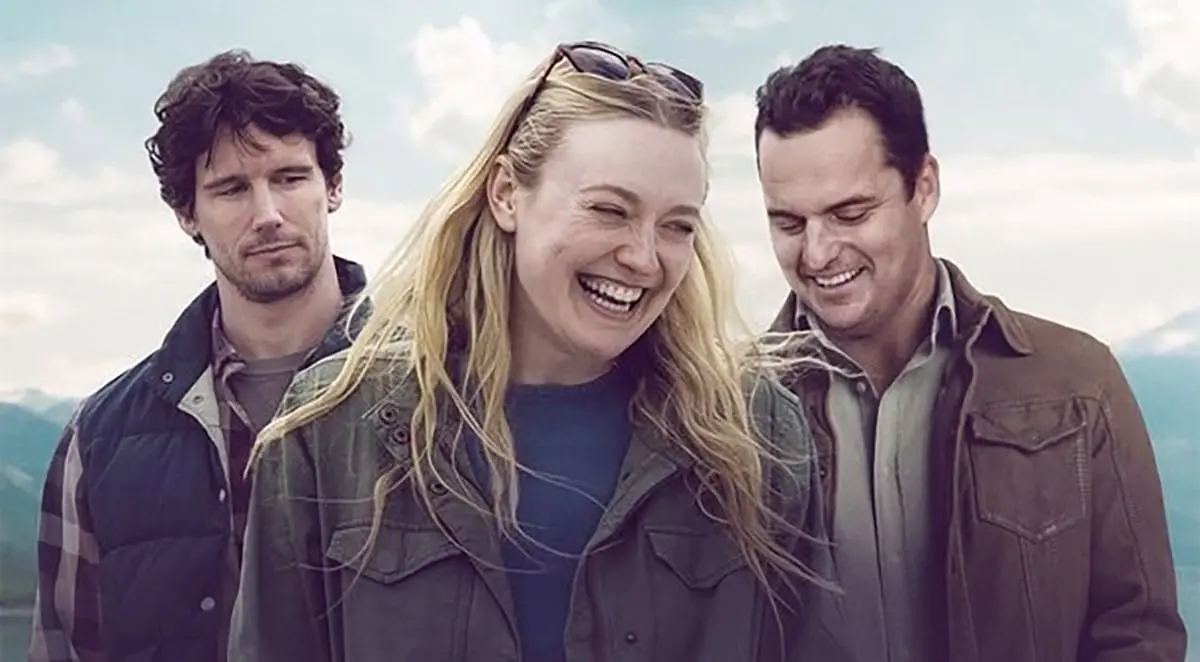
Starring Dakota Fanning alongside reliable Swanberg collaborator Jake Johnson and newcomer Cory Michael Smith, The Sun Never Sets investigates the psychology of indecision, commitment phobia, and the illusion of the "perfect partner." To celebrate the film’s release, director Joe Swanberg and stars Jake Johnson and Cory Michael Smith sat down for an exclusive, wide-ranging discussion about the unique, high-wire act of improvisational filmmaking, the vulnerability required to unearth authentic emotional truths, and the distinct collaborative energy that defines a Swanberg set.
Detailed Chronology & Production Genesis
Returning to the Roots of Independent Cinema
For a generation of filmmakers and cinephiles rooted in the Midwest, Joe Swanberg’s name carries substantial weight. After cutting his teeth as a travel coordinator for the Chicago International Film Festival and famously churning out seven low-budget independent features in a single calendar year—often acting in them as well—Swanberg became synonymous with a subgenre that prioritized naturalistic performances over rigid, word-for-word screenplays. His works have historically functioned as astutely observed, emotionally raw-for-comfort dissections of human coupling.
Following a detour into prestige television and a brief creative hiatus, Swanberg’s return to feature filmmaking with The Sun Never Sets feels like a homecoming. However, rather than retreating to familiar urban loft apartments or Midwestern suburbs, Swanberg transports his signature brand of emotional friction to the atmospheric, isolated expanse of Alaska.
Plot Mechanics: The Anatomy of a Breakup
The narrative catalyst of The Sun Never Sets is as believably flawed as it is audacious. Dakota Fanning stars as Wendy, a woman standing firmly at a crossroads in her life. Surrounded by a peer group rapidly settling down and building families, Wendy finds herself questioning her trajectory alongside her older boyfriend, Jack (played by Jake Johnson). Jack, radiating a perhaps unjustified level of confidence, suggests a summer-long separation. His logic? To allow Wendy space to live life, explore alternative paths, and determine whether their relationship—marked by the fact that they will have no more children (Wendy has accepted and grown fond of Jack’s daughters from a previous relationship) and his distinct disinterest in outdoor mainstays like boating and camping—is genuinely what she wants.
Confiding in a friend via Zoom, Jack casually remarks that he isn’t worried about the separation because everyone in Alaska is awkward and smells like salmon. Enter Chuck, played by Cory Michael Smith. A former flame who has ostensibly reformed his notorious bad-boy ways, Chuck re-enters Wendy’s orbit, presenting himself as a mature, viable option for her future. What follows is a deeply human exploration of how well-intentioned people can thoroughly scramble each other’s emotional compasses, leaving everyone involved stranded in a sea of doubt.
Supporting Context & Metrics: The Mechanics of Improv
Casting the Ensemble: Chemistry Meets High-Wire Acting
Bringing fresh talent into Swanberg’s established creative ecosystem requires a distinct psychological alignment. While Johnson is a seasoned veteran of Swanberg’s style—having famously starred in Drinking Buddies opposite Olivia Wilde and Anna Kendrick, as well as Digging for Fire and Win It All—actors like Fanning and Smith were stepping into an entirely unscripted frontier.
The transition from traditional, script-reliant filmmaking to Swanberg’s looser, framework-driven environment can induce palpable anxiety for newcomers. Smith noted that his initial conversations with the director involved confronting personal vulnerabilities that mirrored his character’s own flaws. Yet, the collaborative ethos of the set quickly dismantled those fears. Rather than working from traditional line memorization, the cast was tasked with living inside the scene, reacting in real-time to the emotional stakes dictated by the narrative arc.
The Baseball Trivia Barometer
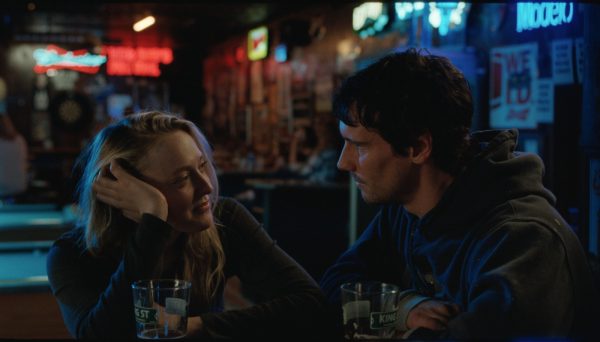
One of the film’s most memorable and structurally efficient narrative devices occurs during a seemingly innocuous bar trivia sequence. Written by Assistant Director Mike Brune—who also plays the trivia host—the scene features a pop-culture trivia question centered around baseball.
The inclusion of the baseball question serves as a brilliant narrative shorthand, instantly delineating the vast operational differences between Jack and Chuck. When the trivia host announces the baseball-related query, Chuck’s audible groan ("Fuck") and the audience’s immediate, vocalized realization that he is entirely out of his depth demonstrate the precision hidden beneath Swanberg’s loose, improvisational exterior.
Official Statements & Roundtable Insights
The Collaborative Process: Trusting the Framework
During their roundtable conversation, the creative team pulled back the curtain on how The Sun Never Sets achieved its remarkable sense of lived-in authenticity.
Joe Swanberg on integrating new talent:
"When Cory and I first talked, we dove right into a two-hour conversation off the bat. I love making movies. I occasionally act myself. And I have a tremendous amount of respect for that job, and working with new people is part of what keeps this career interesting and exciting… There’s no formula to this. You’re not just jumping into the ‘Joe and Jake show,’ but there’s a huge amount of space for you to come in and influence this process, affect the character, and even change the script or bring yourself in a big way."
Cory Michael Smith on overcoming initial hesitation:
"In my first conversation with Joe, I was really upfront with him and Jake. I said I’ve never worked like this, and I do have a little bit of anxiety and trepidation about this, but also, it is part of what’s exciting… Joe loves making movies and has a lot of experience. His sets are one of the calmest environments I’ve ever worked in. There was a real tone of relaxation and freedom. Jake was really great ahead of time. We had a FaceTime, and he basically said, ‘You’re a good actor. You know how to do this.’"
Jake Johnson on the realities of unscripted performance:
"What I’ve now found 15 years later, after being on a bunch of different sets, is that it’s actually not that different. Joe has a very clear vision. He knows exactly what he wants. The only thing you can’t do as an actor, which we all love to do, is obsess over your lines and have anxiety that you’re gonna forget them… You’re just not allowed to do that. But you’re still obsessing over the story, the scene, and what’s happening. So when you show up, it just forces you to be present."
Navigating Emotional Truths and Personal Echoes
The film’s uncanny ability to evoke uncomfortable cringes from its audience stems directly from the actors tapping into genuine psychological friction. Smith admitted that his character’s struggles hit uncomfortably close to home.
Cory Michael Smith on on-screen vulnerability:
"Unfortunately, a lot of the things my character struggles with aren’t unfamiliar to me; I have spent years in therapy working against them. It was just, how do I pretend like I’ve never gone to therapy for any of these issues—my worst instincts? Watching this movie is personally a little difficult because I see behaviors on screen that feel a little too relatable to my past, and it makes me absolutely cringe and feel pretty awful."
Future Outlook
As The Sun Never Sets rolls out to audiences following its successful festival run, the film solidifies Joe Swanberg’s enduring relevance in contemporary American independent cinema. By proving that the improvisational framework he championed decades ago can gracefully mature alongside its creators, Swanberg has crafted a mature, funny, and occasionally agonizing portrait of modern romance.
For actors like Jake Johnson and Cory Michael Smith, the project highlights the vitality of stepping outside traditional Hollywood mechanics to embrace pure, present-tense performance. As the cultural conversation around relationship dynamics, emotional labor, and personal autonomy continues to evolve, The Sun Never Sets positions itself not merely as a romantic comedy or drama, but as a timeless mirror reflecting the beautiful, messy complications of choosing a path forward.











Belum ada komentar. Jadilah yang pertama berkomentar!