

Executive Overview
In the rapidly evolving landscape of contemporary roots and rock music, few trajectories have mirrored the meteoric rise of Grace Bowers. Initially heralded as a viral guitar prodigy who captured the internet’s attention during the global lockdowns of the COVID-19 pandemic, Bowers quickly transitioned from a bedroom shredder to a darling of the Nashville establishment. Yet, just as the industry pigeonholed her into a comfortable, roots-adjacent niche of southern blues, funk, and jam-band stylings alongside her backing ensemble, Grace Bowers & The Hodge Podge, the young artist executed a sharp, uncompromising pivot.
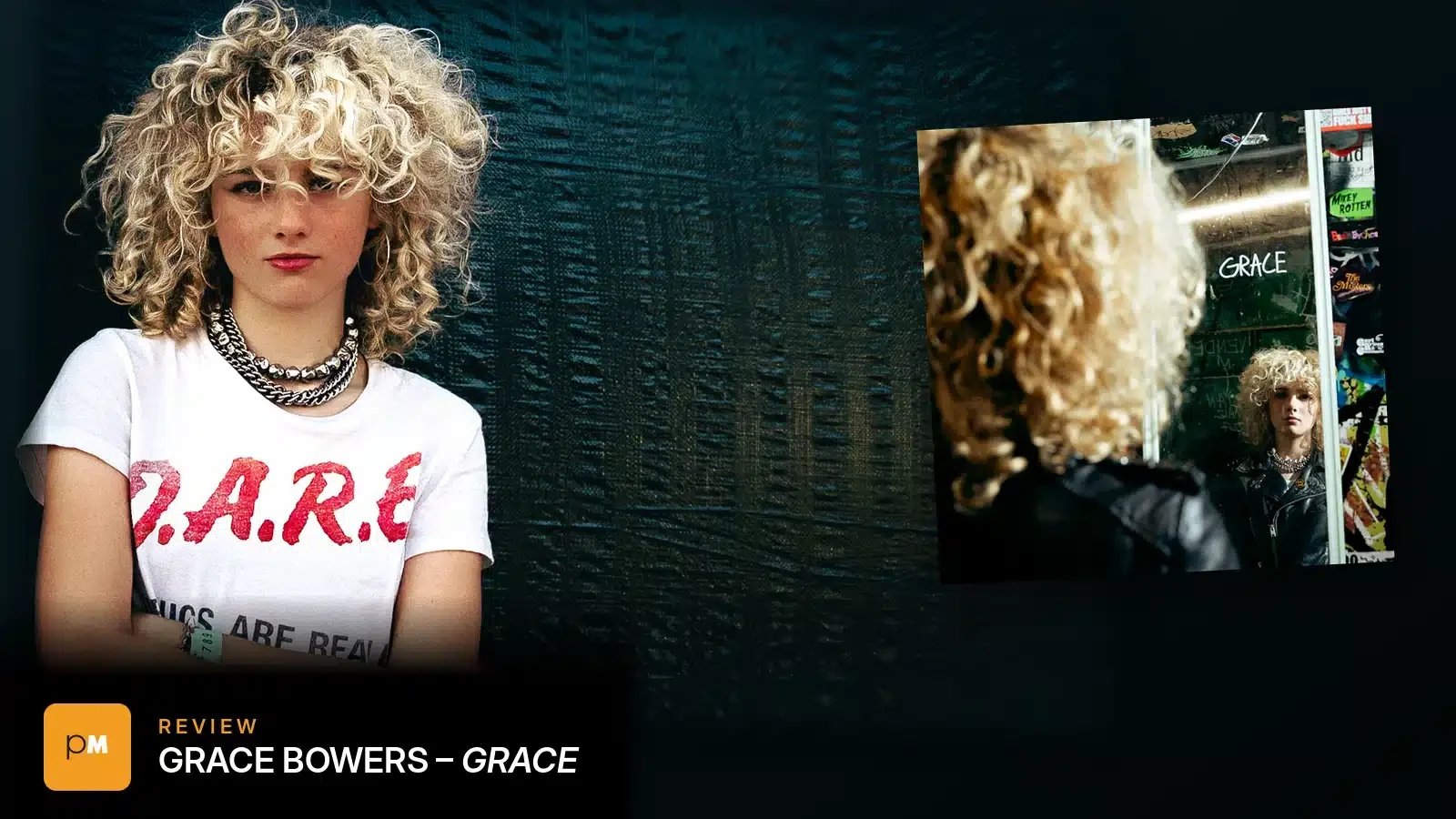
Released independently on November 6, 2026, her latest eponymous EP, Grace, marks a dramatic sonic departure. Trading the polished jams of her early career for buzzing, distortion-heavy electric-guitar riffs, rapid-fire staccato tempos, and unapologetic attitude, Bowers has fully embraced the kinetic fury of 1990s pop-punk and grunge. Across seven lean, highly energetic tracks—including provocative cuts like "Eat Shit and Die," "Cigarettes for Breakfast," "Holly Wouldn’t," and "19"—the 20-year-old musician forcefully steps up to the microphone. Once reticent to sing live, Bowers now commands the stage with a sneering, confrontational vocal delivery that cements her transformation from a technical virtuoso into a fully realized, ferocious frontwoman. This comprehensive review examines the mechanics of her reinvention, the cultural context of her retro-modern pop-punk aesthetic, and what this bold artistic pivot means for the future of guitar-driven rock.
Detailed Chronology
The Genesis of a Prodigy (2020–2023)
Grace Bowers’ journey into the public consciousness began long before she stepped foot on a professional stage. Picking up the guitar at the remarkably young age of nine, Bowers cultivated her craft through relentless practice and a deep fascination with the fretboard. When the COVID-19 pandemic ground the world to a halt in 2020, millions turned to social media for solace. Bowers utilized this digital ecosystem to share videos of her blistering guitar covers and improvisations. Her precocious technical capability, marked by fluid phrasing and a natural pocket for groove, quickly earned her a dedicated following of seasoned musicians and casual listeners alike.
Recognizing the gravity of her talent, Bowers and her family made the pivotal geographical and professional leap from California to Nashville, Tennessee—the epicenter of American roots music. In Music City, her reputation expanded from internet curiosity to industry-acknowledged phenomenon. She integrated herself into Nashville’s vibrant musical fabric, sitting in with legendary players and drawing eyes across the Americana and blues circuits.
Breakthroughs, Milestones, and the Roots Era (2024)
The year 2024 served as a watershed moment for the young artist. Cementing her arrival as a major player in the modern roots ecosystem, Bowers made her debut at the hallowed Grand Ole Opry precisely on her 18th birthday. The milestone was both symbolic and historic, signaling the traditional establishment’s embrace of a new generation of instrumentalists.
Accompanying her Opry debut was a nomination for the prestigious Americana Music Association Instrumentalist of the Year award—a rare nod for a teenager competing against veteran session players. During this period, Bowers’ collaborative resume expanded exponentially. She shared stages with an eclectic pantheon of musical royalty, including:
- Dolly Parton: Bridging generational divides in country and pop.
- Gary Clark Jr.: Aligning with modern blues-rock royalty.
- Peter Frampton: Nodding to classic rock virtuosity.
- Trey Anastasio: Merging her jam sensibilities with Phish-adjacent improvisational royalty.
- Chris Martin: Expanding into global pop-rock spheres.
Backed by her dynamic ensemble, Grace Bowers & The Hodge Podge, she earned widespread critical acclaim for fusing blues, funk, rock, and soul into a cohesive, high-energy live show. To the outside observer, Bowers was destined to be the next great torchbearer of traditional American guitar music.
The Punk Reimagining (2025–Present)
Yet, artistic stagnation has never appealed to true innovators. Behind closed doors and in the studio, Bowers was plotting a radical departure. Growing restless within the confines of polite jam-band and blues circles, she began gravitating toward the raw, unfiltered energy of high-octane rock.
In promotional press notes leading up to the release of Grace, Bowers made a striking confession: as recently as a year prior, she had vowed never to sing live in concert, preferring to let her guitar do the talking. However, as the songwriting process for the new EP took shape, her stance shifted entirely. Fronting her own material became not just a necessity, but the centerpiece of her artistic expression. The resulting independent release on November 6, 2026, shattered expectations, proving that Bowers was no longer content to merely play the notes—she demanded to write the rules and shout the lyrics herself.
Supporting Context & Metrics
Dissecting the Sound of Grace
Clocking in at a brisk, digestible runtime across seven radio-friendly tracks, Grace rejects the self-indulgent extended solos often associated with the jam-band and blues scenes from which Bowers emerged. Instead, the EP embraces the concise, punchy ethos of classic 1990s pop-punk and alternative rock.
Musically, the tracks are characterized by:
- Staccato Riffs: Sharp, rhythmic guitar strikes that cut through the mix with precision.
- Aggressive Rhythm Section: Pounding drums and thick, driving basslines that establish an unrelenting forward momentum.
- Frenzied Economy: Songs that burst out of the gate with maximum velocity and end abruptly the moment their narrative and sonic points are made.
The production relies on a heavy, saturated guitar tone that acts like a thick black crayon outline on a coloring book page—simple, bold, and starkly contrasting. This sonic simplicity feels refreshingly unpretentious, aligning with the raw emotional honesty of youth culture.

The Nostalgia Paradox and Pop-Punk’s Longevity
Pop-punk has always walked a precarious tightrope between genuine teenage angst and commercial pop parody. Acts like the Ramones and The Offspring successfully navigated this duality for decades, proving that three-chord fury and melodic hooks can appeal to both underground purists and mainstream stadium audiences.
As music critic and cultural observer Don Henley once famously lamented seeing a Deadhead sticker on a Cadillac, cultural touchstones inevitably shift. In the current era, perhaps that sentiment is best updated to spotting a vintage Nirvana T-shirt on a toddler. Nostalgia ensures that listeners can never truly step backward into the past, yet Grace manages to bypass cynical pastiche. By channeling the spirit of the ’90s through the unfiltered perspective of a 20-year-old writing in the mid-2020s, the EP sounds remarkably comfortable, relevant, and alive in the modern day.
Lyrical Themes: Satire, SKEPTICISM, and the Hypocrisy of Adulthood
Lyrically, Grace finds Bowers alternating between self-reflection and sharp-eyed observation of human folly. Rather than adopting a stance of moral superiority, her lyricism is deeply observant and frequently tongue-in-cheek.
- "19": A candid exploration of personal doubt, grappling with the anxieties and existential weight of entering young adulthood.
- "Holly Wouldn’t": A satirical examination of the exorbitant sacrifices everyday people make in pursuit of superficial success.
- "Cigarettes for Breakfast": A wry commentary on the absurdities individuals endure in the name of aesthetic beauty.
- "Fleas": A humorous, biting take on the lengths people go to simply "get laid."
- "Eat Shit and Die" & "Outta Sight Outta Mind": Direct confrontations against the hypocrisy of fair-weather flatterers and a palpable expression of contempt for those born into effortless privilege.
These themes are timeless. The foundational rock ‘n’ roll motto—that the adult world is inherently fraudulent and out of touch—remains as resonant today as it was during the era of Buddy Holly. Bowers revitalizes these classic adolescent grievances by delivering them over a driving four-four beat and razor-sharp guitar hooks.
Official Statements and Industry Insights
While major label publicity campaigns often rely on carefully curated talking points, Bowers’ transition has been documented through candid reflections shared in press materials and interviews surrounding the independent rollout of Grace.
Reflecting on her evolution from a silent instrumentalist to an empowered frontwoman, Bowers noted a profound psychological shift in her relationship with the microphone:
"A year ago, I said I wouldn’t sing live in concert. Now, that’s my favorite part."
This evolution highlights a vital turning point in her artistic maturity. By shedding the insecurities that previously kept her anchored exclusively to the fretboard, Bowers has unlocked a new dimension of performance artistry. Observers within the Nashville and broader independent rock communities have taken note of the courage required to pivot away from a lucrative, critically adored niche—such as blues and roots instrumentation—in favor of the abrasive, high-risk world of independent pop-punk.
Industry analysts suggest that Bowers’ independence—releasing Grace via an independent label structure—has granted her the creative autonomy necessary to execute this jarring genre pivot without corporate interference. By retaining full control over her image, song choices, and sonic direction, Bowers has signaled to the industry that she will not be typecast as a historical preservationist of vintage guitar styles, but rather as a living, breathing, and unpredictable contemporary force.
Future Outlook
As Grace resonates with critics and fans alike, the musical horizon for Grace Bowers has expanded exponentially. At only 20 years of age, she possesses a rare combination of elite technical proficiency, deep industry respect, and the fearless creative curiosity required to sustain a decades-long career.
What Lies Ahead
- Touring and Live Performance Integration: With her newfound love for vocal performance and fronting her band, future live iterations of Bowers’ tours promise to be markedly different from her early instrumental-heavy club sets. Expect high-octane, mosh-pit-friendly club shows where her vocal delivery matches the intensity of her blistering guitar solos.
- Genre-Fluid Evolution: While Grace firmly establishes her pop-punk credentials, Bowers’ background in blues, funk, and jam music suggests she will likely refuse to stay boxed into any single genre. Future releases may see her seamlessly blending punk aggression with intricate improvisational structures.
- A Blueprint for Young Artists: Bowers stands at the vanguard of a new generation of musicians who refuse to let digital virality dictate their artistic boundaries. Her successful pivot from internet prodigy to independent punk-rocker serves as a masterclass in artistic reinvention.
Ultimately, Grace proves that technical mastery does not have to be stuffy, and youth does not have to equal naivety without teeth. Grace Bowers is loud, proud, unapologetic, and fully in control of her narrative. The adult world may still be full of hypocrisy, but with an electric guitar in hand and a four-four punk beat driving the charge, Bowers has proven that she is more than ready to take it on. Let’s rock.





Belum ada komentar. Jadilah yang pertama berkomentar!