

Executive Overview
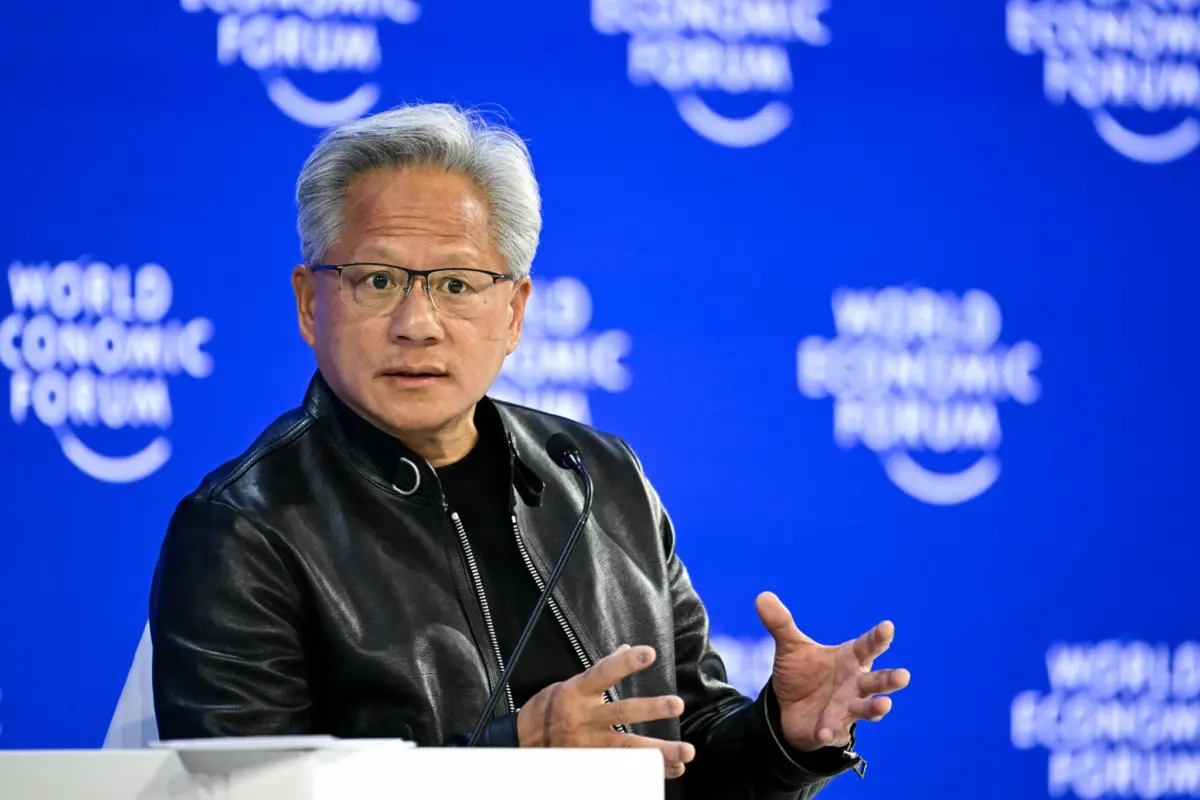
In an era where technology, politics, and media increasingly collide, few moments capture the volatile convergence quite like a live, impromptu phone call from the Oval Office interrupting a major tech conference. During the opening morning of the high-profile All-In Summit in Los Angeles, Nvidia Chief Executive Officer Jensen Huang found himself staring at an incoming call he simply could not send to voicemail. The caller was none other than United States President Donald Trump.
Rather than discreetly declining the call or stepping away from the microphone, Huang embraced the spectacle to the simultaneous delight of the audience and the presumed horror of public relations teams everywhere. In a move that immediately dominated headlines and social media streams, Huang broadcast the conversation live to the packed auditorium, looping the president into a panel discussion featuring some of the most influential venture capitalists and tech-adjacent political advisers in the country.
The conversation quickly pivoted from casual banter to heavy-hitting matters of national and global economic policy, specifically targeting the burgeoning debate over the pacing of artificial intelligence development. As Silicon Valley leaders increasingly fracture over whether to slow down frontier AI model releases due to existential safety concerns, both Trump and Huang forcefully rejected the idea, framing self-imposed regulatory or developmental slowdowns as strategic vulnerabilities that would hand an advantage to geopolitical rivals like China.
This unexpected intersection of the world’s most valuable chipmaker, prominent tech venture capitalists, and the executive branch lays bare the intensifying high-stakes power struggle over the future of American technology infrastructure. This report examines the unfolding chronology of the event, the underlying policy and safety debates surrounding artificial intelligence acceleration, the friction between local communities and massive data center expansions, and the broader economic implications of keeping the AI boom running at full speed.
Detailed Chronology: From AI Safety Debates to an Oval Office Interruption
The morning session of the All-In Summit was already tracking toward a provocative exploration of the tech industry’s internal ideological schisms before the phone rang. Hosted by the prominent venture capitalists known colloquially as the "besties"—including Chamath Palihapitiya, Jason Calacanis, and White House advisers David Friedberg and David Sacks—the panel had turned its attention to a controversial recent essay published by Anthropic CEO Dario Amodei.
In his manifesto titled “We Must Pace the Frontier,” Amodei argued that the rapid acceleration of AI capabilities poses unique alignment, security, and societal challenges, suggesting that the industry should intentionally pace its scaling and deployment to ensure safety guardrails can keep up. This stance has found prominent allies elsewhere in the tech ecosystem, with SpaceX and xAI CEO Elon Musk and OpenAI CEO Sam Altman publicly expressing support for cautious pacing under specific conditions.
However, Jensen Huang’s perspective has consistently diverged from this school of thought. The Nvidia chief has routinely championed a philosophy of relentless expansion, arguing that hardware advancements and model scaling must proceed aggressively to unlock breakthroughs in medicine, scientific research, and global productivity.
It was precisely this philosophical divide that drew the attention of the White House. While Huang and the All-In hosts dissected Amodei’s call for a slowdown, Huang’s mobile phone lit up. Recognizing the caller, Huang announced to the crowd, "I’m onstage with the besties," before working with stagehands to secure an extra microphone to project the audio.
Trump wasted no time injecting his signature rhetoric into the room. Playing on the contrast between Huang’s engineering genius and the practical realities of mobile software user interfaces, the president quipped:
"The great thing about life is Jensen can develop the most complex computer chip in the world… but he can’t figure out how to put you on speaker."
Once the audio technicalities were resolved, the conversation cut straight to the heart of the AI pacing debate. Trump dismissed calls to slow down AI innovation as a dangerous trap orchestrated by external actors and domestic political opponents.
"They’re just playing right in the hands of a lot of people that don’t want to see it happen," Trump told the conference attendees. "That could be political people. It could also be China. And we’re not going to let that happen. It’s a hoax."
To which Huang, cheered on by the audience, responded: "You’re right. We’re not going to let that happen, sir."
The exchange underscored an increasingly tight alliance between the current administration and aggressive hardware-scaling proponents within Silicon Valley. Trump went on to validate Huang’s unyielding momentum, assuring the Nvidia CEO that despite necessary administrative checks, the administration’s full weight stands behind the expansion of the domestic tech ecosystem.
"We have to be a little bit careful… We have to do things and we have to do them prudently, but that doesn’t mean we’re going to stop an industry," Trump said. "So I’m with you all the way. I didn’t even know how you felt about it. I just hoped you felt the same way as me. We’re going to lead."
Supporting Context & Metrics: The Geopolitical and Local Realities of the AI Boom
While the spectacle of an onstage presidential call offered a dramatic highlight for the All-In Summit, the policy implications rippling out from the conversation touch on a massive, physical reality: the exponential demand for power, land, and capital required to build out the infrastructure underpinning generative artificial intelligence.
The Geopolitical Dimension
The narrative advanced by Trump, Huang, and tech leaders such as Y Combinator CEO Garry Tan frames resistance to infrastructure expansion—ranging from regulatory hurdles to safety-focused slowdowns—as part of a coordinated campaign to hobble American technological dominance. Proponents of this view argue that if U.S. companies voluntarily throttle their compute capacity or stall data center deployment out of an abundance of caution, foreign adversaries, most notably China, will aggressively fill the vacuum.
In this zero-sum framing, artificial intelligence is viewed through the lens of Cold War-style supremacy. Whoever controls the most advanced compute clusters, trains the most sophisticated models, and secures the most resilient supply chains dictates the global economic and military balance of power for the next century. Consequently, any domestic friction—whether coming from safety advocates warning of existential risk or local communities pushing back against industrial zoning—is frequently re-characterized by industry boosters as strategically counterproductive.
The Ground-Level Backlash: Polling and Public Sentiment
Yet, the friction slowing down the AI infrastructure boom is not merely a theoretical debate among Silicon Valley elites or a foreign psyop; it is increasingly rooted in tangible, local grievances felt by everyday Americans.
Recent data from Gallup highlights a significant disconnect between the ambitions of tech executives in Washington and Silicon Valley, and the desires of residents living near proposed technology developments:
- Overwhelming Local Opposition: Seven in 10 Americans (roughly 70%) actively oppose the construction of massive data centers in their local areas.
- Environmental Anxieties: More than 50% of survey respondents explicitly cite concerns over the strain data centers place on environmental resources, particularly regarding massive water consumption for cooling systems and the explosive draw on local electrical grids.
- Economic Quality of Life: Approximately 20% of respondents express deep concern regarding the impact of these mega-facilities on their cost of living, rising electricity bills, and overall quality of life.
From Loudoun County, Virginia, to emerging tech hubs across Massachusetts and the Midwest, local zoning boards and municipal governments are increasingly locking horns with developers over grid capacity and environmental degradation. While tech leaders view every blocked or delayed data center as a blow to national competitiveness, local residents view them as unwelcome industrial neighbors that hike utility bills and tax local resources without offering proportional community benefits.
Official Statements and Industry Alignment
The public split among AI luminaries regarding development speed highlights a deep identity crisis within the tech sector.
On one side, the "safety-first" coalition—epitomized by Anthropic’s Dario Amodei, and supported at various times by OpenAI’s Sam Altman and xAI’s Elon Musk—argues that the exponential nature of AI scaling introduces unpredictable hazards. These leaders advocate for structured pauses, international oversight, and measured capability milestones to ensure that humanity maintains effective control over advanced autonomous systems.
On the other side, the "accelerationist" alliance—anchored by hardware giants like Jensen Huang, supported by venture capitalists like the All-In podcast hosts, and heavily courted by the Trump administration—argues that hesitation is the greatest risk of all. From this perspective, the utility of AI in curing diseases, optimizing supply chains, and strengthening national defense outweighs the speculative risks of future misalignment.
By taking the president’s call live on stage, Huang effectively solidified a public alignment between Nvidia’s corporate trajectory and the administration’s deregulatory, pro-expansion mandate. The message delivered to the global tech community was unambiguous: the hardware will keep shipping, the data centers will keep breaking ground, and regulatory friction will be aggressively challenged at the highest levels of government.
Future Outlook
The impromptu phone call at the All-In Summit is more than just a viral media moment; it serves as a harbinger of how the intersection of tech policy and governance will operate moving forward. Several critical trends are poised to shape the landscape over the coming years:
- A Clash Between Federal Ambition and Local Resistance: As the federal government pushes to fast-track permits and clear obstacles for massive energy and data center projects, local communities are mobilizing with unprecedented legal and political force. The battle over grid access and environmental impact will increasingly move from quiet municipal zoning meetings to high-stakes state and federal courts.
- Deepening Ideological Rifts in Silicon Valley: The open rejection of safety-pacing frameworks by market leaders like Huang and political figures like Trump will likely cement a permanent ideological schism among AI developers. Companies that prioritize slow, cautious alignment may find themselves politically and economically isolated by an administration dead-set on aggressive national acceleration.
- The Compute Supply Chain as Foreign Policy: With Nvidia sitting at the absolute epicenter of the global AI hardware supply chain, CEO Jensen Huang finds himself cast not merely as a corporate executive, but as a central player in American foreign policy and economic statecraft. Decisions regarding chip allocations, export controls, and domestic manufacturing partnerships will be scrutinized through an increasingly nationalistic lens.
Ultimately, Jensen Huang’s live conversation with President Trump demonstrated that the lines separating Silicon Valley boardrooms, White House offices, and public cultural spectacles have effectively dissolved. As the race to dominate the artificial intelligence landscape accelerates, the pressure to build faster, scale larger, and brush past regulatory and local roadblocks will only intensify—setting the stage for an explosive collision between global tech ambition and local democratic resistance.





Belum ada komentar. Jadilah yang pertama berkomentar!