

Executive Overview
The contemporary cinematic landscape is saturated with predictable shocks. Modern horror and thriller pictures frequently lean on immediate tropes—cheap jump scares, overt gore, and sensationalized violence—to elicit a visceral reaction from audiences. Yet, every few years, a filmmaker emerges with a project designed to bypass the surface-level adrenaline rush entirely, opting instead to drill deep into societal taboos that most narratives cautiously sidestep.
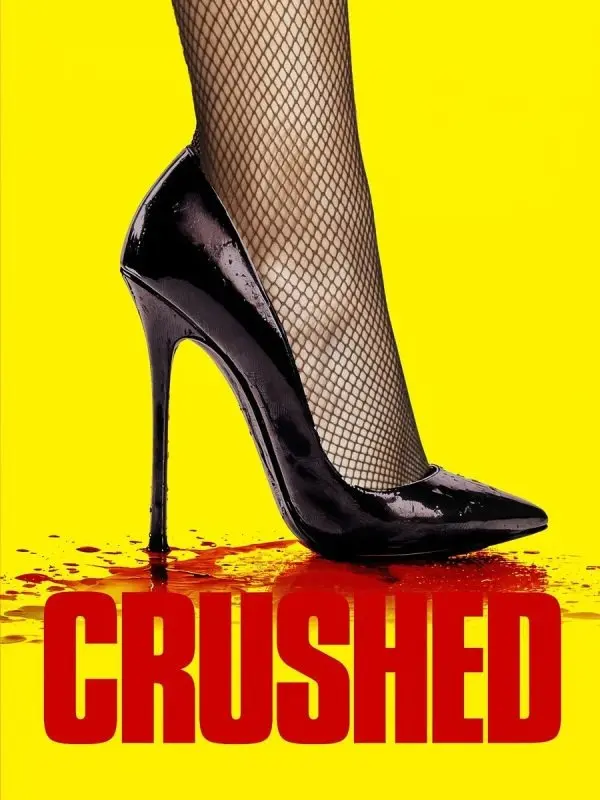
With his harrowing 2025 feature Crushed, writer and director Simon Rumley returns to the unflinching, morally complex territory that defined his critically acclaimed 2010 masterwork, Red White & Blue. Known for his daring depictions of human depravity and the dark undertones festering beneath polite facades, Rumley has crafted a film that is as deeply unsettling as it is emotionally arresting.
Crushed follows Father Daniel (Steve Oram), a Christian priest living in Thailand alongside his Thai wife, May (May Nattaporn Rawddon), and their 10-year-old daughter, Olivia (Margaux Dietrich). When a seemingly innocent birthday gift spirals into a nightmare involving animal cruelty and child trafficking, the family’s foundational beliefs in faith, resilience, and forgiveness are violently upended.

Rather than relying on explicit visualization of its darkest themes, Rumley deploys the psychological power of suggestion and audio design, plunging viewers headfirst into a multi-layered ethical quagmire. Bolstered by standout performances from a stellar international cast—including Christian Ferriera, Nadech Chatwin, and Jonathan Samson—Crushed transcends traditional genre boundaries, offering a bleak, uncompromising look at justice, retribution, and the harrowing costs of human exploitation.
Detailed Chronology: The Unraveling of an Expatriate Family
The narrative architecture of Crushed is engineered to pull the audience into a tightening vice, beginning with an idyllic setting before systematically tearing it apart.
Act I: The Catalyst
The film introduces viewers to the tranquil life of Father Daniel, May, and Olivia in Thailand. Their existence is outwardly peaceful, anchored by Daniel’s ministry and the simple joys of raising a young child abroad. The turning point arrives on Olivia’s tenth birthday, when she receives a kitten as a pet—a symbol of youthful innocence and unconditional care.
Shortly thereafter, Olivia attends a routine sleepover at a local friend’s house. It is here that the rot at the edge of their community is exposed. The friend’s teenage brother, Marcus (Nadech Chatwin), exposes Olivia to a deeply disturbing homemade video depicting a woman stamping on a small animal. Distraught, confused, and profoundly shaken by what she has witnessed, Olivia flees the home to search for her own kitten.
Act II: The Abduction and Escalation
Unable to find her pet at home, Olivia’s search leads her directly to the physical location where the snuff video was produced. Unbeknownst to her, she enters a trap. She is quickly discovered by Stanley (Christian Ferriera), a local youth caught up in illicit circles. Recognizing that no one knows the young girl’s whereabouts, Stanley makes a calculated, monstrous phone call to Mr. Jeffreys (Jonathan Samson), an affluent American expatriate who frequently travels to Thailand for predatory "pleasure."
What follows is a race against time. The core of the second act shifts dramatically into a desperate search party led by Father Daniel and May. As the hours tick away, the film examines the widening philosophical chasm between the couple.
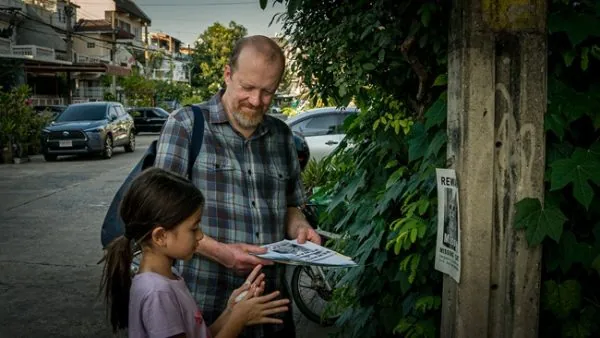
- Father Daniel’s Dilemma: As a Christian priest, Daniel’s ideological framework is theoretically built upon tenets of grace, mercy, and radical forgiveness. Yet, when confronted with the absolute horror of his daughter’s disappearance and potential victimization, those theological abstractions are put to the ultimate test.
- May’s Pragmatism: In stark contrast to her husband’s internal crisis, May’s path is unburdened by pastoral dogma. Her maternal instinct toward immediate protection and retributive justice brooks no philosophical hesitation, setting up a poignant domestic friction that mirrors the film’s broader thematic battles.
Act III: Confrontation and the Illusion of Resolution
As the narrative races toward its conclusion, Rumley avoids clean, Hollywood-style resolutions. Characters like Stanley undergo their own turbulent arcs, forced to confront the harsh reality that earthly actions carry inescapable, irreversible consequences. The climax delivers moments of cathartic, vigilante-style violence that might initially appease an audience baying for blood, but the film purposefully subverts this satisfaction. The lingering emotional resonance is not one of triumphant closure, but of profound discomfort—leaving viewers to question the true cost of vengeance.
Supporting Context & Metrics: The Auteur’s Vision and Technical Mastery
To fully understand the weight of Crushed, one must examine the stylistic choices and thematic DNA that Simon Rumley brings to the table.
Simon Rumley’s Cinematic Blueprint
Rumley has carved out a distinct niche within independent cinema by exploring characters pushed past their absolute breaking points. His breakout 2010 feature, Red White & Blue, earned widespread acclaim for its brutal honesty and subversion of standard exploitation tropes. In Crushed, Rumley applies a similarly unblinking lens to two harrowing global crises: animal abuse as a psychological precursor to escalating violence, and child sex trafficking.
Directorial and Technical Framework
- Handheld Cinematography: Rumley utilizes erratic, aggressively mobile handheld camerawork that places the audience directly inside the panic of the unfolding events. This visual restlessness creates a constant, buzzing atmosphere of anxiety that refuses to abate, even during moments of stillness.
- The Power of Suggestion: Dealing with inherently repulsive subject matter requires immense restraint. Rumley avoids gratuitous exploitation by leaning heavily on sound design and psychological implication. For instance, audiences hear the terror and implication of cruelty rather than witnessing graphic atrocities on screen. As critic Chris Ward aptly notes, Jonathan Samson’s portrayal of Mr. Jeffreys relies entirely on physical demeanor and predatory cadence, allowing the viewer’s imagination to supply the horror without crossing ethical boundaries into gratuitous visualization.
Official Statements and Cast Insights
The success of Crushed hinges on its uncompromising performances, which ground the heavy thematic material in raw human emotion.
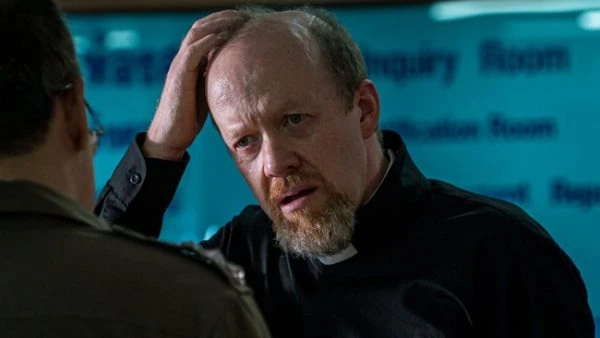
- Steve Oram as Father Daniel: Best known for blending dark comedy and intense drama, Oram delivers a career-best performance here. Speaking on the character’s internal struggle, industry analysts have noted how Oram utilizes micro-expressions—subtle shifts in facial tension juxtaposed against calm, measured line delivery—to illustrate a man violently fracturing under the weight of his own dogma.
- Margaux Dietrich as Olivia: The young actress carries an immense emotional burden with remarkable poise. Her portrayal of lost innocence captures the exact moment a child’s worldview is permanently corrupted by human malice.
- Christian Ferriera and Jonathan Samson: Ferriera brings a tragic, multi-layered vulnerability to Stanley, charting a downward trajectory that highlights the cycle of exploitation. Meanwhile, Samson’s chillingly understated performance as the American predator anchors the film’s critique of wealthy expatriates operating within vulnerable foreign landscapes.
Future Outlook: Critical Reception and Cultural Legacy
Flickering Myth and other leading critical outlets have assigned Crushed high marks (such as a 4/5 rating), designating it as a monumental, albeit exceptionally difficult, viewing experience.
The Verdict on Rewatchability
Crushed is widely categorized as a "one-time watch"—not due to a lack of artistic merit, but because of its unyielding emotional gravity. It does not offer the comfortable escapism typical of mainstream cinema. Instead, it demands intellectual and emotional endurance from its audience.

Cultural Impact
By tackling the nexus of international trafficking, domestic faith crises, and the digital dissemination of cruelty, the film positions itself as a vital piece of dark social commentary for 2025. It challenges contemporary thriller cinema to elevate its discourse, proving that stories addressing society’s darkest corners resonate most profoundly when handled with rigorous psychological depth, stellar performances, and uncompromising artistic integrity.









Belum ada komentar. Jadilah yang pertama berkomentar!