

Executive Overview
In the cinematic landscape of 2026, few releases commanded as much speculative attention or generated as fierce a critical divide as The Dog Stars. Directed by visionary filmmaker Ridley Scott and adapted from Peter Heller’s acclaimed 2012 post-apocalyptic novel by screenwriter Mark L. Smith, the film arrived with immense pedigree. Boasting an A-list ensemble cast led by Jacob Elordi, Margaret Qualley, and Josh Brolin, the project was framed as a towering meditation on isolation, grief, and the fragile endurance of the human spirit in the wake of a global pandemic.
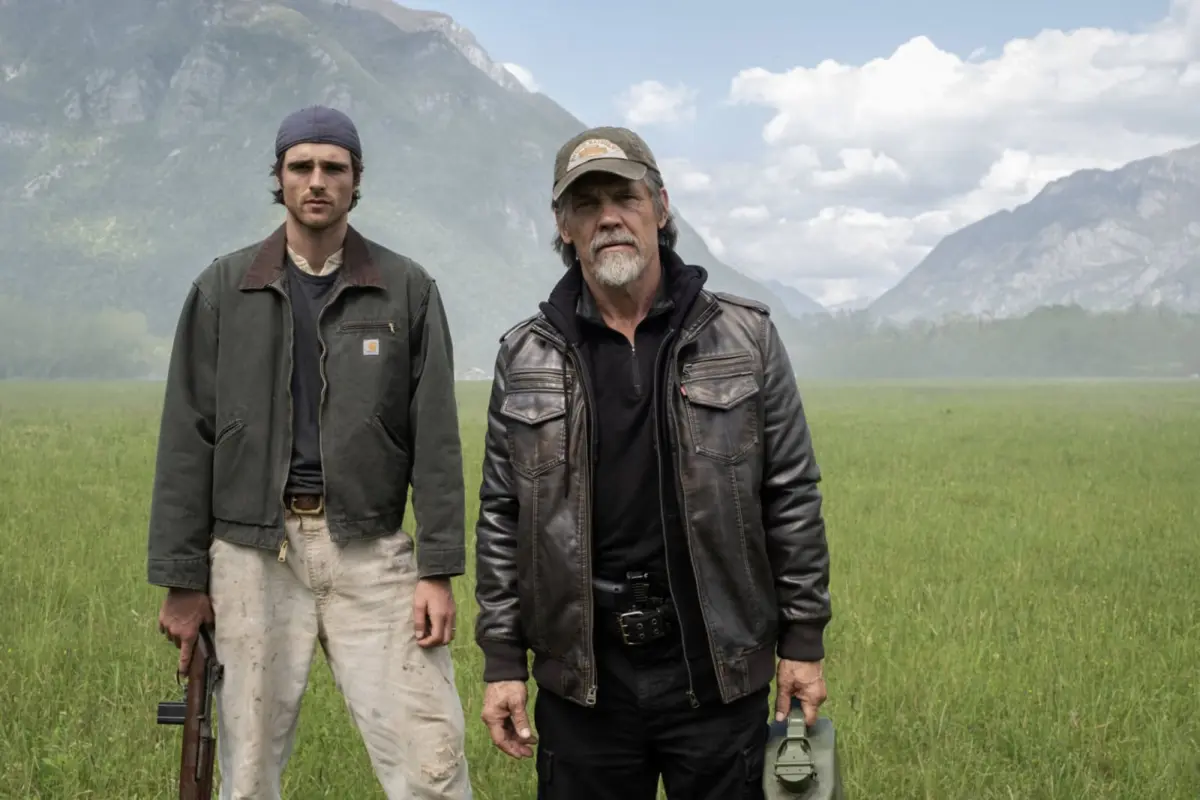
Set against a sweeping backdrop of rugged, unforgiving American wilderness, the narrative centers on Hig (Elordi), a civilian pilot who has survived a devastating flu-like pandemic that wiped out a vast majority of humanity. Stationed in an abandoned, fortified Colorado airport hangar alongside a paranoid, gun-toting former Marine named Bangley (Brolin), Hig navigates an existence defined by quiet desperation, haunting memories of his deceased wife and unborn child, and a singular, steadfast connection: his dog.
However, beneath its visually arresting cinematography and high-octane set pieces, The Dog Stars sparked intense debate among critics and audiences alike. While praised for Scott’s peerless technical craftsmanship and pulse-pounding action sequences, the film faced substantial criticism for narrative bloat, derivative genre tropes, and an uneasy ideological undercurrent that reportedly subverted its more contemplative themes. This comprehensive retrospective examines the trajectory of The Dog Stars, breaking down its thematic framework, production dynamics, critical reception, and its ultimate place within Ridley Scott’s legendary directorial canon.
Detailed Chronology
Development and Adaptation
The journey of The Dog Stars from page to screen began years prior to its 2026 release, picking up momentum as studios sought high-concept, prestige science-fiction properties capable of resonating with contemporary anxieties about global health and societal fragility. Peter Heller’s original novel had long been celebrated for its lyrical prose and unique focus on the interiority of its protagonist. Securing Mark L. Smith—known for his atmospheric and visceral work on films like The Revenant—to draft the screenplay signaled an intent to capture both the stark brutality and the poetic naturalism of the source material.

When Ridley Scott signed on to direct, the production immediately escalated in scale and ambition. Known for his career-defining contributions to the sci-fi genre, including Alien (1979) and Blade Runner (1982), Scott brought his characteristically brisk production style and exacting visual standards to the project. Casting Jacob Elordi as the melancholic, weary pilot Hig positioned the young actor at the forefront of a major studio blockbuster, supported by a heavy-hitting supporting cast that included Guy Pearce, Allison Janney, Benedict Wong, and Ewen Bremner.
Narrative Progression and Act Structure
The Dog Stars establishes its desolate premise in its opening sequences. A catastrophic flu has devastated civilization, leaving survivors at the mercy of roaming scavengers and brutal raiders dubbed "Reapers." Hig and Bangley occupy an uneasy co-existence in their Colorado hangar. Bangley views the apocalypse as a long-awaited vindication of his extreme survivalist ethos—a real-life manifestation of a wish-fulfillment fantasy—whereas Hig clings to a cautious, painful hope that humanity might still be thriving beyond the horizon.
The narrative shifts when Hig, driven by tragedy and fueled by fragments of scrambled radio chatter originating from the Grand Junction airport, decides to risk it all. Piloting a small aircraft into the unknown, he ventures past the mountains, setting the stage for his encounter with Cima (Margaret Qualley) and her protective father-figure, Pops (Guy Pearce). What begins as a cautious alliance quickly deepens into a romantic and emotional bond, offering Hig a fragile glimpse of a renewed future.
The film’s third act marks a dramatic tonal pivot. Abandoning much of its quiet, reflective atmosphere, the story accelerates into a high-stakes, action-heavy spectacle. Hig, Cima, and Pops find themselves fighting for survival against coordinated attacks from hostile factions. While sequences such as Brolin’s desperate defense of the hangar and a harrowing takeoff under enemy fire showcase Scott’s mastery of tension, this explosive shift ultimately compresses the narrative, forcing a dense web of conflicts into a rushed resolution.

Supporting Context & Metrics
Thematic Tensions and Ideological Critiques
One of the most heavily debated aspects of The Dog Stars centers on its ideological positioning. Critics noted an uncomfortable friction between Hig’s yearning for connection and empathy, and Bangley’s gun-crazy, shoot-first mentality. Rather than actively critiquing Bangley’s worldview, the narrative frequently places the characters in scenarios that validate his cynical, hyper-militarized ethos. This tonal ambiguity led to charges of uneven thematic messaging, complicating the film’s efforts to serve as a pure exploration of moving past grief.
Cast and Crew Overview
- Director: Ridley Scott
- Screenwriter: Mark L. Smith (based on the novel by Peter Heller)
- Primary Cast:
- Jacob Elordi as Hig
- Margaret Qualley as Cima
- Josh Brolin as Bangley
- Guy Pearce as Pops
- Allison Janney
- Benedict Wong
- Ewen Bremner
- James Craze
- Sam Spruell
- Sai Bennett
- Sebastian Rokison-Woodall
- Alara-Star Khan
Box Office and Critical Standing
Upon its theatrical rollout, The Dog Stars performed moderately at the global box office, drawing audiences eager for prestige sci-fi while encountering a polarized critical response. Review aggregators reflected a split consensus: technical elements, production design, and cinematography earned widespread acclaim, whereas narrative pacing, derivative world-building tropes (such as the heavily criticized "Reapers"), and overstuffed plotting drew sharp reprimands.
Official Statements
While the studio and principal creators emphasized the sheer scale and emotional gravity of the adaptation during promotional tours, critics and industry analysts offered a sobering assessment of the film’s execution.
In his review for Flickering Myth, critic Robert Kojder encapsulated the central frustration of many viewers, noting that despite Scott’s undeniable technical competence, the film ultimately buckles under the weight of its own clichés:

"Perhaps if the rest of the film weren’t a stew of bland clichés… the above would be disappointing. No, by the time the uneasy right-wing messaging is being broadcast loud and clear, one is dog-tired and already checked out of The Dog Stars."
Kojder further pointed to the film’s narrative congestion, observing that Scott’s attempt to juggle multiple character arcs and fast-paced action sequences often came at the expense of genuine emotional resonance:
"It comes at the cost of wiping out whatever interesting story there could be to tell about these two characters in the most generic of scenarios and environments. On top of that, it’s overstaffed and often feels as if three of these novels were crammed into one film."
Future Outlook
As The Dog Stars transitions from its theatrical window to home entertainment and streaming platforms, its long-term legacy remains open to interpretation. In the context of Ridley Scott’s sprawling, decades-spanning filmography, the movie joins a lineage of ambitious literary adaptations that prioritize atmospheric world-building over airtight narrative cohesion.
For Jacob Elordi and Margaret Qualley, the film represents another significant step into major-studio headlining territory, showcasing their ability to anchor high-concept genre pieces even when narrative scripts present structural hurdles. Whether The Dog Stars will be reassessed over time as an underrated gem of Scott’s late-career output—much like several of his previously overlooked historical and sci-fi epics—depends largely on how future audiences engage with its stark depiction of a fractured world.
Ultimately, The Dog Stars stands as a testament to the enduring allure of apocalyptic fiction: a cinematic venture that soared on the wings of brilliant technical execution, even as it occasionally lost its way in the turbulence of the wasteland.









Belum ada komentar. Jadilah yang pertama berkomentar!