

Executive Overview
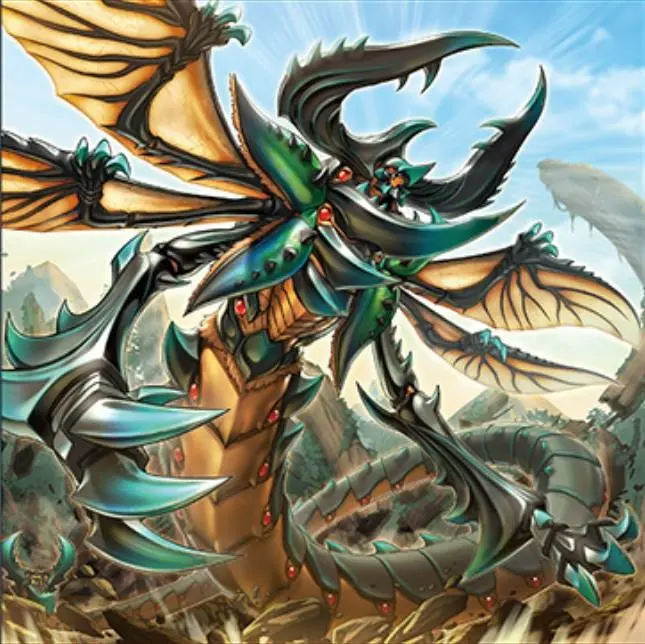
Deep within the uncharted frontiers of the primordial continent lies a biome unlike any other recorded in natural history: a sprawling, dense canopy known colloquially as the "Draconic Ossuary Forest." For centuries, myth and cartographic warnings painted this region as a graveyard, a desolate wasteland where legendary beasts retreated to die. However, recent ecological and magical expeditions reveal a far more dynamic and terrifying reality. The soil of this forest is not merely enriched by the calcium and minerals of fallen dragon bones; it is saturated with the residual elemental energies, primordial marrow, and untamed vitae of creatures that once dominated the skies.
At the center of this unique geological formation is a closed-loop evolutionary crucible. The insectoid species inhabiting the undergrowth did not merely adapt to their environment—they weaponized it. Through generations of consuming subterranean dragon remains, these invertebrates underwent hyper-accelerated mutagenesis. Today, this ecosystem stands as a profound anomaly: a domain where microscopic adaptations have birthed macro-evolutionary terrors. Insects within the Ossuary Forest now wield biological artillery, possess armor impenetrable to standard steel, and exhibit a predatory drive that targets the very apex predators whose ancestors birthed the soil beneath them.
This investigative report provides an exhaustive examination of the Ossuary Forest, detailing the chronological descent of its insect lifeforms, analyzing the biochemical metrics of their transformation, evaluating official statements from ecological watchdogs, and forecasting the destabilizing geopolitical and environmental future of this anomalous zone.
Detailed Chronology of an Anomalous Biome
To understand the current apex status of the Ossuary Forest’s insect population, researchers must trace the evolutionary timeline backward through centuries of biological upheaval, cataclysmic environmental shifts, and generational predatory pressure.
Phase I: The Great Fall and the Sedimentation Era
Approximately eight centuries ago, the region now known as the Ossuary Forest served as the final resting place for a massive migratory lineage of dragons. Over generations, hundreds of these colossal reptiles succumbed to a localized magical blight, plunging from the skies to perish in the densely wooded valleys below.
Initially, the sheer volume of decaying organic matter threatened to poison the local watershed. The immense skeletal remains—some measuring upwards of fifty meters in length—crushed the native flora and saturated the topsoil with concentrated reserves of elemental fire, raw arcane energy, and bio-calcium. For decades, the area remained a silent, toxic graveyard. Standard plant life withered under the corrosive influence of undiluted dragon blood, leaving behind a barren landscape dominated by exposed ribs, shattered skulls, and scorched earth.
Phase II: The Micro-Consumptive Shift
The true catalyst for change occurred when hardy, detritivorous insect species—primarily subterranean beetles, centipedes, and hymenopteran ancestors—began burrowing into the marrow-rich chambers of the fallen skeletons. Lacking alternative food sources in the toxic soil, these insects fed exclusively on the decaying remnants of dragon tissue.
This consumption triggered profound genetic shifts. Unlike normal decomposition, the ingestion of dragon vitae introduced high-potency elemental catalysts directly into the metabolic tracts of these invertebrates. The first wave of mutations was chaotic and often fatal; millions of specimens perished as their exoskeletons fractured under the strain of raw elemental absorption. However, those that survived passed these traits onto their offspring, initiating a relentless cycle of natural selection driven by the unforgiving pressures of survival within a lethal, nutrient-dense womb.
Phase III: The Morphological Divergence
By the fourth century of exposure, distinct evolutionary branches began to separate from the baseline insect stock, each specializing in a different facet of draconic biology:
- The Winged Adaptation: One primary lineage, drawing from the aerodynamic marrow of aerial dragons, began developing membranous, scaled pinions that mimicked the structural integrity of true dragon wings, allowing them to lift heavy abdomens into the upper canopy.
- The Pyrolithic Mutation: Another lineage, focusing on the calcified fire-glands of deceased drakes, evolved internal combustion chambers within their cephalothoraxes, developing specialized antennae capable of generating, concentrating, and projecting sustained thermal plumes.
- The Adamantine Exoskeleton: A third group absorbed the hardened, mineral-dense dermal plates of ancient armor-drakes, resulting in Chitinous shells capable of deflecting blade strikes and withstanding immense pressure.
Phase IV: The Rise of the Defiant Entities
In the contemporary era, the evolutionary loop has closed. No longer mere scavengers feeding passively on the dead, the dominant insect species of the Ossuary Forest have transitioned into active hunters. Utilizing the very powers gifted to them by ancestral dragon remains, these insects now take flight in organized swarms to hunt living dragons that dare fly over their territory. By consuming fresh draconic prey, they ingest a concentrated dose of power, continually renewing and heightening their anomalous traits. They are no longer victims of their environment; they are the sovereign rulers of it, standing as defiant entities challenging the natural order of the food chain.
Supporting Context and Metrics
The transformation of the Ossuary Forest is supported by rigorous fieldwork data collected by vanguard bio-magical surveyors. The metrics recorded within this zone defy standard biological paradigms.
Biochemical Analysis of the Soil
Soil samples taken from beneath the primary canopy reveal a composition entirely foreign to standard continental geography.
- Elemental Saturation: The soil exhibits a persistent, low-level thermal radiation equivalent to active volcanic vents, paired with high concentrations of concentrated phosphorus and esoteric isotopes traditionally found only in draconic bloodstreams.
- Density and Porosity: Due to the pulverization of billions of tons of bone over centuries, the soil density is nearly double that of normal forest loam, featuring a crystalline structure that retains magical energy rather than dissipating it.
Physiological Metrics of Apex Invertebrates
The insect life forms within the forest exhibit physical measurements and capabilities that far exceed standard terrestrial biology:
| Specimen Classification | Primary Trait | Observed Capability | Metabolic Energy Source |
|---|---|---|---|
| Dracoid-Vespa (Winged Swarm) | Draconic Pinions | Mach-speed short bursts; aerial dominance over juvenile dragons | Fresh draconic muscle tissue and marrow |
| Ignis-Antenna (Flame-Wielding Lineage) | Thermal Appendages | Plasma projection reaching temperatures up to 2,500°C | Subterranean elemental sulfur and bone-ash |
| Titan-Beetle (Exoskeletal Juggernaut) | Adamantine Chitin | Complete immunity to physical trauma up to siege-weapon impact | Calcareous mineral deposits from mega-skeletons |
Ecosystemic Energy Flow
In a standard ecosystem, energy flows upward from producers (plants) to primary consumers (herbivores) and finally to apex predators (carnivores). In the Ossuary Forest, this pyramid has been inverted and compressed:
- Foundation: Decomposed dragon bones and elemental soil.
- Primary Beneficiaries: Mutated macro-invertebrates.
- Active Predators: The same macro-invertebrates hunting apex draconic lifeforms.
This closed loop means the forest is entirely self-sustaining, requiring no external sunlight for its primary energy reserves; instead, it relies entirely on the preserved, primordial energy locked within the earth.
Official Statements
The emergence of the Ossuary Forest and its defiant insect populations has not gone unnoticed by continental authorities, academic institutions, and magical councils. Below are synthesized excerpts from official briefings and hazard warnings issued regarding the region.
Statement from the High Council of Arcane Naturalists
"For generations, we understood dragons to be the undisputed pinnacle of magical evolution—creatures of fire, scale, and ancient sky. What we are witnessing in the Ossuary Forest challenges the very foundation of taxonomy. These insects have bypassed millions of years of standard evolutionary progression through the forced ingestion of concentrated draconic vitae. They are not unnatural aberrations; they are the logical, terrifying conclusion of an ecosystem left to gorge on the bones of gods. We strongly advise all civilian travelers, merchants, and military patrols to maintain a wide berth around the canopy perimeter. The swarm does not negotiate, and its hunger is indiscriminate."
Field Report from the Vanguard Scout Corps
"Our reconnaissance unit approached the southern edge of the forest under the assumption we would encounter standard wildlife and perhaps some oversized beetles. We were entirely unprepared for what we found. The canopy hums with a deafening frequency—a collective resonance generated by millions of wings beating in synchronization. We witnessed a flock of three juvenile sky-drakes drift too close to the tree line; within minutes, they were intercepted by a squadron of winged arthropods firing concentrated plasma beams from their antennae. The drakes were stripped to the bone in less than ten minutes. The soil here is alive, and it is hungry."
Future Outlook
As the Ossuary Forest continues to mature, its implications for the wider continent grow increasingly precarious. The future outlook for the region can be categorized into three primary trajectories: ecological expansion, military containment challenges, and the potential harvesting of anomalous biological assets.
1. The Threat of Expansion
The most pressing concern for neighboring territories is the potential migration of the swarm. Currently, the insect populations are largely bound to the nutrient-rich soil of the forest, as their metabolisms remain heavily dependent on the ambient magical resonance of the dragon bones. However, as generations pass, these creatures are growing increasingly hardy. Researchers fear that if the soil’s resources are exhausted, or if a mutation allows the insects to metabolize standard organic matter with equal efficiency, the swarm may break containment and expand outward into fertile agricultural lands. An invasion of flame-wielding, dragon-hunting invertebrates would spell absolute devastation for rural provinces.
2. Geopolitical and Military Stalemates
Military strategists are currently debating the necessity of a preemptive strike against the forest. Proposals involving large-scale incendiary campaigns and magical containment barriers have been drafted, but executing them presents immense logistical hurdles. Introducing fire to a forest saturated with combustible elemental gases and inhabited by pyrolithic insects could trigger a catastrophic chain reaction, potentially awakening dormant magical forces buried deep within the bedrock. Consequently, a policy of passive containment and armed observation remains the current operational protocol.
3. The Quest for Bio-Synthetic Harvesting
Conversely, rogue alchemists, mercenary guilds, and opportunistic corporations view the Ossuary Forest not as a threat, but as an unparalleled opportunity. The prospect of harvesting adamantine chitin plates, thermal antennae, and dragon-mimicking wings has sparked a clandestine black market. Expeditions financed by wealthy syndicates frequently attempt to slip past the forest perimeter to capture live specimens or secure shed carapaces. If these factions succeed in isolating and replicating the genetic catalysts driving the insects’ evolution, it could revolutionize military armor and weaponry across the continent—provided they do not unleash the swarm upon civilization in the process.
Conclusion
The Ossuary Forest stands as a stark reminder of nature’s relentless adaptability. From the silent, tragic remains of fallen dragons, a new dynasty has risen from the dirt. These defiant insects, forged in the crucible of survival and fueled by the blood of legends, have rewritten the rules of dominance. Whether this anomalous biome remains a contained ecological wonder or evolves into an existential threat to the continent depends entirely on humanity’s ability to respect—and fear—the power of the earth’s deepest, darkest trenches.







Belum ada komentar. Jadilah yang pertama berkomentar!