

Executive Overview
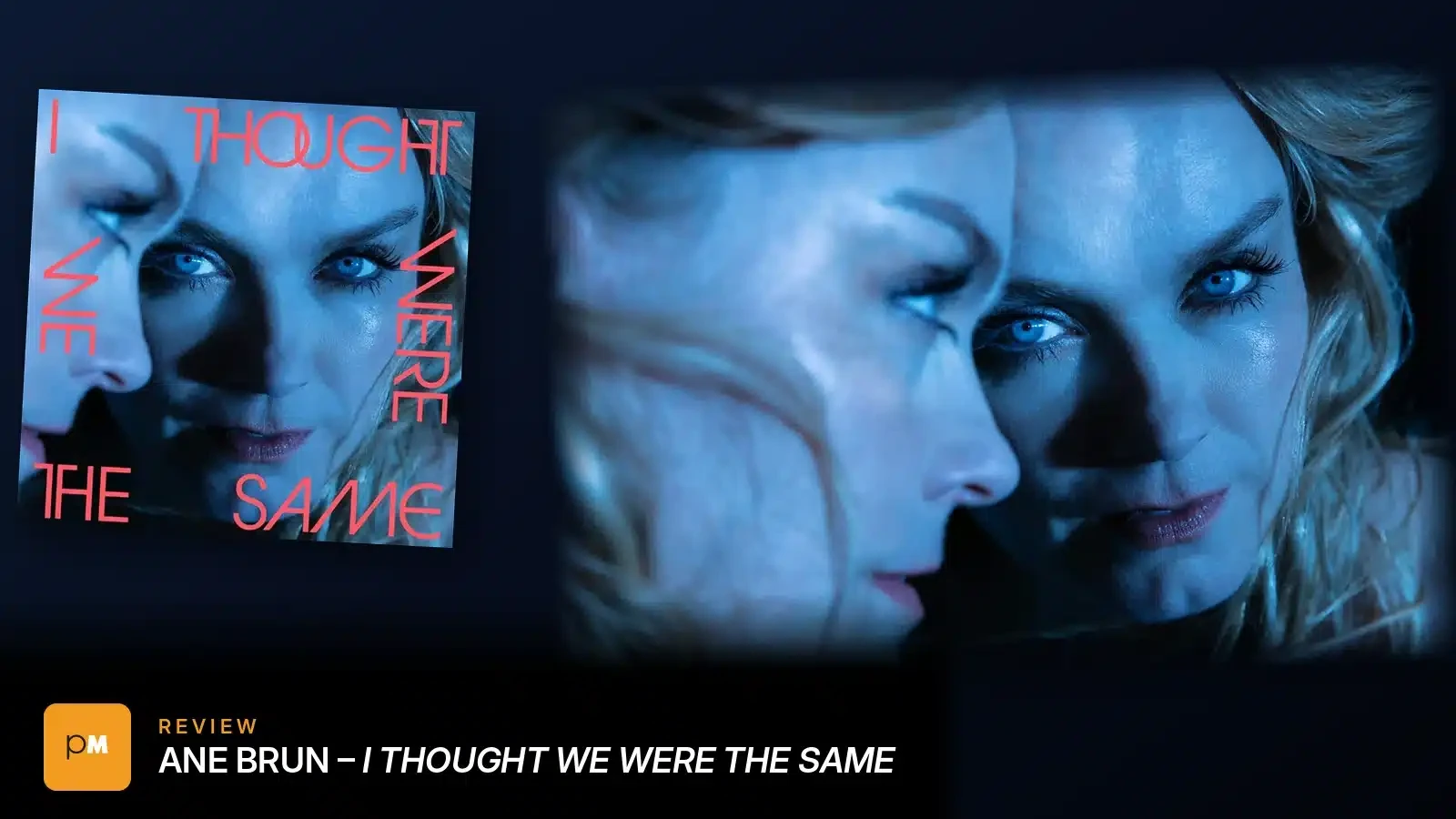
In the contemporary landscape of pop and singer-songwriter music, few artists possess the linguistic and sonic dexterity required to interrogate complex philosophical tenets without sacrificing melodic immediacy. With her latest full-length release, I Thought We Were the Same, Norwegian songstress Ane Brun returns with a masterclass in introspective songcraft. Moving decisively away from the organic, folk-leaning textures of her 2020 release, How Beauty Holds the Hand of Sorrow, Brun fully embraces the expansive, lush architecture of contemporary pop. Yet, this is pop music engineered for the intellect as much as the heart—richly orchestrated, theatrically staged, and conceptually bound by the twin pillars of psychological vulnerability and the existential mechanics of trust.
At the core of the album lies a profound inquiry into human connection, initiated most explicitly on the seventh track, "Reevaluating You." Here, Brun strips away the conversational trivialities of modern romance to ask a fundamental question: "What is the opposite of trust?" Her answer—that the opposite is not doubt, but anxiety—serves as the thematic linchpin for the entire project. Throughout the album’s eleven tracks, Brun meticulously dissects how fear governs human behavior, how we instinctively retreat into the safety of emotional armor, and how true liberation requires what philosophers like Søren Kierkegaard termed the "leap of faith."
This review-analysis explores the structural and thematic anatomy of I Thought We Were the Same. By examining the album’s production ethos, its literary and psychological underpinnings, and its precise track-by-track emotional trajectory, we uncover how Brun bridges the gap between grand, stadium-ready pop aspirations (reminiscent of Adele or Peter Gabriel) and the eclectic, avant-garde sensibilities of the Nordic indie scene (akin to Susanne Sundfør). The result is a defining artistic statement—a record that treats emotional excavation not as a burden, but as a prerequisite for self-actualization.
Detailed Chronology: The Narrative and Sonic Trajectory of the Album
The sequencing of I Thought We Were the Same is a carefully mapped psychological journey, guiding the listener from the initial tremors of relational instability through the harrowing depths of post-breakup rationalization, and finally toward the serene shores of self-acceptance.
The Onset of Doubt and the Architecture of Fear
The album opens by establishing the emotional stakes of contemporary romance. Brun observes how relationships frequently begin and end under the heavy shadow of fear: the terror of solitude clashing violently with the dread of permanent commitment. This tension is vividly brought to life on tracks like "Hold Me." Built around a meticulously layered, beat-driven arrangement, the song showcases Brun’s voice at its most disciplined—evocative yet restrained, sultry yet fiercely controlled. She attempts to parse the anatomy of a connection that inflicts more pain than fulfillment, yet remains anchored by the sheer gravity of emotional fantasy.
This exploration of emotional risk-taking deepens on "How Can I Hold Your Hand." Supported by brushy percussion and sweeping, cinematic instrumentation, Brun demonstrates her impressive technical range. She glides effortlessly across octaves, capturing the exact psychological moment when an individual must decide whether to express unreciprocated or uncertain feelings. It is an auditory translation of the Kierkegaardian leap: stepping into the unknown without any guarantee of a safety net.
The Mid-Project Epiphany: "Reevaluating You"
At the dead center of the record sits the structural and philosophical pivot point: "Reevaluating You." It is within this track that Brun articulates the thesis statement of the entire project. Rejecting the conventional wisdom that doubt is the antithesis of trust, she identifies anxiety as the true enemy of intimacy.
"In anxiety, we seek certainty before we commit ourselves. But in trust, we commit ourselves without certainty… trust won’t appear until we find ourselves defenseless."
These lyrics function as a mid-project explication, framing the surrounding songs not merely as diary entries of a broken heart, but as case studies in human self-protection. Brun argues that our desperate attempts to control our environments—to guarantee emotional safety before extending trust—ultimately lock us out from genuine connection with others and, most detrimentally, from ourselves.
Transcendence, Ego-Death, and the Pop Landscape
As the album pivots toward its second half, the soundscapes expand to mirror themes of liberation and release. "Eat the Fruit"—a hypnotic collaboration that merges melodic hooks with a riveting, pulse-driven beat—conjures powerful contrasting imagery. One can easily picture bodies swaying under a nocturnal sky in a celebration of nature, change, and the shedding of the ego; alternatively, the track evokes the transcendent, inward-looking atmosphere of electronic music enthusiasts losing themselves in a downtown apartment surrounded by urban noise.
Through tracks like this, Brun successfully synthesizes disparate musical lineages. She merges the prime-time, emotive vocal delivery of Adele with the cool, electronic-tinged eclecticism of artists like Susanne Sundfør and Röyksopp, proving her adaptability within high-end pop production.
Confronting Impermanence and the "Full Catastrophe"
The mood shifts toward starker, more meditative territory with "Certain Moments." Featuring austere yet weighty instrumentation that immediately calls to mind Peter Gabriel and Kate Bush’s 1986 masterwork, "Don’t Give Up," the song addresses the inevitability of change and impermanence.
Facing the existential question, "Where does the road go from here?" Brun’s voice emerges from confusion with a newfound suppleness. She consciously chooses what psychologist Jon Kabat-Zinn famously termed the "full catastrophe"—embracing the unpredictable, chaotic nature of lived experience—over the hollow safety of a protected, risk-free life. String arrangements swell and recede, adding an inescapable gravitas to her realization that active presence and open-hearted curiosity are the only antidotes to existential dread.
The Anatomy of a Breakdown: Nostalgia and Bargaining
The album does not shy away from the messy, unglamorous phases of grief. On "Two in This Story," Brun is at her most confessional. She cross-examines her own memories:
"Was it connection really / Or was it just a feeling / An illusion?"
Drifting between minimalist arrangements and denser, more complex orchestrations—evoking a hybrid of Florence Welch’s dramatic vulnerability and Cassandra Jenkins’s quiet inquisitiveness—Brun makes peace with the death of the relationship. She acknowledges the shared culpability of both partners in its demise, noting how priorities naturally shift, incompatibilities fester, and quiet discontents eventually tear unions apart.
Yet, acceptance is rarely a linear path. "Can We Go Back?" plunges headfirst into the seductive trap of nostalgia. Here, Brun captures that universal moment of weakness when a relationship that desperately needed to end suddenly appears idyllic in the rearview mirror:
"I always felt safe… that you would be with me. I always felt like me. I always felt so free."
By juxtaposing snarly, defensive verses that vent post-breakup frustration with spacious, relaxed choruses tinged with emotional detachment, Brun brilliantly maps out the human tendency to bargain with the universe through magical thinking when the reality of loneliness becomes too heavy to bear.
Resolution: The Path to Self-Actualization
The journey finds its culmination in the album’s closing track, "In These Waters." Operating as both a personal mantra and a directive to the listener, Brun sings:
"Everything you want can happen."
The message is clear: self-actualization is not a prize to be won through the approval of others, but a birthright accessed through radical self-acceptance. As decades of therapeutic wisdom have suggested, we do not require another human being to complete us. By shedding regrets and embracing clarity, Brun closes the record on a note of hard-won sovereignty.
Supporting Context & Metrics: Analyzing Brun’s Artistic Evolution
To fully appreciate I Thought We Were the Same, one must contextualize it within Ane Brun’s extensive catalog and the broader trends of contemporary adult-alternative pop. Over a career spanning two decades, the Norwegian artist has consistently resisted categorization, shifting fluidly between acoustic minimalism, Nordic folk traditions, and electronic collaborations (most notably with artists like Peter Gabriel and Ane Brun’s various Scandinavian contemporaries).
Production and Arrangement Metrics
- Sonic Shift: While 2020’s How Beauty Holds the Hand of Sorrow relied heavily on organic, intimate instrumentation that favored the singer-songwriter tradition, I Thought We Were the Same represents a definitive leap into lush, high-definition pop production.
- Dynamic Range: The album utilizes 11 distinct tracks to experiment with dynamic contrast—shifting from sparse, vocal-forward arrangements ("Two in This Story") to beat-driven, orchestrated spectacles ("Eat the Fruit," "Hold Me").
- Lyrical Thematic Density: An analysis of the album’s lyrical content reveals a heavy reliance on interrogative phrasing. Unlike declarative pop records that assert emotional certainty, Brun’s songwriting is defined by questions ("What is the opposite of trust?", "Where does the road go from here?", "Was it connection really?"), positioning the listener as an active participant in her psychological excavations.
Literary and Philosophical Frameworks
Brun’s work on this album does not exist in a vacuum; it draws heavily from established traditions in existential philosophy and modern psychology:
- The Kierkegaardian Leap: The foundational belief that true commitment cannot be logically deduced or made safe through risk assessment; it requires moving forward into the void without guarantees.
- Kabat-Zinn’s "Full Catastrophe": The conscious embrace of life’s inherent chaos and vulnerability over the illusory comfort of emotional isolation.
- Attachment Theory: The album serves as an auditory exploration of anxious versus secure attachment styles, mapping out the terror of abandonment and the subsequent defensive mechanisms deployed by the human ego.
Official Statements and Artistic Intent
While Ane Brun has traditionally allowed her music to speak primarily for itself, interviews surrounding the release of I Thought We Were the Same shed light on the rigorous intellectual and emotional labor behind the project.
In promotional statements regarding the album’s overarching concept, Brun emphasized that the record was born out of a desire to look unflinchingly at the ways people sabotage their own happiness through the pursuit of absolute emotional security.
"We spend so much of our lives trying to engineer environments where we cannot possibly get hurt," Brun noted during a recent discussion on the album’s themes. "We wait for guarantees that people will stay, that love will not fade, that the ground won’t drop out from under us. But in doing that, we lock ourselves in fortresses. The irony is that the fortress designed to keep pain out also keeps life out."
Furthermore, speaking on the musical transition from her previous acoustic-heavy releases to the grand, orchestrated pop styling of this project, Brun highlighted her intent to match the emotional scale of her lyrics with an equally expansive sonic palette: "When you are dealing with themes as vast as existential trust, the fear of mortality, and the mechanics of the human heart, an acoustic guitar and a whisper are sometimes not enough. I wanted these songs to feel cinematic, to surround the listener the way anxiety or love surrounds us in real life."
Future Outlook: The Legacy of I Thought We Were the Same
As Ane Brun continues to chart her trajectory as one of Scandinavia’s most enduring and fearless musical exports, I Thought We Were the Same marks a critical high-water mark in her discography. By successfully marrying intellectual rigor with high-end pop craftsmanship, she has carved out a unique space for herself in the global music ecosystem—proving that sophisticated pop music can engage with existential philosophy without ever losing its emotional resonance.
Looking ahead, the album establishes a new benchmark for Brun’s future endeavors. It demonstrates that an artist two decades into their career does not need to resort to repetition or stylistic stagnation. Instead, by pushing the boundaries of pop production and refining her exploration of tragic romance and psychological liberation, Brun has expanded the persona of the modern singer-songwriter.
For listeners, I Thought We Were the Same offers more than just a collection of memorable hooks and lush orchestrations; it offers a mirror. It challenges our cultural obsession with safety, questions our definitions of trust, and invites us—with both gentleness and unflinching honesty—to take our own Kierkegaardian leaps into the unknown.








Belum ada komentar. Jadilah yang pertama berkomentar!