

Executive Overview
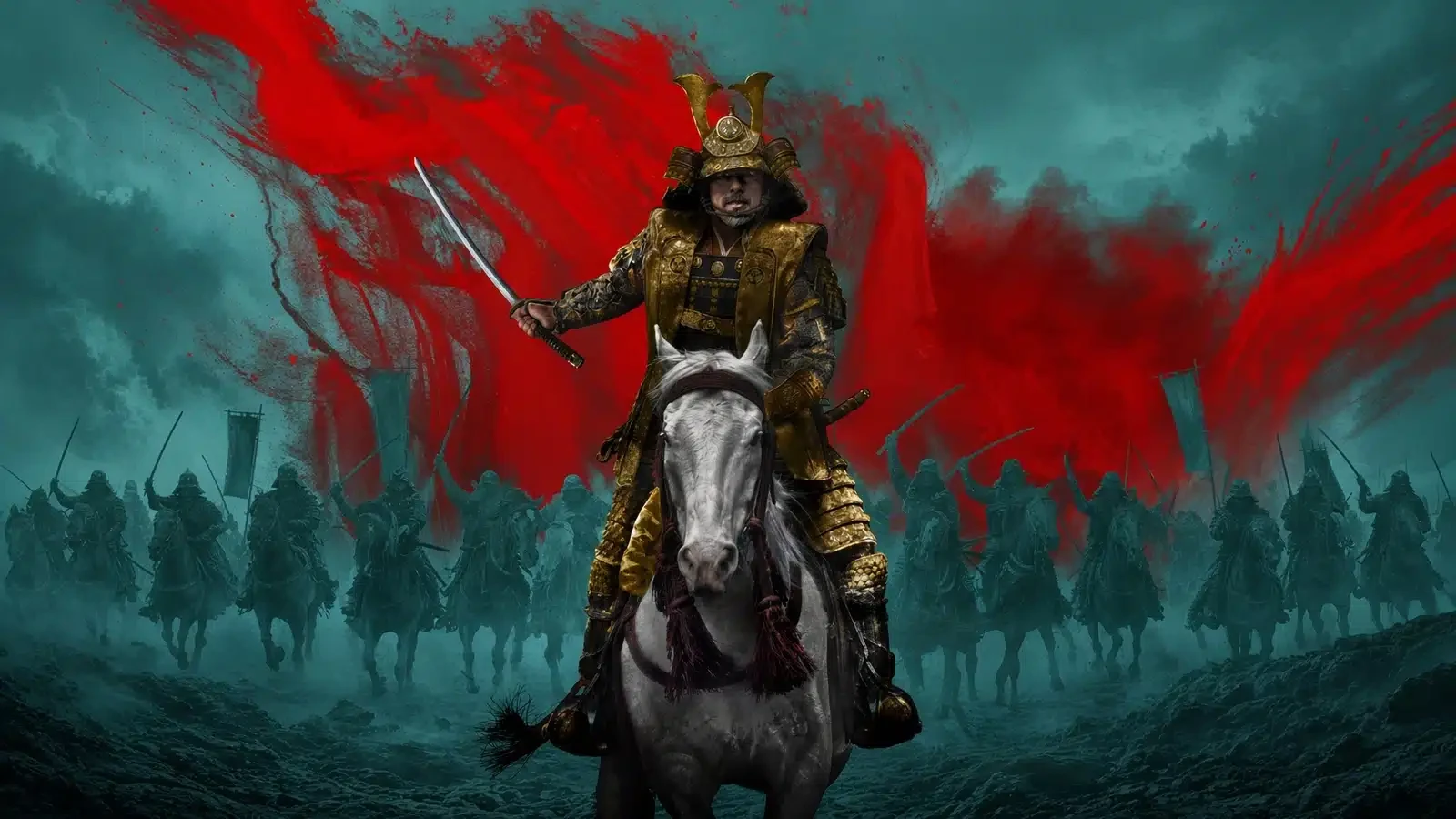
James Clavell occupies a paradoxical position in twentieth-century literature. As the architect of the multi-volume Asian Saga—which encompasses King Rat (1962), Tai-Pan (1966), Shōgun (1975), Noble House (1981), Whirlwind (1986), and Tai-Pan’s spiritual successor Gai-Jin (1993)—Clavell achieved astronomical commercial success. His blockbusting epic Shōgun alone sold millions of copies worldwide, a cultural footprint recently magnified by FX’s 2024 television adaptation, which claimed a historic 18 Emmy Awards. Yet, despite this massive popular and contemporary resurgence, Clavell has rarely enjoyed comparable critical esteem within high-literary circles.
For decades, academic and literary critics have treated Clavell’s work with suspicion, identifying the pervasive presence of "Orientalist fantasies." Across his sprawling narratives set in China, Japan, Hong Kong, and Iran, Western readers are frequently treated to exoticized tropes: samurai executing ritual seppuku with mechanical frequency, Japanese characters fixating on the anatomical dimensions of Western men, and idealized Asian women who seem exclusively engineered to validate Western male ego and appetite.
However, a close, unvarnished examination of Clavell’s oeuvre reveals a far more complex ideological tapestry than these standard post-colonial critiques suggest. Beneath the dated 1950s-era sexual politics and orientalist frameworks lies a surprisingly progressive, empathetic engagement with gender non-conformity and homosexuality. Furthermore, Clavell’s moral universe is anchored not by sexual policing or conventional identity politics, but by an intense, philosophical inquiry into the burdens of power. For Clavell, a character’s worth is never dictated by whom they love or how they express their sexuality, but by how responsibly they wield authority over their fellow human beings.
Detailed Chronology of the Asian Saga and Its Social Landscapes
To understand the evolution of Clavell’s treatment of power and identity, one must trace the chronological architecture of the Asian Saga against the backdrop of its publication history.
1. The Crucible of Confinement: King Rat (1962)
Clavell’s literary career began not in the imperial courts of Japan or the corporate boardrooms of Hong Kong, but in the brutal microcosm of a Changi prisoner-of-war camp during World War II—an experience drawn directly from Clavell’s own harrowing years as a Japanese prisoner of war. Published in 1962, King Rat establishes the foundational themes of the Asian Saga: the mechanics of survival, the transactional nature of human relationships, and the fragility of social classes under extreme duress.

Within this deprived environment, Clavell introduces characters whose gender and sexual expressions drastically subvert the hyper-masculine military code of the era. Sean, a prisoner who adopts a female identity after playing female roles in camp theatricals, and Steven, a camp nurse navigating his homosexuality, are rendered with striking psychological depth. When the protagonist, Peter Marlowe, confronts Sean in a moment of visceral transphobic rage, shouting, "You call yourself a woman?… You’re a man, by God, and you always will be," Clavell does not validate the outburst. Instead, Marlowe is immediately consumed by acute remorse, wandering the camp in a daze of self-loathing over his unwarranted cruelty.
Similarly, Dr. Kennedy’s pragmatic internal monologue regarding Steven—noting that homosexuality is merely another survival strategy in a camp where men trade bodies for rations and protection, and asking clinically what makes "normal sex" any less grotesque—strips heterosexuality of any inherent moral superiority. (It is worth noting, though perhaps unsurprising, that Bryan Forbes’s 1965 cinematic adaptation of King Rat completely excised both the homosexual and transgender characters from the narrative).
2. Feudal Honor and Fluid Desire: Shōgun (1975)
Set in the turbulent political landscape of feudal Japan in the year 1600, Shōgun represents Clavell’s commercial breakthrough. The novel follows English pilot-major John Blackthorne as he navigates the intricate power struggles between warlords Toranaga and Ishido.
Initially, Blackthorne embodies Western provincialism, reacting with sputtering, red-faced outrage when Japanese characters suggest he might enjoy sleeping with a boy. Yet Clavell systematically subverts Blackthorne’s disgust, turning the narrative ironies back onto the reader. For Clavell’s Japanese characters, same-sex acts are approached as matters of casual pleasure rather than foundational moral markers.
Consider the casual domesticity of the warlord Yabu sharing a bed with both a female courtesan and a young boy, who afterward debate the comparative exhaustion of heterosexual versus homosexual encounters with charming, disarming candor. Later in the novel, as samurai face inevitable execution via seppuku, the narrative explicitly elevates the bond between "dearest friends" to an eroticized attachment characterized by courage, honor, and fidelity unto death. Same-sex love in Shōgun is decoupled from decadence and framed as an intrinsic component of warrior valor.

3. Corporate Capitalism and Duplicity: Noble House (1981)
Moving forward into late-twentieth-century Hong Kong, Noble House explores the cutthroat corporate espionage surrounding the trading house Struan’s. Here, the interrogation of sexuality takes on darker, more political tones through the character of Roger Crosse, the corrupt chief of police and triple agent.
When questioned about his sexual preferences by his subordinate, Robert Armstrong, Crosse replies with chilling nonchalance: "Perhaps. Perhaps only occasionally and only when it pleases me. Perhaps… I hear homosexuality is quite normal, even in high places."
Crosse’s bisexuality is not depicted as the root cause of his villainy. Rather, it serves as an extension of his absolute opportunism—his willingness to weaponize ideology, friendship, sex, and nationhood for personal gain. While Armstrong briefly wrestles with the tired trope that bisexuality equates to duplicity, Clavell ultimately insists that Crosse’s danger lies not in his bedroom habits, but in his fundamental lack of moral integrity. Crosse is simply a bastard who will sell out anyone to survive.
Supporting Context & Metrics: The Clavell Phenomenon
To fully grasp the cultural weight of James Clavell’s work, we must examine the quantitative and qualitative metrics surrounding his literary output and its modern adaptations:
- Sales and Print Runs: Clavell’s novels have sold tens of millions of copies worldwide, establishing him as one of the definitive historical-fiction titans of the late 20th century. Shōgun alone sold over 15 million copies following its publication.
- The Emmy Sweep: The 2024 FX adaptation of Shōgun, developed by Rachel Kondo and Justin Marks, made television history by winning an unprecedented 18 Emmy Awards in a single season, proving the enduring narrative hooks of Clavell’s universe for modern streaming audiences.
- Geographical Scope: The Asian Saga spans roughly four centuries of Asian and Western entanglement, moving from 1600s feudal Japan (Shōgun), through 1840s Hong Kong (Tai-Pan), 1905 Japan (Gai-Jin), 1941 Singapore/Changi (King Rat), 1960s Hong Kong (Noble House), to 1979 revolutionary Iran (Whirlwind).
- The Philosophical Influence: Clavell maintained a notable correspondence and ideological proximity to Objectivist philosopher Ayn Rand. While both writers celebrated the exceptional, driven individual—the "King," the "Tai-Pan," the "Shōgun"—Clavell sharply diverged from Rand by tethering his heroes not to unbridled selfishness, but to inescapable communal, familial, and institutional obligations.
Official Statements and Critical Discourse
Literary critics, cultural historians, and adapters have long debated the dual nature of Clavell’s writing: the tension between his regressive stylistic tropes and his surprisingly modern psychological insights.

In discussions surrounding the 2024 television adaptation of Shōgun, showrunners and critics frequently highlighted the necessity of maintaining the complex agency of female characters like Toda Mariko while addressing the antiquated 1950s gender dynamics baked into the original text. Mariko, who serves as Blackthorne’s interpreter and moral anchor, embodies this friction. As critic and cultural commentators note, Mariko can effortlessly transition from discussing high matters of statecraft and Buddhist philosophy to teasing Blackthorne about his ignorance, playfully suggesting he import European sex toys for Queen Elizabeth.
Yet, this autonomy exists within rigid patriarchal frameworks. As Mariko explicitly tells Blackthorne, the world "rightly belongs to men." Clavell’s female characters—whether it is the shrewd business executive Casey Tcholok in Noble House, the fiercely loyal Fujiko in Shōgun, or the spirited May-may in Tai-Pan—are consistently endowed with exceptional intelligence, emotional resilience, and professional cunning. Yet, they almost uniformly operate within a universe where masculine power structures remain structurally unassailable, and where physical vulnerability is occasionally minimized or romanticized by the narrative voice in jarring ways (such as Casey Tcholok finding an attempted assault by Quillan Gornt to be a shared joke).
This duality has prompted scholars to divide Clavell into two distinct camps: the pop-historical entertainer pandering to mid-century male fantasies of exoticized submission, and the surprisingly nuanced moral philosopher examining how power corrupts or elevates those who wield it.
Future Outlook: The Resurgence of the Asian Saga
As we look toward the future of literary adaptation and historical fiction, James Clavell’s work is undergoing a profound reassessment. The historic triumph of the 2024 Shōgun series has proved that Clavell’s intricate plotting, complex geopolitics, and sweeping historical canvases possess timeless dramatic currency.
Networks and production houses are actively eyeing the remaining volumes of the Asian Saga for television adaptation. This industrial momentum guarantees that new generations of audiences will encounter Clavell’s unique blend of Eastern history and Western melodrama.

However, contemporary adaptations must inevitably navigate the cultural minefield of Clavell’s Orientalism. The challenge for future storytellers lies in separating Clavell’s structural orientalist biases from his genuine narrative strengths: his brisk pacing, his deep fascination with cross-cultural translation, and, above all, his rigorous moral framework regarding the responsibilities of leadership.
Ultimately, Clavell remains a fascinating literary contradiction. He was no modern progressive social engineer; his books are riddled with outdated gender assumptions, exoticized tropes of Asian femininity, and nostalgic paternalism. Yet, his willingness to decouple moral worth from sexual conformity—treating homosexuality, gender non-conformity, and individual eccentricity as ordinary facets of the human condition—endows his work with a surprising generosity of spirit. In Clavell’s universe, you do not have to be heterosexual to be honorable, nor do you have to be conventional to be brave. What matters is not who you love, but how you bear the crushing, inescapable weight of power.




Belum ada komentar. Jadilah yang pertama berkomentar!