

Executive Overview
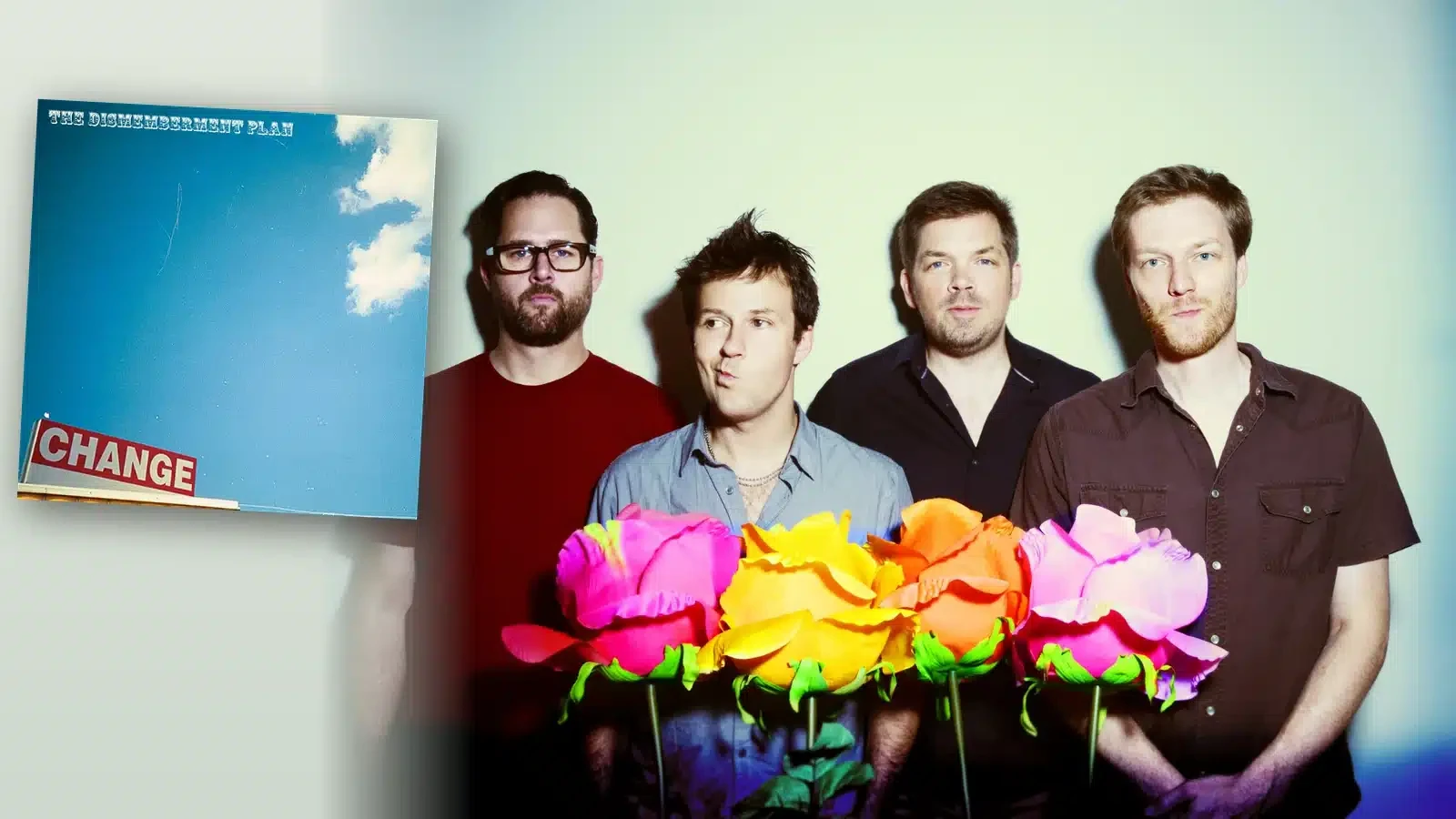
In the late 1990s and early 2000s, Washington, D.C.’s indie-rock vanguard The Dismemberment Plan captured the restless anxiety of a generation standing on the precipice of a new millennium. Following the staggering, career-defining success of their 1999 masterpiece Emergency & I, the band faced the daunting task of following up a record that had effortlessly mapped the post-college, pre-millennial tension of young adulthood.
Their response was Change, released in October 2001. Arriving just weeks after the cataclysmic events of September 11, the album’s somber, rhythm-driven, and deeply introspective soundscapes resonated with a stunned public in ways the band could never have predicted. Written largely in the wake of frontman Travis Morrison’s father passing away, Change traded the frenetic, wide-eyed optimism of its predecessor for something far heavier: a stark acceptance of life’s limitations, the weight of grief, and the quiet dignity found in everyday resignation.
More than two decades later, Change stands not merely as a dark horse in the band’s catalog, but as a brilliant, rhythm-heavy post-punk document that continues to reward close listening. This retrospective explores the historical context, musical mechanics, and lingering cultural footprint of an album that proved the D-Plan could pivot from capturing endless possibilities to staring unflinchingly into the abyss.
Detailed Chronology: From Emergency & I to the Shadow of Change
The Interscope Interlude and the Birth of a Cult Classic
To understand the gravity of Change, one must first examine the turbulent journey that preceded it. The Dismemberment Plan’s ascent was catalyzed by Emergency & I, a record that found instant critical acclaim despite a brief, ill-fated misadventure with major label Interscope Records that ended prior to its release.
Looking back, it is evident that a major label simply would not have known what to do with a band possessing such idiosyncratic mechanics. The lone Interscope release featured "The Ice of Boston" and an early version of "Spider in the Snow"—two of the band’s signature tracks—yet the label couldn’t figure out how to market them during an era when lesser, glib novelty tracks dominated mainstream acceptance. No matter; Emergency & I was released independently to critical acclaim and quickly found its devoted audience. It served as a sonic graduation gift of sorts, a frantic point of entry into the real world.
The World Shifts: October 2001
Two years later, anticipation for the follow-up was palpable. When Change dropped in the autumn of 2001, the cultural landscape had fundamentally altered. Released just weeks after the September 11 attacks, the album’s inherently somber tone hit differently. As a Washington, D.C. band, the members of The Dismemberment Plan—Morrison, bassist Eric Axelson, guitarist Jason Caddell, and drummer Joe Easley—absorbed the ambient dread of a nation looking inward. Tracks like "Pay for the Piano," with its stark insistence that society must find a way to respect everyone despite ideological divides, felt uncomfortably prescient.
The album was no longer just about personal maturation; it was a soundtrack for a collective existential reckoning. Life had suddenly grown far less exciting and vastly more exhausting, yet the band recognized that it was still too early to surrender to total hopelessness.
Supporting Context & Metrics: The Groove, the Grief, and the Machinery
Embracing the Hip-Hop Beat and the Pop Sensibility
Musically, Change marked a distinct evolution. The album places an extraordinary emphasis on rhythm, driven heavily by Joe Easley’s staggering, head-nodding drum work. Tracks like "Other Side" showcase a rhythmic precision that feels almost superhuman—so intricate that casual listeners often mistake Easley’s organic performance for programmed electronics.
The Dismemberment Plan never made any bones about their affinity for pop music, so their seamless integration of hip-hop-inspired drum patterns onto Change felt organic rather than forced. In an alternate universe, one can easily imagine The Dismemberment Plan operating as the ultimate house band for the end of the world. Their eclectic taste has long been a hallmark of their identity, evidenced by everything from a chilling cover of Jennifer Paige’s 1990s pop hit "Crush" on a split EP with Juno, to their unexpected live rendition of Chappell Roan’s "Pink Pony Club" at the 2024 Best Friends Forever festival.
While fans have always danced at their shows—prompting Morrison to playfully call out crowds for "Doing the Standing Still" on their second album, Is Terrified—the rhythmic quality on Change serves a different psychological purpose. It is less about celebratory movement and more about locking into a heavy, unyielding groove to weather the storm.
The Lyrical Landscape: Disillusionment and Acceptance
Lyrically, the album serves as a two-year check-in on the characters who survived Emergency & I. Opener "Sentimental Man" instantly establishes a subdued, reflective sound. Led by Axelson and Easley’s memorable hook, Morrison’s voice enters with the same high-pitched register that kicked off Emergency & I opener "A Life of Possibilities." But whereas that 1999 track implored forward motion and boundless optimism, the narrator here bluntly declares:
"There’s no heaven, and there’s no hell / No limbo in between / I think it’s all a lie."
The stakes have completely shifted. Rather than engaging in the tedious, cyclical debates of an atheist at a party, the character is simply exhausted, accepting that others may not understand his certainty while remaining content to keep things grounded in reality. It is a moment defined not by bitter resignation, but by quiet, hard-won acceptance—a thematic thread woven by Morrison following the passing of his father.
Official Statements and Artistic Intentions
Throughout interviews surrounding the era, the band articulated a deliberate departure from the bright-eyed whimsy found on tracks like "I Love a Magician" and "Girl O’Clock" from Emergency & I. Instead, Change aligns itself with the darker, more introspective veins of songs like "The City" and "Spider in the Snow."
On "Face of the Earth"—a track reportedly inspired by an interview Morrison saw with Michael Jordan regarding a new romantic partner tragically pulled under by a riptide—the narrator processes grief in real-time. The relationship is framed as ordinary ("As kisses go / It wasn’t anything out of the ordinary"), yet the sudden tragedy leaves him stranded in an emotional vacuum. When no one answers his phone calls, he is left confronting the limits of human empathy: How long is one supposed to grieve a connection that barely had time to blossom? ("It’s not like we were married / It was three or four months.") Musically, the track slows the propulsion of the album to a crawl, accented by bursts of sonic noise as Morrison watches his unnamed lover drift away like "an unloved marionette."
Similarly, "Superpowers" examines detachment through a flattened, deadpan delivery. Morrison lists mundane yet provocative modern vignettes—such as "The rich risk[ing] it all for fifteen minutes in a Heathrow bathroom"—before offering the deflationary thesis:
"I guess you could call them superpowers / But no one is going to save the world with what I’ve got."
In speaking about the track "Time Bomb"—a ferocious, anxiety-inducing song that had already been road-tested during the tail end of the Emergency & I tours—Morrison highlighted the duality of modern observation. Whether you choose to be a detached observer watching the world burn or an active participant, the psychological weight remains identical.
Furthermore, tracks like "Come Home" channel direct paternal wisdom imparted before his father’s passing:
"You’re either wrong or right and life will go on, whatever you choose" and "Anger’s all right / Bitterness no."
Life moves forward independently of our desires, demanding that we grow comfortable being wrong, and above all, proving that we will survive the fallout.
Future Outlook and Legacy: Keeping Your Eyes on the Prize
As time marches on, Change continues to age with remarkable grace. While Emergency & I remains the critical darling most frequently cited in indie-rock canons, Change represents the indispensable sobering-up period that must inevitably follow youth.
The back half of the record unfolds like a masterclass in emotional navigation. "Automatic" delivers spare, cutting political and personal observations ("Once again the politics of common sense / You do and I don’t") with detached resignation. "Following Through" pairs a mournful, infectious guitar hook with the gutting admission: "I get up at 5 am / I so don’t need these dreams anymore that I used to have."
The album reaches its boiling point with the aforementioned "Time Bomb," seamlessly bleeding into the breathtaking drum-and-bass-infused workout of "Other Side." According to Morrison in a retrospective Spin interview, the track was born out of a conscious desire to emulate the obscure local Baltimore band Lake Trout and their song "Little Things in Different Places."
The album ultimately closes with "Ellen and Ben," a narrative post-mortem of a couple who loved each other fiercely yet devolved into bitter strangers after blowing up at a wedding. It is a fittingly uncertain end for a record steeped in the friction between human growth and romantic decay. There are no neat bows tied at the final fade-out, only an insistence to stay in touch, keep moving, and keep eyes on the prize.
For anyone who spent their early adulthood trudging through the exact emotional phases documented across Emergency & I and Change, these records remain lifelong companions. Some lines in these tracks whisper of an elusive inner peace, while others burn with a restless energy that can never truly be settled. The lesson of Change is ultimately one of endurance: take the joys—however fleeting—and savor them deeply before the next wave of modern anxieties inevitably washes ashore in this vast, unpredictable Life of Possibilities.






Belum ada komentar. Jadilah yang pertama berkomentar!