


Executive Overview
The global video game industry is hurtling toward an unprecedented era of mega-consolidation, marked by unprecedented capital deployment, massive corporate restructuring, and sweeping private equity acquisitions. Following a landmark year characterized by blockbuster megadeals—most notably the $55 billion acquisition of Electronic Arts by a powerful consortium including Saudi Arabia’s Public Investment Fund (PIF), Silver Lake, and Affinity Partners—the landscape of interactive entertainment is shifting drastically.
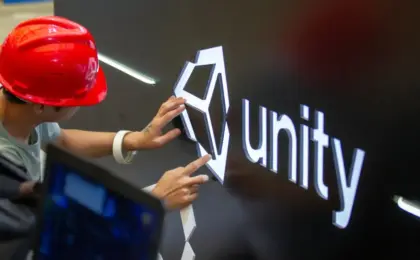
Now, the crosshairs of global private equity have turned toward foundational game infrastructure. According to recent reports from Reuters, the PIF and investment powerhouse Silver Lake have held serious, high-level discussions regarding a potential buyout of Unity Software, the company behind the ubiquitous multiplatform game engine of the same name.
Valued initially in preliminary talks at approximately $25 billion, a prospective acquisition of Unity would fundamentally alter the development pipeline for thousands of independent and AAA studios worldwide. However, this financial maneuver arrives against a backdrop of deep-seated industry anxiety. As legacy publishers like Electronic Arts face immediate workforce reductions and staggering debt obligations post-acquisition, the prospect of Unity falling under the umbrella of state-backed sovereign wealth and private equity has sent a tremor through the global game development community.
This article investigates the mechanics of the proposed Unity buyout, Silver Lake’s historical entanglement with the software provider, Unity’s recent financial resurgence following past controversies, and the broader, harrowing implications of an industry racing headfirst into a consolidation crisis.
Detailed Chronology: From Engine Pioneer to Private Equity Target
To understand the weight of the current acquisition talks, one must look at Unity’s turbulent historical timeline, its deep financial roots with Silver Lake, and the accelerating trend of macroeconomic buyouts within the games sector.
The Genesis and Rise of Unity
Founded in 2004, Unity Technologies democratized video game development. By offering a robust, accessible, and cross-platform engine, Unity enabled countless independent developers to ship titles to consoles, PCs, and mobile devices without building proprietary technology from scratch. For well over a decade, it stood shoulder-to-shoulder with Epic Games’ Unreal Engine as one of the two pillars of modern interactive development.
Silver Lake’s Early Investment (2017)
Silver Lake’s history with Unity is longstanding and deeply strategic. In 2017, the private equity firm poured approximately $400 million into Unity, securing an ownership stake of roughly 8%. This foundational investment cemented Silver Lake’s influence within the company. Egon Durban, Co-CEO of Silver Lake, secured a seat on Unity’s Board of Directors. This dual positioning now presents distinct corporate governance complications; typically, such cross-cutting board memberships require executives to recuse themselves from formal deliberations regarding corporate sales to avoid conflicts of interest.
The Public Offering and the Runtime Fee Crisis (2020–2023)
Unity officially went public in September 2020, entering the stock market with high expectations. However, its public tenure has been fraught with turbulence. Most notoriously, the company sparked a massive developer revolt during the catastrophic "Runtime Fee" scandal, where leadership attempted to retroactively charge developers per game install. The severe backlash led to executive departures, widespread public relations damage, and a fracturing of trust within the indie community.
Financial Rebound and AI Integration (2024–2026)
Despite past missteps, Unity executed a quiet and aggressive turnaround. Under new leadership, the company pivoted toward stabilization, optimizing core engine features—such as pioneering cross-engine workflows like the ability to integrate Unreal character assets into Unity environments—and leaning heavily into monetization tools. Most critically, strong growth within Unity’s AI-powered Vector advertising platform propelled the company to historic financial milestones. In late 2025 and early 2026, Unity posted its first quarterly profit on a Generally Accepted Accounting Principles (GAAP) basis since its 2020 IPO, immediately drawing the attention of predatory capital looking for undervalued, cash-generative tech assets.

Supporting Context & Metrics: The Anatomy of a Mega-Consolidation
The potential acquisition of Unity does not happen in a vacuum; it is part of a systemic reshaping of the technology and entertainment sectors driven by sovereign wealth funds and private equity giants.
The EA Blueprint: A Cautionary Tale
Earlier this year, the gaming world was stunned when Electronic Arts—one of the last independent titan publishers—was acquired for $55 billion by a consortium featuring the Saudi PIF, Silver Lake, and Affinity Partners. The fallout was swift and severe. Within months of the ink drying, EA enacted mass layoffs across several marquee studios and was saddled with an estimated $18 billion in debt to service the leveraged buyout.
Industry analysts point to the EA playbook as the template for what could happen to Unity. When private equity firms and state-backed funds inject tens of billions of dollars into software ecosystems, the immediate imperative is aggressive capital recovery, operational streamlining, and yield optimization—buzzwords that almost universally translate to workforce reductions and aggressive monetization schemes.
Unity’s Valuation Metrics ($25 Billion Benchmark)
- Initial Valuation Discussions: Preliminary talks between Silver Lake and the Saudi PIF have centered around a valuation benchmark of roughly $25 billion.
- Silver Lake Stake: Silver Lake retains an approximate 8% equity stake acquired through its foundational $400 million investment in 2017.
- Profitability Milestones: Unity recently achieved its first GAAP-compliant profitable quarter since September 2020, largely driven by the explosive scaling of its AI-backed Vector advertising platform.
- Market Footprint: Unity engine technology powers an estimated 70% of top mobile games and thousands of independent PC and console titles globally.
Official Statements & Industry Reaction
As news of the ongoing talks between Silver Lake, the Saudi PIF, and Unity’s leadership leaked via Reuters, responses from the broader technology and gaming communities have been overwhelmingly pessimistic regarding worker welfare and creative autonomy.
While official spokespeople for Unity Software, Silver Lake, and the Saudi Public Investment Fund have maintained standard corporate silence regarding "rumors and market speculation," independent analysts and veteran developers have been vocal.
"The video game industry seems determined to speedrun its way into a consolidation crisis where three opaque consortiums own everything, and almost everyone is unemployed."
— Industry Analyst Commentary
For game developers who rely on the Unity engine every day to build their livelihoods, the thought of the software falling under the control of private equity heavyweights and foreign sovereign wealth is deeply unsettling. Unlike traditional tech companies where software pivots are viewed purely through spreadsheets, game engines are artistic and technical mediums. Developers fear that under private equity pressure, Unity’s roadmap will become even more aggressively monetized, prioritizing ad-tech and data extraction over engine stability and developer-friendly licensing terms.
Future Outlook: Where Does the Industry Go From Here?
The potential buyout of Unity Software by Silver Lake and the Saudi PIF represents a critical inflection point for interactive media. If the deal successfully closes at or near the $25 billion valuation mark, it will signal that virtually no piece of foundational game infrastructure is safe from total financialization.
Key Questions for the Coming Months:
- Regulatory Scrutiny: Given the geopolitical ties of the Saudi PIF and the massive market share Silver Lake already holds in the tech and gaming sectors, antitrust and foreign investment regulators in the United States, European Union, and United Kingdom will likely scrutinize any formal acquisition bid.
- Developer Migration: If Unity undergoes the same aggressive restructuring and cost-cutting measures seen at EA, will developers finally abandon the engine en masse in favor of open-source alternatives like Godot or proprietary engines?
- The Fate of AI and Ad-Tech: With Unity’s recent financial health tied heavily to its AI-driven Vector advertising platform rather than pure engine licensing, future owners may seek to strip away or aggressively expand data-driven monetization features inside the editor itself.
Ultimately, the games industry is witnessing a structural shift from a creative medium driven by independent visionaries and publicly traded accountability to a consolidated asset class dominated by private equity portfolios and sovereign wealth funds. Whether Unity can maintain its role as an impartial tool for global creators under such a regime remains the defining question of its future.




Belum ada komentar. Jadilah yang pertama berkomentar!