

Executive Overview
For over a decade, the global gaming community has existed in a state of suspended animation, waiting for the sequel to one of the most commercially successful and culturally enduring role-playing games of all time: The Elder Scrolls V: Skyrim. When Bethesda Game Studios initially teased the sixth installment at E3 in 2018, it touched off a generation of rampant speculation, community theorizing, and meme-fueled impatience.
Now, more than eight years after that initial, empty-handed teaser, Bethesda has finally broken its silence. The studio has officially confirmed the subtitle of the upcoming epic: The Elder Scrolls VI: Sentinel. Yet, this long-awaited revelation has failed to extinguish the fires of anticipation. Instead, it has ignited a fresh wave of turbulence. Alongside the title drop, Bethesda cautioned fans that the game remains far from finished. Industry insider Jason Schreier of Bloomberg poured cold water on any remaining hopes for a near-term release, stating the game is still more than two years away.
What followed was a masterclass in community sociology—a collision between professional industry reporting and the unfettered, often chaotic ecosystem of online fandoms. As Redditors traded "copium theories," dissected star constellations in the reveal trailer, and sparred with reporters, the broader industry was left pondering a delicate question: Why reveal a game title now if the launch is still a distant horizon, and how much longer can Bethesda rely on goodwill before the weight of expectation cracks the foundation?
Detailed Chronology: Eight Years of Silence and the "Sentinel" Reveal
To understand the volatile reaction to the Sentinel announcement, one must trace the timeline of Bethesda’s communication strategy, which has historically relied on long, quiet development cycles punctuated by massive reveals.
The 2018 Teaser
At the Shrine Auditorium in Los Angeles during the June 2018 E3 showcase, Director and Executive Producer Todd Howard stepped onto the stage. Knowing that fans would demand news on The Elder Scrolls VI, Howard opted to pull back the curtain historically early. He presented a sweeping, cinematic flyover of a mountainous, coastal landscape, punctuated by the unmistakable, thunderous swells of Jeremy Soule’s iconic theme music.
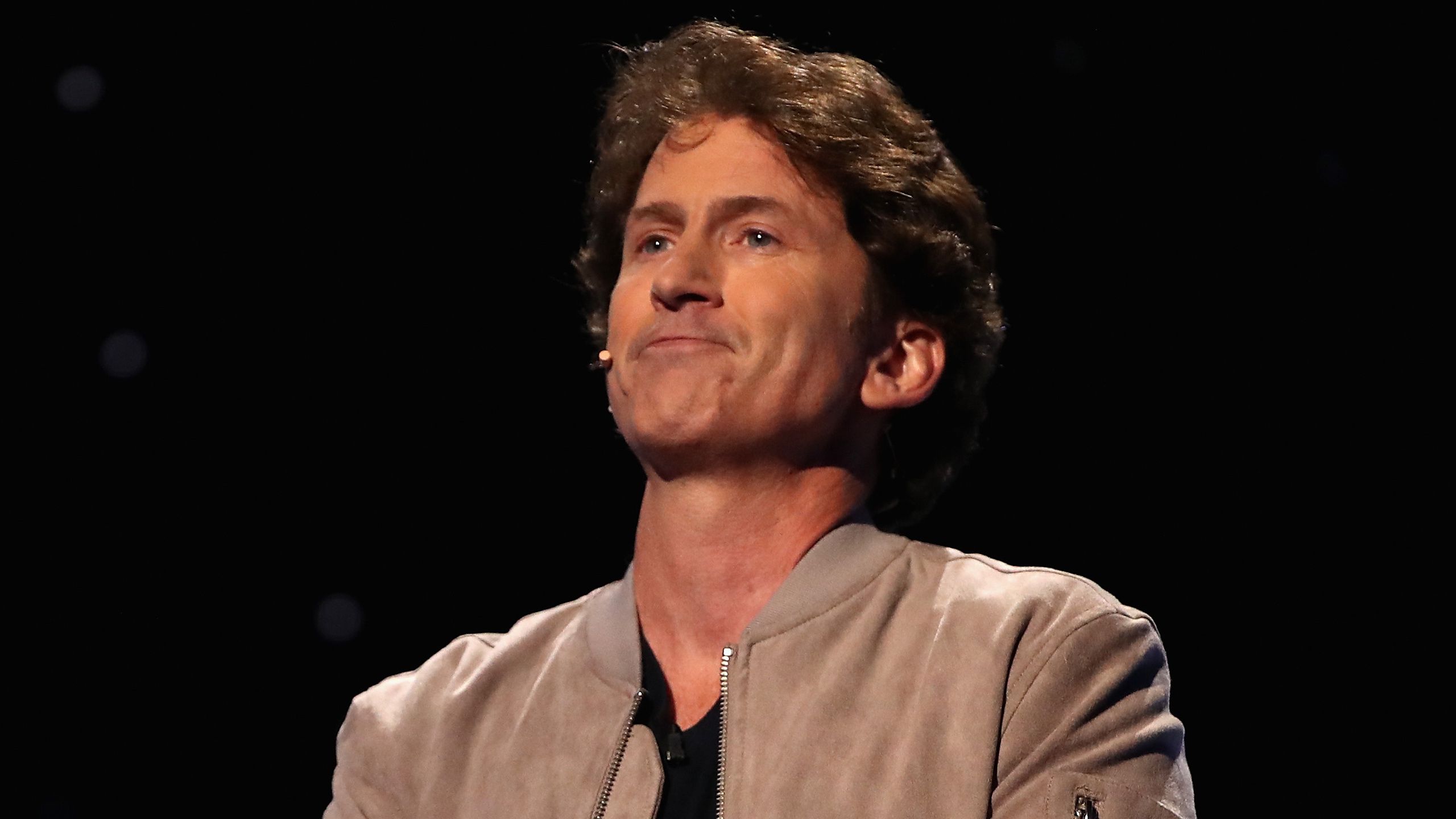
At the time, Howard admitted the reveal was premature. Bethesda was entirely focused on Fallout 76 and the upcoming space epic Starfield. The message was clear: The Elder Scrolls VI was in pre-production. What fans did not realize was just how literal that warning was.
The Long Drought (2018–2025)
In the years that followed, Bethesda entered an information blackout. Starfield absorbed the studio’s primary development bandwidth, launching in September 2023 to polarized reviews and solid player counts. Throughout this period, Todd Howard expressed retrospective regret over announcing The Elder Scrolls VI so early, noting that if he could do it over, he might have waited until the studio was closer to the finish line.
Fans starved for information began turning to forensic analysis of promotional materials, developer social media posts, and background assets in other titles.
The Breakthrough and the Title Drop
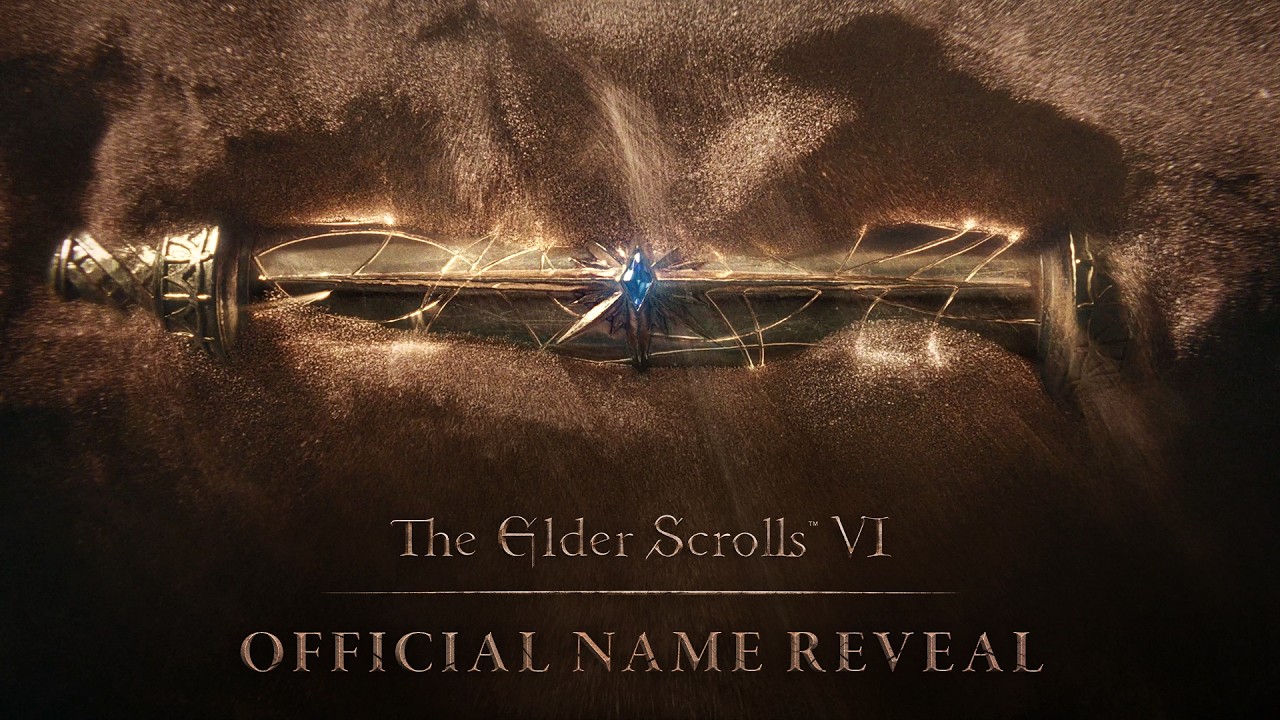
The silence finally shattered when Bethesda formally announced the sub Sentinel. Referencing the historic port city of Hammerfell, the title instantly grounded the game’s lore in the deserts, political intrigue, and maritime trade of the Redguards. Alongside the title, however, came the sobering realization that the game’s core production timeline was still ongoing. Bethesda warned that it would be "some time before we’re ready to share more," prompting Bloomberg’s Jason Schreier to clarify that the game is realistically more than two years away from store shelves.
Supporting Context & Metrics: The Anatomy of a Fandom in Turmoil
The interplay between veteran video game journalists and modern online forums provides a fascinating lens into how information flows—and frequently fractures—in the modern games industry.
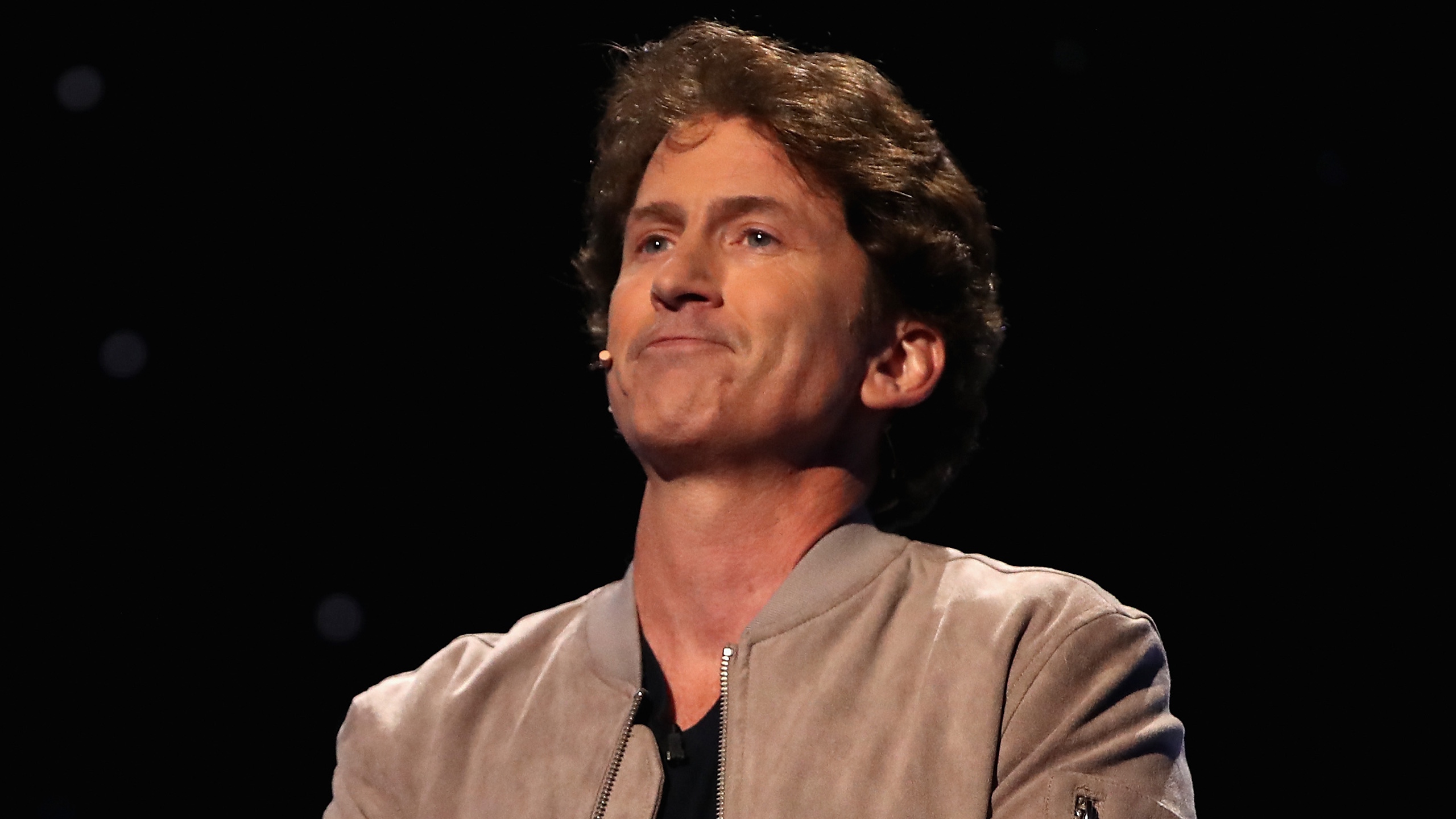
When Schreier, joined by Windows Central’s Jez Corden, corroborated that Sentinel was still years out, the response on platforms like Reddit’s r/TESVI was immediate. While a substantial segment of the community acknowledged the reporters’ tracks records—both having correctly predicted difficult developments or launch windows for titles like Fallout 76 and Starfield—a vocal contingent pushed back with hostility, skepticism, and denial.
The Anatomy of Fan Copium
Faced with the prospect of waiting until late 2027 or 2029, the community’s collective psyche fractured into several distinct schools of thought:
- The 2027 Release Conspiracy: Buoyed by loose interpretations of trailer details and cross-platform hints (including rumors tied to future hardware cycles like a hypothetical Nintendo Switch 2), optimistic fans anchored their hopes to the year 2027.
- The 11/11/202X Numerology: Leaning into Bethesda’s historical affinity for iconic launch dates (such as Skyrim’s famous 11/11/11 release), users like Reacryoum and Any-West7160 advanced theories suggesting the Sentinel trailer contains hidden visual timestamps or celestial alignments pointing to November 11, 2027.
- The Disinformation Hypothesis: In a display of peak internet cynicism, some users suggested that Bethesda was intentionally feeding false, distant timelines to insiders to catch leakers red-handed—a theory widely acknowledged by its proponents as pure "copium."
The Precedent of the Starfield Easter Egg
What complicates the skepticism toward insiders is that community conspiracy theories are occasionally proven right. Long before yesterday’s official announcement, sharp-eyed fans had identified a subtle Easter egg hidden within Starfield that hinted at the word "Sentinel" in connection to the next Elder Scrolls chapter. While dismissed at the time as wishful thinking, the discovery turned out to be entirely accurate.
However, industry analysts point out a crucial distinction: dropping a hidden lore word or subtitle into a shipping game years in advance is a low-risk creative choice. Committing to a hard, actionable launch window in an industry plagued by post-pandemic development delays, engine overhauls, and shifting corporate milestones is an entirely different matter.
Official Statements and Industry Authority
The friction between the gaming public and journalistic reporting led Jason Schreier to address the community directly via Reddit, clarifying the ethical and professional imperative behind his reporting:
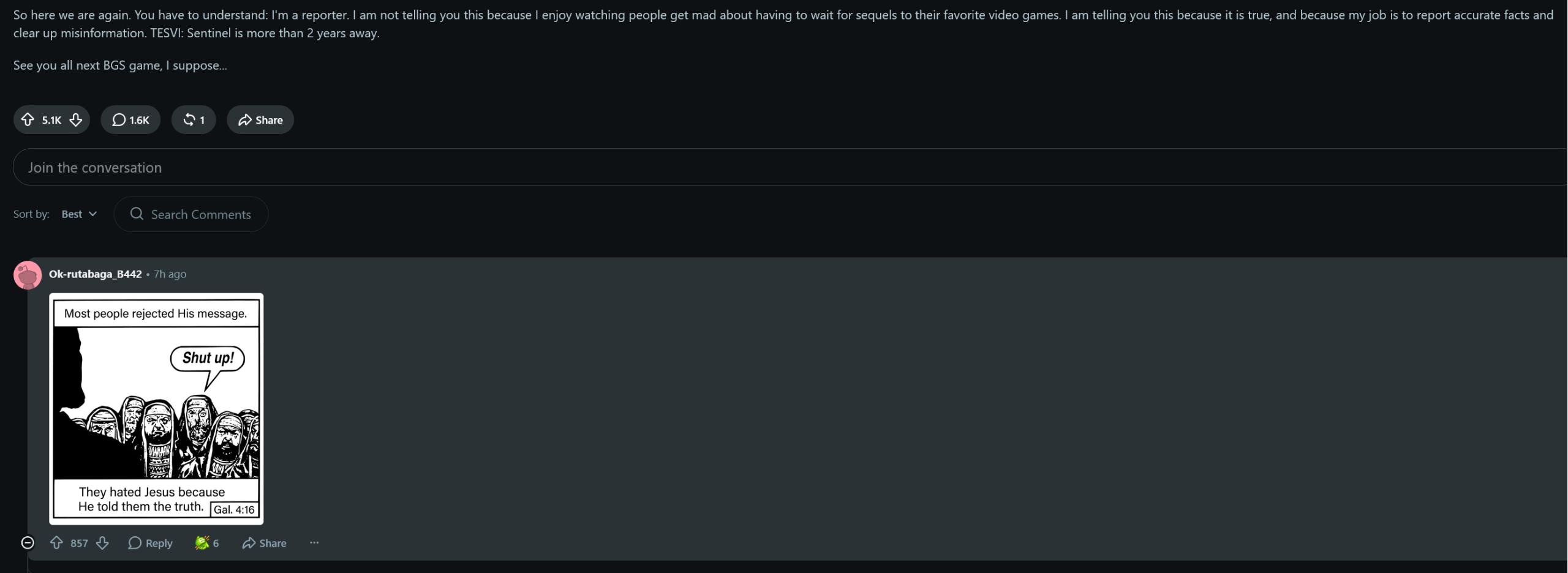
"I’m a reporter. I am not telling you this because I enjoy watching people get mad about having to wait for sequels to their favorite video games. I am telling you this because it is true, and because my job is to report accurate facts and clear up misinformation. TES6: Sentinel is more than two years away."
Schreier’s defense underscores the thankless nature of games journalism. In an ecosystem where hype can distort commercial realities, reporters who provide grounded developmental timelines are frequently cast as antagonists by fans emotionally invested in accelerated release schedules.
Simultaneously, Bethesda’s leadership finds themselves trapped in a paradox of their own making. By teasing the game in 2018, they established an unprecedented runway of anticipation. Releasing the title Sentinel now acts as a pressure valve, reassuring the player base that the project is real, active, and progressing, while attempting to manage expectations regarding its proximity to completion.
Industry veterans note that corporate transparency in AAA game development is a razor-slicing balance. Too much silence breeds apathy; too many details too early breed resentment. Bethesda’s current strategy appears to be a middle ground: feed the ravenous beast a name to chew on, but keep the oven door firmly shut.
Future Outlook: What Lies Ahead for Sentinel?
As the dust settles on the initial reveal of The Elder Scrolls VI: Sentinel, the industry faces a protracted period of waiting. If insider projections hold true, players will likely not see substantial gameplay, deep-dive developer diaries, or concrete launch dates until late 2027 at the earliest.
This extended timeline raises critical questions for Bethesda Game Studios and its parent company, Microsoft:
- Engine Evolution: Sentinel is expected to run on an evolved iteration of Bethesda’s Creation Engine. As hardware standards advance with current-generation consoles and high-end PC architectures, the pressure on Bethesda to deliver a technically stable, visually rich open-world RPG—unlike the mixed technical reception of early Starfield builds—has never been higher.
- The Hammerfell Setting: Shifting the narrative focus to Sentinel and the broader region of Hammerfell offers fertile ground for political intrigue, desert survival mechanics, and naval exploration. How Bethesda leverages this distinct cultural identity away from the nordic forests of Skyrim will define the game’s critical reception.
- The Cost of Premature Hype: The eight-year gap between the initial teaser and the title reveal serves as a cautionary tale for the modern games industry. As studios increasingly move toward shorter, punchier marketing windows—often revealing games 12 to 18 months before launch—Bethesda’s drawn-out rollout for Sentinel will be studied for years as either a masterclass in legendary brand persistence or a lesson in the dangers of over-promising.
For now, the legions of fans scouring the stars in the Sentinel reveal trailer, drafting multi-page lore essays on Reddit, and nursing their preferred brands of online copium must resign themselves to the reality of the situation. The Elder Scrolls VI is real, it has a name, and it is coming. But as the wise advice circulating online reminds us: try not to hurt yourselves in the wait. See you in Tamriel—possibly by the end of the decade.




Belum ada komentar. Jadilah yang pertama berkomentar!