

Executive Overview
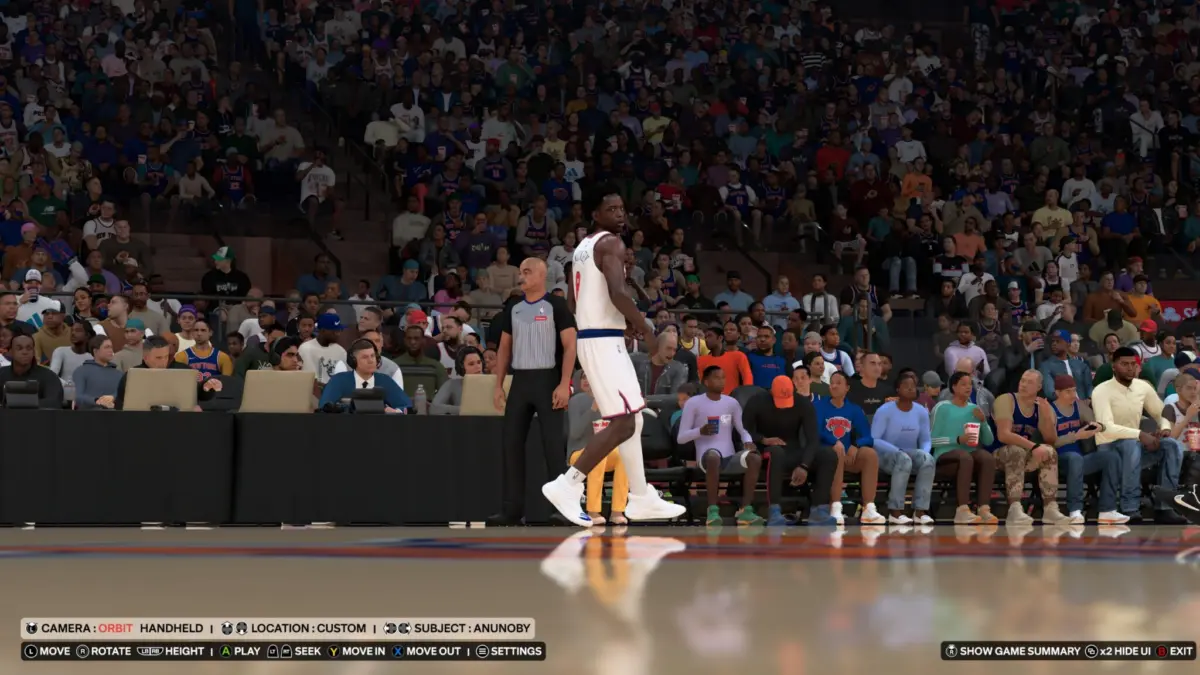
The arrival of NVIDIA’s DLSS 5 technology marks a massive milestone in the evolution of real-time graphics and artificial intelligence upscaling. Following its official debut—and a preemptive weekend leak by enterprising modders that largely bypassed the traditional marketing rollout—gamers and hardware enthusiasts alike are finally getting their hands on Nvidia’s latest image-enhancing suite. To understand its practical limits, we put DLSS 5 through its paces using NBA 2K27, the newest entry in the long-running basketball franchise.
Running tests on a high-end, premium-tier rig featuring an AMD Ryzen 7 9800X3D processor, 32GB of blazing-fast DDR5 memory, and an NVIDIA GeForce RTX 5080 graphics card, the findings are striking. While NVIDIA’s pre-release briefings estimated a heavy 50% to 60% performance tax when toggling DLSS 5, our empirical benchmarks reveal an even more punishing toll. In select scenarios, average frame rates plummeted by up to 73%.

This steep performance penalty raises critical questions about the current state of consumer hardware. With flagship cards commanding well over $1,500 in a volatile hardware market, users are forced to weigh whether the undeniable visual fidelity brought by neural rendering justifies sacrificing more than half of their frame rate. This deep dive examines the chronological rollout, benchmark metrics across 1440p and 4K resolutions, visual fidelity analysis, and what this heralds for the future of PC gaming hardware.
Detailed Chronology
The pathway to DLSS 5 has been a whirlwind of corporate anticipation, accidental leaks, and hands-on skepticism.

- The Pre-Launch Hopes and Briefings: NVIDIA originally framed DLSS 5 as a revolutionary step in neural rendering during closed-door technical briefings. Executives emphasized that the technology would transform character models, lighting, and textures through advanced AI models, though they quietly acknowledged that early adopters should brace for a significant 50% to 60% performance deficit.
- The Modder Disruption: Just days before the official software development kit (SDK) and game integrations went live, independent modders managed to extract and deploy early implementations of DLSS 5. This unexpected grassroots release effectively scooped NVIDIA’s official launch event, turning what was supposed to be a tightly controlled corporate rollout into a wild-west experimentation phase for technical enthusiasts.
- The NBA 2K27 Launch: NBA 2K27 was chosen as the inaugural official title to support DLSS 5 out of the box. Thanks to its clean base optimization and manageable standard hardware requirements, it served as an ideal sandboxed environment to isolate and test the heavy processing demands of NVIDIA’s new neural network pipeline.
- The Reality Check: Upon running baseline and stress tests on the RTX 5080, testers quickly realized that the performance tax exceeded initial corporate estimations, sparking intense online debate over whether DLSS 5 is genuinely ready for prime-time consumer hardware or if it represents an overreach designed strictly for future GPU generations.
Supporting Context & Metrics
To evaluate DLSS 5 accurately, testing was conducted on a high-end benchmarking rig: an AMD Ryzen 7 9800X3D processor paired with an NVIDIA GeForce RTX 5080 and 32GB DDR5 RAM. Tests were executed during actual gameplay sessions within NBA 2K27’s quick match mode at Ultra settings with ray tracing enabled. This ensured that cinematic cutaways, crowd reactions, and player celebrations were actively factored into the performance data.
DLSS 5: 1440p Benchmarks
At a native resolution of 1440p, the RTX 5080 easily handles NBA 2K27, delivering a buttery-smooth 230 average frames per second (FPS) with a 1% low of 93 FPS. However, turning on DLSS 5 at native resolution slashes the average frame rate down to 93 FPS, while 1% lows drop into worrying territory at 37 FPS.
When combining Quality upscaling and 2x Frame Generation with DLSS 5, the system managed an average of 168 FPS (75 FPS 1% low), compared to a staggering 363 FPS average when running Quality upscaling and 2x Frame Generation without DLSS 5. This represents a massive performance drop that can disrupt the responsiveness of a fast-paced sports title.
DLSS 5: 4K Benchmarks
Pushing the resolution to 4K highlights an even more aggressive performance penalty. At native 4K with Ultra settings and ray tracing enabled, the RTX 5080 outputs a highly respectable 183 FPS average (91 FPS 1% low). The moment DLSS 5 is enabled natively, that average crashes to 49 FPS, with 1% lows sinking to 31 FPS—a staggering 73% performance reduction.

Utilizing Quality upscaling and 2x Frame Generation alongside DLSS 5 claws performance back to a playable 92 FPS average (53 FPS 1% low). Yet, that same setup without DLSS 5 enabled yields a phenomenal 255 FPS average. The 163 FPS deficit illustrates just how heavily neural rendering taxes even second-tier flagship consumer silicon.
Image Quality Analysis: Beauty vs. Reality
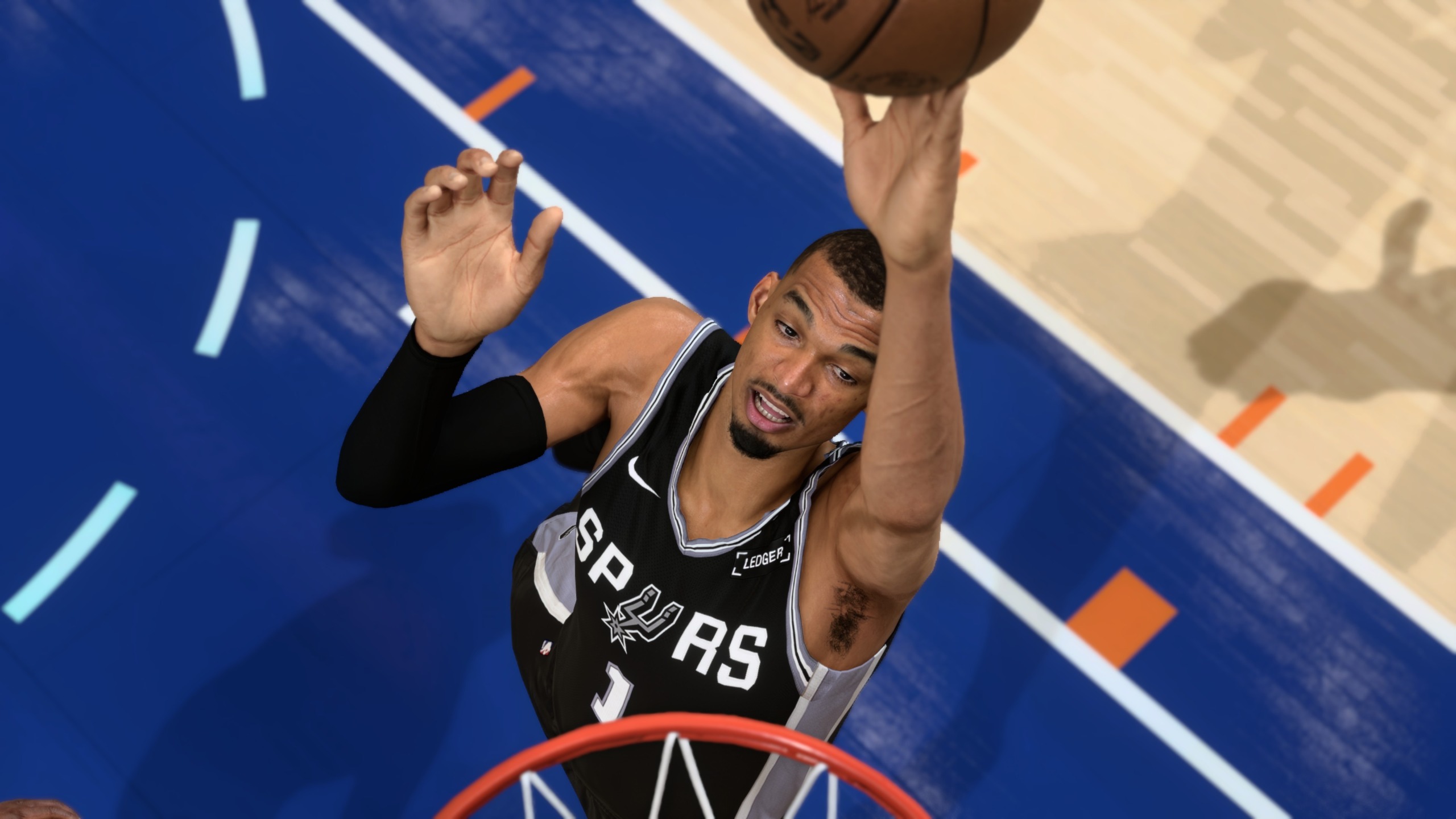
NVIDIA’s primary defense for these performance cuts lies in the visual leaps achieved by neural rendering. In NBA 2K27’s photo mode and close-up cutscenes, the technology is undeniably impressive.

- Facial Detailing and Lighting: Character models benefit from realistic specular highlights on the nose and forehead without looking completely blown out. Skin shading is far more nuanced, avoiding the flat, lifeless look of traditional rendering.
- Textiles and Assets: Jerseys exhibit realistic micro-wrinkles and fabric physics that create a genuine 3D-knitted appearance. Facial hair and head hair appear individualised rather than blocky.
- The Catch: While close-ups in photo mode look stunning, the reality of gameplay dictates a zoomed-out perspective where these intricate details are largely imperceptible. Furthermore, certain character models occasionally suffer from an over-processed, "AI beauty filter" aesthetic that can look artificial upon closer inspection.
Official Statements and Industry Perspective
NVIDIA has maintained a defensive yet forward-looking stance regarding the performance profile of DLSS 5. Representatives have reiterated that neural rendering fundamentally changes how pipelines construct pixels, shifting workloads from traditional rasterization and ray tracing shaders onto dedicated Tensor Cores.
Corporate briefings emphasize that future software updates and driver optimizations will steadily claw back performance overhead. Furthermore, NVIDIA argues that developers retain complete artistic control over the intensity sliders, allowing studios to dial back the aggressiveness of the AI filters to match their specific art direction.

However, independent hardware analysts and community consensus point to a glaring hardware mismatch. Features demanding upwards of a 60% to 73% performance tax on a $1,500+ graphics card suggest that DLSS 5 is effectively a preview technology—architecturally tailored for the hardware generations of tomorrow rather than the consumer rigs sitting on desks today.
Future Outlook
The debut of DLSS 5 in NBA 2K27 serves as a double-edged sword for the PC gaming community. On one hand, it proves that AI-driven neural rendering can achieve remarkable leaps in lighting realism, material texturing, and character fidelity. On the other hand, the sheer computational weight of the technology creates an excruciating trade-off between visual splendor and fluid responsiveness.

As DLSS 5 support inevitably rolls out to heavier, more demanding titles—such as upcoming AAA juggernauts like Borderlands 4—the hardware strain will only intensify. If an optimized, relatively lightweight sports game can reduce a high-end RTX 5080 system’s frame rate by over 70%, more complex open-world titles risk becoming practically unplayable with neural rendering fully engaged.
Ultimately, DLSS 5 is a tantalizing glimpse into the future of digital rendering, but it arrives before the hardware is comfortably ready to shoulder the burden. Unless gamers are willing to accept massive frame rate penalties for incremental aesthetic gains, the wise choice for fast-paced, competitive titles will be to leave DLSS 5 turned off and let raw rasterization carry the load.







Belum ada komentar. Jadilah yang pertama berkomentar!