

Executive Overview
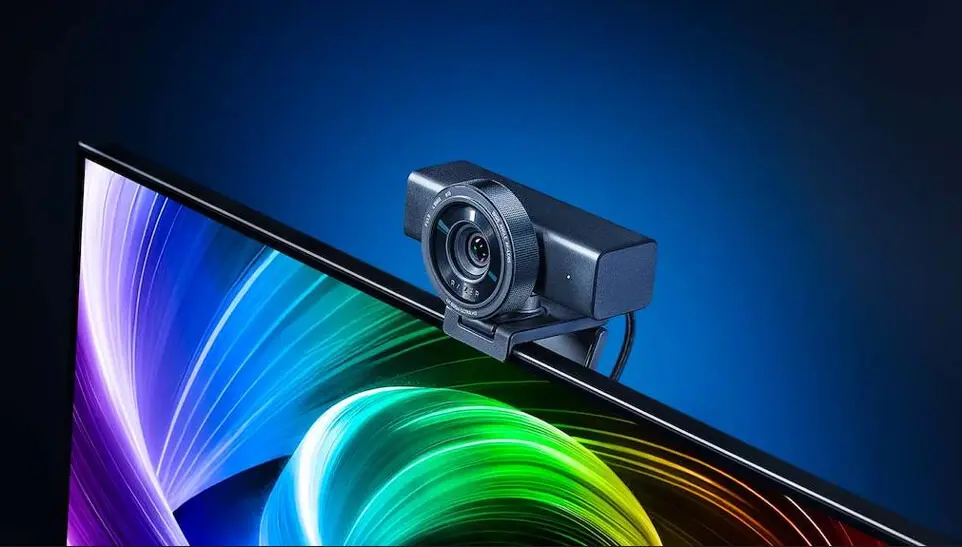
The evolution of digital content creation, live streaming, and remote professional collaboration has triggered a relentless demand for higher-fidelity video equipment. Historically, achieving broadcast-quality visuals—characterized by crisp 4K resolutions, high frame rates, and exceptional low-light performance—required investing in complex, expensive digital single-lens reflex (DSLR) or mirrorless camera setups, complete with capture cards, dummy batteries, and convoluted lens configurations. Addressing this persistent hardware gap, gaming and lifestyle peripheral titan Razer has officially announced the launch of its flagship professional-grade webcam: the Razer Kiyo V2 Pro.
Tailored specifically for competitive gamers, professional live streamers, virtual content creators, and corporate professionals, the Kiyo V2 Pro aims to democratize high-end broadcasting. At its core, the device boasts native 4K recording at a buttery-smooth 60 frames per second (fps), a specification previously reserved for dedicated, high-end video production hardware. Powering this visual prowess is a state-of-the-art Sony STARVIS 2 sensor, an industry-leading component engineered to optimize low-light capture and eliminate digital noise in dimly lit environments.
Beyond its raw hardware specifications, the Kiyo V2 Pro introduces a sophisticated suite of automated and manual software tools designed to streamline the user experience. Features such as an 86-degree wide-angle lens with minimal distortion, dynamic digital pan-tilt-zoom (PTZ) framing, One-Click Image Enhancement, and Ultra-High Dynamic Range (HDR) ensure that creators can achieve studio-quality broadcasts straight out of the box. Encased in a flexible, premium housing with an integrated physical privacy shutter, the webcam is positioned as an all-in-one ecosystem for digital communicators. Available immediately through global channels at a retail price of US$299.99 (€319.99), the Kiyo V2 Pro represents a strategic play by Razer to capture the high-end creator market, bridging the gap between plug-and-play simplicity and cinematic visual fidelity.
Detailed Chronology: The Engineering and Evolution of Razer’s Kiyo Lineup
To understand the magnitude of the Kiyo V2 Pro’s market entry, one must examine the chronological evolution of Razer’s webcam ecosystem. When Razer first introduced the original Kiyo webcam, it disrupted the market by integrating a multi-step ring light directly onto the chassis, recognizing that illumination was the primary bottleneck for desktop video quality. However, as streaming platforms like Twitch, YouTube, and Kick evolved, and as remote work became institutionalized, the limitations of 1080p resolution and basic CMOS sensors became glaringly apparent to professional creators.
The subsequent release of intermediate models experimented with larger sensors and higher resolutions, yet compromises remained between frame rate and fidelity—users frequently had to choose between the cinematic depth of 4K at lower frame rates or the fluid motion of 1080p at 60fps. The development cycle for the Kiyo V2 Pro was thus predicated on solving this engineering compromise.
- Phase One: Sensor Selection and Thermal Management. Razer’s engineering teams targeted the integration of the Sony STARVIS 2 sensor. Known primarily in the security and professional cinematography sectors, this backside-illuminated sensor captures significantly more photons per pixel. Integrating this into a compact webcam chassis required innovative thermal management to prevent sensor degradation and thermal noise during prolonged 4K/60fps recording sessions.
- Phase Two: Optical Architecture and Distortion Control. Wide-angle lenses inherently suffer from barrel distortion, where straight lines near the frame edges appear curved—an undesirable aesthetic for professional streams. Razer developed a custom 86-degree wide-angle optical stack that widens the field of view to comfortably capture desk setups, peripheral lighting, and immersive room backdrops while mathematically correcting edge warping.
- Phase Three: Software Integration and Ecosystem Partnerships. Recognizing that advanced hardware requires intelligent control systems, Razer refined its proprietary software suite while partnering with external streaming app developers, bundling access to tools like Camo Pro. This ensured that features such as AI-driven auto-framing and manual exposure parameters operate with zero perceptible latency.
- Phase Four: Global Commercial Rollout. Following rigorous internal testing and beta trials within select creator communities, Razer officially greenlit the Kiyo V2 Pro for global distribution, launching simultaneously across Razer.com, flagship RazerStores, and authorized international retail networks.
Supporting Context & Technical Metrics
The technical architecture of the Razer Kiyo V2 Pro is a masterclass in modern peripheral engineering, balancing raw pixel density with intelligent computational photography.
The Sony STARVIS 2 Advantage
At the heart of the Kiyo V2 Pro lies the advanced Sony STARVIS 2 sensor. Traditional webcams often struggle in evening or mood-lit streaming environments, resulting in grainy, artifact-laden video feeds unless paired with overpowering studio lights. The STARVIS 2 architecture features enhanced near-infrared sensitivity and a wider dynamic range at pixel level. This allows the webcam to pull usable light from dim room environments, preserving color saturation and reducing luminance noise without blowing out highlights.
Resolution, Frame Rates, and Bandwidth
Streaming in 4K at 60fps demands immense data throughput. While many consumer webcams advertise 4K capabilities, they often throttle frame rates down to a choppy 30fps—unacceptable for fast-paced gaming broadcasts where motion blurring can disorient viewers. The Kiyo V2 Pro maintains a fluid 60fps at maximum resolution, ensuring that rapid hand movements, gameplay action, and facial expressions are rendered with absolute clarity. To handle this data load, the device utilizes advanced video compression algorithms to minimize CPU overhead on the host machine.
Optics and Dynamic Framing
The lens array provides an 86-degree field of view. For creators who utilize dual-monitor setups, physical props, or dynamic physical expressions, this width ensures they remain fully framed without needing to position the camera awkwardly far away.
- Dynamic PTZ: Through software integration, the camera can dynamically pan, tilt, and digitally zoom into the user. If the creator shifts in their seat or leans forward, the software maintains a consistent framing ratio, mimicking the effect of a human camera operator.
- One-Click Image Enhancement & HDR: Inconsistent ambient lighting—such as sunlight shifting through a window during a long stream—can ruin video balance. The Kiyo V2 Pro’s automated systems instantly recalibrate exposure, white balance, and noise reduction. Concurrently, Ultra-High Dynamic Range (HDR) merging ensures that blown-out window backgrounds or deep shadows under a cap are balanced into a cohesive, highly detailed image.
Ergonomics, Mounting, and Privacy
Hardware reliability extends beyond internal silicon. The Kiyo V2 Pro features a universal pivoting mounting mechanism designed to clamp securely onto ultra-thin laptop lids, thick desktop monitors, and standard camera tripods. This versatility allows creators to achieve unconventional, high-angle, or side-profile shots easily. Furthermore, security and privacy concerns are addressed via a built-in, twist-operated physical privacy shutter. When closed, a mechanical barrier physically blocks the lens, offering absolute peace of mind against digital intrusion.
| Feature Specification | Razer Kiyo V2 Pro Details |
|---|---|
| Max Resolution & Frame Rate | 4K Ultra HD at 60 Frames Per Second (fps) |
| Sensor Technology | Sony STARVIS 2 (Enhanced Low-Light Performance) |
| Field of View (FoV) | 86-degree wide-angle lens with low distortion |
| Imaging Technologies | Ultra-High Dynamic Range (HDR), One-Click Image Enhancement |
| Software Features | Dynamic Pan/Tilt/Zoom (PTZ), bundled Camo Pro access |
| Physical Controls | Twist-operated integrated privacy shutter |
| Mounting System | Universal pivoting mount (monitors, displays, tripods) |
| Global Pricing | US$299.99 / €319.99 |
Official Statements and Industry Perspective
The launch of the Kiyo V2 Pro reflects Razer’s broader corporate strategy to capture the high-end lifestyle and productivity market, moving beyond traditional gaming peripherals into professional broadcast tools.
While specific executive quotes from the product launch emphasize the democratization of studio-grade tools, industry analysts note that the pricing tier—US$299.99 and €319.99—positions the Kiyo V2 Pro directly against entry-level mirrorless camera bodies and specialized broadcast webcams from competitors like Elgato and Logitech.
Razer representatives highlighted during the product briefing that the primary motivation behind the Kiyo V2 Pro was friction reduction. "Content creators should spend their energy engaging with their audience, perfecting their craft, and entertaining—not troubleshooting capture cards, dealing with HDMI signal drops, or managing complex mirrorless camera clean-HDMI output settings," noted a company spokesperson. By integrating DSLR-rivaling low-light performance and 4K60 speeds into a plug-and-play USB device, Razer is betting that convenience paired with uncompromising quality will win over discerning creators.
Moreover, the inclusion of bundled access to advanced third-party software like Camo Pro demonstrates Razer’s commitment to an open ecosystem. Rather than locking users into a proprietary, restrictive software garden, Razer is empowering creators to leverage industry-standard tuning utilities to customize their visual output precisely to their brand identity.
Future Outlook: The Trajectory of Desktop Broadcasting Hardware
As we look toward the future of digital content creation, the release of the Razer Kiyo V2 Pro signals several broader industry trends that will shape hardware development over the coming years.
1. The Blurring Lines Between Consumer and Professional Gear
The traditional hierarchy of video equipment—where consumer webcams were relegated to casual video calls and professional broadcasts required expensive cinema cameras—is rapidly collapsing. As sensors like the Sony STARVIS 2 become miniaturized and cost-effective enough for peripheral form factors, the performance delta between a dedicated webcam and an entry-level interchangeable-lens camera narrows significantly. In the near future, we can expect high-end webcams to incorporate advanced onboard neural processing units (NPUs) for real-time background blurring, AI object tracking, and automated cinematic framing without drawing processing power from the host PC.
2. The Rise of Hybrid Work and High-End Virtual Presence
The corporate sector is also undergoing a permanent shift. Enterprise executives, remote consultants, legal professionals, and educators increasingly recognize that video quality directly correlates with perceived authority and professionalism. A crisp, perfectly exposed, 4K60 video feed in a dimly lit home office builds stronger trust and engagement during high-stakes virtual meetings than a grainy, artifact-heavy laptop integrated webcam. Devices like the Kiyo V2 Pro are uniquely positioned to capture this burgeoning "prosumer" enterprise market.
3. Regional Availability and Market Adaptation
While the global launch details and Western pricing have been firmly established at US$299.99 and €319.99, regional adaptations remain a point of anticipation. At the time of writing, Razer has yet to announce official localized pricing or release dates for key Southeast Asian markets such as Malaysia, where the creator economy is experiencing exponential growth. Industry observers expect localized pricing announcements to roll out via regional Razer subsidiaries in the coming weeks, accompanied by localized creator sponsorships and review campaigns.
Conclusion
The Razer Kiyo V2 Pro is much more than an incremental hardware update; it is a definitive statement on the current state of desktop video production. By successfully marrying the cinematic clarity of 4K/60fps recording with the unmatched low-light sensitivity of the Sony STARVIS 2 sensor, Razer has engineered a compelling alternative to cumbersome DSLR setups. For streamers, gamers, and professional creators seeking uncompromising visual fidelity paired with effortless plug-and-play convenience, the Kiyo V2 Pro sets a formidable new benchmark in the professional webcam marketplace.






Belum ada komentar. Jadilah yang pertama berkomentar!