

Executive Overview
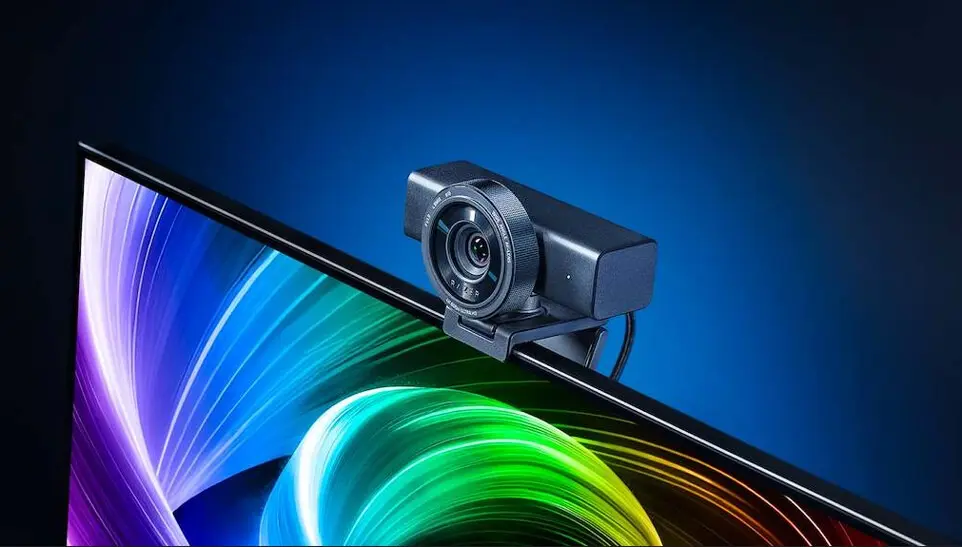
The landscape of digital content creation, live streaming, and remote professional communication has undergone a monumental shift over the past half-decade. As audiences demand increasingly cinematic visual fidelity, the barrier to entry for high-end video production has steadily fallen. Recognizing this paradigm shift, hardware giant Razer has officially announced its latest flagship peripheral: the Razer Kiyo V2 Pro. Tailored explicitly for professional streamers, competitive gamers, and digital content creators, this high-performance webcam is engineered to bridge the gap between consumer-grade USB cameras and complex, expensive DSLR or mirrorless camera setups.
At the core of the Kiyo V2 Pro’s value proposition is its headline-grabbing capability to record and broadcast at pristine 4K resolution at 60 frames per second (fps). This performance tier is further elevated by the inclusion of a state-of-the-art Sony STARVIS 2 sensor, a component renowned within the imaging industry for its exceptional low-light sensitivity and dynamic range. By combining high-frame-rate ultra-high-definition capture with advanced sensor technology, Razer aims to eliminate the grain, motion blur, and washed-out aesthetics that have historically plagued desktop streaming setups in dimly lit environments.
Beyond raw hardware specifications, the Kiyo V2 Pro heavily integrates intelligent software solutions to streamline the user experience. Featuring automatic framing capabilities, dynamic pan-tilt-zoom (PTZ) functionality, One-Click Image Enhancement, and Ultra-High Dynamic Range (HDR) support, the webcam is designed to adapt autonomously to challenging lighting and movement dynamics. Encased in a flexible, mounting-friendly chassis complete with a physical privacy shutter, the Kiyo V2 Pro launches globally at a premium price point of US$299.99 / €319.99, positioning itself directly against established heavyweights in the professional broadcasting ecosystem.
Detailed Chronology and Product Evolution
To fully appreciate the engineering leap represented by the Kiyo V2 Pro, it is essential to trace the lineage of Razer’s webcam ecosystem. When Razer first introduced the original Kiyo, its defining characteristic was not ultra-high resolution, but rather its integrated, adjustable ring light—a direct solution to the universal streaming problem of poor face illumination. While the original Kiyo and its subsequent iterations carved out a dedicated niche among budget-conscious and mid-tier creators, the industry quickly evolved.
As platforms like Twitch, YouTube, and TikTok transitioned toward higher bitrate requirements and audiences began expecting cleaner, more immersive visual framing, the limitations of 1080p webcams became glaringly apparent. Creators found themselves forced to choose between two unappealing paths: settling for soft, artifact-heavy USB webcams, or investing heavily in dedicated mirrorless cameras, dummy batteries, clean HDMI capture cards, and complex lens configurations.
The development of the Kiyo V2 Pro represents Razer’s systematic response to this market friction. Engineering teams focused intensely on three primary pillars:
- Uncompromised Resolution and Fluidity: Moving past the historical compromise of choosing between high resolution (such as 4K at 30fps) and high fluidity (1080p at 60fps), the Kiyo V2 Pro delivers both simultaneously.
- Sensor Superiority: Integrating the Sony STARVIS 2 sensor marks a departure from standard consumer webcam sensors, bringing back-illuminated pixel technology typically reserved for security and professional videography equipment into the desktop ecosystem.
- Software-Driven Autonomy: Recognizing that creators want to focus on their content rather than tweaking exposure settings mid-broadcast, Razer engineered a suite of automated tools designed to handle environmental inconsistencies in real-time.
The official unveiling marks the culmination of this development cycle, bringing a product to market that targets the absolute upper echelon of desktop-bound content creators who refuse to deal with the logistical complexities of interchangeable-lens cameras.
Supporting Context, Technical Metrics, and Hardware Architecture
The Power of 4K at 60fps and Sony STARVIS 2
The most technically demanding aspect of modern webcam design is the processing pipeline required to handle uncompressed or efficiently compressed 4K video at a smooth 60 frames per second. Lower-tier webcams often throttle frame rates when shifting to maximum resolutions, resulting in choppy, unnatural motion that detracts from fast-paced gaming broadcasts. The Kiyo V2 Pro maintains a fluid 60fps feed even at maximum resolution, ensuring that rapid hand movements, dynamic gameplay, and expressive reactions are captured with absolute clarity.
Central to this performance is the Sony STARVIS 2 sensor. Unlike traditional front-illuminated sensors, STARVIS 2 utilizes a back-illuminated pixel structure that maximizes the light-gathering surface area of each pixel. This architectural advantage drastically improves sensitivity in low-light conditions—a common scenario for creators who stream in darkened rooms with only RGB peripheral backlighting. Noise is significantly reduced, color fidelity is preserved, and shadow details are pulled out without introducing digital artifacts.
Optical Design and Automated Framing
The hardware is paired with a custom-engineered 86-degree wide-angle lens. This focal width has been strategically chosen to strike a delicate balance: it is wide enough to capture more of a streamer’s physical environment, dual-monitor setups, or background decor, yet narrow enough to prevent the unnatural "fisheye" edge distortion that plagues ultra-wide alternatives.
To complement the physical optics, Razer has integrated intelligent software-driven PTZ mechanics. Through the supporting software suite, the webcam can dynamically pan, tilt, and zoom to keep the user perfectly centered within the frame. Whether a creator leans back, stands up, or moves laterally during an energetic broadcast, the camera tracks their position smoothly, eliminating the need for manual adjustments.
Lighting Optimization and Dynamic Range
Lighting inconsistency is the bane of live broadcasting. To combat this, Razer implemented One-Click Image Enhancement, an algorithm that autonomously evaluates the user’s environment and instantly adjusts exposure, white balance, and noise reduction parameters.
Furthermore, the inclusion of Ultra-High Dynamic Range (HDR) ensures that high-contrast scenes are handled gracefully. In environments where a bright window sits behind the creator, or harsh ring lights create blown-out highlights on the face while plunging the background into darkness, HDR processing blends multiple exposures in real-time. This retains critical detail in both the brightest highlights and the deepest shadows, delivering a balanced, professional-grade image straight out of the box. For advanced users who prefer granular control, manual tuning options remain fully accessible, allowing creators to dial in exact color profiles, contrast ratios, and sharpness levels to match their personal brand aesthetics.
Software Ecosystem and Bundled Access
Hardware is only as good as the software driving it. Razer is bundling access to Camo Pro with the Kiyo V2 Pro, unlocking an advanced suite of professional controls, secure connections, and refined auto-framing capabilities. While Razer’s announcement left the exact subscription duration of the bundled Camo Pro access unspecified, the integration provides immediate access to high-level customization options that rival dedicated third-party streaming suites.
Ergonomics, Mounting Flexibility, and Privacy
Physical design considerations extend beyond internal electronics to the chassis and mounting hardware. The Kiyo V2 Pro rests upon a universal pivoting mount designed for seamless compatibility with standard desktop monitors, laptops, and professional camera tripods. This versatility allows creators to experiment with creative angles—positioning the camera directly above a display for eye-level engagement or off-axis for dynamic cinematic perspectives.
Privacy and security have also been prioritized. Integrated directly into the camera housing is a twist-operated physical privacy shutter. With a simple mechanical twist, users can physically block the lens, offering absolute peace of mind against digital intrusion or accidental broadcasting when off-camera.
Official Statements and Market Positioning
While direct quotes from executive leadership during the launch event emphasized Razer’s dedication to the content creation community, the strategic positioning of the Kiyo V2 Pro speaks volumes about the company’s market trajectory.
Industry analysts note that peripheral manufacturers have recognized a distinct saturation in the entry-level streaming market. Consumers who purchased basic 1080p webcams during the work-from-home boom are now looking to upgrade. However, many find the financial and technical commitment of transitioning to a DSLR system—complete with lenses, capture cards, power supplies, and mounting arms—to be prohibitive.
Razer is purposefully targeting this "middle ground." By pricing the Kiyo V2 Pro at US$299.99 / €319.99, the company is positioning the device as a premium, all-in-one upgrade path. It offers the visual fidelity and sensor performance that creators crave, packaged in a plug-and-play USB form factor that requires zero specialized video production knowledge to operate.
At the time of writing, Razer has made the Kiyo V2 Pro available globally through Razer.com, physical RazerStores, and selected online retail partners. However, official pricing and availability for regional markets—such as Malaysia—have yet to be formally disclosed by local distributors, leaving regional fans eagerly awaiting further announcements.
Future Outlook and Industry Implications
The launch of the Razer Kiyo V2 Pro signals several important trends for the future of desktop peripherals and content creation hardware:
- The Blurring Lines Between Consumer and Professional Gear: As sensors like the Sony STARVIS 2 filter down into consumer-facing devices, the baseline expectation for webcam quality will permanently rise. Manufacturers can no longer rely on software interpolation alone; physical sensor architecture and optical clarity are taking center stage.
- AI and Software Autonomy: The heavy reliance on automated framing, dynamic PTZ, and real-time HDR highlights the industry-wide transition toward software-driven hardware. Webcams are increasingly acting as smart devices that understand and adapt to human movement and environmental conditions autonomously.
- Competitive Pressure on Traditional Camera Brands: Traditional camera manufacturers (such as Sony, Canon, and Panasonic) have introduced webcam utility software to turn their mirrorless bodies into webcams. Devices like the Kiyo V2 Pro challenge this ecosystem by offering comparable visual results natively via USB, without the battery-drain, overheating risks, and bulk associated with traditional cameras.
As live streaming continues to professionalize across platforms like Twitch, YouTube, Kick, and corporate virtual boardrooms, the demand for frictionless, high-end video capture will only accelerate. The Razer Kiyo V2 Pro stands as a formidable entry in this evolving market, proving that creators no longer need to compromise between ease of use and uncompromising visual excellence. Whether it sets a new benchmark for competitor responses remains to be seen, but for creators seeking an instant, plug-and-play production upgrade, the Kiyo V2 Pro establishes an undeniably high standard.









Belum ada komentar. Jadilah yang pertama berkomentar!