The global entertainment landscape mourns the loss of one of its most distinguished and culturally transcendent figures. Sir Patrick Stewart, the beloved British actor whose commanding presence, unmistakable resonant voice, and peerless dramatic range defined generations of theatergoers and science fiction enthusiasts alike, has passed away at the age of 86.
According to an official statement released across his verified social media channels, Stewart died peacefully at his home in Los Angeles. He was surrounded by the enduring affection of his wife, Sunny, following a brief and poignant journey with Alzheimer’s disease and Lewy body dementia.
Over a career spanning nearly seven decades, Stewart transformed from a gritty Northern English theater apprentice into an international icon. He anchored himself firmly in the cultural consciousness through two monumental franchise roles: Captain Jean-Luc Picard in Star Trek: The Next Generation and Professor Charles Xavier in 20th Century Fox’s X-Men cinematic universe. Yet, reducing his legacy solely to these interstellar and mutant realms overlooks a masterclass in versatility.
Stewart was, first and foremost, a classical Shakespearean actor whose rigorous training at the Bristol Old Vic Theatre School and decades-long tenure with the Royal Shakespeare Company imbued his screen performances with a gravity, intellectual rigor, and emotional depth rarely matched in contemporary cinema. As the industry and millions of fans worldwide reckon with his passing, his life serves as a testament to the enduring power of classical craft meeting modern pop culture iconography.
Detailed Chronology: From Yorkshire Roots to Global Stardom
Early Life and Classical Beginnings (1940–1986)
Born in Mirfield, West Yorkshire, England, in July 1940, Patrick Stewart’s early life was marked by hardship and resilience, themes that would later inform the profound empathy of his acting. Introduced to the dramatic arts during his youth, he left school at age fifteen to work as a local journalist while simultaneously immersing himself in amateur dramatics. His undeniable talent earned him a spot at the prestigious Bristol Old Vic Theatre School, which he attended starting in 1957.
By 1959, Stewart had made his professional stage debut, quickly establishing a reputation as a formidable talent capable of commanding the boards with physical presence and vocal authority. In 1966, he achieved a major career milestone by joining the Royal Shakespeare Company (RSC). Over the next two decades, Stewart became a pillar of British classical theater, tackling some of the Bard’s most complex roles—including Antony, Enobarbus, and Shylock—while touring internationally.
While theater remained his artistic anchor, Stewart began branching into film and television in the late 1960s. His screen debut came with a minor appearance in the long-running British soap opera Coronation Street in 1967. Throughout the 1970s and early 1980s, he built a solid resume as a reliable character actor, appearing in prestige television dramas and prominent feature films. Notable cinematic credits from this transitional period included John Boorman’s Arthurian epic Excalibur (1981) as King Leondegrance, David Lynch’s sci-fi adaptation of Dune (1984) as the fierce Gurney Halleck, and Tobe Hooper’s cosmic horror film Lifeforce (1985). Despite these steady roles, international household-name status eluded him—until a fateful casting call in the mid-1980s changed the trajectory of his life and television history.
The Star Trek Era: Commanding the Enterprise (1987–2023)
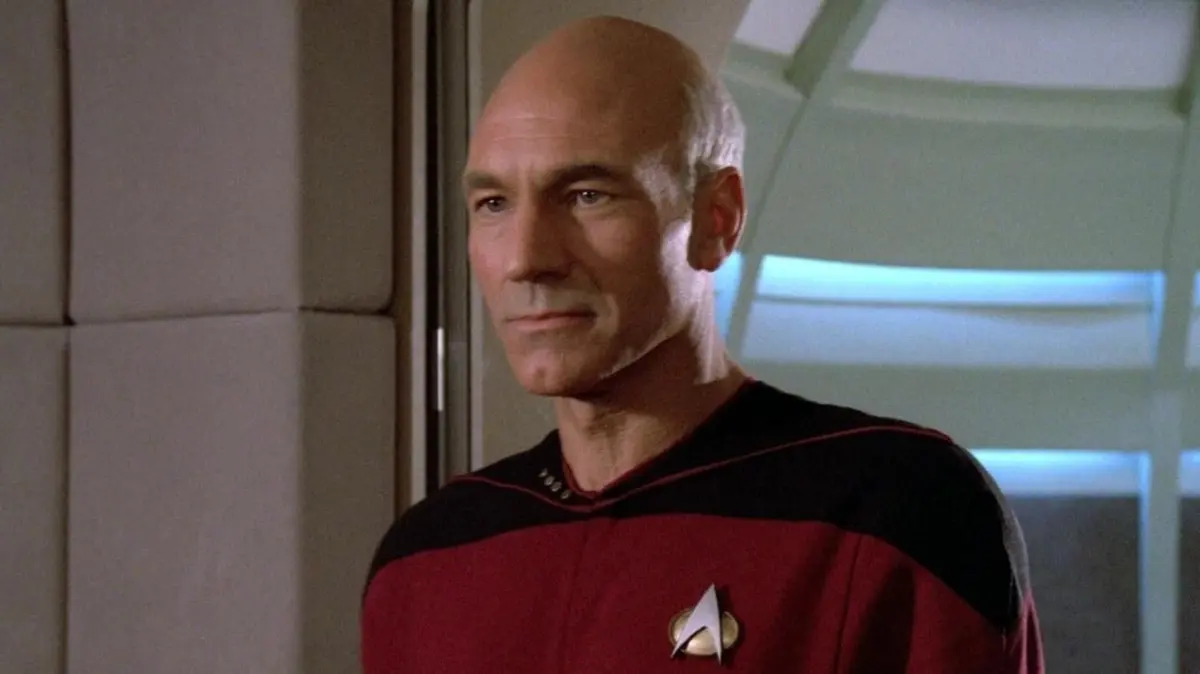
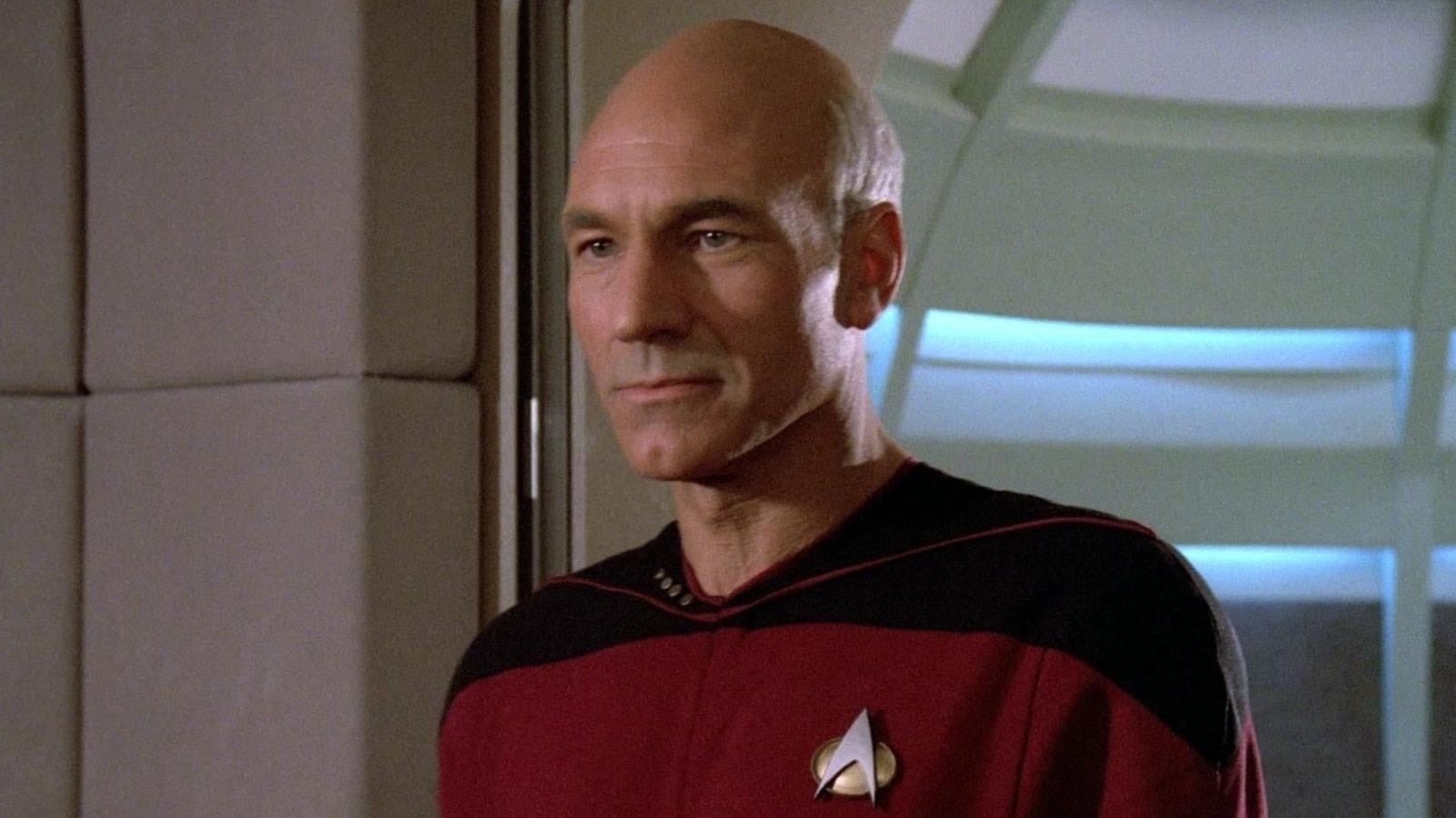
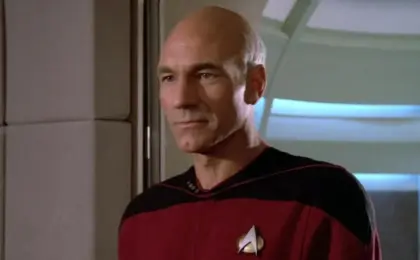
In 1987, at the age of 47, Stewart took a leap of faith that transformed him into a global superstar. Creator Gene Roddenberry cast the classically trained British stage actor as Captain Jean-Luc Picard for the revival of television’s most famous space franchise, Star Trek: The Next Generation.
Initially met with skepticism by traditionalists who doubted a Shakespearean actor could anchor a syndicated science fiction series, Stewart quickly silenced his critics. He infused Captain Picard with moral integrity, intellectual curiosity, diplomacy, and an unshakeable quiet strength. Picard was not a rugged, brawling space cowboy like his predecessor James T. Kirk; instead, he was an introspective diplomat, philosopher, and explorer.
Star Trek: The Next Generation ran for seven critically acclaimed and commercially dominant seasons, cementing itself as a cornerstone of 1990s television. Following the series’ conclusion in 1994, Stewart seamlessly transitioned Picard to the silver screen, starring in four feature films:
Star Trek Generations (1994)
Star Trek: First Contact (1996) — widely regarded as one of the finest films in the franchise’s history
Star Trek: Insurrection (1998)
Star Trek: Nemesis (2002)
Decades later, Stewart returned to the role that defined a generation of fans. He spearheaded and executive-produced the Paramount+ streaming series Star Trek: Picard (2020–2023). The series offered a poignant, autumnal look at the aging Starfleet captain, concluding in its third and final season in 2023 with a triumphant, emotional reunion of the original TNG bridge crew.
+-----------------------------------------------------------------+
|               KEY STUART FRANCSHISES & MILESTONES               |
+--------------------------+--------------------------------------+
| 1959                     | Professional Stage Debut             |
| 1966                     | Joins Royal Shakespeare Company      |
| 1987 – 1994              | Stars in Star Trek: TNG              |
| 2000 – 2017              | Portrays Professor X in X-Men Films  |
| 2020 – 2023              | Leads Star Trek: Picard              |
| 2022 / 2026              | MCU Appearances (Doctor Strange /    |
|                          | Avengers: Doomsday)                  |
+--------------------------+--------------------------------------+
Entering the Mutant Universe: Professor X (2000–2026)
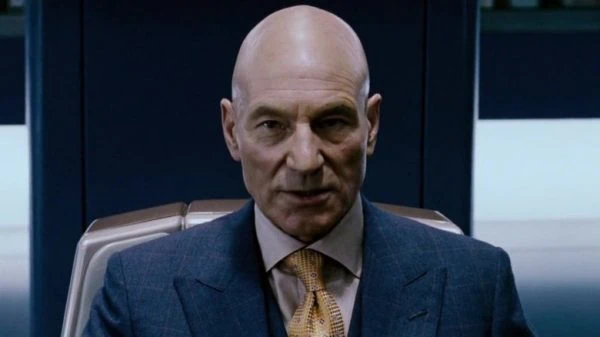
Even as his time with Star Trek wound down, Stewart found himself at the vanguard of another cultural phenomenon. At the turn of the millennium, director Bryan Singer cast him as Professor Charles Xavier—the telepathic, wheelchair-using founder and mentor of the mutant superhero team—in 20th Century Fox’s blockbuster adaptation X-Men (2000).
Stewart was so physically and temperamentally suited to the role that comic book fans had campaigned for his casting for years prior. He brought an innate dignity, wisdom, and underlying vulnerability to Professor X, serving as the moral compass of a cinematic franchise that helped launch the modern superhero film boom.
Stewart reprised the role across multiple sequels and prequels over the next two decades, including:
X2: X-Men United (2003)
X-Men: The Last Stand (2006)
X-Men Origins: Wolverine (2009)
The Wolverine (2013)
X-Men: Days of Future Past (2014)
He delivered arguably his finest performance in the genre alongside Hugh Jackman in James Mangold’s gritty, elegiac masterpiece Logan (2017). In this neo-Western tragedy, Stewart portrayed an aging, ailing Charles Xavier suffering from a degenerative neurological condition, grounding the comic book narrative in heartbreaking human reality.
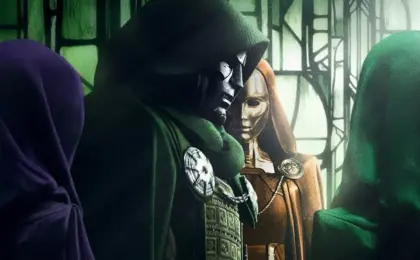
Demonstrating his enduring cultural footprint, Stewart became the first of Fox’s X-Men actors to cross over into the Disney-owned Marvel Cinematic Universe (MCU), making a surprise cameo in Doctor Strange in the Multiverse of Madness (2022). He is slated to make one final, highly anticipated posthumous appearance this coming December, returning alongside the original X-Men cast in Marvel Studios’ blockbuster event Avengers: Doomsday.
Supporting Context, Theater, and Diverse Credits
While Star Trek and X-Men earned him worldwide renown, Stewart’s resume boasts a remarkable variety of prestige projects, dark comedies, and cult classics.
Throughout the 1990s and 2000s, he frequently returned to television and independent film to showcase his range. Notable television credits include his Emmy- and Golden Globe-nominated performance as Captain Ahab in the 1998 miniseries Moby Dick, his moving turn as Ebenezer Scrooge in a 1999 adaptation of A Christmas Carol, and his critically lauded reprisal of his Royal Shakespeare Company role in a modern-dress television adaptation of Hamlet (2009).
On the silver screen, Stewart subverted his dignified public image with comedic flair, notably playing King Richard in Mel Brooks’ classic spoof Robin Hood: Men in Tights (1993) and starring in the groundbreaking comedy-drama Jeffrey (1995). Decades later, he terrified audiences in Jeremy Saulnier’s harrowing punk-rock thriller Green Room (2015), playing a chillingly calm neo-Nazi club owner—a performance that proved his capacity for dark, menacing villainy. Furthermore, for nearly two decades, he lent his aristocratic British timbre to the animated sitcom American Dad!, voicing the eccentric, shape-shifting CIA deputy director Avery Bullock.
Official Statements and Industry Tributes
The entertainment industry has responded with an outpouring of grief, reverence, and gratitude for Stewart’s immense contributions to the arts. Co-stars, directors, and cultural institutions have shared heartfelt tributes highlighting his mentorship, wit, and dedication to his craft.
Jonathan Frakes, who starred alongside Stewart for decades as Commander William Riker on Star Trek: The Next Generation and directed several projects with him, released a tearful statement:
"There will never be another Captain. Patrick wasn’t just the leader of our ship; he was our moral center, our teacher, and a fiercely loyal friend. The world has lost a titan, but his light—and his Picard—will echo across the stars forever."
Hugh Jackman, who shared the screen with Stewart in multiple X-Men films and forged a lifelong bond during the production of Logan, shared a tribute on social media:
"I have lost a mentor, a dear friend, and a gentleman of unmatched grace. Working opposite Patrick was the masterclass of a lifetime. His kindness, his razor-sharp intellect, and his ferocious commitment to truth on stage and screen made everyone around him better. Rest well, my professor."
Kevin Feige, president of Marvel Studios, issued a statement reflecting on Stewart’s impact on modern cinema:
"Sir Patrick Stewart brought supreme gravitas to the comic book genre long before superhero films were considered high art. As Charles Xavier, he anchored a universe with wisdom, heart, and authority. We are profoundly grateful that he graced our cinematic universe, and his legacy will forever remain part of Marvel history."
Future Outlook: A Legacy Cast in Eternity
As the dust settles on the news of Sir Patrick Stewart’s passing, the cultural architecture he helped build remains unshakeable. He leaves behind an artistic footprint that spans classical theater, television history, and modern cinematic mythology.
Though his final performance in Avengers: Doomsday will bittersweetly screen later this year, Stewart’s immortality is guaranteed not merely by the franchises he anchored, but by the humanity he brought to every role. Whether sitting in the captain’s chair of the USS Enterprise, wheelchair-bound in the Xavier Institute, or delivering Shakespearean soliloquies to packed London houses, Sir Patrick Stewart elevated every project he touched.
He leaves behind his loving wife, Sunny, countless colleagues, and legions of fans across the globe who will continue to look to the stars—and to his remarkable body of work—for inspiration, comfort, and truth.









Belum ada komentar. Jadilah yang pertama berkomentar!