

Executive Overview
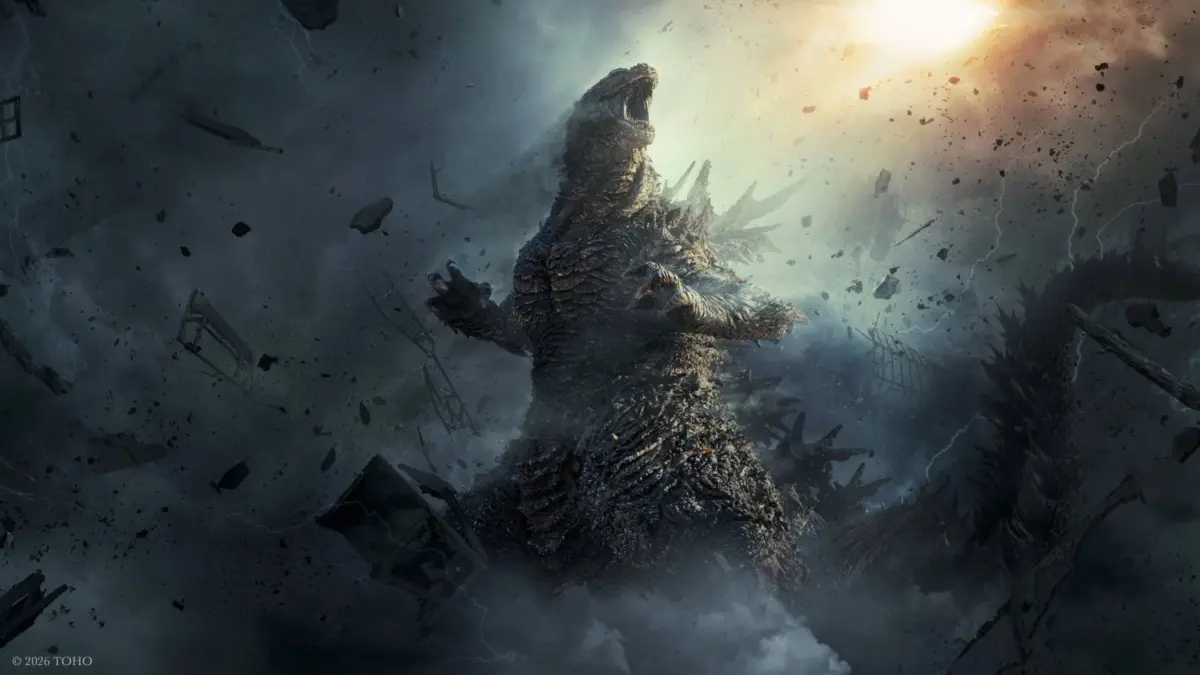
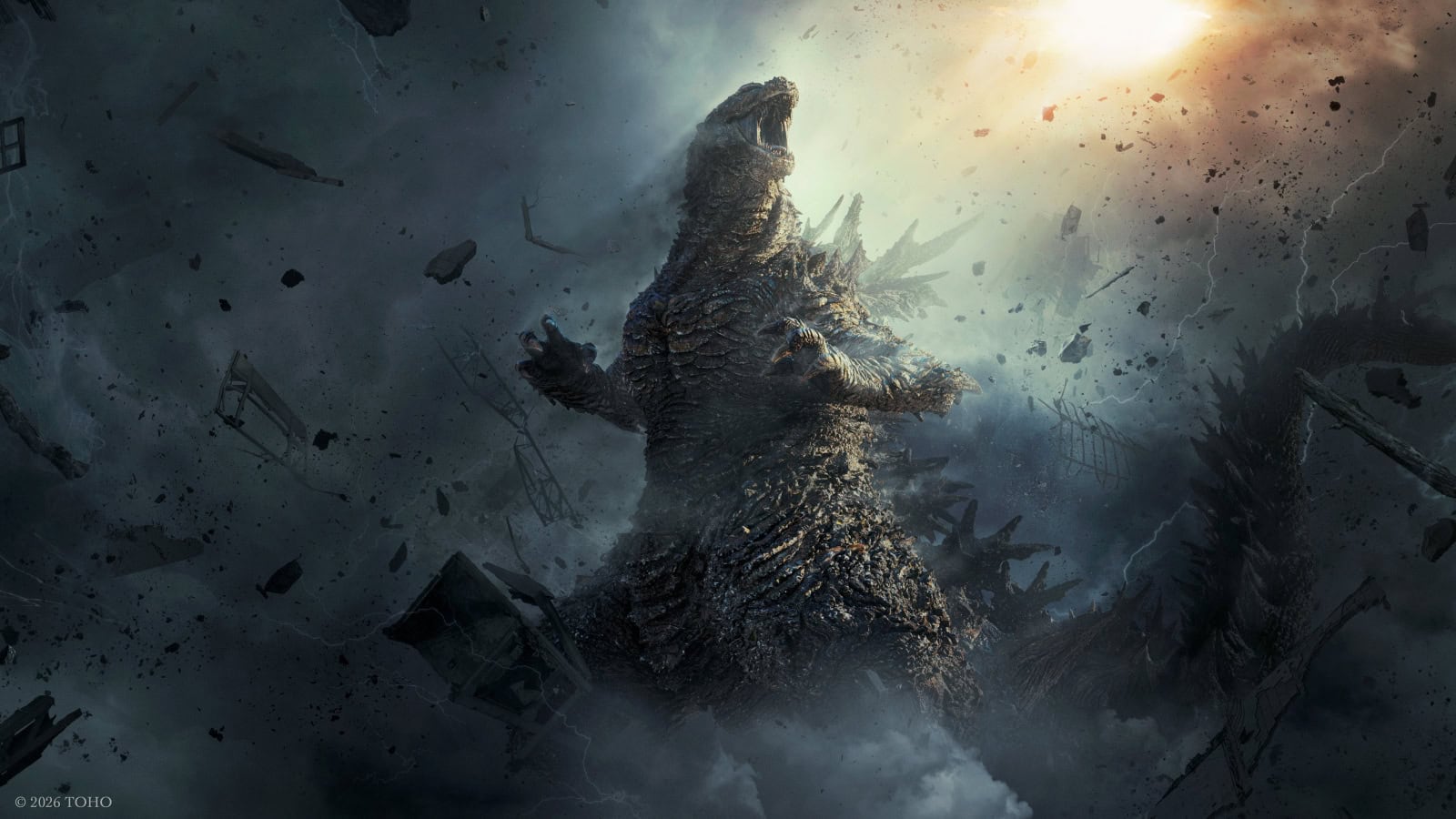
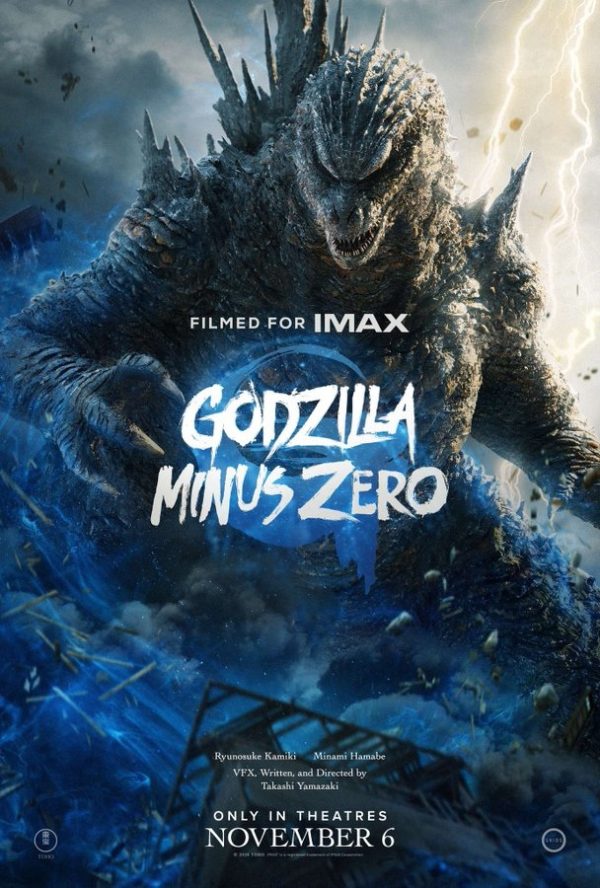
Following the monumental, Oscar-winning triumph of 2023’s Godzilla Minus One, writer, director, and visual effects maestro Takashi Yamazaki returns with the highly anticipated 2026 follow-up, Godzilla Minus Zero. Set in post-war Japan in the year 1949—two years after the harrowing events of the first film—the narrative reunites audiences with the shell-shocked yet resilient Shikishima family as they grapple with a catastrophic new era.
While Godzilla Minus One was widely praised for its tight focus, emotional resonance, and lean storytelling achieved on a modest budget, Godzilla Minus Zero expands its scope exponentially. Working with a larger narrative canvas, a bigger budget, and grander cinematic ambitions, Yamazaki brings back the atomic-breath-wielding leviathan alongside a legendary new antagonist: the three-headed, flying, dinosaur-like menace, King Ghidorah. Complete with Ghidorah’s devastating blue gravity beams capable of lifting entire structures and citizens alike, the sequel promises breathtaking blockbuster spectacle.
However, this ambitious expansion comes with a price. While the film delivers on visceral, pulse-pounding carnage and technical brilliance, it occasionally struggles under the weight of an overstuffed screenplay. Juggling an expanded ensemble cast, complex geopolitical strategy meetings, and heavy historical trauma, Godzilla Minus Zero battles pacing issues that dilute some of its emotional impact. Despite these stumbles, Yamazaki’s latest cinematic offering remains a visually arresting and generally satisfying addition to the storied franchise, proving that Japanese kaiju cinema can still compete toe-to-toe with Hollywood blockbusters on craft and brutality.
Detailed Chronology: Plot and Character Dynamics
1. The Post-War Interlude (1949)
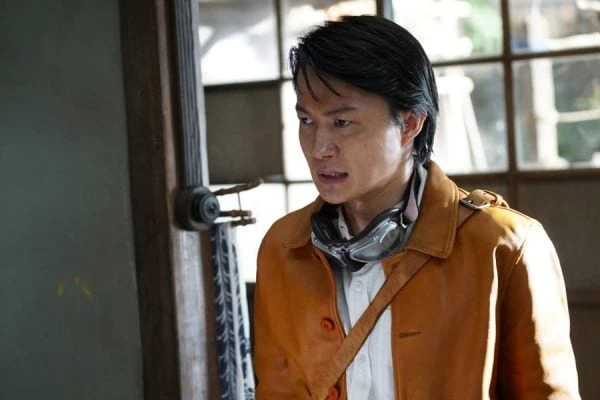
The story opens in 1949, precisely two years after Kōichi Shikishima (Ryunosuke Kamiki) seemingly vanquished Godzilla in a suicidal yet miraculous finale. Shikishima is desperately trying to adapt to the normalcy of post-war domestic life. He shares a modest home with his now-wife, Noriko Ōishi (Minami Hamabe)—who bears a stark, bandaged reminder of the past with a severely damaged eye—and their adopted daughter, Akiko (Sae Nagatani).
Despite his attempts to find peace, Shikishima is haunted by survivor’s guilt and the persistent fear that the miracle of his survival is temporary. His worst fears are realized when environmental anomalies and seismic reports begin signaling the emergence of a fresh catastrophe.
2. Enter King Ghidorah and Renewed Threats
As mysterious disruptions plague the Pacific, government and scientific factions mobilize. Kenji Noda (Hidetaka Yoshioka) has assumed the role of Director of the Large-Scale Disaster Response Bureau. He works closely with Makoto Aoyama (Masami Nagasawa), a guilt-ridden weather specialist dedicated to tracking behavioral patterns that defy natural science.
Parallel to their efforts, Dr. Ogata (Jun Kunimura)—still grappling with debilitating survivor’s guilt following the loss of his family in the Hiroshima bombing—conducts clandestine research into recovered Godzilla cells. Dr. Ogata theorizes that if Godzilla has survived, humanity’s only viable countermeasure might be a high-stakes gambit: engineering a confrontation between two apex predators and eliminating whatever remains.
Meanwhile, the threat arrives not from the ocean depths alone, but from the skies. King Ghidorah emerges from dormancy, laying waste to the landscape with terrifying power. Its signature blue gravity beam introduces a terrifying new tactical dynamic, effortlessly manipulating gravity to hoist people, vehicles, and entire buildings into the air before crashing them to earth.
3. The Reluctant Pilot and the Climax
As the nation faces total annihilation, military and scientific leaders turn once more to Shikishima, arguing that his piloting expertise and firsthand experience make him "worth a hundred pilots." Torn between his hard-won family life and his civic duty, Shikishima is forced back into the cockpit. Noriko also steps into a much more active and pivotal role, defying passive victimhood as the crisis peaks.
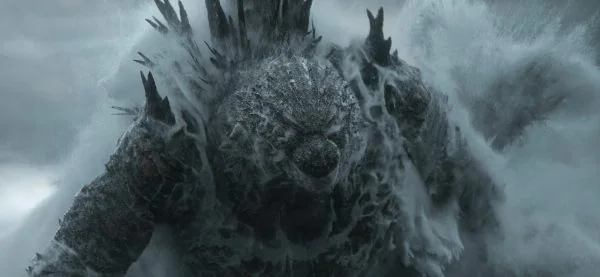
With Godzilla delayed until roughly an hour into the runtime, the film dedicates its first half to intense strategizing, psychological friction, and bureaucratic maneuvering. The ultimate confrontation materializes as an epic, brutal clash between kaiju behemoths, culminating in a high-stakes military and aerial operation orchestrated by Shikishima and his peers.
Supporting Context & Metrics: Production and Creative Vision
Budgetary Scale and Visual Effects Mastery
One of the most remarkable achievements of Godzilla Minus One was its ability to look like a $150 million Hollywood blockbuster on a fraction of that budget—a feat that ultimately earned the visual effects team a historic Academy Award. For Godzilla Minus Zero, Yamazaki was granted an expanded budget and increased resources.
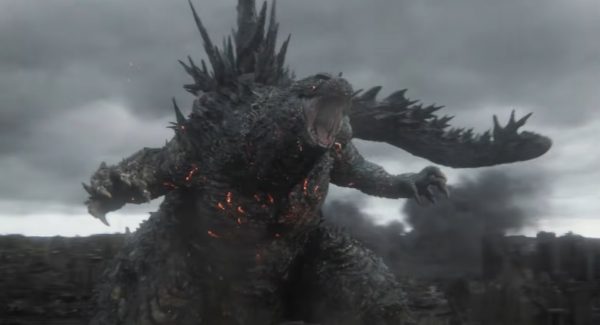
True to form, the visual effects remain world-class. Dogfights in the skies over war-scarred Tokyo ruins are rendered with striking clarity, ensuring the audience never loses track of spatial geography during frantic action sequences. Furthermore, the creature combat is visceral and unflinching: limbs are severed, blood flows freely, and the sheer kinetic force of the monsters’ blows is palpable.
Thematic Weight and Historical Parallels
Yamazaki continues to ground his monster movies in profound historical trauma. In Godzilla Minus Zero, the narrative does not shy away from depicting the immediate, brutal aftermath of historical atrocities like the Hiroshima bombing. These stark visual and emotional cues drive home the psychological pain of characters who are desperately trying to rebuild their country—and their souls—from the ground up. This thematic gravity anchors the film, elevating it above standard creature-feature fare, even when the plotting threatens to run off the rails.
Official Statements and Critical Reception
While major promotional tours and studio press statements have emphasized the filmmakers’ desire to "push the boundaries of Japanese visual effects," critical reception has highlighted a delicate balancing act between spectacle and narrative ambition.
The Overstuffed Screenplay Debate
Industry analysts and reviewers have pointed out that Godzilla Minus Zero occasionally suffers from the trappings of modern serialized storytelling. Critics note that the screenplay frequently loops back on itself, echoing dialogue scenes and rehashing plot points in a manner reminiscent of binge-able streaming television.
Furthermore, the substantial expansion of the human ensemble means that characters like Dr. Ogata—whose internal trauma and ulterior motives are occasionally expressed through heavy-handed dream sequences—lose some of their emotional impact. The pacing suffers from extended stretches of waiting between expositional briefings and actual monster action, leading to a structure that some reviewers likened to "sitting through unskippable cutscenes in a video game before reaching the final boss."
Comparative Analysis: Minus One vs. Minus Zero
Most critics agree that while Godzilla Minus Zero is a slight step down from the tight, emotionally cohesive perfection of Godzilla Minus One, it remains a massive cinematic achievement. The reduction in overall screen time for the monsters—with Godzilla absent for the first hour and Ghidorah dormant for long stretches—is viewed as a questionable narrative gamble. Nevertheless, the sheer quality of the set pieces when the monsters do clash ensures that audience satisfaction remains high.
Future Outlook: The Trajectory of Toho’s Franchise
The release of Godzilla Minus Zero in 2026 solidifies Toho’s modern strategy for its flagship intellectual property: treating Godzilla not merely as a pop-culture icon, but as a prestigious, high-art canvas for exploring national trauma, political anxiety, and human resilience.

Lessons Learned for Future Installments
As Yamazaki and Toho contemplate potential further installments or spin-offs, the lessons of Godzilla Minus Zero will be vital. The sequel proves that audiences are eager for deep lore integration—such as the brilliant introduction of King Ghidorah—and top-tier visual effects. However, it also serves as a cautionary tale about the dangers of narrative bloat. Future projects will likely need to streamline their human subplots, tighten dialogue economy, and ensure a more balanced distribution of kaiju action to maintain the breathless momentum that defined the franchise’s highest peaks.
Cultural Legacy
Ultimately, Godzilla Minus Zero cements the modern Japanese Godzilla era as one of the most compelling revivals in modern cinematic history. By balancing breathtaking, brutal spectacle with deeply human stories of survival, grief, and familial love, Yamazaki and his team have ensured that the King of the Monsters—and his terrifying rivals—will continue to stomp across international screens with unmatched authority for years to come.







Belum ada komentar. Jadilah yang pertama berkomentar!