

Executive Overview
For much of the 1980s, the landscape of British underground music was defined by an unyielding orthodoxy. Run through the blistering tempos, aggressively shouted vocals, and politically charged manifestos of the UK hardcore scene, it was a culture that prized friction and raw abrasion above all else. Yet, beneath this seemingly impenetrable crust of street punk, a quiet mutation was taking place.
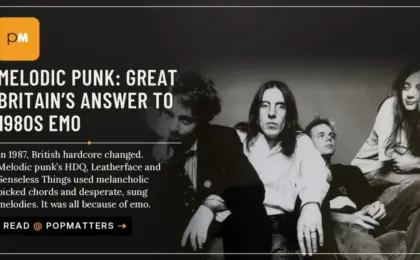
By 1987, the foundational architecture of the genre had begun to buckle. In its place emerged a vibrant, melancholic, and deeply introspective mutation known simply as "melodic punk." Drawing inspiration from an unexpected transatlantic source—the burgeoning, emotional hardcore (emocore) movement bubbling out of Washington, D.C.—a network of British bands began trading football-chant choruses for jangling, picked chords and desperate, sung melodies.
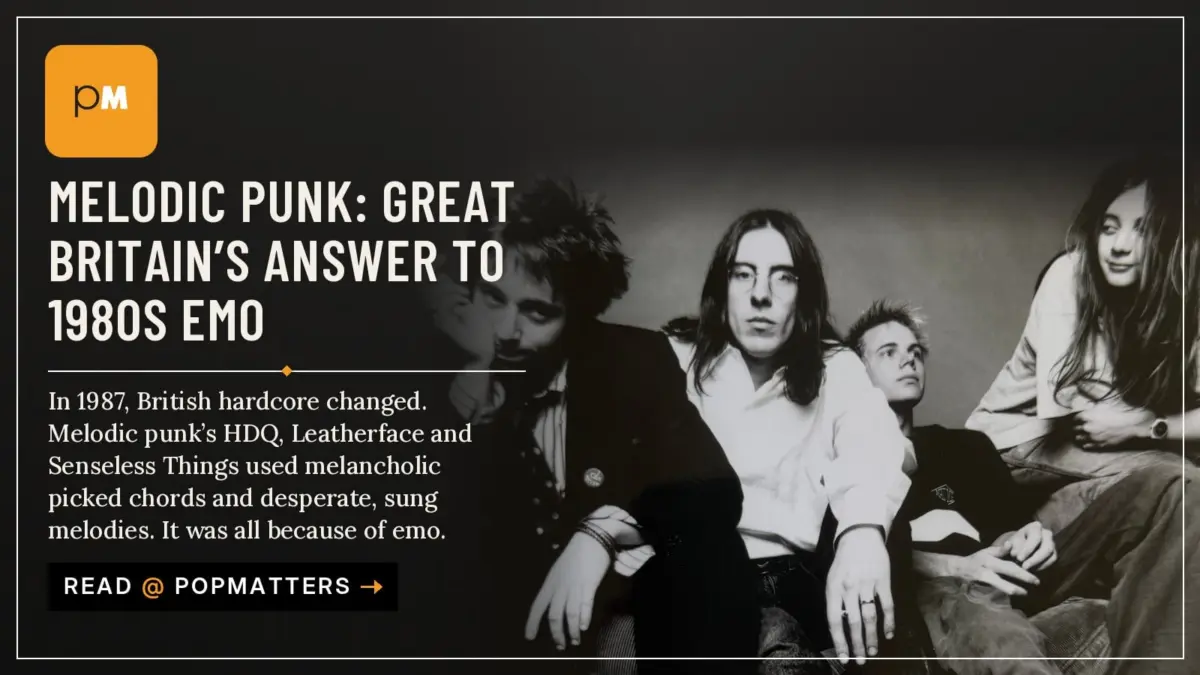
Acts like HDQ, Leatherface, Senseless Things, Snuff, and Bad Dress Sense evolved from regional curiosities into underground heroes, forever altering the DNA of modern alternative music. Their stylistic trajectory did not merely bridge the gap between two distinct punk subcultures; it birthed enduring subgenres like "gruff punk," informed the rise of 1990s indie-rock, and laid the direct melodic groundwork for the pop-punk explosion that would eventually dominate global radio waves in the 2000s.
Detailed Chronology: From D.C. Basements to British Coastlines
The Transatlantic Spark: The Rise of Emocore
To understand the seismic shift that shook the British underground in the late 1980s, one must first look to the mid-1980s in Washington, D.C. Out of the ashes of traditional American hardcore crawled bands like Rites of Spring, Dag Nasty, Gray Matter, and Embrace. These pioneers sought to diversify the rigid constraints of hardcore by injecting introspective, emotionally raw lyrics and the jangly, open-string picked chords characteristic of indie rock icons like The Smiths and R.E.M., alongside the post-punk rhythmic sensibilities of Empire and The Fall.
This early style—christened "emocore"—proliferated rapidly through the D.C. scene via outfits like Fire Party and Soulside, while prompting a total sonic overhaul in established acts like Government Issue and Scream. However, at the time, these transatlantic cross-currents traveled slowly across the ocean, largely unmoored from official genre tags.
Northern Metamorphosis: HDQ and the Birth of a Movement
In 1985, Hung, Drawn and Quartered (HDQ) were operating as a fairly conventional street punk band in England’s far northern port city of Sunderland. Their stripped-down, aggressive abrasion and football-chant choruses were the stock-in-trade of British hardcore. That changed when their vocalist departed in 1986, prompting guitarist Dickie Hammond to draft his friend David Golledge as a replacement.
Golledge’s musical compass pointed squarely away from domestic output. He spent his time traveling to nearby Newcastle to catch touring US underground acts like Government Issue and Bad Brains.
"I was more into the melodic punk sound of what was coming out of the US and in particular Washington D.C. with all of the Dischord bands," Golledge recalls. "I soon got Dickie into this sound."
By the end of 1986, Hung, Drawn and Quartered had transformed completely. They adopted sung melodies, picked guitar structures, and a distinctly American pop sensibility, commemorating the shift by shortening their moniker to HDQ. Their second album, 1987’s You Suck!, served as the UK’s introduction to this new ethos. Unsurprisingly, the domestic hardcore establishment reacted with hostility.
"HDQ [was] getting quite a bit of a hard time… we sounded too American," says Golledge. "It didn’t really bother us… We seemed to play more gigs in mainland Europe than in the UK anyhow, as they definitely appreciated what we were doing a lot more."
The Industrial Grime: Leatherface and Gruff Punk
While HDQ leaned into pop sensibilities, Leamington Spa’s The Depraved took a darker path. Having incorporated emocore riffing into their anarcho-hardcore style on 1986’s Stupidity Maketh the Man, they rejected the nihilism of the prevailing scene. By 1987, they adopted the moniker Visions of Change, fusing emocore with the era’s psychedelic revival.
This northern experiment reached its zenith in 1988 when Hammond and drummer Andrew Laing began writing outside of HDQ alongside local rehearsal space owner Frankie Stubbs. Baptizing themselves Leatherface, the trio integrated emocore and pop-punk with the raw foundations of classic street punk like The Exploited and The Blood. Driven by melancholic picked chords, bittersweet vocal harmonies, and Stubbs’ signature gravel-throated rasp—which drew frequent comparisons to Motörhead—Leatherface injected a grim, post-industrial English weight into American suburban templates.
Concurrently, Stoke-on-Trent’s Exit Condition paired similar American elements with harmonized lead guitars reminiscent of the New Wave of British Heavy Metal (NWOBHM) acts like Iron Maiden. Together, these bands pioneered what would come to be known as "gruff punk" or "gruff emo," instantly establishing Leatherface as the underground leading light of British melodic punk.
The Ipswich Catalyst and the London Scene
Meanwhile, the nation’s South-East was cultivating its own vibrant ecosystem, heavily influenced by The Stupids. Vocalist Tommy Stupid, raised in Connecticut, spent the summer of 1985 absorbing the epicenter of D.C. emocore. When The Stupids channeled these influences onto their 1986 sophomore release, Retard Picnic, it sparked a creative land rush in their hometown of Ipswich.
Guitarist Ed Wenn soon formed Bad Dress Sense, releasing 1987’s Goodbye… It Was Fun—widely regarded as Britain’s first traditional emocore record. Wenn followed this with Sink, which integrated acoustic guitars and harmonicas into a swampy, country-influenced punk framework. Simultaneously, Ipswich transplant Duncan Redmonds formed Snuff in London, merging emo-pop-punk with soul-styled organs and occasional thrash metal breakdowns.
This energy soon collided with the London college circuit. At Richmond College, bands like Senseless Things formed under the heavy influence of Minneapolis indie rock acts like The Replacements and Soul Asylum. Following a pivotal August 1987 bill at The Clarendon featuring The Stupids and the Milk Monitors, the London and Ipswich scenes rapidly coalesced. Senseless Things embraced the speed and desperate vocal melodies of D.C. hardcore while retaining a self-deprecating British humor.
As Senseless Things and kindred spirits Mega City Four toured relentlessly across every overlooked town in the UK—from Cinderford to Scunthorpe—their ubiquitous T-shirts turned them into national fixtures, catching the eye of a young NME journalist named Steve Lamacq.
Supporting Context & Metrics: The NME, "Fraggle Rock," and the Grunge Eclipse
The Lexicon of the Underground
As the movement gained critical mass, music journalism scrambled for terminology. In the 7 October 1989 issue of NME, Steve Lamacq coined the term "fraggle" (and by extension, "fraggle rock") to describe the entire melodic punk spectrum, adapting a local Harlow pejorative used against young, scruffy punks. Lamacq credited Mega City Four, Senseless Things, HDQ, Snuff, Sofa Head, and Perfect Daze as the architects of this coalition.
However, the taxonomy was plagued by cross-contamination. Mainstream music publications often conflated the melodic punk movement with "grebo"—a dance-oriented rock style championed by Carter USM and Ned’s Atomic Dustbin. Frustrated by manufactured media narratives, artists frequently rejected these labels, though alternative suggestions like Spiral Scratch writer Mike Martinetto’s "Blink Generation" failed to stick.
The Commercial Peak and Sudden Fall
By the late 1980s and early 1990s, the commercial potential of these melodic acts could no longer be ignored. Senseless Things signed to major label Epic Records, releasing First of Too Many in October 1991.
Yet, timing proved catastrophic. Just one month prior, Nirvana released Nevermind, shifting global industry focus instantly to Seattle grunge. The British music press dropped its support for regional melodic punk, and foundational acts like HDQ, Sink, and Snuff dissolved within the year.
Reflecting on the shift, Senseless Things guitarist Ben Harding remarked:
"It killed our career stone dead… Mudhoney, Tad, Babes in Toyland, Dinosaur Jr., Afghan Whigs, some band called Nirvana, all sounded amazing to our ears. It was like a distillation of what we’d been aiming for but hadn’t really hit."
Official Statements & Archival Testimony
To fully capture the ethos of the era, archival statements from key players illustrate the organic, fiercely independent nature of the scene:
-
David Golledge (HDQ) on cross-pollinating American and British sounds:
"From that moment on we were never influenced by any UK bands… I think the emo tag came after, that wasn’t used back in the late 1980s."
-
Ben Harding (Senseless Things) on rejecting hardcore seriousness:
"Dag Nasty really embodied how we wanted to play. For me, the clear metal influence was pretty important, but also the relative simplicity… Descendents, too, were absolutely essential to us. Their lack of seriousness chimed with our approach; there was a seriousness to the D.C. hardcore scene that we couldn’t really reflect as a bunch of Herberts from West London."
-
Ben Harding on major label transitions:
"We were always a pop band at heart… I don’t think there was ever any doubt that, should we be offered a deal with a major, we’d take it. Epic were one of a number of labels that were interested… we thought that we’d get less of a backlash with them somehow."
Future Outlook & Legacy: The Undying Chord
While the British melodic punk movement of the late 1980s faced a brutal commercial retraction in the wake of the 1990s grunge explosion, its structural DNA proved remarkably resilient.
The Underground and Transatlantic Echoes
In Britain, the underground kept the flame alive. Bands like Shutdown, Bob Tilton, and Baby Harp Seal adopted a more direct faithfulness to American emo, while Chopper, Hooton 3 Car, and China Drum maintained the legacy of the "fraggle" sound. Meanwhile, gruff punk evolved into an undying domestic staple championed by acts ranging from Four Letter Word to Gnarwolves.
Crucially, the aesthetic looped back across the Atlantic. The gruff punk blueprint forged by Leatherface was enthusiastically adopted in the United States by Hot Water Music and Dillinger Four, who merged it with the gritty American emo of Jawbreaker and Fuel. Centered around Gainesville, Florida’s No Idea Records and the annual Fest, this iteration became globally known as "The Gainesville sound."
Simultaneously, the emo-pop-punk hybrid pioneered by HDQ and Snuff found a permanent home in the US via Samiam, 411, and early Lifetime—lineages that directly paved the way for the mainstream pop-punk radio dominance of Fall Out Boy and Taking Back Sunday in the 2000s.
Though the transit vans have long since retired and the original line-ups have largely fragmented—with figures like Ben Harding playing in The Charlemagnes and David Golledge singing for Diaz Brothers—the transatlantic conversation initiated in D.C. basements and carried across British port cities remains an unshakeable pillar of modern alternative music.
Bibliography
- Azerrad, Michael. Our Band Could Be Your Life. Little Brown, 2003.
- Glasper, Ian. Trapped in a Scene. Cherry Red Books, 2009.
- Glasper, Ian. Armed With Anger. Cherry Red Books, 2012.
- McDonald, Chris. Days and Days. ECW Press, 2014.
- "Dan (interview)." Problem Child, 1987, pp. 54.
- Lamacq, Steve. "Fraggle Rock." NME, 7 October 1989, pp. 8.
- Williams, Simon. Pandamonium!: How (Not) To Run a Record Label. Nine Eight Books, 2023.
- Williams, Simon. "Audi West was Won." NME, 8 September 1990, pp. 8.
- Fraggle Brothers (Lamacq, Steve and Williams, Simon). "The Revs, the Hysterics, London Kentish Town Bull & Gate." NME, 24 November 1990, pp. 8.
- Marinetto, Mike. "Senseless Things." Spiral Scratch, August 1991, pp. 34–39.
- Williams, Simon. "BROCCOLI: Broken (Rumblestrip)." NME, 4 February 1994, pp. 40.
- Walker, Matt. Gainesville Punk. History Press, 2016.


Belum ada komentar. Jadilah yang pertama berkomentar!