Tucked away in the mountainous foothills just beyond the bustling urban center of Matsumoto, Nagano Prefecture, lies the historic post town of Hofukujimachi. Long revered for its pivotal role in Japan’s feudal history, this once-sleepy mountain settlement has emerged as a beacon of architectural preservation and rural revitalization. At the center of this cultural resurgence stands Satoyama Villa Honjin—a meticulously restored luxury inn—and its crown jewel for day-trippers and culinary travelers alike: KAMENOYA Annex.
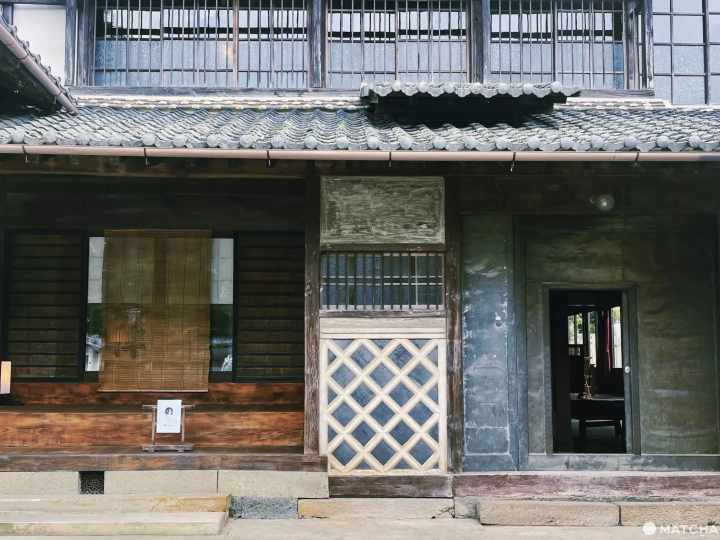
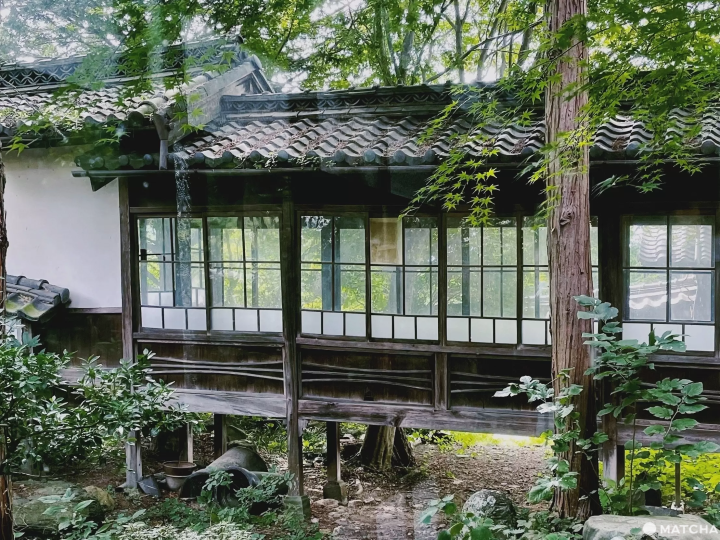
Housed within a century-old grain and tribute-rice storehouse, KAMENOYA Annex operates as a living bridge between eras. It marries the robust architectural traditions of rural Nagano with the delicate, ornate sensibilities of the Taisho (1912–1926) and Showa (1926–1989) periods. Far more than a mere coffee shop, the establishment is a testament to the power of public-private partnerships in rural heritage preservation. By offering an authentic menu of classic kissaten (Japanese retro coffee shop) staples—ranging from savory Napolitan spaghetti to firm, custard-rich Showa-style puddings—KAMENOYA Annex invites travelers to step off the beaten tourist path and experience a tactile, flavorful journey into Japan’s storied past.
Detailed Chronology: From Feudal Highway to Modern Heritage Haven
The history of Hofukujimachi and the property now known as Satoyama Villa Honjin and KAMENOYA Annex is deeply intertwined with the sociopolitical maneuvers of the Tokugawa shogunate. Understanding the depth of the visitor experience requires tracing the chronology of the land across four distinct historical epochs.
1. The Edo Period (1603–1868): The Rise of Hofukujimachi and the Honjin System
During the Edo period, under the centralized rule of the Tokugawa shogunate, Japan experienced a rare era of internal peace coupled with strict social stratification. To maintain absolute control over the country’s powerful regional warlords (daimyo), the third shogun, Tokugawa Iemitsu, formalized and strictly enforced the policy of sankin-kotai (alternate attendance).
Under this system, every daimyo was required to maintain residences in Edo (modern-day Tokyo) and spend alternating years living there, while leaving their wives and heirs behind as political hostages. The biannual processions to and from their home domains were monumental, expensive undertakings involving hundreds—sometimes thousands—of samurai retainers, luggage carriers, and attendants.
To accommodate these high-ranking travelers, strategic transportation arteries were established across the Japanese archipelago. Hofukujimachi developed organically as a vital shukuba (post town) along one such critical route. Within the town, accommodations designated for feudal lords and shogunate officials were classified as honjin—exclusive, heavily fortified, and elegantly appointed estates reserved strictly for the nation’s elite.
2. The Ozawa Family Legacy and the Tribute Rice Economy
The physical site that now anchors Satoyama Villa Honjin was originally the sprawling private estate of the Ozawa family, a lineage of immense wealth, local influence, and administrative power in the Matsumoto Domain. Beyond hosting visiting lords and dignitaries, the Ozawa family served as a central logistical hub for the collection, storage, and transport of tribute rice—the primary currency and tax medium of the feudal era.
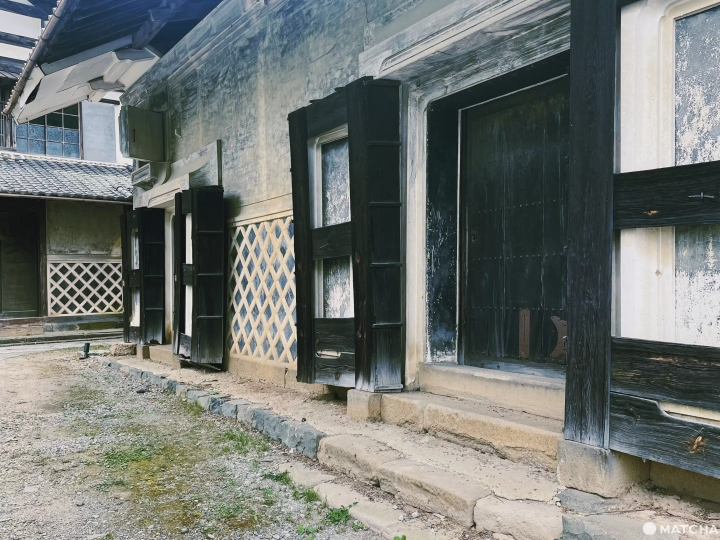
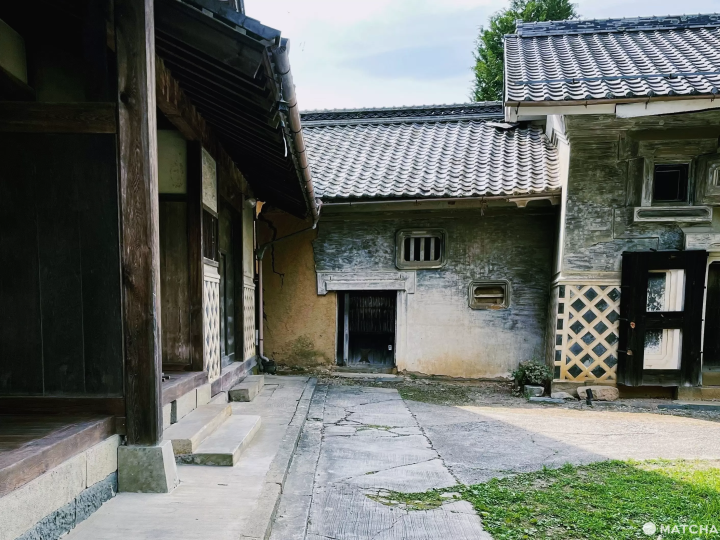
Because rice values dictated the economic health of regional domains, families entrusted with its storage wielded considerable political capital. The Ozawa estate featured extensive landholdings and multiple traditional storehouses (kura), which safeguarded massive agricultural yields. These sturdy timber-and-plaster structures were built to withstand fires, earthquakes, and moisture, ensuring the security of the domain’s wealth.
3. Destruction, Abandonment, and the 20th-Century Rebuilding
The architectural legacy of the Ozawa estate faced a catastrophic setback in 1908, when a devastating fire swept through the area, reducing the original honjin structures to ashes. Demonstrating deep-rooted resilience and regional pride, reconstruction efforts commenced shortly thereafter in 1913, resurrecting the grand estate largely in the form that visitors observe today.
However, the shifting tides of modernization in mid-to-late 20th-century Japan dealt a severe blow to rural post towns. As railways and highways bypassed traditional mountain routes, economic activity dwindled. For a decade, the historic Ozawa property stood neglected, its timber frames weathering under the alpine elements, vulnerable to structural decay and loss of cultural memory.
4. The 21st-Century Renaissance (2021–Present)
Recognizing the irreplaceable historical and aesthetic value of the property, local stakeholders intervened to prevent its permanent loss. A collaborative revitalization initiative was launched, spearheaded by regional property owners in partnership with visionary entrepreneur Tadamasa Saito—widely acclaimed for his successful heritage preservation projects, including the renowned ryokan Myojinkan and the historic restaurant Hikariya.
Through meticulous restoration, the main residence was reborn as Satoyama Villa Honjin, offering exclusive lodging for travelers seeking immersion in rural tranquility. Crucially, in 2021, the adjacent century-old storehouse was repurposed into KAMENOYA Annex (or Kamenoya Bekkan), democratizing the historic space by opening its doors to day-trippers, hikers, and coffee enthusiasts from across Japan and the globe.
Supporting Context & Metrics: Architecture and Culture
To fully grasp the significance of KAMENOYA Annex, one must examine the architectural vernacular and cultural movements that shaped its interior design.
Metric / Feature
Description & Historical Context
Structure Age
Main storehouse structure dates back over 100 years (post-1913 reconstruction era).
Establishment Year (Annex)
Converted into a public coffee house in 2021.
Architectural Style
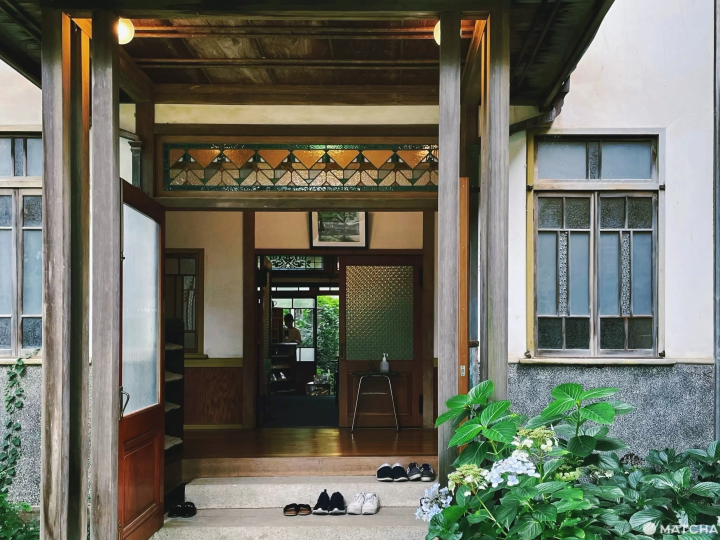
Traditional Japanese kura (storehouse) exterior featuring thick white plaster walls and heavy tiled roofs, paired with Taisho-era Western-eclectic interior design.
Hofukujimachi, Matsumoto City, Nagano Prefecture (Latitude: 36.3127° N, Longitude: 138.0294° E).
The Taisho Aesthetic: East Meets West
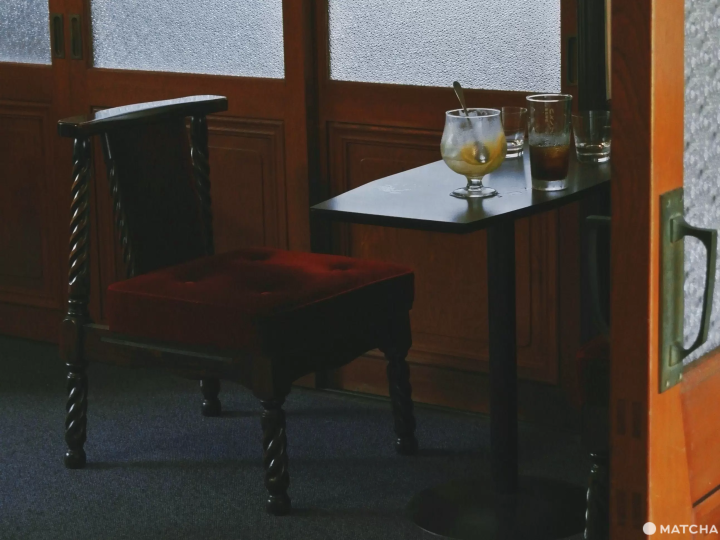
The interior of KAMENOYA Annex is a masterclass in Taisho-era romanticism (Taisho Roman). The Taisho period (1912–1926) was a brief yet culturally explosive window in Japanese history characterized by the rapid adoption and synthesis of Western democratic ideals, fashion, and architectural motifs with traditional Japanese craftsmanship.
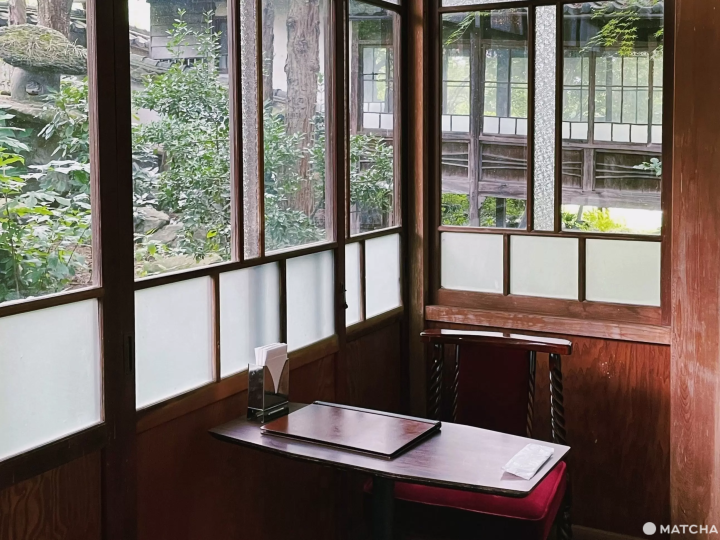
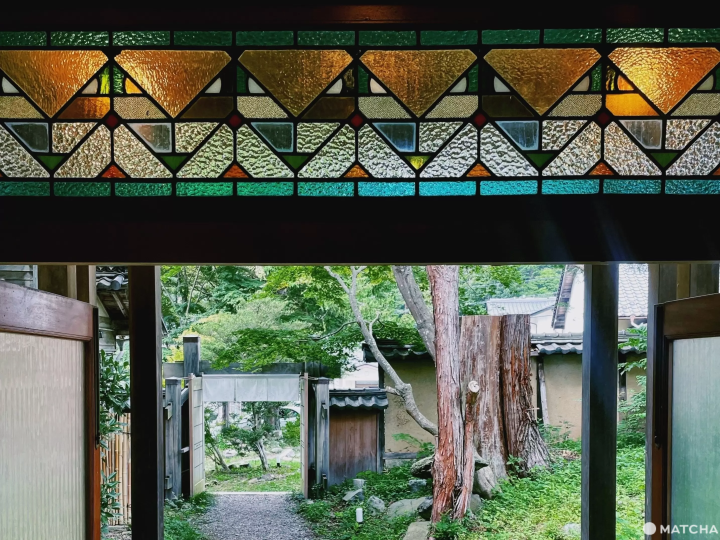
Inside the storehouse, visitors are greeted by an atmospheric interplay of light and shadow. Natural sunlight filters through delicate, brightly colored stained-glass panes, casting jewel-toned hues across dark, polished wood floors. Ornate, Western-style carved ceilings—rare for rural agricultural storehouses—demonstrate the ambition of the regional craftsmen who sought to elevate rural vernacular architecture by integrating cosmopolitan design trends from Tokyo and international ports.
Official Statements and Stakeholder Perspectives
The revitalization of Hofukujimachi and the opening of KAMENOYA Annex have been lauded by regional tourism boards, cultural heritage conservationists, and hospitality experts as a model for sustainable rural development.
"In an era where rural depopulation threatens the survival of Japan’s historical villages, projects like Satoyama Villa Honjin and KAMENOYA Annex prove that heritage can be a powerful economic engine. By honoring the architecture of the Edo and Taisho periods while introducing modern, high-quality hospitality experiences, we are not just preserving buildings; we are preserving the soul of Matsumoto’s mountain communities."
— Regional Heritage Development Initiative, Nagano Prefecture
Hospitality directors involved in the project emphasize that the goal was never to create a sterile museum piece, but rather a living, breathing space.
"We wanted a place where history is not viewed from behind a glass rope, but tasted, touched, and experienced. Whether you are staying at the villa overnight or simply stopping by during a bicycle ride through the foothills for a cup of coffee and a plate of Napolitan spaghetti, you are participating in the ongoing story of this town."
— Project Management Team, Satoyama Villa Honjin & KAMENOYA Annex
Culinary Heritage: The Menu at KAMENOYA Annex
A visit to KAMENOYA Annex is as much a culinary journey through mid-20th-century Japanese popular culture as it is an architectural excursion. The cafe’s menu pays homage to the classic kissaten tradition, which flourished across Japan during the Showa era.
1. The Iconic Napolitan Spaghetti
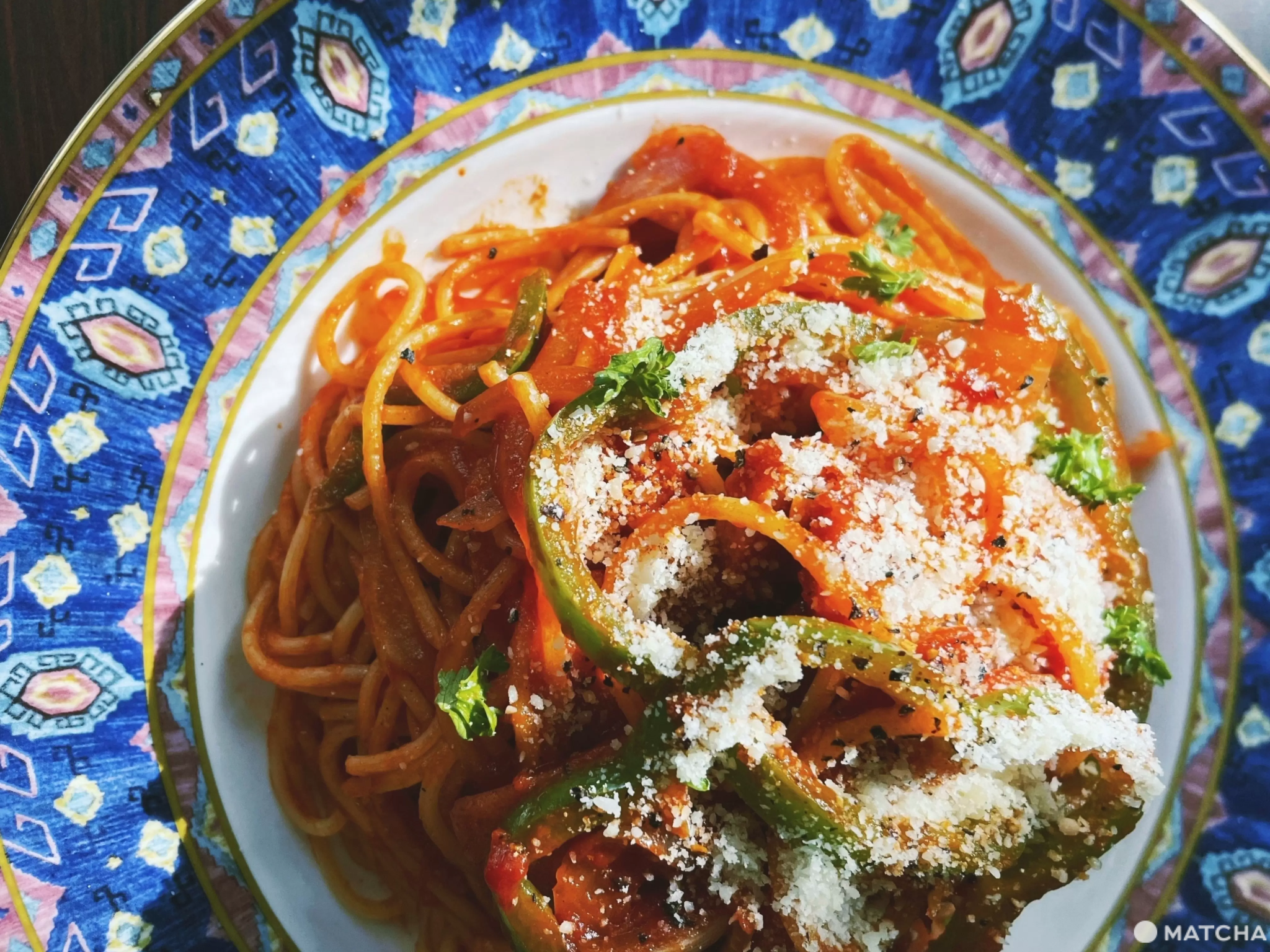
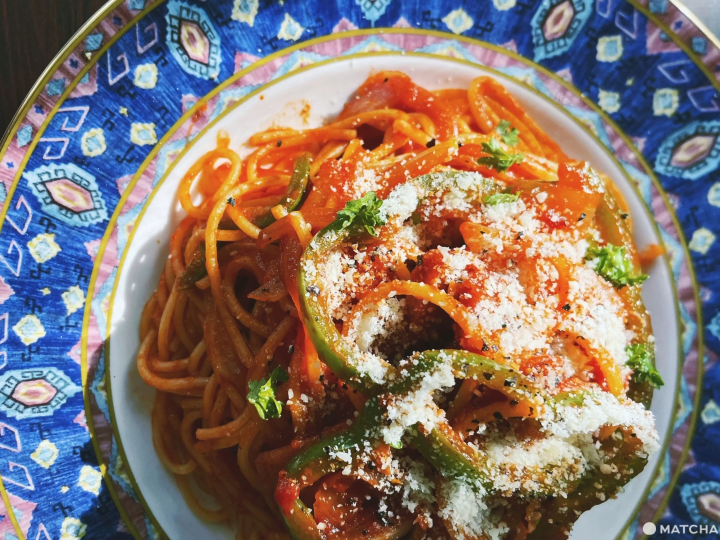
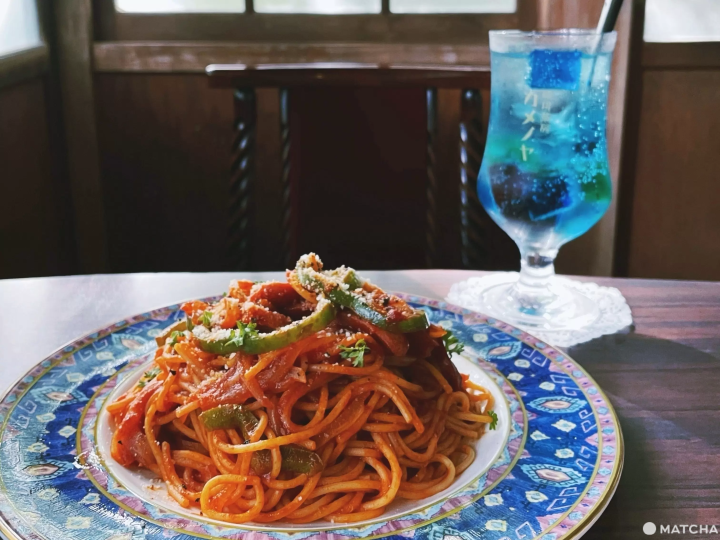
No authentic retro coffee shop experience is complete without Napolitan—a distinctly Japanese comfort food creation born in Yokohama following World War II. At KAMENOYA Annex, the dish is prepared with rigorous attention to traditional technique:
The Sauce: A rich, savory tomato-ketchup base infused with aromatic vegetables and browned over high heat to remove excess acidity.
The Technique: The noodles are vigorously stir-fried with ingredients such as sliced onions, bell peppers, and sausage, allowing the sauce to caramelize slightly and thoroughly coat every strand of pasta. The result is a deeply comforting, umami-rich flavor profile that resonates with generations of Japanese diners.
2. Translucent Jelly Sodas
To accompany the savory meals, KAMENOYA Annex serves ice-cold, jewel-toned jelly sodas. Crafted to capture the aesthetic spirit of the Taisho stained-glass windows, these beverages feature suspended blocks of shimmering, brightly colored fruit jelly within sparkling soda water. As alpine sunlight streams through the historic storehouse windows, the glasses refract brilliant cascades of color, making them an essential subject for culinary photography.
3. Showa-Style Custard Pudding
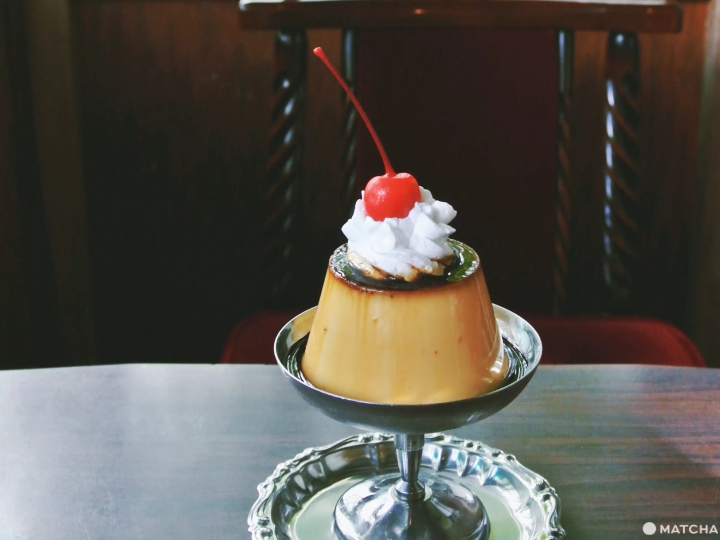
For dessert, the cafe offers a masterclass in nostalgic confectionery: the classic Showa-style pudding (purin).
Local Ingredients: The custard is crafted using premium, locally sourced eggs from Nagano’s verdant Shiga region, ensuring a dense, velvety-smooth texture and a robust, authentic egg-rich aroma.
Presentation: Unlike modern gelatinous desserts, this firm, baked custard stands proud on the plate, bathed in a pool of dark, bitter-sweet caramel syrup. Crowned with a fluffy dollop of freshly whipped cream and a vibrant maraschino cherry, it delivers a harmonious balance of rich sweetness and subtle bitterness.
Future Outlook: Sustainable Tourism and Rural Preservation
As international and domestic travelers increasingly seek out "slow tourism"—trips characterized by deep cultural immersion, environmental consciousness, and avoidance of over-touristed urban centers—destinations like Hofukujimachi are uniquely positioned for sustained growth.
The success of KAMENOYA Annex underscores a vital blueprint for regional revitalization across Japan:
Adaptive Reuse: Transforming utilitarian agricultural or feudal structures (like tribute-rice storehouses) into consumer-facing hospitality venues preserves architectural integrity while generating local revenue.
Community Integration: Ensuring that spaces remain accessible to both high-end overnight guests (at Satoyama Villa Honjin) and casual local day-trippers (at KAMENOYA Annex) fosters a vibrant, inclusive community hub.
Digital Storytelling & Organic Reach: Leveraging digital platforms to share the hidden narratives of rural post towns allows travelers to discover off-the-beaten-path locations, redistributing economic benefits away from overcrowded metropolitan cores.
For city dwellers and international explorers alike, a pilgrimage to Matsumoto’s mountainous fringes offers far more than a picturesque coffee break. It provides a rare, contemplative sanctuary where the echoes of samurai processions along the Edo highway merge seamlessly with the comforting aroma of freshly brewed coffee, artisanal custard, and a century-old timber hearth.










Belum ada komentar. Jadilah yang pertama berkomentar!