

Executive Overview
For centuries, the string quartet has occupied a position of profound reverence within the Western classical tradition. From the structural masterworks of Joseph Haydn and Wolfgang Amadeus Mozart to the late-romantic introspection of Beethoven and Brahms, the configuration of two violins, a viola, and a cello has long been viewed as the ultimate test of a composer’s counterpoint and a chamber ensemble’s telepathic cohesion. Yet, in the contemporary cultural landscape, the genre is undergoing a radical renaissance. Today’s string quartets are no longer content merely to curate museum-piece repertoires from the 18th and 19th centuries; instead, they are acting as vital catalysts for contemporary composition, socio-political commentary, and community engagement.
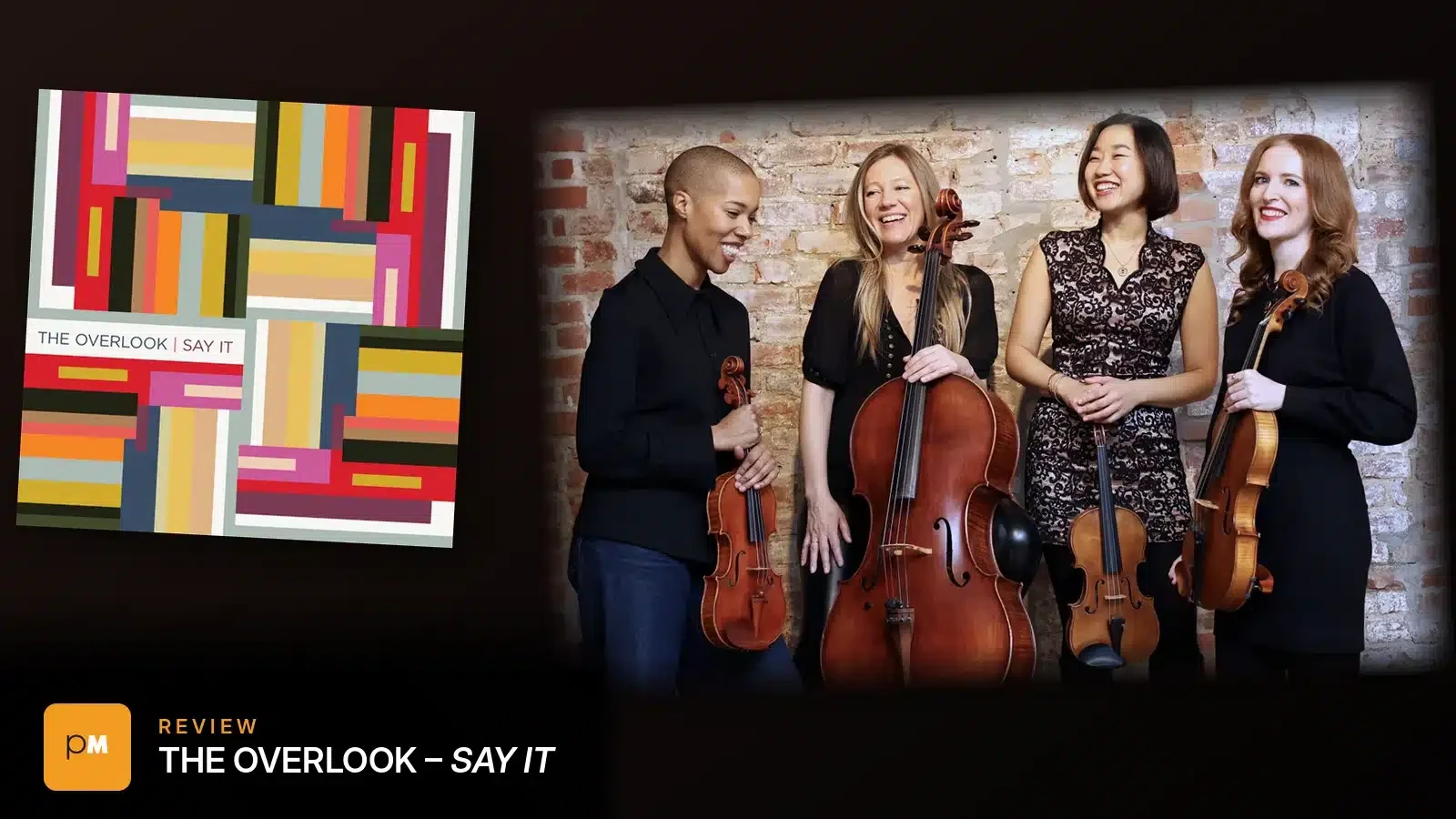
Entering this vanguard with striking urgency is The Overlook, a New York-based string quartet whose highly anticipated debut album, Say It, redefines the parameters of what a chamber ensemble can achieve. Formed during the crucible of the COVID-19 pandemic by accomplished freelance players seeking new ways to connect with audiences, the ensemble initially bypassed traditional concert halls for parks, street corners, and open-air community venues. That grassroots origin forged a foundational ethos centered on deep community integration, interdisciplinary collaboration, and an unwavering commitment to amplifying the voices of living composers—particularly those from marginalized backgrounds.
Say It is not merely an album of contemporary music; it is a cultural artifact, a sonic mirror reflecting the complexities, injustices, and enduring resilience of modern society. Through masterworks by Grammy-nominated composer Carlos Simon, Shelley Washington, Leila Adu-Gilmore, Trevor Weston, Shanan Estreicher, and Forbes Graham, The Overlook positions itself alongside legendary pathfinders like the Kronos Quartet and contemporaries such as the JACK and Attacca Quartets. The album moves fluidly between breathtaking technical virtuosity and raw emotional tenderness, challenging listeners while offering a clear, resonant window into the human experience.
Detailed Chronology: From Pandemic Streets to the Recording Studio
The story of The Overlook is inextricably bound to a moment of unprecedented global isolation. When the pandemic shuttered New York City’s traditional performance spaces in 2020, classical musicians found themselves adrift. Rather than retreating into digital isolation, violinists Monica Davis and Yezu Woo, violist Angela Pickett, and cellist Laura Metcalf looked outward. Recognizing an immediate, visceral hunger for shared human experiences, they banded together to form The Overlook.
Their early performances were unpretentious and direct: they played in public parks, on stoops, and at street corners across the five boroughs. This direct, unmediated contact with everyday listeners fundamentally shaped their mission statement: to build lasting relationships with contemporary composers, consistently champion new works, engage across artistic disciplines, and share music directly with their local community. As pandemic restrictions eased, this street-level ethos translated into residency-style performances in community-based venues, laying the structural and emotional groundwork for what would eventually become Say It.
The journey from outdoor pop-ups to a polished, professional studio recording required intense artistic refinement. The ensemble spent months workshopping pieces, collaborating closely with composers to ensure that every microtone, extended technique, and rhythmic shift captured the intended narrative. The culmination of this developmental timeline is Say It, an album designed to be heard not as a passive listening experience, but as an active, demanding dialogue between the musicians, the composers, and the listener.
Supporting Context & Metrics: The Sociopolitical Landscape of Modern Chamber Music
To understand the weight of Say It, one must examine the broader movement within contemporary classical music toward social justice and narrative-driven composition. For decades, classical music institutions insulated themselves from socio-political realities, framing the canon as a universal, placeless entity. However, the 21st century has seen a democratization of the art form, with ensembles explicitly using their platforms to chronicle historical trauma, systemic inequality, and cultural heritage.
The Overlook’s debut sits at the intersection of several significant artistic and literary milestones:
- Literary Adaptations: The anchor of the album is Carlos Simon’s three-movement piece, The Warmth of Other Suns, which directly adapts Isabel Wilkerson’s Pulitzer Prize-winning book of the same name. Wilkerson’s masterwork chronicles the six-decade Great Migration of Black Americans fleeing the terror and oppression of the Jim Crow South for northern and western cities.
- Interdisciplinary Protests: The advance single, "Say," written by Shelley Washington, incorporates spoken vocalizations and body percussion alongside traditional string instrumentation, merging protest art with classical technique.
- Microtonal Exploration: Leila Adu-Gilmore’s 2013 multi-movement work, if the stars align…, commissioned originally for the Brentano String Quartet, challenges Western tuning paradigms by integrating microtonal structures reminiscent of traditional music from India and the Middle East.
Track-by-Track Architectural Breakdown
1. Carlos Simon’s The Warmth of Other Suns
Composed in three distinct movements, Simon’s piece translates Wilkerson’s historical text into breathtaking, harrowing sonic narratives:
- Movement I: "Rays of Light": The piece opens with a dawn-like warmth reminiscent of Ralph Vaughan Williams’s The Lark Ascending, but this optimism is quickly fractured by darker underlying tones. It represents the psychological reality of waking up under oppression. For the first two-thirds of the movement, the four instruments remain separated, mirroring the rigid segregation of Jim Crow society—such as the historical detail of a train platform in Wilkerson’s book where Black and white passengers boarded via separate staircases so their shoes would never touch the same step. Only in the final third do the individual instrumental lines begin a tense, hesitant conversation.
- Movement II: "Flight": An appropriately frantic, relentless dance characterized by scurrying fiddles and jagged, anxious harmonies. The music mimics the motion of a train hurtling northward, building intense psychological anticipation that suddenly screeches to a halt on a high-pitched, dead stop before resuming its breathless momentum. The movement concludes with a rigid, inescapable repeated figure echoed across all four voices.
- Movement III: "Settle": Returning to the still, fragile beauty of the opening, this movement features soaring, lyrical violin lines underscored by a melancholy cello and viola accompaniment. It captures the complex emotional landscape of arriving in a new city only to face a bitter, entrenched reality, closing on a stark, pessimistic cadence.
2. Shelley Washington’s "Say"
Serving as a visceral centerpiece, Washington’s "Say" features words and music designed as a direct condemnation of racial injustice. The track opens a cappella, driven entirely by organic hand claps and finger snaps before the strings enter with a seething, high-string tension offset by low pizzicato rumblings. The musicians seamlessly weave their spoken voices into the performance, chanting tight vocal harmonies of "Say it loud" that escalate into a piercing refrain of "White in America / Black in America." The piece ultimately resolves into a cautious yet optimistic coda, holding fast to the refrain as a beacon of persistent hope.
3. Leila Adu-Gilmore’s if the stars align…
Brought into the repertoire with virtuosic precision by violist Angela Pickett, this work places the viola at the forefront of the sonic stage. Featuring a dazzling cadenza complete with unorthodox double-stops, the piece deliberately abandons standard equal temperament. By leaning into microtonal "crazy tunings," Adu-Gilmore expands the expressive vocabulary of the string quartet, drawing listeners into sound worlds traditionally marginalized by Western classical paradigms.
Official Statements & Industry Context
The release of Say It places The Overlook within a thriving ecosystem of contemporary avant-garde chamber ensembles that are actively expanding the boundaries of the medium.
Reflecting on the ensemble’s mission during the recording process, violinist Monica Davis noted:
"When we began playing on street corners during the pandemic, our focus wasn’t on building a traditional career path; it was about survival, connection, and making sure that music functioned as a lifeline for our immediate community. Bringing those pieces into the studio for Say It meant retaining that raw, community-first urgency while meeting the highest standards of contemporary execution."
Composer Carlos Simon, whose work anchors the album’s emotional core, has frequently spoken about the necessity of translating historical narratives into living music. In liner notes discussing The Warmth of Other Suns, Simon emphasizes that historical injustices cannot be understood solely through academic text:
"Music possesses a unique visceral capacity to bypass intellectual defenses and force the listener to feel the historical weight of displacement, courage, and systemic oppression in real time."
Comparative Industry Landscape
The Overlook’s artistic trajectory aligns them with some of the most innovative forces in modern chamber music:
- The Kronos Quartet: For decades, Kronos has pioneered the integration of global folk traditions, political activism, and contemporary commissions into the string quartet canon. The Overlook inherits this fearless approach to socially conscious programming.
- The JACK Quartet & Attacca Quartet: As both ensembles roll out major contemporary releases in 2026—such as JACK’s Stirrings Still and Attacca’s David Lang: note to a friend—The Overlook distinguishes itself by explicitly pairing technical rigor with narratives directly addressing marginalized human experiences.
- The PRISM Quartet: Known for combining saxophone configurations with spoken-word poetry on releases like Generate Music (September 2026), PRISM shares The Overlook’s dedication to interdisciplinary storytelling.
Future Outlook
As Say It makes its way into the hands of critics, classical aficionados, and new listeners alike, The Overlook stands at the precipice of a major national and international profile expansion. The success of their debut recording proves that there is a thriving, hungry audience for classical music that refuses to divorce itself from contemporary social realities.
Looking ahead, the ensemble plans to take Say It on an extensive tour, returning to their community-centric roots by performing not only in traditional concert halls, but also in community centers, schools, and public outdoor spaces where classical music is rarely heard. Furthermore, The Overlook has already begun commissioning new works for their sophomore project, continuing their foundational pledge to maintain living, breathing relationships with the composers of our time.
In an era where the arts are constantly forced to justify their cultural and economic utility, The Overlook offers an irrefutable answer. By bridging the gap between classical virtuosity and contemporary social consciousness, they have crafted an artistic statement that is as intellectually challenging as it is deeply, enduringly human. Say It is not merely a stunning debut; it is a blueprint for the future of chamber music.


Belum ada komentar. Jadilah yang pertama berkomentar!