

Executive Overview
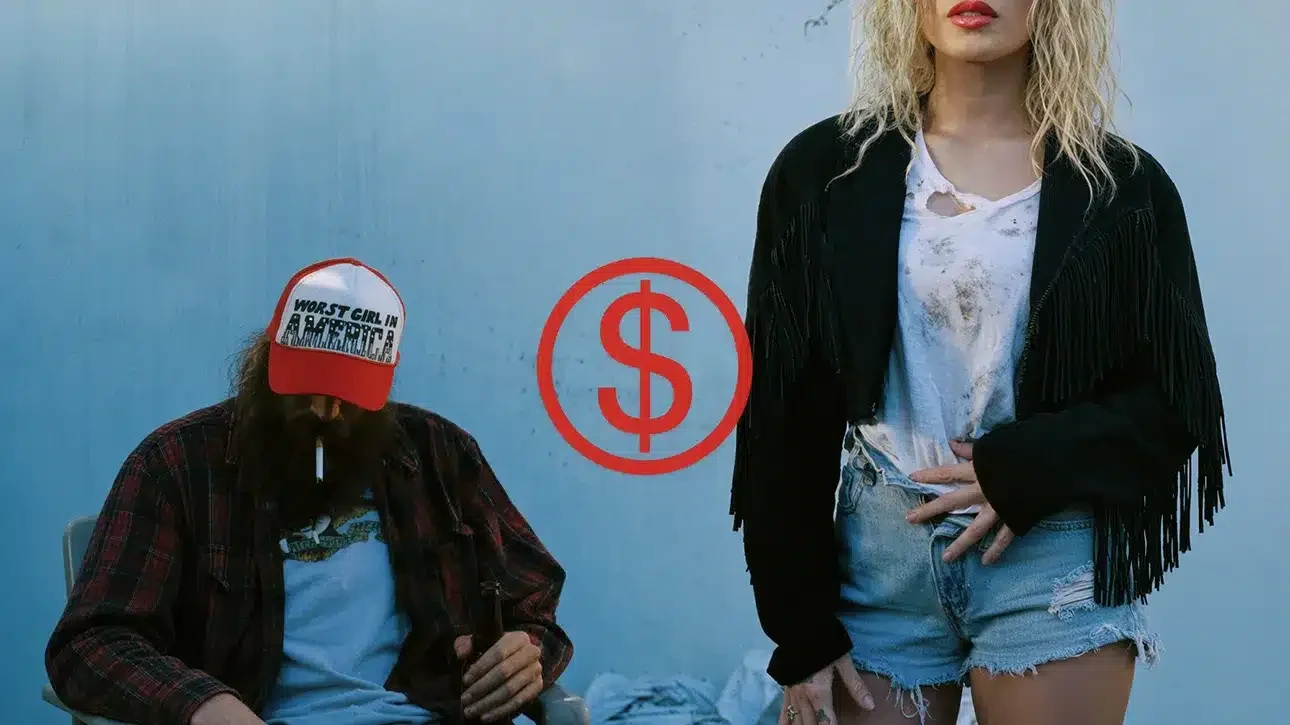
In the sprawling, decaying landscape of contemporary lower-class America, pop culture rarely manages to capture the pungent, unfiltered reality of economic disenfranchisement without sanitizing it through the lens of bourgeois voyeurism. Enter Catherine Grace Garner, better known by her stage name Slayyyter. With her 2026 album, Worst Girl in America, the St. Louis-born auteur has constructed a sonic and visual monument to life at the absolute bottom of the American socioeconomic ladder.
Bridging the gap between the bleak, forgotten stretches of the rural Midwest and the glitter-soaked aesthetic of hyper-pop, Worst Girl in America is a masterclass in class-conscious artistry. The album does not merely observe poverty; it internalizes it, weaponizes it, and throws it back into the faces of an increasingly indifferent cultural elite. Through a meticulously curated blend of DIY music videos, hauntingly raw lyricism, and genres that clash as violently as a broken home—merging pop hooks, aggressive rap cadences, and visceral scream-singing—Slayyyter has established herself as the definitive anti-heroine of the mid-2020s.
This piece provides a comprehensive examination of Worst Girl in America, dissecting its socio-economic undertones, tracking its thematic chronology, analyzing its cultural metrics, and evaluating its place within the broader discourse of working-class survival and political resistance.
Detailed Chronology: The Making of an Anti-Pop Icon
To understand the universe of Worst Girl in America, one must trace the trajectory of Slayyyter’s creative output leading up to and culminating in this defining 2026 release. Born in the shadows of St. Louis and raised in the impoverished rural pockets of southern Illinois, Garner’s early life was defined by the structural collapse of the Rust Belt. Her subsequent artistic ascent reflects an uncompromising commitment to self-representation.
The Genesis of the Aesthetic (Pre-2025)
Long before the roll-out for Worst Girl in America began, Garner was quietly building a reputation as a DIY powerhouse. Operating largely independently in an industry that frequently demands corporate homogenization, she took total control of her artistic output. She sewed her own bedazzled costumes—sometimes fashioned out of unconventional materials like empty cigarette boxes and garbage bags—and conceptualized every visual element of her brand. This hands-on approach was not merely a stylistic choice; it was an economic necessity born from the very destitution she immortalizes in her music.
The Era of Worst Girl in America (2025–2026)
As the economic pressures on America’s working and lower classes intensified through the mid-2020s, Slayyyter positioned her artistic lens squarely on the fallout. The album roll-out began in earnest with the release of the breakout single "Crank," a track that immediately signaled a stylistic shift toward harder, more visceral sonic territories.
Accompanying the album rollout was an ambitious visual project: Slayyyter directed and produced narrative-driven music videos for every track on the record. Drawing explicit inspiration from David Lynch’s eerie, deadpan suburban disquiet—most notably nodding to his 2002 short film Rabbits with a recurring, unsettling mascot—the videos painted a picture of Middle America that was simultaneously Lynchian and hyper-modern.
Tracks like "Brittany Murphy," "Beat Up Chanel$," and "$T. LOSER" dropped sequentially throughout late 2025 and early 2026, each video serving as a chapter in an overarching narrative of systemic neglect, self-medication, and defiant self-assertion. By the time the full album dropped in early 2026, it was already being hailed by critics and fans alike as a defining cultural artifact of the era.
Supporting Context & Metrics: The Socioeconomics of the Rust Belt
To fully grasp the resonance of Worst Girl in America, one must contextualize the material conditions that birthed it. Slayyyter’s work functions as both a mirror and a magnifying glass for the structural decay of the American heartland.
The Meth Epidemic and the Economics of Despair
At the core of the album’s thematic weight is the opioid and methamphetamine crises that have gutted working-class communities across the Midwest. On the breakout hit "Crank," Slayyyter plays on a double entendre: the act of "cranking up" the volume and the party, contrasted against the devastating reality of methamphetamine use as a primary engine of escapism in economically devastated regions.
Data from public health organizations consistently correlates spikes in rural substance abuse with the systematic hollowing out of local industries, the erosion of labor unions, and the concentration of wealth among coastal and corporate elites. Slayyyter captures this harsh reality in lines like, "Bitch, I’m on junkie time, drop dimes, big truck crank up," seamlessly blending the desperate euphoria of a bender with the crushing weight of systemic poverty.
+-----------------------------------------------------------------+
|              The Socioeconomic Cycle of Rust Belt Pop           |
+-----------------------------------------------------------------+
|  [ Wealth Concentration at Elite Levels ]                       |
|         │                                                       |
|         ▼                                                       |
|  [ Deindustrialization & Rural Job Loss ]                       |
|         │                                                       |
|         ▼                                                       |
|  [ Erosion of Safety Nets & Rising Poverty ]                    |
|         │                                                       |
|         ▼                                                       |
|  [ Epidemics of Despair (Meth / Substance Abuse) ]              |
|         │                                                       |
|         ▼                                                       |
|  [ Slayyyter's "Worst Girl in America": Cathartic Art & Defiance]|
+-----------------------------------------------------------------+
The Architecture of Neglect
The visual world of Worst Girl in America relies heavily on environments that will evoke a visceral sense of recognition for anyone who grew up poor in America. The interiors featured in her music videos—dimly lit, cluttered, marked by holes in the drywall and decades-old, stained carpeting—echo the trauma of transient housing and systemic neglect.
Sociological metrics regarding lower-income housing in the rural Midwest highlight a severe lack of investment in infrastructure, leaving families to navigate mold infestations, structural hazards, and extreme financial precarity. Slayyyter translates these cold statistics into flesh and blood, framing the domestic sphere not as a sanctuary, but as a site of trauma to be fled or survived.
The "Recession Indicator" Metric
Perhaps one of the most striking cultural observations embedded within the album’s reception is Slayyyter’s own sardonic thesis: "If kids are bumping my shit, that’s a recession indicator."
While traditional economists rely on GDP growth, inflation rates, and employment figures to gauge the health of the nation, cultural analysts are increasingly looking toward underground pop consumption as a barometer of working-class anxiety. When youth culture leans heavily into art that celebrates hedonistic escapism amidst squalor, it signals a widespread loss of faith in upward mobility. Slayyyter’s commercial rise aligns precisely with widening wealth gaps and the dismantling of the remaining social safety nets that once cushioned America’s vulnerable populations.
Official Statements & Critical Reception
The critical response to Worst Girl in America has been overwhelmingly positive, marked by an acknowledgment that Slayyyter has successfully transitioned from a cult internet darling to a vital voice for a disenfranchised generation.
Artistic Intent and Autonomy
In various interviews surrounding the release, Slayyyter has emphasized the collaborative yet intensely personal nature of the project. Speaking on her total creative control, she noted:
"When you come from nothing, nobody is handing you a budget to tell your story the ‘correct’ way. You have to sew the costumes yourself, you have to direct the cameras yourself, and you have to be willing to look ugly and broken on camera if you want people to understand what it actually feels like to survive down here."
Cultural Commentary
Music critics have been quick to praise the album’s uncompromising lyricism and its ability to balance tragedy with high-energy danceability. Cultural theorist and music critic circles have highlighted the album’s sophisticated handling of class dynamics:
"Slayyyter has achieved something rare: she has made an album about destitution that refuses to fetishize poverty or pander to bourgeois sympathy. Worst Girl in America is loud, obnoxious, terrifying, and deeply glamorous all at once. It is a primal scream wrapped in a high-gloss pop shell."
Furthermore, the record has found an intensely loyal fanbase within the queer community—particularly among its poor, rural, and downwardly mobile members. For these listeners, Slayyyter’s refusal to make herself "small" or polite in the face of systemic rejection serves as a vital blueprint for survival.
Future Outlook: The Legacy of a Working-Class Anti-Heroine
As Worst Girl in America continues to dominate cultural conversations deep into 2026, the question turns toward what comes next for Slayyyter and the broader movement of class-conscious pop music.
The Shift in Pop Paradigms
For decades, mainstream pop music has been dominated by aspirational wealth-signaling—celebrating yachts, champagne, and frictionless upward mobility. Slayyyter, alongside a growing cohort of underground and alternative artists, is aggressively inverting this paradigm. By turning financial ruin, trauma, and systemic abandonment into the raw materials for high-art pop, she has opened the door for a new generation of artists who refuse to hide their working-class roots.
Political Organizing and Cultural Resistance
Art alone cannot fix a broken economic system, but as the album’s themes suggest, cultural production is a crucial weapon in the fight for visibility and dignity. In an era where working-class and marginalized rights are facing relentless legislative and economic assaults, the communities rallying around Slayyyter are proving that despair does not have to equal silence.
As the lines between political precarity and cultural expression continue to blur, Worst Girl in America stands as a testament to the power of defiance. Slayyyter may wear the crown of dilapidation, but her reign marks the emergence of a powerful new force in American culture—one that refuses to look away from the ugly truths of economic collapse, and instead chooses to dance through the wreckage.
Crank it.








Belum ada komentar. Jadilah yang pertama berkomentar!