

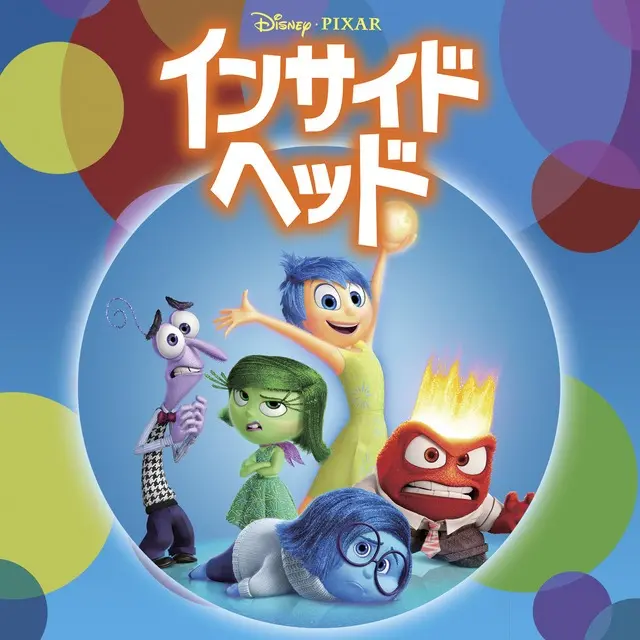
On October 9, 2026, at 9:00 PM JST, Nippon TV’s prestigious Friday Roadshow (金曜ロードショー) will broadcast Disney and Pixar’s critically acclaimed masterpiece, Inside Out (released in Japan as Inside Head / 『インサイド・ヘッド』). More than a simple television broadcast, this event represents a major terrestrial milestone for a film that fundamentally altered the landscape of modern animation.
This comprehensive analysis explores the narrative architecture, psychological depth, localization success, and enduring legacy of Pete Docter’s Oscar-winning feature, providing a definitive guide for audiences and industry observers alike.

1. Executive Overview
Originally released in 2015, Inside Out stands as one of the most creatively daring and commercially successful ventures in Pixar Animation Studios’ history. Directed by Pete Docter and co-directed by Ronnie del Carmen, the film grossed over $858 million worldwide and secured the Academy Award for Best Animated Feature at the 88th Oscars.
At its core, the film is a high-concept psychological fantasy set inside the mind of an 11-year-old girl named Riley Andersen. Rather than relying on traditional external antagonists, the drama unfolds through the interactions of five personified primary emotions: Joy, Sadness, Anger, Disgust, and Fear.
                       +-------------------------+
                       |    RILEY'S MIND (HQ)    |
                       +-------------------------+
                                    |
         +-------------+------------+------------+-------------+
         |             |            |            |             |
   +-----+-----+ +-----+-----+ +----+----+ +-----+-----+ +-----+-----+
   |    JOY    | |   SADNESS | |  ANGER  | |  DISGUST  | |   FEAR    |
   | (Yorokobi)| |(Kanashimi)| | (Ikari) | |(Mukamuka) | | (Bibiri)  |
   +-----------+ +-----------+ +---------+ +-----------+ +-----------+
The upcoming broadcast on Nippon TV’s Friday Roadshow—a cornerstone of Japanese television culture since 1985—reintroduces this modern classic to a domestic audience that has long held a deep affinity for its themes of emotional intelligence, transition, and the bittersweet nature of growing up. This broadcast is particularly significant as it continues to foster intergenerational dialogues regarding mental health, emotional expression, and the psychological challenges of adolescence.
2. Detailed Chronology
The narrative of Inside Out is a meticulously calibrated journey that parallelly tracks Riley’s external struggles with her internal emotional landscape.
+--------------------------------------------------------------------------+
|                           NARRATIVE TIMELINE                             |
+--------------------------------------------------------------------------+
| 1. MINNESOTA ORIGINS: Riley's early life is dominated by Joy.             |
|    Core memories are formed, establishing five distinct Personality      |
|    Islands (Family, Honesty, Hockey, Friendship, Goofiness).             |
|                                                                          |
| 2. THE SAN FRANCISCO SHIFT: Riley's family relocates. The stress of the  |
|    new environment destabilizes Headquarters. Sadness begins to          |
|    involuntarily alter core memories.                                    |
|                                                                          |
| 3. THE DISPLACEMENT: An altercation over a blue core memory leads to     |
|    Joy and Sadness being accidentally ejected from Headquarters into     |
|    the vast expanse of Long-Term Memory.                                 |
|                                                                          |
| 4. THE COGNITIVE COLLAPSE: In the absence of Joy and Sadness, Headquarters|
|    is managed by Anger, Disgust, and Fear. Riley's Personality Islands   |
|    collapse one by one as she slips into emotional apathy.               |
|                                                                          |
| 5. JOURNEY THROUGH THE LABYRINTH: Joy and Sadness navigate the mind's     |
|    subsystems (Abstract Thought, Dream Productions, Imagination Land)    |
|    with the help of Riley's forgotten childhood friend, Bing Bong.       |
|                                                                          |
| 6. THE ABYSS & SACRIFICE: Trapped in the Memory Dump, Joy realizes the   |
|    essential role of Sadness. Bing Bong sacrifices himself to propel Joy  |
|    back to the surface.                                                  |
|                                                                          |
| 7. INTEGRATION & RECOVERY: Joy returns to Headquarters and relinquishes  |
|    control to Sadness. Riley expresses her grief to her parents,         |
|    creating a new, multi-faceted core memory and restoring her mind.     |
+--------------------------------------------------------------------------+
The Catalyst: Displacement and Destabilization
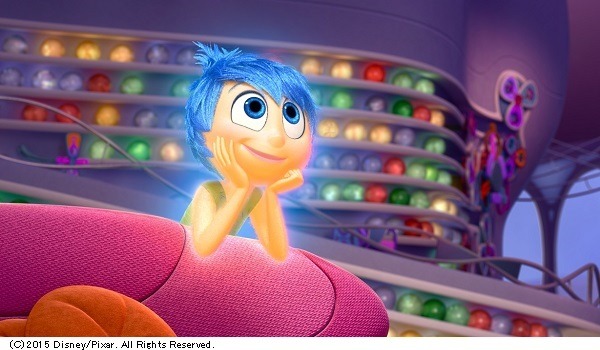
The story begins in Minnesota, where Riley enjoys a happy childhood rooted in family, friendship, and ice hockey. Her mind is governed harmoniously from "Headquarters" by her five emotions, with Joy acting as the de facto leader to ensure Riley remains happy. Riley’s personality is anchored by five "Personality Islands" powered by golden "Core Memories"—all of which are joyful.
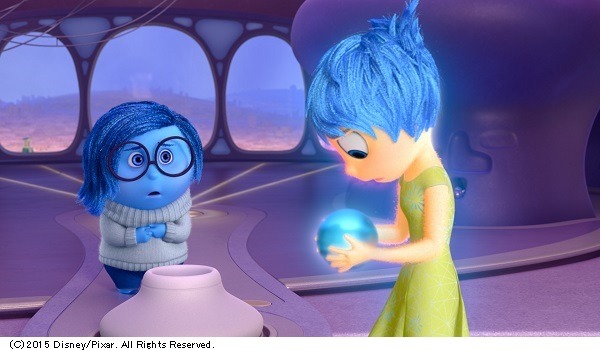
However, when Riley is 11, her father accepts a new job, forcing the family to relocate to a cramped apartment in San Francisco. The sudden loss of her familiar environment, coupled with her parents’ stress, places immense pressure on Riley. In Headquarters, the emotions struggle to manage the crisis. Sadness feels an uncontrollable urge to touch the golden Core Memories, which permanently tints them blue with melancholy.

The Headquarters Crisis
During Riley’s first day at her new school, Sadness touches a newly forming memory of a classroom introduction, causing Riley to cry in front of her peers. A frantic struggle ensues in Headquarters as Joy attempts to isolate the new sad Core Memory.
In the chaos, the memory machine malfunctions. Joy, Sadness, and the collection of Core Memories are sucked into the maintenance tube and blasted out of Headquarters, leaving them stranded in the distant, labyrinthine regions of Riley’s mind.
The Collapse of Personality
Without Joy and Sadness, Riley’s emotional spectrum is restricted to Anger, Disgust, and Fear. Back in Headquarters, these three attempt to steer Riley’s behavior, but their efforts are disastrous. Unable to cope, Riley becomes sarcastic, distant, and hostile toward her parents and friends.
One by one, her Personality Islands—Goofiness, Friendship, Hockey, and Honesty—lose power and collapse into the Memory Dump, a vast gray chasm where forgotten memories fade into non-existence. In a desperate bid to regain control, Anger implants an idea in Riley’s mind to run away back to Minnesota, believing that returning will allow her to generate new happy memories.

Navigating the Subconscious
Meanwhile, Joy and Sadness must find their way back to Headquarters through the vast, surreal landscape of Riley’s cognitive functions. They journey through Long-Term Memory—a boundless archive of shelves containing millions of colored memory spheres—and meet Bing Bong, Riley’s half-cat, half-elephant, half-dolphin imaginary friend made of cotton candy.
             +-----------------------------------------+
             |              HEADQUARTERS               |
             +-----------------------------------------+
                                  ^
                                  | (The Goal)
             +-----------------------------------------+
             |           LONG-TERM MEMORY              |
             +-----------------------------------------+
               /                  |
              /                   |
    +--------v--------+ +---------v---------+ +--------v--------+
    | ABSTRACT THOUGHT| |DREAM PRODUCTIONS  | |IMAGINATION LAND |
    | Deconstructs    | |Simulates reality  | |Stores childhood |
    | ideas to shapes | |like a movie studio| |fantasies        |
    +-----------------+ +-------------------+ +-----------------+
As they race to catch the "Train of Thought," they traverse:

- Abstract Thought: A chamber that deconstructs their forms into two-dimensional geometric shapes.
- Dream Productions: A movie studio-like complex that processes Riley’s daily experiences into surreal nighttime entertainment.
- Imagination Land: A sprawling theme park of childhood fantasies, which is gradually being demolished to make room for teenage interests.
The Memory Dump and the Crucial Epiphany
The journey takes a tragic turn when Riley’s decision to steal her mother’s credit card causes the collapse of Honesty Island, breaking the Train of Thought. Joy, Bing Bong, and Sadness are caught in the debris. In the chaos, Joy and Bing Bong fall into the Memory Dump.
Deep in the abyss, Joy experiences a moment of despair. Looking through Riley’s memories, she discovers a bittersweet truth: a memory of Riley losing a hockey game was









Belum ada komentar. Jadilah yang pertama berkomentar!