In the fast-evolving landscape of Japanese municipal governance, few initiatives have generated as much sustained friction, ambition, and eccentric public participation as the long-standing push to transform Osaka Prefecture into a designated "metropolis." Spearheaded primarily by the regional ruling party, the Japan Innovation Party (Ishin no Kai), the overarching objective is to mirror Tokyo’s administrative model by dissolving Osaka City into several autonomous "special wards" (tokubetsu-ku).
Proponents argue that this structural overhaul is essential to eliminate governmental redundancy, streamline public services, and cement Osaka’s status as Japan’s designated "Vice Capital." Yet, past attempts have foundered at the ballot box, thwarted by voter skepticism and the logistical nightmare of redrawing municipal maps.
Undeterred, regional leaders have reignited the campaign through innovative public outreach strategies, including online naming surveys designed to capture civic imagination. However, this democratization of urban planning has yielded a wildly unexpected frontrunner: "Myakumya-ku" (Myakumya Ward). Inspired by Myaku-Myaku, the surreal, multi-eyed mascot of the Kansai Expo, the proposal has sparked a fierce national debate. While governance purists view it as an administrative joke that could damage property values and civic dignity, others champion it as a bold, unforgettable branding masterstroke.
This report examines the intricate politics of the Osaka Metropolis plan, the mechanics of the proposed ward restructuring, the unexpected cultural phenomenon of the Myakumya naming controversy, and what this says about the intersection of contemporary pop culture and municipal identity in modern Japan.
Detailed Chronology: The Decades-Long Quest for an Osaka Metropolis
The ambition to reshape western Japan’s economic powerhouse is not a recent bureaucratic whim; it is the culmination of more than fifteen years of political maneuvering and institutional warfare.
1. The Genesis of the Ishin Vision (Early 2010s)
The concept of the "Osaka Metropolis Plan" (Osaka To Koso) was popularized by former Osaka Governor and Mayor Toru Hashimoto alongside the Japan Innovation Party. At its core, the proposal targeted a fundamental structural inefficiency: the dual existence of Osaka Prefecture and Osaka City. Historically, these two overlapping bodies maintained separate bureaucracies, schools, infrastructure budgets, and civic programs, often leading to political gridlock, wasted taxpayer funds, and duplicated administrative overhead.
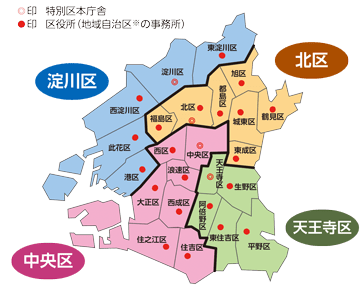
Under the Ishin proposal, Osaka City would be dissolved and replaced by four distinct special wards—similar to the 23 special wards of Tokyo. While the prefectural government would manage broad, macro-level infrastructure and regional planning, the new wards would handle localized grassroots services, education, and welfare.
2. The Referendum Defeats (2015 and 2020)
Despite strong regional backing from the Japan Innovation Party, turning the metropolis plan into reality required direct voter approval via municipal referendums.
The 2015 Referendum: In a bitterly contested vote, the metropolis plan was narrowly defeated, prompting Hashimoto to retire from frontline politics.
The 2020 Referendum: Revived under subsequent leadership, a second referendum was held in November 2020. Despite intensive campaigning, the measure was again voted down by a razor-thin margin, signaling that while voters recognized inefficiencies, the risks and disruption of dismantling Osaka City outweighed the theoretical benefits.
3. The Re-emergence and the "Vice Capital" Coalition (2025–2026)
Rather than abandoning the blueprint, the Japan Innovation Party adapted its strategy. Capitalizing on shifting national priorities and the massive infrastructure investments surrounding the Kansai Expo, Ishin formed a strategic political coalition with the nation’s ruling Liberal Democratic Party (LDP).
The federal government’s recent legislative nods toward establishing regional backup capitals—positions capable of maintaining government continuity in the event of a Tokyo-centric disaster—provided fresh momentum. The LDP-Ishin coalition effectively revived the discourse surrounding Osaka’s ascent to "Vice Capital" status. To achieve this, proponents argue that Osaka must possess the streamlined administrative unity of a metropolis. Consequently, the wheels were set in motion to re-examine the division of Osaka City, leading directly to the controversial public surveys regarding special ward nomenclature.
Supporting Context & Metrics: The Case For and Against Administrative Reform
To understand why the naming of a municipal ward has triggered such fierce cultural anxiety, one must analyze the complex mechanics, financial realities, and administrative trade-offs underpinning the Osaka Metropolis proposal.
The Bureaucratic Redundancy Problem
Osaka Prefecture encompasses Osaka City alongside dozens of surrounding municipalities. Within the urban core, however, the jurisdiction of Osaka City frequently duplicates that of the prefecture.
Overlapping Budgets: Both entities historically invested in competing cultural centers, overlapping hospital networks, and redundant public works departments.
Fiscal Disparities: Supporters project that centralizing metropolitan governance will optimize tax allocation, saving billions of yen annually in administrative overhead and re-channeling those funds into high-priority public infrastructure.
The Disruption Factor
Opponents of the plan—including traditional local business leaders, opposition political parties, and neighborhood associations—point to significant structural downsides:
Administrative Turmoil: Redrawing municipal boundaries requires reorganizing tens of thousands of civil service employees, restructuring public school districts, and re-registering millions of residents.
Democratic Representation: Critics argue that breaking Osaka City into four large wards will dilute the political voice of urban residents, transferring greater central authority to the prefectural governor’s office and reducing grassroots accountability.
The Psychology of Public Engagement Surveys
Recognizing that past failures stemmed from a perceived disconnect between technocratic planners and ordinary citizens, current Ishin leadership turned to crowdsourcing. By launching an online survey inviting citizens to submit and vote on potential names for the proposed special wards, the administration hoped to foster a sense of grassroots ownership.
Instead, the digital voting populace did what digital voting populations often do: they embraced internet meme culture, injected local humor into bureaucratic proceedings, and elevated the concept of "Myakumya Ward" to national prominence.
Official Statements and the Cultural Phenomenon of "Myaku-Myaku"
To appreciate the gravity—and absurdity—of the "Myakumya-ku" proposal, one must understand the cultural footprint of Myaku-Myaku, the official mascot of the 2025 Osaka Kansai Expo.
The Rise of Myaku-Myaku Fever
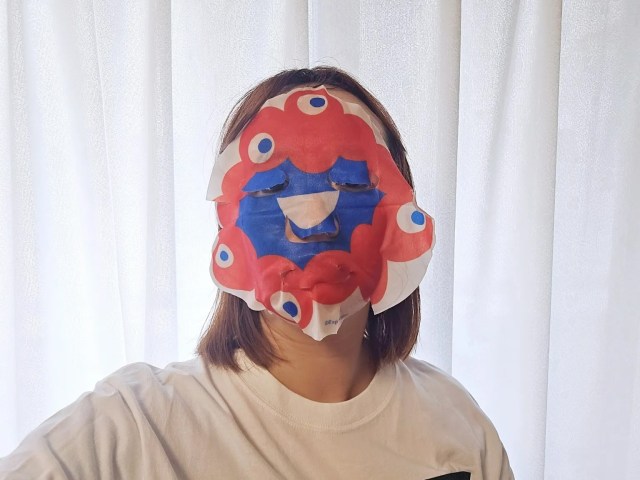
Designed by illustrator Kohei Yamashita and creative director Sawa Tokoro, Myaku-Myaku is an amorphous, red-and-blue entity composed of cellular rings and staring, cartoonish eyes. Upon its initial unveiling, the mascot generated global bewilderment and shock, frequently described by international media as "nightmarish" or "lovecraftian."
Yet, true to the eccentricities of Japanese mascot culture (yuru-chara), public sentiment rapidly inverted. The creature evolved from a target of irony into an emblem of unabashed civic pride. By the time the Kansai Expo drew massive crowds, "Myaku-Myaku fever" had saturated Japanese retail, media, and public consciousness.
The Naming Conundrum
When survey results revealed strong public traction for naming a northern Osaka municipal district "Myakumya Ward" (Myakumya-ku), government officials found themselves trapped in a classic public relations dilemma.
The Bureaucratic Dilemma: On one hand, official adoption of a mascot-derived name risks trivializing serious administrative restructuring. Critics argue that foreign investors, domestic businesses, and future generations will view a district named after a gooey, multi-eyed creature as a laughingstock, potentially depressing local property values and commercial investment.
The Engagement Strategy: Conversely, the explicit goal of the survey was to generate public interest in a political process that citizens had previously ignored or rejected. Embracing the meme could signal a vibrant, modern, self-aware municipal government willing to break from stifling traditionalism.
Public reaction online highlights this deep societal division:
"It would be embarrassing to have to write ‘Myakumyaku’ on official government documents and tax forms." — Online Commenter
"I think if the city truly owns it wholeheartedly, it could become an iconic global tourist destination. It has character." — Online Commenter
"Say goodbye to property values in the north side if we become a living cartoon meme." — Online Commenter
"I can’t wait to hand out business cards that proudly state I reside in Myakumya-ku." — Online Commenter
Senior political figures, including Osaka Governor Hirofumi Yoshimura, have walked a fine line in public appearances, acknowledging the public’s viral creativity while tempering expectations regarding whether an internet poll will dictate legally binding municipal nomenclature.
Future Outlook: What Lies Ahead for Osaka’s Special Wards?
As the political machinery grinds forward, the path to an Osaka Metropolis remains fraught with institutional hurdles and public relations battles.
1. The Legal and Legislative Roadmap
Even if the Japan Innovation Party and its LDP allies secure sufficient legislative backing at both the prefectural and national levels, any structural division of Osaka City requires meticulous legal drafting. The Diet must pass enabling legislation, and local assemblies must debate ward boundaries, asset distribution, and administrative transition timelines.
2. Navigating the Naming Process
While "Myakumya Ward" currently commands viral attention, it faces stiff competition from more conventional geographic and historical naming conventions currently sitting on the government shortlist. Most urban planners and local residents naturally gravitate toward established transit hubs and historical river basins—such as Yodogawa or Shin-Osaka.
However, even traditional names carry baggage. "Shin-Osaka" (literally "New Osaka"), for instance, risks becoming an architectural misnomer as the district ages into an established urban center, leading some commentators to wryly suggest it sounds more like a fictional sci-fi setting (Neon Genesis Evangelion) than a functional municipal zone.
3. Winning Hearts and Minds
Ultimately, the success of the Osaka Metropolis plan does not hinge on whether a special ward is named after a legendary Expo mascot or a traditional geographic landmark. It depends on whether regional leaders can convince a skeptical public that structural reorganization will genuinely improve daily life, lower administrative costs, and elevate Osaka’s global standing.
Whether residents of northern Osaka ultimately find themselves filling out tax forms for "Myakumya Ward" or a more sober geographic district, the episode has already secured its place in the annals of Japanese municipal history—proving that even the driest bureaucratic reforms can be unexpectedly upended by the unstoppable force of internet culture.











Belum ada komentar. Jadilah yang pertama berkomentar!