In the heart of Kagawa Prefecture—widely celebrated across Japan as the undisputed "Udon Prefecture"—culinary tradition is fiercely guarded yet remarkably prone to playful innovation. Famed globally for its wheat cultivation, climate-optimized noodle production, and the highest per-capita udon consumption in the country, Kagawa represents a holy land for noodle enthusiasts. Yet, in the shadow of the historic Kompirasan Shrine, a local eatery has pushed the boundaries of regional gastronomy so far that it risks rewriting the rules of dessert altogether.
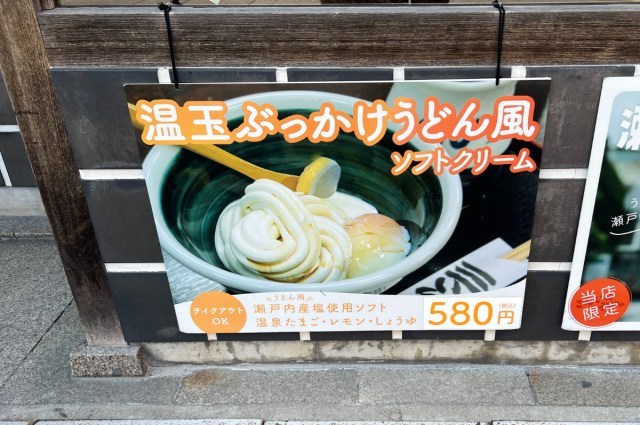
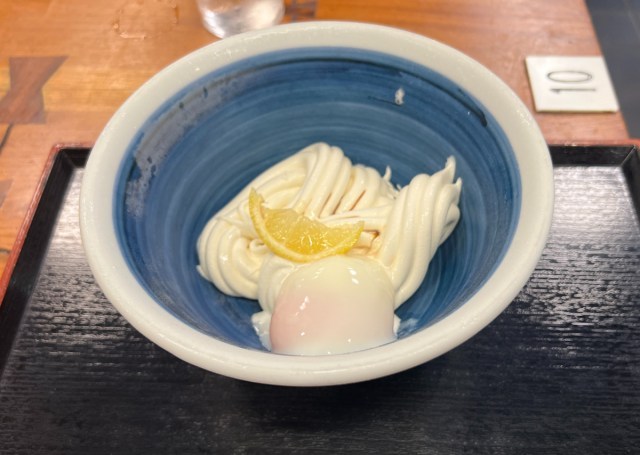
The Konpira Udon Sando Store, situated along the grand, sloping approach to one of Shikoku’s most revered spiritual sites, has introduced a creation that challenges every preconceived notion of savory and sweet: the "Onsen Egg Bukkake Udon-style Soft Serve." Priced at 580 yen (approximately $3.90 USD), this frozen confection mirrors one of Japan’s most beloved noodle dishes down to the smallest detail. Complete with an authentic onsen (hot spring) egg, a drizzle of soy-sauce-based dashi analogue, a slice of fresh lemon, and a noodle-like silhouette extruded from a soft-serve machine, the dessert serves as a delicious optical and sensory illusion.
This report provides an exhaustive, chronological examination of this bizarre gastronomic phenomenon. By side-by-side taste-testing the savory classic against its frozen mimic, food researchers have uncovered a masterclass in culinary illusion, a dish that forces the human palate to reconcile the rich, savory umami of an egg yolk with the cold, sugary comfort of soft-serve ice cream.
Detailed Chronology of the Tasting Experience
The Encounter at the Threshold of Kompirasan
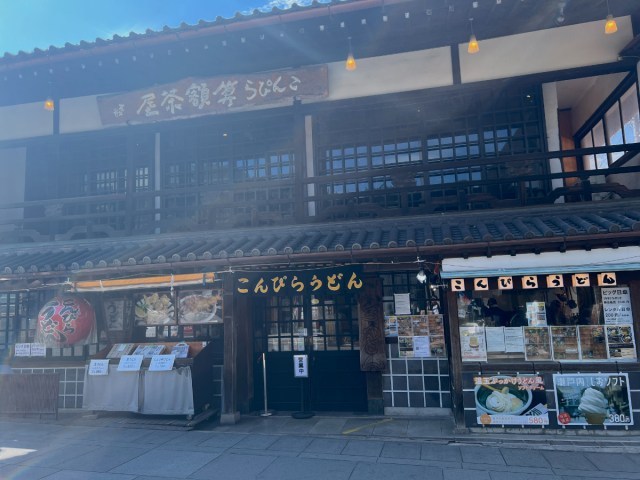
The discovery began during a routine architectural and cultural expedition up the storied path of Kotohira’s Kompirasan Shrine—a grueling ascent defined by 785 stone steps. Exhausted from the climb and seeking respite, researchers caught sight of a weathered, charismatic storefront belonging to the Konpira Udon Sando Store.
Prominently displayed outside was a promotional banner bearing text that immediately caused cognitive dissonance: "Onsen Egg Bukkake Udon-style Soft Serve."
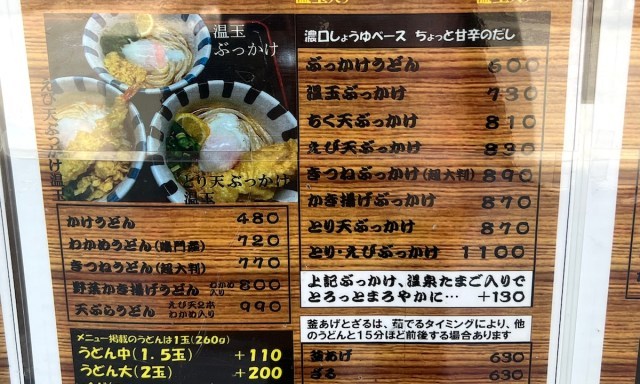
While Japan is no stranger to regional novelty ice creams—ranging from wasabi and soy sauce flavors to raw horse meat and squid ink variations—adapting a wet, hot or lukewarm noodle dish into a chilled dairy format is virtually unprecedented. Intrigued by the audacity of the concept, the investigative team decided to conduct a rigorous, side-by-side sensory analysis. They ordered both the traditional, hot-or-cold Onsen Egg Bukkake Udon (priced at 730 yen) and its dairy-based impersonator to evaluate how faithfully the dessert could replicate its muse.
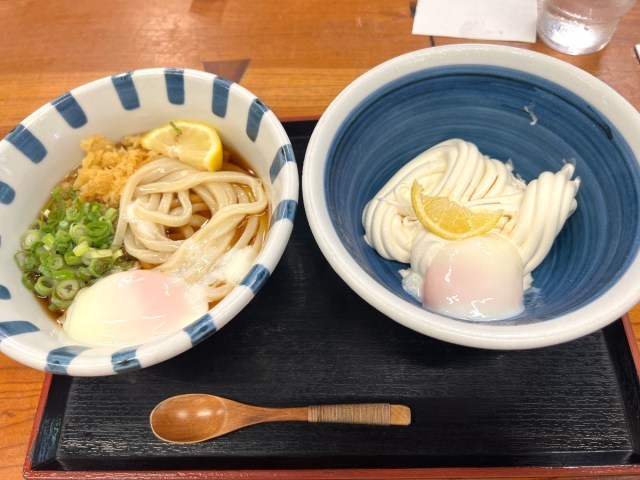
Within five minutes, both dishes arrived on identical wooden trays, served in bowls of matching size and shape. The visual symmetry was startling.
To the left sat the traditional standard-bearer: a pristine ceramic bowl holding thick, gleaming strands of Kagawa udon, generously bathed in a shimmering soy-sauce-infused dashi broth. Atop the noodles rested a delicate onsen egg—with its cloudy whites and liquid yolk—alongside crisp green onions, tempura flakes (tenkasu), and a solitary wedge of lemon.
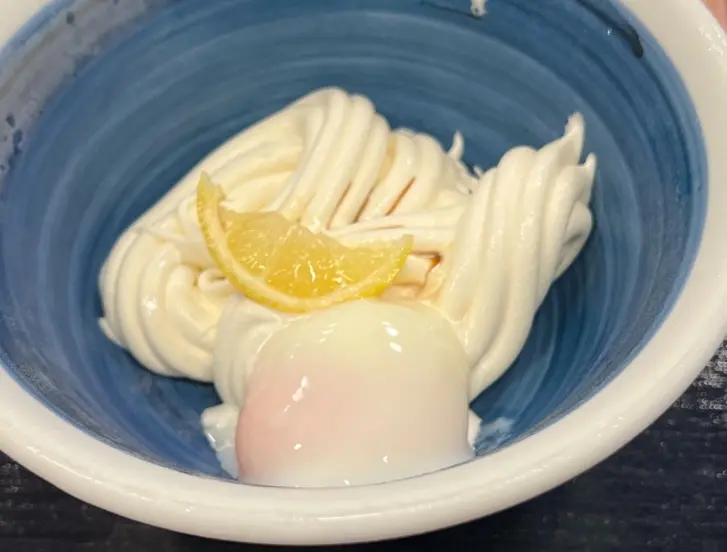
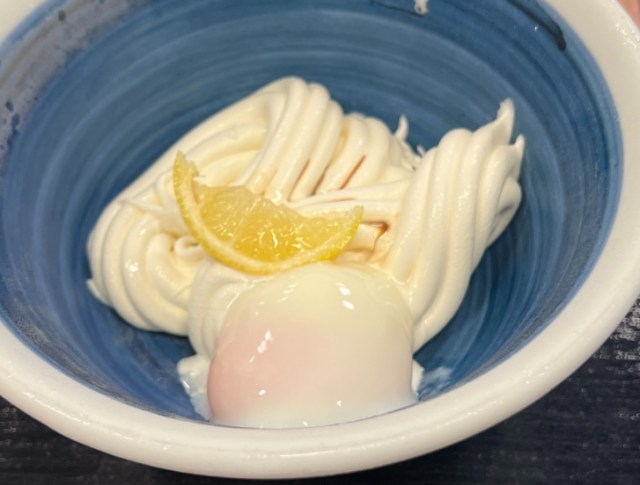
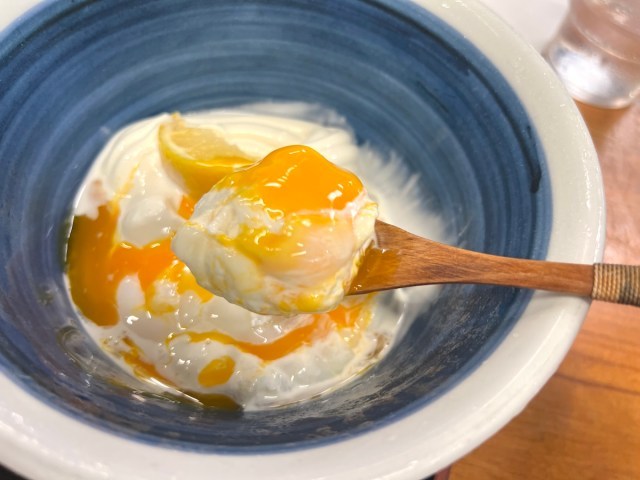
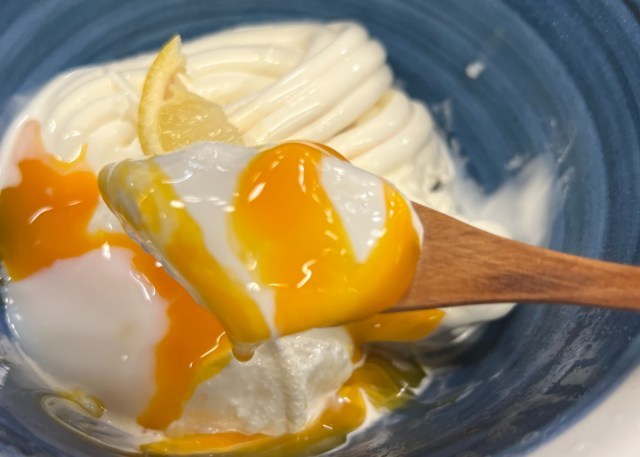
To the right sat the optical illusion. The base consisted of a stark white, extruded soft-serve cream meticulously piped to mimic the undulating, voluminous texture of tangled noodles. Slathered across the white crest was a dark, glossy ribbon of sweet-savored sauce mirroring soy-sauce dashi. Crowning the creation were the exact same canonical garnishes: a wedge of fresh lemon and a whole, trembling onsen egg.
Replacing chopsticks with a standard dessert spoon felt like an act of betrayal against noodle etiquette, yet it was the only tool fit for the task.
Phase 1: Grounding in Tradition (The Savory Control)
Before diving into the frozen anomaly, the team grounded their palates with the authentic Onsen Egg Bukkake Udon.
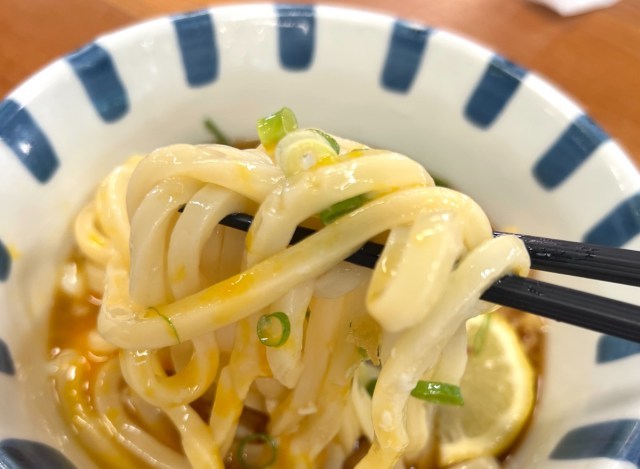
The benchmark was predictably exceptional. Kagawa udon possesses a distinct DNA: a remarkably firm, elastic bite coupled with a slippery, luxurious mouthfeel that resists sogginess. The dashi broth achieved an equilibrium of salt, umami, and subtle fish-and-kelp aromatics.
Upon breaking the onsen egg, the liquid yolk cascaded across the noodles, enveloping them in a velvety emulsion. The addition of tempura crumbs introduced a necessary crunch, while the green onions cut through the richness with a crisp, vegetal sharpness. It was a masterclass in regional comfort food.
Phase 2: Piercing the Forbidden Egg
With the baseline established, attention shifted to the dairy imposter. Poking a dessert spoon into the raw-appearing onsen egg perched atop ice cream felt fundamentally counterintuitive. Culinary conditioning dictates that eggs belong in savory dishes, quiches, or custards—not dripping down a cone or bowl of vanilla dairy fat.
As the translucent white gave way, the rich, orange yolk spilled across the pristine white soft serve. The resulting presentation was simultaneously alluring and deeply unorthodox.
Lifting the first spoonful to the mouth yielded an immediate cognitive shock: What am I tasting?
The richness and moderate saltiness of the egg yolk immediately tamed the aggressive sweetness of the underlying soft-serve cream. Instead of reading strictly as a dessert, the flavor profile morphed into something closer to an avant-garde, sweet-savored meal.
Upon reflection, the pairing possesses an underlying logic: traditional ice cream bases and custards are heavily reliant on pasteurized egg yolks for emulsification and mouthfeel. However, experiencing a runny, semi-liquid savory egg yolk pooling over chilled cream introduced a texturally jarring yet surprisingly harmonious sensation. It was bizarre, unfamiliar, but undeniably compelling.
Phase 3: The Citrus Catalyst
To complete the comparative analysis, researchers introduced the final variable: fresh lemon juice.
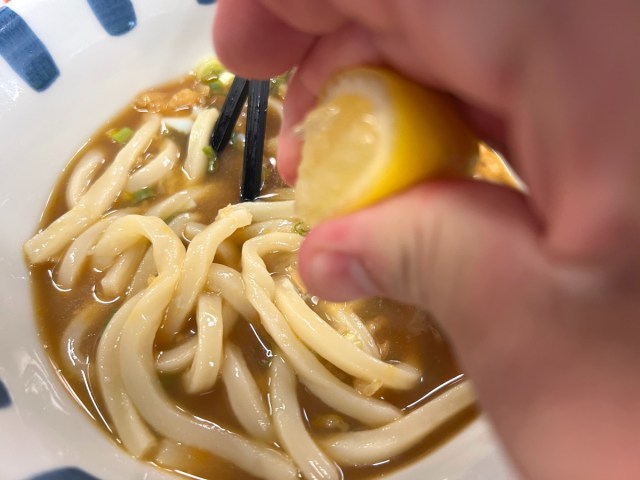
Applied first to the traditional udon, the citrus injection acted as a classic palate-brightener, slicing through the heavy umami of the dashi and the rich fat of the yolk with a vibrant snap of acidity.
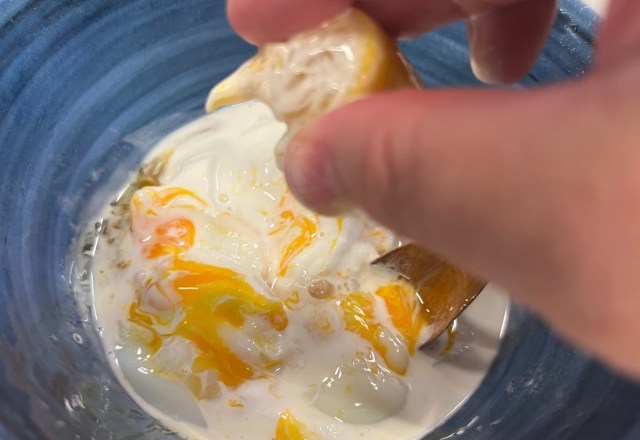
Replicating the test on the soft serve yielded an even more profound transformation. The moment the lemon juice hit the egg-and-ice-cream matrix, the dessert experienced a structural elevation. The acidity trimmed the heavy, lingering sweetness of the dairy, lifting the flavor profile into a refreshing, bright finish. It was at this juncture that the dish transitioned from a mere marketing gimmick into a genuinely addictive, forward-thinking dessert concept.
Phase 4: Total Sensory Overload and Synthesis
In the final stages of the experiment, researchers engaged in rapid alternation: a bite of hot savory udon, followed immediately by a spoonful of the lemon-drenched egg soft serve, then back to the noodles.
This sensory ping-pong pushed the human brain to its absolute processing limit. The palate bounced wildly between steaming hot dashi and freezing cold dairy; between elastic wheat and melting cream; between savory umami and sugary confection.
Eventually, cognitive fatigue gave way to total culinary surrender. In a moment of sheer experimental abandon, the researchers crossed the final frontier: they mixed the remaining udon noodles directly into the soft serve.
To the utter shock of everyone at the table, the combination worked. The starchy, neutral profile of the udon anchored the wild swings of the sweet-and-savory dairy mix, allowing the entire bowl to be polished off with zero remorse.
Supporting Context & Metrics
To fully appreciate the significance of the Konpira Udon Sando Store’s creation, one must analyze the broader economic and cultural ecosystem of Kagawa Prefecture.
Metric / Feature
Data / Description
Prefectural Nickname
"Udon Prefecture" (Udon Ken)
Per Capita Consumption
Kagawa ranks #1 in Japan for annual udon expenditure and consumption volume.
Primary Dish Emulated
Onsen Egg Bukkake Udon
Traditional Udon Price
730 yen (~$4.90 USD)
Soft Serve Innovation Price
580 yen (~$3.90 USD)
Store Location
810-3 Kotohira-cho, Nakatado-gun, Kagawa-ken
Operating Hours
8:00 AM – 5:00 PM daily
Contextual Landmark
Kompirasan Shrine (accessible via 785 stone steps)
The creation of the Udon-style Soft Serve is not merely a random stunt; it is part of a calculated regional strategy to merge historic pilgrimage tourism with modern viral food culture. Every year, millions of domestic and international tourists visit the Kotohira-gu shrine. Climbing the 785 stone steps to reach the main shrine demands physical endurance, leaving visitors physically spent and primed for culinary indulgence on their descent.
By pricing the soft serve at 580 yen, the store captures the demographic of fatigued travelers looking for a quick, Instagram-friendly sugar fix, while simultaneously honoring the prefecture’s proudest export.
Official Statements & Culinary Philosophy
While the Konpira Udon Sando Store operates with a playful storefront demeanor, the engineering behind the dessert reveals serious culinary craftsmanship. According to representatives of the establishment, the development of the soft serve required months of trial and error regarding texture and dairy composition.
"When crafting a dessert designed to mimic a hot noodle dish, you cannot simply rely on novelty. The visual presentation must trick the eye so completely that the customer’s defenses are down before the first bite," notes a shop spokesperson. "By incorporating actual structural elements of the dish—such as the onsen egg and fresh citrus—we force a dialogue between the diner’s expectations of a sweet treat and their memories of a savory meal."
Gastronomic analysts have praised the item for its adherence to the Japanese philosophy of Asobi (playfulness) in food preparation. While Western culinary traditions often maintain rigid boundaries between savory courses and dessert courses, Japanese washoku and regional yoshoku (Western-influenced Japanese cuisine) have long embraced hybrid flavor profiles—manifested most famously in matcha green tea parfaits, sweet red bean soups with mochi, and savory-sweet soy glaze applications.
Future Outlook
The success of the Onsen Egg Bukkake Udon-style Soft Serve signals a broader evolution in regional tourism marketing across Japan. As domestic travel patterns shift and travelers increasingly seek hyper-local, shareable experiences, heritage foods are no longer constrained by traditional preparation methods.
Industry insiders predict that the success of Kagawa’s noodle-themed dairy experiment will inspire adjacent prefectures—such as Yamanashi (famous for Hoto noodles) or Morioka (famous for Reimen)—to explore similar boundary-pushing dessert adaptations. However, replicating the precise balance of a liquid onsen egg, dashi-infused syrup, and citrus acidity over dairy cream will prove a high bar to clear.
For visitors planning a pilgrimage to Shikoku, tackling the 785 stairs of Kompirasan is no longer just a spiritual or athletic milestone. It is now the mandatory prerequisite for earning one of the most delightfully brain-melting culinary experiences modern Japan has to offer.










Belum ada komentar. Jadilah yang pertama berkomentar!