

Executive Overview
The intersection of generative artificial intelligence and enterprise workflows has reached a profound new inflection point. What once lived exclusively in the realm of speculative science fiction—digital replicas capable of speaking, listening, and reasoning in real-time—has firmly established itself in the commercial mainstream. Leading this charge is Synthesia, a prominent video-generation startup that has captured the tech industry’s attention with a staggering $4 billion valuation and over $100 million in annual recurring revenue (ARR).
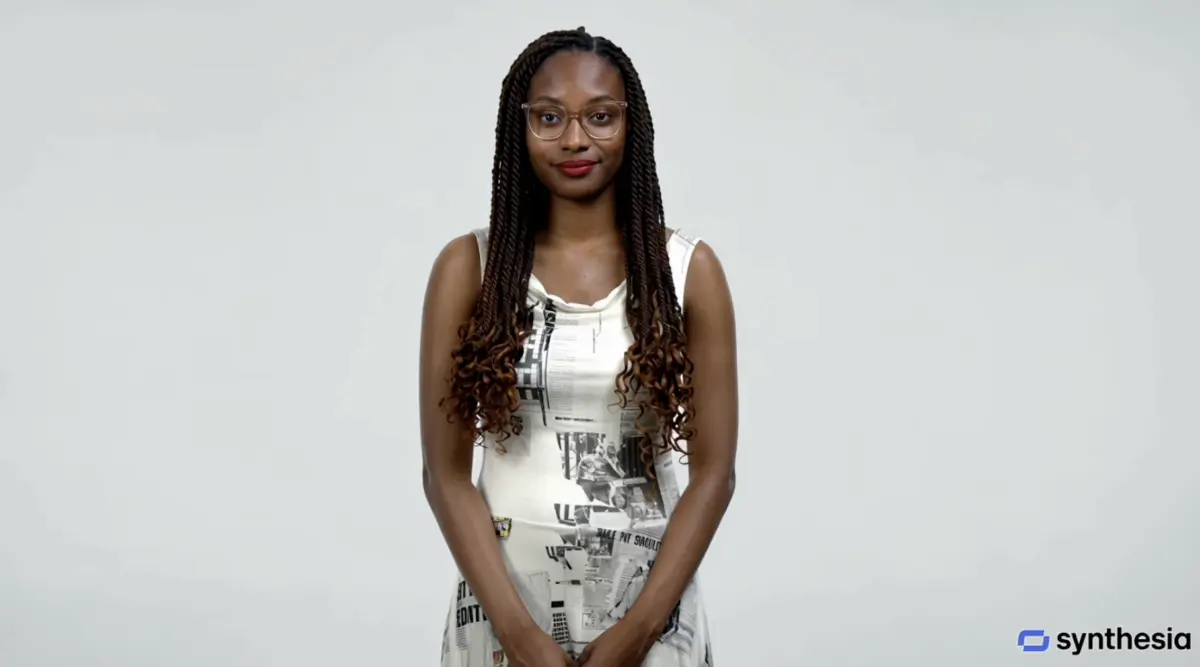
The author’s journey into this world began not with a formal product demonstration, but with a glimpse into the future of corporate communications: an interactive virtual avatar of Alexandru Voica, Synthesia’s head of corporate affairs, deployed to field routine press inquiries. This initial encounter opened the door to a broader, more immersive experiment during a visit to Synthesia’s New York offices. There, the author became the first journalist to be digitally cloned—creating both standard video-generation avatars and sophisticated, interactive digital twins.
This piece explores the technology behind these interactive agents, the mechanics of their creation, the complex psychological implications of interacting with one’s own digital likeness, and the profound questions this innovation raises for the future of journalism, trust, and human identity.
Detailed Chronology: From PR Novelty to Personal Digital Twin
The First Encounter with "Digital Voica"
The evolution of corporate public relations has historically relied on human touchpoints, press releases, and carefully curated email exchanges. However, when Alexandru Voica shared a link to his newly minted interactive virtual avatar earlier this summer, the paradigm shifted. Designed to autonomously answer common media questions regarding Synthesia’s operations and underlying technology, the avatar demonstrated a level of autonomy that surpassed traditional AI-generated text tools. It was a clear signal that the tools of corporate representation were undergoing a radical, automated transformation.
Stepping Into the Studio
In September, Synthesia invited media figures to tour its newly established New York workspace. Amidst a wave of industry momentum—bolstered by its massive valuation and surging revenue—the company offered attendees the opportunity to experience the creation process firsthand. Enticed by the novelty and the reassurance of good hair and a well-chosen outfit, the author agreed to step into the miniature film studio housed within the office.
The production process was remarkably swift. It required numerous high-resolution photographs and a brief two-minute voice recording. After providing explicit consent, the author’s digital likeness was captured, giving birth to multiple iterations:
- Personal Avatars: Standard video-generation models (available both with and without glasses) engineered to recite scripted text provided by the user verbatim.
- Interactive Avatars: Deterministic, conversational models capable of listening, processing, and responding to spoken queries based strictly on a pre-selected training document—in this case, an in-depth investigative piece regarding venture-backed startup fraud.
Testing the Clones: Reactions from Friends and Family
The resulting avatars offered a fascinating study in human perception. When testing the personal avatar with a generic script about the arrival of autumn in New York, the voice replication proved remarkably accurate, smoothly bypassing minor vocal hoarseness present during the original recording. Non-tech-savvy friends described the result as a compelling blend of fascinating and eerie.
The interactive avatar, however, elicited a more complex response. Because it was programmed deterministically to restrict its commentary solely to the venture fraud article, attempts to trip up the model with personal trivia—such as past places of residence or previous employers—were met with polite, programmatic redirections back to the subject matter.
While friends noted minor discrepancies in the vocal cadence and visual likeness compared to the personal variant, the illusion was sufficiently robust to unnerve them. Meanwhile, the author’s mother offered high praise, albeit tinged with humor: "I don’t remember giving birth to two of you," she joked after exhausting her list of personal questions on the locked-down model.
Supporting Context & Metrics: The Mechanics of Digital Twins
To understand how these hyper-realistic avatars function, one must look beneath the hood at the sophisticated multi-layer technology stack that powers modern generative video platforms.
The Technological Architecture
Synthesia’s ecosystem—alongside competitors such as D-ID, HeyGen, and Colossyan—relies on an intricate choreography of distinct AI models working in tandem:
- Voice-to-Text (ASR): Converts spoken human queries into written text data.
- Agentic Language Models (LLMs): Interprets the text, determines intent, and formulates an appropriate contextual response based on the boundaries of its training data.
- Text-to-Voice (TTS): Translates the generated response back into an authentic audio stream matching the user’s vocal profile. Synthesia natively supplies its own voice models while remaining platform-agnostic, allowing enterprises to integrate alternative labs such as Cartesia, ElevenLabs, Google, or OpenAI.
- Video Generation Models: Synthesia’s proprietary rendering engine animates the visual avatar, synchronizing facial movements, micro-expressions, and lip-syncing to the audio output.
Market Positioning and Product Tiers
Synthesia categorizes its enterprise offerings into three distinct pillars:
- Classic Video Creation & Distribution Platforms: Tools where users input text scripts to generate predictable, corporate video content.
- Agentic Platforms (e.g., Sessions): Interactive environments designed for dynamic employee training, customer surveys, and roleplay simulations. For instance, the recently launched Roleplay Sessions product allows corporate sales teams to practice live pitches against an intelligent AI avatar that evaluates and scores their performance.
- API Platforms: Infrastructure enabling developers to blend Synthesia’s video and voice capabilities with external software services to build custom interactive agents.
Enterprise clients retain total flexibility regarding deployment, choosing whether to host their proprietary avatars on private cloud infrastructure or leverage Synthesia’s managed hosting services.
Official Statements and Industry Perspectives
The rapid proliferation of digital avatars has sparked intense debate across corporate boardrooms, investment circles, and editorial offices. Opinions diverge sharply regarding how deeply these tools should penetrate daily professional life.
The Investor and Media Divide
When industry leaders are asked whether news broadcasting or executive communications could eventually be fronted by AI avatars, the reactions are starkly polarized. Some prominent venture capitalists dismiss the notion outright, reflecting a broader public pushback against digital "slop"—the rising tide of unvetted synthetic content flooding social media feeds and information platforms.
Conversely, others see significant potential for digital avatars to augment—or in specialized contexts, replace—traditional workflows. The core dilemma centers on trust. In journalism, the currency of the realm is human connection, rigorous research, and an unyielding commitment to factual integrity. As the author notes:
"What I like about our career is connecting with people, writing stories, and researching new topics. But the biggest part of journalism is trust. That doesn’t seem like it could ever be outsourced to an AI."
The Psychology of Clones
Beyond professional utility, the psychological toll of interacting with digital twins warrants serious consideration. While deterministic models—those bound strictly to pre-approved source material—remain safe within predictable guardrails, nondeterministic models powered by open-ended chatbots introduce unfamiliar psychological dynamics. The phenomenon of "AI psychosis," or the subtle cognitive dissonance experienced when engaging with an entity that looks, sounds, and moves like a human yet possesses no inner consciousness, highlights the need for careful boundary-setting as these tools mature.
Future Outlook: Navigating a Synthetic Tomorrow
As corporate America evaluates the long-term utility of digital twins, the trajectory of avatar integration remains fluid. For everyday professionals, the appeal of asynchronous efficiency is undeniable: the prospect of a digital replica handling routine communications during vacations or after-hours work cycles presents a compelling productivity boost.
Yet, generational attitudes toward these technologies vary significantly. Younger demographics, particularly Gen Z, often view digital clones through a hyper-skeptical lens, noting that the science-fiction tropes of yesterday have arrived with startling speed. Interestingly, many users find digital avatars far less jarring than physical humanoid robots; unlike embodied hardware, an avatar can be dismissed instantly with the click of a button.
Ultimately, the emergence of the author’s own digital twin serves as both a technological milestone and a philosophical mirror. As the initial novelty fades and the avatar waits silently for its next prompt, it forces a reckoning with what it means to communicate, to represent, and to remain authentically human in an increasingly synthetic world.
Disclaimer: When you purchase through links in our articles, we may earn a small commission. This does not affect our editorial independence.








Belum ada komentar. Jadilah yang pertama berkomentar!