

By Craig Robinson
Senior Editor, Esports News UK
Last Updated: January 9, 2026
Executive Overview
In what can only be described as a seismic shockwave rippling through the foundations of European League of Legends, Fnatic has officially failed to qualify for the 2026 World Championship. Following a tumultuous and ultimately disastrous conclusion to the LEC Summer Split, the legendary black-and-orange organization finished seventh in the standings, locking them out of the playoff bracket entirely.
This historic failure brings a definitive end to one of the most remarkable and enduring streaks in global esports: Fnatic’s uninterrupted attendance at the World Championship since 2016. For a decade, the organization served as a cornerstone of LEC representation on the international stage, carrying the hopes of European fans through glory years, rebuilds, and fierce rivalries.
The immediate catalyst for this exit was a high-stakes, do-or-die regular-season finale against GiantX on Sunday evening. While GiantX successfully galvanized their campaign to secure a coveted top-four finish and a trip to Madrid for the opening upper-bracket roadshow, Fnatic plummeted out of the qualification zone. Sinking behind MKOI into seventh place, Fnatic’s roster was sent packing straight into a freezing, uncertain offseason.
Compounding the sting of this historic elimination is a poetic, almost cinematic plot twist: the final nail in Fnatic’s coffin was driven by their former top laner, Oscarinin. Having joined GiantX at the start of the summer split following a bitter departure from Fnatic—during which he publicly claimed the organization damaged his professional reputation—Oscarinin engineered the ultimate revenge arc.
As Fnatic faces the harsh reality of an extended competitive drought, missing out on both Worlds and the upcoming global Demacia Cup, broader questions loom over the organization. With background rumors of a corporate buyout swirling and consecutive failures across their flagship divisions—including their Valorant team’s struggles in the EMEA region—Fnatic stands at a perilous crossroads. The path forward demands an exhaustive, root-and-branch rebuild if the once-dominant titan hopes to reclaim its lost glory ahead of the 2027 season.
Detailed Chronology: The Anatomy of a Collapse
To understand how a powerhouse of Fnatic’s stature missed the World Championship for the first time in ten years, one must examine the slow erosion of their competitive dominance throughout the 2026 LEC season. While the early months hinted at flashes of the brilliance historically expected from the organization, chronic structural inconsistencies, internal friction, and late-split turbulence ultimately eroded their playoff aspirations.
The Summer Split arrived with immense pressure. Entering the summer window, Fnatic management made calculated moves to adjust their roster, notably signing Soboro to inject fresh energy into the lineup, while veteran bot-laner Upset teased strategic curveballs, unconventional champion pools, and high-stakes aggression on streaming platforms. Yet, these adjustments failed to translate into cohesive, reliable team play on the Summoner’s Rift.
As the regular season careened toward its final weeks, the LEC standings turned into a volatile bloodbath. Multiple mid-tier and upper-tier teams found themselves locked in a mathematical deadlock, fighting tooth and nail for the remaining playoff berths. For Fnatic, the math was simple yet terrifying: they needed to secure a victory in their final Sunday fixture against GiantX to leapfrog MKOI, claim the sixth and final playoff seed, and keep their Worlds dream alive.
Conversely, GiantX entered the match with ambitious targets of their own. Far from merely fighting for survival, the Spanish-UK organization was hunting a top-four finish—a milestone that would guarantee them a spot in the prestigious Madrid roadshow for the first round of upper-bracket matches.
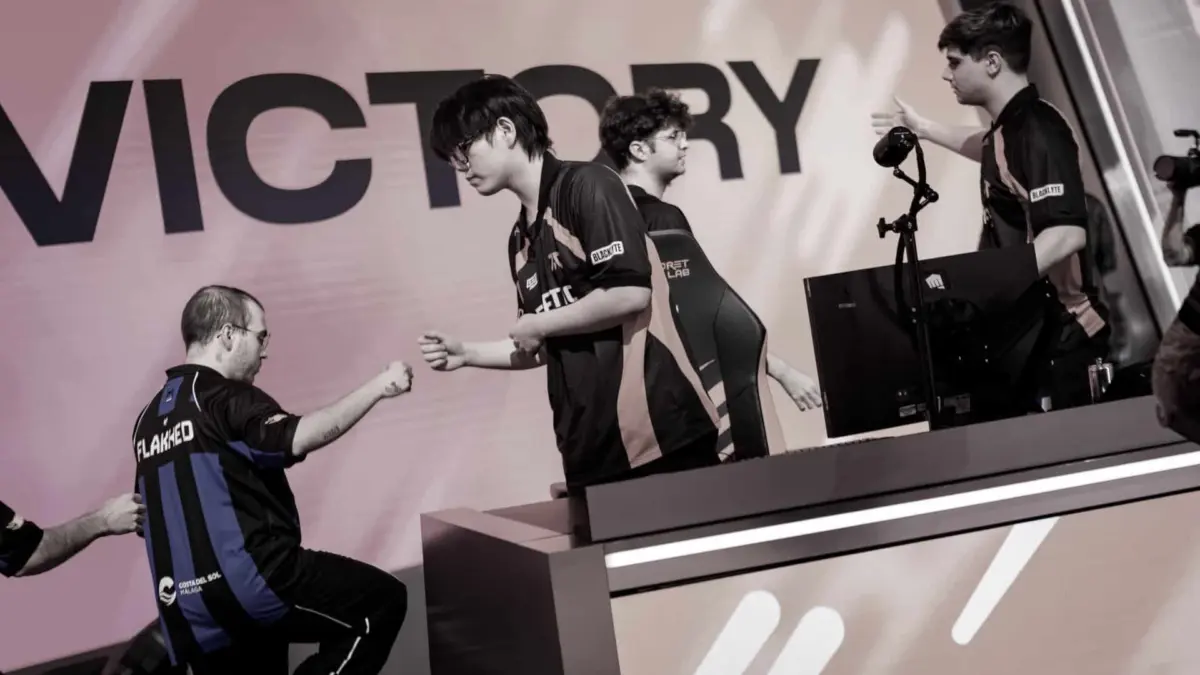
When the titans collided on Sunday, the contrast in composure and execution was stark. GiantX played with surgical precision, exploiting Fnatic’s defensive weaknesses and capitalizing on hesitation within the black-and-orange ranks. Despite flashes of desperate resistance from Fnatic, GiantX closed out the series decisively. The scoreboard flashed the final, damning truth: GiantX secured their ticket to Madrid in triumphant fashion, while Fnatic slumped into seventh place.
The dream of Worlds 2026 evaporated in real-time, sealing the darkest day in modern Fnatic history.
Supporting Context & Metrics: The Magnitude of the Fall
The weight of Fnatic missing the World Championship cannot be overstated. In the cultural lexicon of competitive League of Legends, Fnatic is royalty. As the winners of the very first World Championship in 2011 (Season 1 Championship), the organization has historically been synonymous with the growth, resilience, and competitiveness of the European region.

Prior to this disaster, Fnatic’s absence from Worlds was an anomaly of the distant past. Barring their missed appearance in 2016—a year that similarly triggered a massive organizational soul-searching and subsequent rebuild—Fnatic has been an omnipresent fixture on the global stage. They have consistently carried the banner for Europe, providing legendary series against international giants from LCK and LPL alike.
Furthermore, the timing of this elimination strips the team of valuable developmental opportunities. By missing the LEC playoffs, Fnatic is locked out of the extended international invitational circuit, including the newly globalized Demacia Cup, which features twelve elite teams from across all major global regions. For a roster in desperate need of high-pressure reps to forge synergy, the sudden halt of their competitive calendar is a devastating blow.
The crisis is not isolated to League of Legends, either. Fnatic’s flagship status as a multi-game esports giant has been shaken by simultaneous underperformance across other titles. Most notably, their Valorant division failed to advance through the fiercely competitive EMEA region this summer, leaving the organization without a major international LAN presence across its primary competitive pillars.
These synchronized failures amplify external financial and structural pressures. Industry insiders have spent much of the year tracking persistent buyout rumors, with reports suggesting that traditional football organizations and external capital groups have been aggressively circling the UK-based esports giant. With flagship revenues and brand equity tied heavily to competitive success, missing Worlds 2026 will undoubtedly complicate ongoing boardroom discussions regarding valuations, sponsorships, and long-term ownership structures.
The Oscarinin Factor: A Cinematic Revenge Arc
No retrospective of Fnatic’s 2026 summer collapse would be complete without examining the poetic and deeply personal narrative surrounding top-laner Oscarinin.
Cast out of the Fnatic ecosystem following previous roster rotations, Oscarinin’s departure was marked by friction. In candid interviews earlier in the year—most notably with Sheep Esports—the young top-laner did not mince words regarding his time under the black-and-orange banner. Oscarinin publicly asserted that his tenure at Fnatic had actively "damaged his reputation," arguing that the toxic environment and systemic pressures surrounding the brand had unfairly skewed the community’s perception of his individual skill and character.
When GiantX threw him a lifeline at the start of the summer split, Oscarinin found an environment that fostered open communication and mutual trust. In subsequent interviews, such as a candid conversation with RunItDown, he made his personal objectives abundantly clear: he wanted nothing more than to face his former employers and knock them out of the playoff picture.
On Sunday, destiny delivered. Pitting his raw mechanical prowess and newfound team synergy against his former teammates, Oscarinin played a pivotal role in GiantX’s victory. Driving the final nail into Fnatic’s coffin, he transformed a routine regular-season match into a legendary narrative of vindication. For the neutral viewer, it was elite-tier, organic esports storytelling; for Fnatic fans, it was the ultimate insult added to a historic injury.
Future Outlook: The Road to 2027
As the dust settles on an unmitigated disaster of a season, the immediate future for Fnatic is stark, quiet, and grueling. With zero matches remaining on the horizon, the players and coaching staff have been thrust directly into an extended, high-pressure offseason months ahead of their competitors.
The consensus across the European esports ecosystem is unanimous: Fnatic requires a comprehensive, ruthless structural and roster rebuild ahead of the 2027 season. Patchwork fixes, temporary band-aids, and superficial adjustments have clearly run their course. The organization must take a hard look at its talent acquisition pipelines, coaching philosophies, and internal culture.
Key questions loom large as management prepares for the boardroom battles of the upcoming months:
- Roster Retention vs. Total Overhaul: Will management build around select young talents, or will the entire starting five be dismantled in favor of a clean slate?
- Coaching & Infrastructure: Can Fnatic attract elite-tier tactical minds to modernize their read on the meta and restore institutional discipline?
- Corporate Stability: How will the rumored buyout talks impact the financial resources available for constructing a championship-caliber 2027 roster?
For an organization built on the legacy of world champions and legendary runs, missing Worlds 2026 is a humbling reality check. The black-and-orange banner has weathered storms before, but the road back to the summit of European and global League of Legends has never looked steeper. Fnatic’s historic legacy demands a response; whether they possess the institutional fortitude to deliver it remains the defining question of the upcoming offseason.








Belum ada komentar. Jadilah yang pertama berkomentar!