

Executive Overview
Japan’s automated retail landscape—already globally renowned for its astonishing variety, offering everything from piping-hot canned ramen to fresh seasonal fruits—is undergoing a sophisticated cultural and technological evolution. In an era where convenience typically compromises craftsmanship, a groundbreaking partnership between automated retail innovator Toyo Vending and legendary tea giant Ito En has successfully bridged the gap between rapid vending and artisanal quality.
The result of this strategic alliance is the introduction of “Japan Quality Matcha,” an innovative automated beverage system designed to dispense freshly whisked-style matcha on demand. Building upon the success of Toyo Vending’s popular mill-ground coffee machines—which grind whole coffee beans and brew individual cups to order while projecting the live preparation process onto an integrated monitor—this new initiative targets the soaring global and domestic demand for premium green tea.
By utilizing carefully selected matcha ingredients, state-of-the-art preparation technology, and customizable strength settings spanning five distinct levels, these machines bypass the limitations of pre-bottled or canned green tea. Housed in meticulously crafted enclosures that draw inspiration from traditional Japanese aesthetics and modern luxury, these machines are strategically rolling out across high-traffic transit hubs, tourist destinations, and expressway rest stops. This comprehensive report explores the technological mechanics, cultural significance, economic motivations, and future outlook of Japan’s newest culinary trend.
Detailed Chronology: From Mill-Ground Coffee to Automated Green Tea Mastery
The journey toward instant, freshly prepared matcha via automated kiosks did not happen overnight. It represents the culmination of years of engineering refinements in automated beverage extraction, fine-tuned consumer tastes, and corporate cooperation between two industry leaders.
The Foundation: Mill-Ground Coffee Machines
Long before the concept of automated matcha gained traction, Toyo Vending carved out a distinct niche in Japan’s hyper-competitive beverage market by prioritizing freshness. While standard vending machines dispensed mass-produced, pre-heated canned coffees that sat in thermal holding tanks for hours, Toyo Vending’s “Mill-Ground Coffee” units introduced a farm-to-cup ethos into unattended retail spaces.
These machines featured internal grinders that pulverized roasted coffee beans the exact second a customer placed an order. The brewing mechanism utilized pressurized water extraction to mimic a barista-operated espresso machine or a meticulous pour-over setup. To build consumer trust and transform a mundane transaction into an engaging experience, Toyo Vending installed live video monitors on the face of the machines, allowing buyers to watch the bean-grinding and extraction process in real time. This marriage of transparency and quality set a high benchmark for automated specialty drinks.
Recognizing the Matcha Boom
In recent years, matcha has experienced an unprecedented global renaissance. Propelled by health-conscious consumer trends, social media aesthetics, and an international fascination with Japanese culinary traditions, demand for authentic green tea skyrocketed. However, a persistent challenge remained: true, high-quality matcha requires precise temperature control, expert whisking (chasen technique) to eliminate clumps, and immediate consumption to prevent oxidation and settling.
While bottled green tea (ryokucha) is a staple in every Japanese convenience store, it fundamentally differs in flavor, texture, and nutritional profile from freshly whisked matcha. Bottled green teas are pasteurized and stabilized for long shelf-lives, often muting the vibrant umami, natural sweetness, and frothy mouthfeel characteristic of freshly prepared ceremonial or culinary-grade powder.
The Toyo Vending and Ito En Partnership
Seeking to capture this market gap, Toyo Vending approached Ito En—one of Japan’s most trusted authorities on green tea production, sourcing, and leaf cultivation. Ito En brought decades of expertise in tea leaf selection, grinding protocols, and flavor profiling.
The two companies combined forces to adapt the precision mechanics of the Mill-Ground Coffee machines to handle delicate green tea powder. Unlike coffee beans, which are robust and oily, matcha powder is hygroscopic (it absorbs moisture easily) and prone to clumping, making precise dosing and mixing a formidable engineering challenge. Through specialized internal whisking and blending technology developed collaboratively by Toyo Vending and Ito En, the engineering team successfully engineered a system that hydrates and aerates the powder upon command, simulating the traditional bamboo whisk (chasen) process.
Supporting Context & Metrics: The Engineering and Aesthetics of “Japan Quality Matcha”
Understanding the mechanics and design philosophy behind the Japan Quality Matcha machines reveals why this launch represents a major leap forward for automated retail technology.
The Preparation Mechanics
Unlike conventional hot-beverage vending machines that mix pre-dissolved instant powders with hot water via simple gravity feeds, the Toyo-Ito En machines operate on a dynamic, order-specific brewing cycle:
- Order Customization: The user selects their desired beverage type (ranging from pure matcha to creamy matcha lattes) and chooses from five distinct strength levels, catering to both novices seeking a mild, smooth profile and purists demanding a robust, bitter-forward kick.
- Precision Dosing: The machine measures an exact micro-portion of Ito En-sourced matcha powder from a sealed, climate-controlled internal canister to preserve freshness and prevent degradation from humidity.
- Dynamic Whisking: Pure water heated to the optimal brewing temperature is introduced to the powder. A high-speed mechanical whisking apparatus rapidly blends the mixture, creating the signature velvety micro-foam (awa) characteristic of a hand-whisked bowl of matcha.
- Immediate Dispensing: The finished beverage is delivered to the retrieval slot within seconds, ensuring zero loss of volatile aromatic compounds.
Architectural and Visual Design
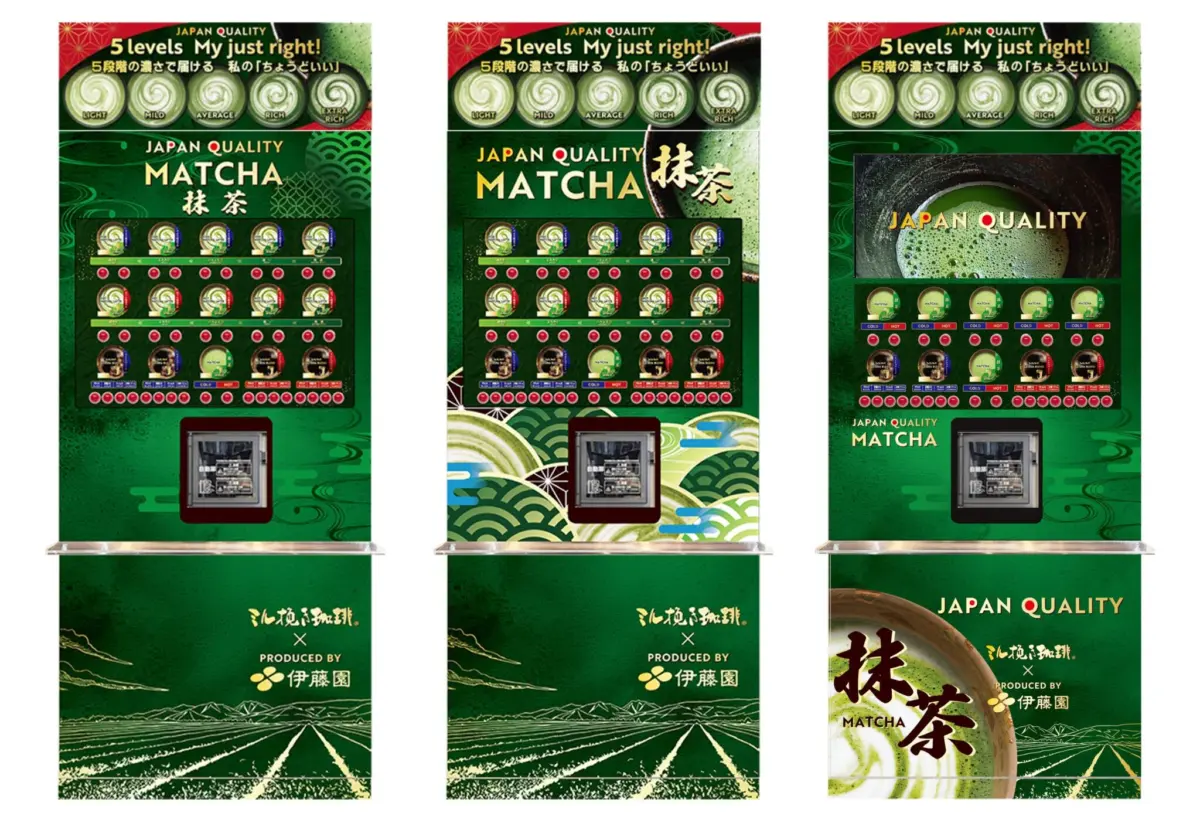
Recognizing that these machines would be installed in culturally sensitive tourist locations, historic transit hubs, and upscale commercial complexes, the design team eschewed the loud, cluttered graphics typical of discount drink dispensers. Instead, they developed three distinct exterior aesthetics rooted in Japanese scenery and traditional culture:
- Design One: The Tranquil Landscape. Finished in a deep, meditative forest green, this exterior evokes the misty hills of Uji or Shizuoka—Japan’s premier tea-producing regions. It is designed to offer psychological respite in hectic urban environments.
- Design Two: Traditional Patterns. This variant incorporates classic Japanese geometric motifs and textile-inspired patterns, honoring heritage craft techniques while signaling authenticity to international visitors.
- Design Three: Modern Luxury. Tailored for high-end airports and corporate business centers, this model pairs a sleek, minimalist metallic finish with a prominent digital display screen, accented by high-resolution imagery of sunlit tea plantations.
Strategic Placement Strategy
To maximize visibility and utility, these units are being deployed in high-traffic corridors where travelers and commuters experience "convenience fatigue" from standard canned drinks. Target locations include:
- Expressway Rest Areas (Pasento): Offering drivers a revitalizing, caffeinated alternative to energy drinks.
- Major Railway Stations: Capturing the morning commuter rush and weekend tourists.
- International Airports: Serving as a final, memorable taste of Japanese culture for departing travelers, or a welcoming introduction for arriving tourists.
- Commercial and Tourist Complexes: Positioned near cultural landmarks to capitalize on foot traffic from matcha enthusiasts.
Official Statements and Industry Reception
The announcement of the Japan Quality Matcha machines has generated substantial media coverage across Japan and considerable excitement within international culinary communities. Industry leaders have emphasized the cultural weight of translating a traditional art form into an automated format.
In an official press statement, Yoshimasa Wakamatsu, CEO of Toyo Vending, articulated the philosophy driving the project:
“We have always been committed to providing an uncompromising cup of coffee through our Mill-Ground Coffee machines, and now we’ve applied that same technology to matcha, one of Japan’s traditional treasures. We’re delighted to have found such an excellent partner in Ito En and to be able to deliver authentic Japan Quality to customers both in Japan and overseas. Through the familiarity of vending machines, we hope to offer a new way to experience matcha.”
Culinary analysts have noted that by partnering with Ito En, Toyo Vending successfully bypassed the skepticism often associated with automated food and beverage systems. Ito En’s market dominance and strict quality control standards serve as a guarantor of authenticity, assuring consumers that the powder inside the machine is of legitimate agricultural origin rather than an artificial substitute or low-grade flavoring.
Social media early adopters have already begun cataloging the machines, praising the five-tier strength adjustment feature. For casual consumers, levels one and two offer a smooth, approachable introduction to green tea, while levels four and five deliver the intense, astringent umami profile demanded by seasoned matcha connoisseurs.
Future Outlook: The Next Wave of Automated Gastronomy
The launch of the Toyo Vending and Ito En matcha machines marks a potential turning point for automated retail in Japan and beyond. As tourism numbers reach record highs and labor shortages impact the hospitality sector, automated solutions that maintain high craftsmanship standards are positioned for rapid expansion.
Potential Scalability and Global Export
While the initial rollout is focused on high-density Japanese locations, industry watchers are already speculating on the international export potential of these machines. The global matcha market—valued at billions of dollars and growing rapidly across North America, Europe, and Southeast Asia—faces a shortage of skilled baristas capable of preparing traditional matcha efficiently in high-volume settings.
An automated kiosk that guarantees authentic, freshly whisked matcha at the push of a button could find lucrative placement in international airports, corporate campuses, upscale grocery stores, and university student unions worldwide.
Technological Iterations on the Horizon
Engineering teams at Toyo Vending are reportedly already researching future iterations of the technology. Potential upgrades include:
- Plant-Based Milk Integration: Expanding beyond standard water-based preparations and basic milk options to include specialized oat, soy, and almond milk pairings tailored for vegan and lactose-intolerant consumers.
- Temperature Customization: Allowing users to select iced variants for the summer months without diluting the flavor profile through standard ice-cube addition.
- Interactive Educational Displays: Expanding the onboard monitor capabilities to display educational content regarding tea farming regions, harvest seasons (first flush vs. later harvests), and the health benefits of L-theanine and antioxidants found in authentic green tea.
Conclusion
Japan’s vending machine culture has long been a source of fascination for the rest of the world, balancing utilitarian efficiency with whimsical novelty. With the introduction of the Japan Quality Matcha machines, this cultural institution transcends mere novelty, offering a masterclass in how traditional culinary arts can embrace modern engineering without losing their soul. As these green-hued monoliths roll out across train stations and rest stops nationwide, they invite locals and travelers alike to pause, press a button, and experience centuries of tea-making heritage freshly whisked into the palm of their hand.





Belum ada komentar. Jadilah yang pertama berkomentar!