

Executive Overview
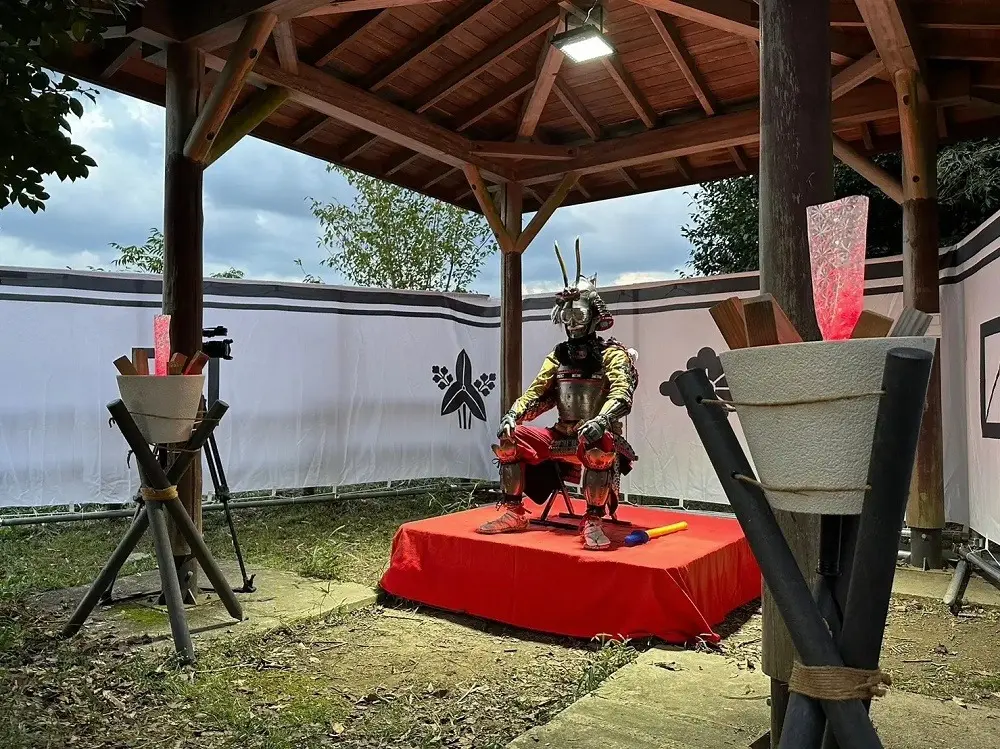
History, pageantry, and tactical warfare are set to violently and playfully collide this autumn as two of Japan’s most legendary rival ninja strongholds prepare to resurrect a centuries-old blood feud. Scheduled for October 3, the upcoming event known as Shinobi Youchi—translating directly to "nighttime battle"—will see the modern cities of Iga (Mie Prefecture) and Koka (Shiga Prefecture) square off in an immersive, large-scale recreation of the historic Tensho Iga War.
Far from a somber historical reenactment, this modern-day clash is designed as a high-engagement, interactive tactical experience that blends live-action roleplay with strategic gaming elements. Fifty elite participants from each municipality will don traditional stealth attire to take up foam-crafted katanas, infiltrate enemy encampments, assassinate rival commanders, and smoke out double agents planted deep within their own ranks.
However, the stakes extend far beyond local pride and bragging rights. In an unprecedented political and promotional gamble, the event features direct participation from the sitting mayors of both municipalities. The chief executive of the losing side will be legally and culturally bound to personally produce, fund, and widely distribute a high-end promotional video celebrating the victor’s rich ninja heritage, signature regional cuisine, and primary tourism assets.
By weaponizing historic rivalry for modern municipal marketing, Iga and Koka are pioneering a masterclass in regional revitalization—transforming a tragic 16th-century military defeat into a celebration of cultural identity, tourism cross-pollination, and community camaraderie.
Detailed Chronology: From 16th-Century Bloodshed to Modern Play
To fully understand the gravity and irony of the upcoming Shinobi Youchi, one must travel back more than four centuries to the crucible of the Sengoku (Warring States) period, an era defined by unyielding military campaigns and shifting alliances across feudal Japan.

The Fall of the Iga Clan (1581)
In the ninth year of the Tensho era (1581), the independent and fiercely proud Iga ninja clan found itself staring down an existential threat. For years, the region had successfully repelled multiple invasions launched by Oda Nobunaga, one of the three great unifiers of feudal Japan. Frustrated by repeated military failures and the impenetrable guerilla tactics of the mountain-dwelling Iga operatives, Nobunaga’s eldest son and commander, Oda Nobukatsu, orchestrated a massive, multi-pronged invasion force.
Realizing that conventional samurai military might alone could not penetrate the rugged Iga terrain or counter the clandestine warfare of their rivals, the Oda forces enlisted a fatal catalyst: the Koka ninja clan. Based immediately to the north of Iga territory, the Koka possessed counter-intelligence capabilities and regional knowledge that proved to be the Achilles’ heel for their southern neighbors.
The combined might of the Oda samurai war machine and the treacherous Koka vanguard proved insurmountable. Outnumbered, outflanked, and subjected to scorched-earth tactics that burned their strongholds to the ground, the Iga clan was systematically subdued. This crushing defeat effectively broke the independent autonomy of the ninja provinces, clearing the path for the Oda clan and their successors to finally unify a war-torn nation.
The Resurgence: Shinobi Youchi’s Evolution
For centuries, the wounds of 1581 remained an immutable part of regional lore, commemorated quietly in local museums, folklore, and historical texts. That is, until local government officials realized that their shared heritage could be leveraged to forge a powerful modern alliance.
While previous iterations of the Shinobi Youchi tactical games have primarily been hosted on Koka’s home turf, the 2026 battlefield marks a dramatic geographical shift. The hostilities will unfold at Yono Park in Iga, sitting directly on the historical border separating the two prefectures. By casting Koka as the invading force on Iga soil once more, event organizers have meticulously recreated the narrative tension of the original 1581 campaign—albeit with a fundamentally altered rulebook designed around foam safety rather than execution blades.

Supporting Context & Metrics: Rules of Engagement and Event Mechanics
Shinobi Youchi is not merely a costume parade; it is a meticulously structured tactical combat game that tests stealth, strategy, political intuition, and physical endurance.
The Battlefield Rules and Scoring System
One hundred combatants split evenly between the Iga and Koka factions will enter the fray under the cover of dusk. The tactical framework incorporates several distinct layers of objective-based gameplay:
- The Foam Katana Strike System: Actual bloodletting is strictly prohibited in favor of soft-foam weaponry. Combatants wear designated target zones attached to their shoulders. A clean strike to an opponent’s shoulder pad registers as a "killing blow."
- The Wooden Token Economy: Every participating ninja enters the battlefield armed with three sacred wooden tokens. When a combatant is successfully struck down, they must forfeit one of their tokens to their victor. These tokens serve as the primary numerical score tallied at the conclusion of the evening.
- Deep Infiltration and Assassination: Beyond direct skirmishes, participants can accumulate massive point bonuses by successfully executing high-risk secondary objectives. These include staging covert night operations to sneak past perimeter guards, stealing the opposing clan’s sacred battle banner, and hunting down the enemy faction’s high-value commanders.
- The Internal Threat (Spies): Adding a layer of psychological paranoia, each 50-person team will secretly harbor three double agents dispatched by the opposing faction. These undercover operatives are tasked with sabotaging their assigned team from the inside—quietly cutting down teammates under the cover of darkness—until their true identities are exposed or they successfully manipulate the outcome of the battle.
Program Schedule and Financial Investment
The comprehensive itinerary for Shinobi Youchi is designed to maximize immersion, providing participants with a full evening of tactical operations, cultural demonstrations, and communal networking:
- Event Date: October 3
- Program Duration: 3:30 p.m. to 8:45 p.m. (Battle proper consists of two intense 30-minute stages, with factions swapping offensive and defensive roles at halftime).
- Ancillary Activities: Prior to the commencement of hostiles, the schedule features comprehensive scouting briefings, high-level strategy conferences, traditional shuriken (throwing star) demonstrations, formal award ceremonies for battlefield MVP ninja, and a traditional intermission break featuring regional tea and onigiri (rice balls).
- Participation Fees:
- Standard Ninja / Spy: 5,000 yen (approx. $31 USD)
- Elite Commander: 8,000 yen
- Full Shinobi Gear Rental: Additional 1,000 yen (for combatants whose traditional stealth wear is currently at the dry cleaners).
- Note: All participants must be of high school age or older.
Official Statements and Political Warfare
The psychological warfare ahead of the October 3 showdown has already spilled over into the public sphere, with the mayors of both cities trading aggressive, high-production video declarations that have quickly captured viral attention across social media platforms.
Iga Mayor Toshihisa Inamori, wearing the solemn expression of a feudal warlord defending his ancestral home, addressed the public with a direct challenge to their northern neighbors:

"We will pay Iga back for what they did 450 years ago."
Not to be outdone, Koka Mayor Yuki Iwanaga leaned into the predatory mystique of his city’s historical operatives, releasing a counter-declaration that emphasized the strategic advantage of night operations:
"When night falls, the Koka ninja will have Iga right where we want them."
Beneath the hyper-serious posturing and cinematic bravado, however, lies an unspoken truth of modern municipal economics. There is no genuine animosity between the citizens of Iga and Koka today. On the contrary, both mayors recognize that their neighboring communities form a symbiotic tourism ecosystem. Visitors drawn to the region for its unparalleled ninja history frequently bounce between the Iga-ryu Ninja Museum in Mie and the Koka Ninja Village in Shiga.
The ultimate prize of the competition—wherein the losing mayor is forced to self-fund and produce a promotional masterpiece for the winning city—is a win-win scenario. Whichever municipality takes the crown will receive a massive, professionally produced marketing campaign distributed by their chief political rival, driving regional tourism to unprecedented heights.

Future Outlook: The Economic and Cultural Horizon
As municipalities across Japan grapple with rural depopulation, shrinking tax bases, and the constant challenge of maintaining domestic tourism interest, the resurrection of the Tensho Iga War stands out as an innovative blueprint for regional revitalization.
By transforming local history from static museum exhibitions into active, gamified, high-energy tourism products, Iga and Koka are tapping into the burgeoning global market for experiential travel. Gamers, history buffs, and martial arts enthusiasts are increasingly seeking out active, narrative-driven vacations over passive sightseeing.
Following the upcoming October 3 clash at Yono Park, tourism boards in both Mie and Shiga prefectures anticipate a significant surge in autumn visitor numbers. Plans are already underway to evaluate the success of the multi-tiered scoring system and spy mechanics, with long-term discussions focusing on scaling Shinobi Youchi into an annual international festival that could eventually attract combatants and spectators from across the globe.
Ultimately, the modern iteration of the Tensho Iga War proves that while swords may be fashioned from foam and political declarations delivered with a knowing smirk, the timeless allure of the Japanese ninja remains as sharp, cunning, and captivating as it was four centuries ago.






Belum ada komentar. Jadilah yang pertama berkomentar!