The landscape of the Marvel Cinematic Universe shifted fundamentally with the events of Spider-Man: No Way Home and the subsequent soft reboot implicitly dubbed Brand New Day. For Tom Holland’s Peter Parker, the canvas has been scraped clean. Gone are the billion-dollar Stark Industries tech grants, the sprawling globe-trotting adventures alongside the Avengers, and, most crucially, the safety net of human relationships that once grounded his dual life. Stripped of his identity in the public ledger and isolated from MJ, Ned, and the memory of his mentors, this iteration of Peter Parker faces a cinematic reality defined by gritty anonymity and stark independence.
As Marvel Studios and Sony Pictures begin charting the course for Spider-Man 5, the central creative dilemma is not merely about finding someone for the web-slinger to punch. It is about identifying a narrative foil capable of challenging a hero who has essentially nothing left to lose. Moving away from multiversal incursions and reality-warping threats, the next chapter in the franchise demands a return to the atmospheric, boots-on-the-ground storytelling that defined the character’s comic book origins.
This analysis examines ten potential antagonists uniquely suited to test the limits of a solitary, hardened Peter Parker. From entrenched crime lords and morally ambiguous anti-heroes to psychological tricksters and cosmic predators, these characters offer the thematic friction necessary to elevate Spider-Man 5 from a standard blockbuster into a defining chapter of modern cinematic storytelling.
Detailed Chronology: From Multiversal Chaos to Street-Level Isolation
To understand why the proposed lineup of villains works so effectively for Spider-Man 5, one must trace the trajectory of Tom Holland’s cinematic journey thus far.
[Phase 1: High School & Mentorship]
   └── Homecoming / Far From Home (Stark Tech, Avengers oversight, global stakes)
          │
[Phase 2: The Multiversal Crisis]
   └── No Way Home (Cosmic scale, reality reset, total identity erasure)
          │
[Phase 3: The Independent Era]
   └── Brand New Day / Spider-Man 5 (Poverty, isolation, street-level threats)
Phase 1: The Mentorship Era
In Spider-Man: Homecoming (2017) and Spider-Man: Far From Home (2019), Peter Parker operated primarily as a protege. His conflicts with the Vulture (Adrian Toomes) and Mysterio (Quentin Beck) were intrinsically tied to advanced technology left in the wake of the Battle of New York and Stark Industries’ vast portfolio. Peter’s challenges were as much about living up to the legacy of Iron Man as they were about stopping local crime.
Phase 2: The Multiversal Reckoning
Spider-Man: No Way Home (2021) brought this formative era to a definitive close. By forcing Doctor Strange to cast a spell that erased Peter Parker from the collective memory of the universe, the narrative wiped the slate clean. Peter lost Aunt May, lost his academic future, and lost his emotional tether to the broader MCU.
Now entering the post-No Way Home paradigm, the franchise stands at a creative crossroads. The stakes can no longer be raised by threatening the fabric of space-time; instead, they must be raised by tightening the noose around Peter’s immediate environment. Operating out of a dismal, run-down apartment in New York City, sewing his own cloth suit, and navigating the harsh realities of rent and isolation, Peter is primed for villains who operate on a deeply personal, psychological, and street-level scale.
Supporting Context & Metrics: The Cinematic Landscape
Transitioning back to a localized New York City requires an understanding of the interconnected urban ecosystem that Marvel Studios has quietly expanded across Disney+ and feature films. The cinematic canonization of Netflix-era characters—most notably Vincent D’Onofrio’s Wilson Fisk—has created a rich sandbox for street-level crime dramas.
Metric / Factor
Previous MCU Spider-Man Films
Proposed Spider-Man 5 Paradigm
Primary Scale
Global / Multiversal
Hyper-localized (Manhattan, Queens)
Tech Reliance
High (EDITH, Stark Nanotech, Web-Shooter Variants)
Low (Improvised gear, cloth suit, manual repairs)
Emotional Anchor
Mentors, Classmates, Aunt May
Total isolation, internal moral code
Threat Archetype
Technologically advanced / Cosmic
Psychopathic, criminal, or sociological
Industry analysts note that fatigue surrounding computer-generated spectacle and multiversal crossovers has opened a commercial window for tighter, character-driven conflict. Films like The Batman (2022) proved that audiences respond enthusiastically to grounded, neo-noir interpretations of comic book properties. Implementing this tone in Spider-Man 5 offers a lucrative differentiation strategy for Sony and Marvel Studios.
The Ten Potential Antagonists for Spider-Man 5
1. Kingpin (Wilson Fisk)
Comic Origin:The Amazing Spider-Man #50 (1967)
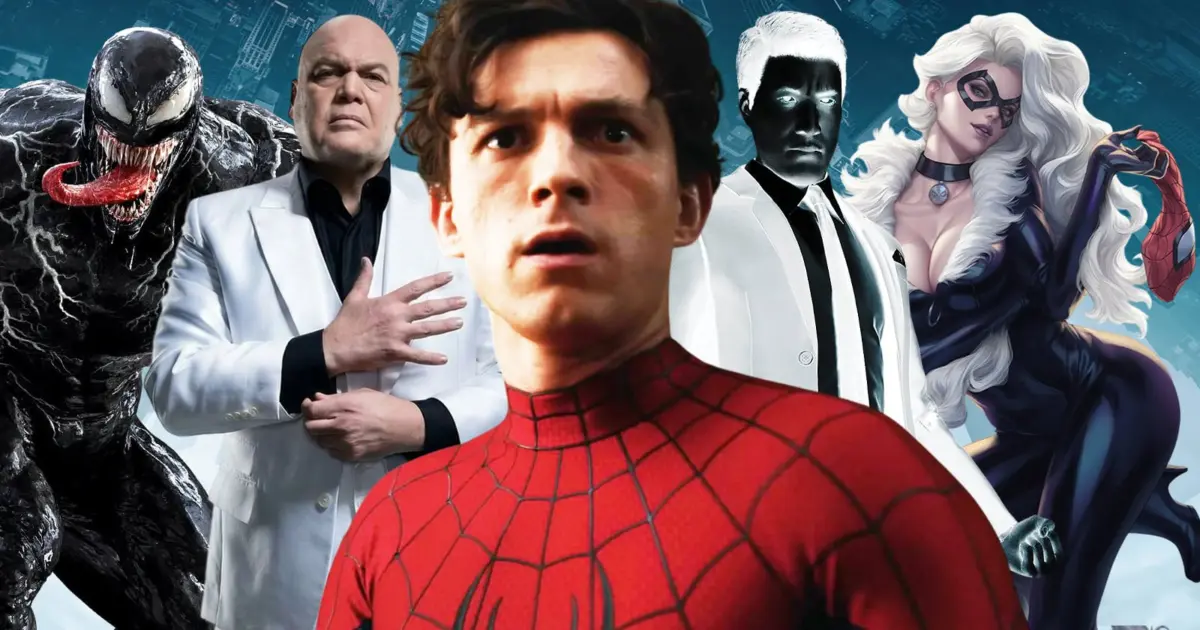
The Dynamic: Wilson Fisk has evolved into the definitive criminal mastermind of the street-level MCU, casting a long shadow through Daredevil and Echo. Pitting a lonely, impoverished Peter Parker against a man who practically owns the legal and illegal infrastructure of New York creates an insurmountable wall. Peter cannot simply punch his way through the Kingpin’s empire without facing catastrophic systemic consequences. It is a battle of attrition, ethics, and endurance.
2. The Black Cat (Felicia Hardy)
Comic Origin:The Amazing Spider-Man #194 (1979)
The Dynamic: With MJ entirely out of the picture, the introduction of Felicia Hardy fills a critical narrative void. Unlike previous love interests, Black Cat operates entirely within the moral grey areas that Peter’s strict ethical code rejects. She does not harbor delusions of world domination; she simply wants to steal from the wealthy and enjoy the thrill of the heist. The romantic and philosophical tension between a thief who embraces chaos and a hero fighting for absolute right could anchor the film’s emotional core.
3. Hobgoblin (Roderick Kingsley)
Comic Origin:The Amazing Spider-Man #238 (1983)
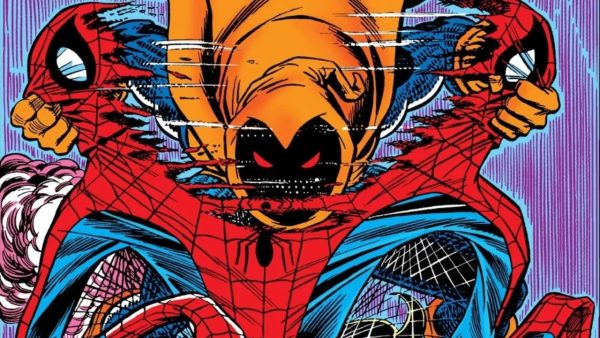
The Dynamic: Retreading Willem Dafoe’s iconic portrayal of the Green Goblin after No Way Home would risk creative stagnation. Enter Roderick Kingsley: a cold, calculating fashion mogul who discovers Norman Osborn’s abandoned caches and commercializes the terror without the psychological instability. By framing the Hobgoblin as a corporate entity driven by greed and market dominance, the film gains a thoroughly modern, razor-sharp edge.
4. Mister Negative (Martin Li)
Comic Origin:The Amazing Spider-Man #546 (2008)
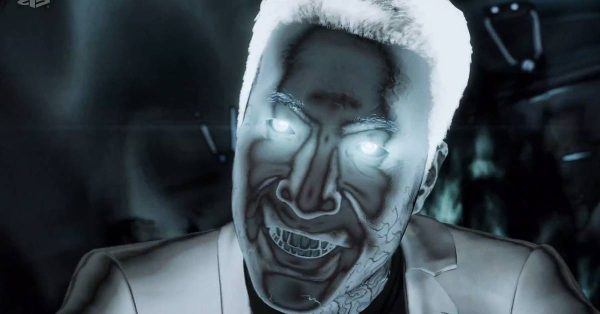
The Dynamic: Popularized broadly by Insomniac Games’ critically acclaimed PlayStation adaptation, Martin Li offers a heartbreaking dramatic hook. As the benevolent director of F.E.A.S.T.—the very shelter where Aunt May spent her final, selfless months working—Li hides a ruthless criminal persona beneath a saintly public facade. Forcing Peter to dismantle the empire of a man who genuinely honored his aunt’s legacy introduces a profound emotional complexity rarely attempted in mainstream blockbusters.
5. Venom (The MCU Symbiote)
Comic Origin:The Secret Wars #8 (1984)
The Dynamic: Though Sony’s standalone franchise starring Tom Hardy has concluded, No Way Home strategically left a lingering fragment of the symbiote stranded within the primary MCU timeline. Rather than rushing an Eddie Brock introduction, the narrative should allow the alien organism to bond directly with Peter. Feeding on the profound isolation, survivor’s guilt, and repressed anger defining his current life, the symbiote offers Holland the rare opportunity to explore a genuinely dark, unhinged facet of the character.
6. Chameleon (Dmitri Smerdyakov)
Comic Origin:The Amazing Spider-Man #1 (1963)
The Dynamic: Astoundingly, Spider-Man’s very first comic book adversary has never received a proper theatrical adaptation. Dmitri Smerdyakov’s ability to flawlessly replicate anyone’s face, voice, and mannerisms is terrifying for a hero whose entire life depends on absolute secrecy. A narrative centered on the Chameleon functions effectively as a psychological paranoia thriller disguised as a superhero movie, forcing Peter to question every ally, acquaintance, and shadow in New York.
The Dynamic: Morlun is an immortal, multidimensional predator who views individuals imbued with animalistic totemic powers as prey. Devoid of grand political ideologies or personal vendettas, Morlun is an implacable force of nature. Pitting Peter against an enemy he cannot reason with, negotiate alongside, or easily outwit transforms the narrative into a grueling survival-horror experience.
8. Kraven the Hunter (Sergei Kravinoff)
Comic Origin:The Amazing Spider-Man #15 (1964)
The Dynamic: Given that Sony’s standalone Kraven the Hunter film explored a vastly different cinematic interpretation, the MCU retains a golden opportunity to adapt elements of the legendary storyline Kraven’s Last Hunt (1987). Stripping away multiversal machinery to focus purely on a master hunter tracking his ultimate quarry across the urban canyons of Manhattan creates a visceral, grounded, and intensely personal conflict.
9. Hammerhead
Comic Origin:The Amazing Spider-Man #113 (1972)
The Dynamic: If Spider-Man 5 explores a power vacuum left in the wake of the Kingpin’s empire, old-school mobster Hammerhead is an essential piece of the puzzle. Complete with his surgically implanted vibranium-alloy skull and unyielding Prohibition-era aesthetic, Hammerhead provides a colorful, violent complication to larger turf wars, serving as a formidable secondary antagonist who tests Peter’s combat limits.
10. Prowler (Aaron Davis)
Comic Origin:The Amazing Spider-Man #69 (2008)
The Dynamic: Donald Glover’s brief cameo as Aaron Davis in Spider-Man: Homecoming left an open narrative loop regarding his nephew, Miles Morales. Bringing Davis back as the fully realized Prowler allows Peter to confront a high-tech street criminal while inadvertently laying the groundwork for a future generational handover. It turns world-building into organic storytelling rather than forced exposition.
Official Statements and Industry Perspective
While Marvel Studios President Kevin Feige and Sony Pictures producer Amy Pascal have kept production details for the next installment closely guarded, industry insiders confirm that development on the script is actively progressing.
Speaking broadly on the thematic direction of the character’s post-trilogy future, creative leads have repeatedly emphasized the necessity of keeping Peter Parker grounded. In a recent press briefing regarding the evolution of the Marvel Cinematic Universe, a studio representative noted:
"The magic of Peter Parker lies in his proximity to the pavement. When you take away the global stakes, the multi-billion-dollar tech, and the cosmic safety nets, you discover who he truly is when the mask is on and nobody is watching. That is the exact space we are eager to explore next."
Future Outlook
As the MCU prepares for its next major narrative cycles, Spider-Man 5 occupies a crucial diagnostic space. It must prove that Tom Holland’s iteration of the web-slinger can sustain a compelling franchise outside the comforting shadow of the Avengers and the infinite possibilities of the multiverse.
Whether the studio opts for the suffocating corporate corruption of the Hobgoblin, the psychological warfare of the Chameleon, or the intimate devastation delivered by Martin Li and Mister Negative, the path forward is clear. By embracing a grounded, gritty, and fiercely independent New York City, Spider-Man 5 has all the narrative ingredients necessary to deliver the most mature and compelling cinematic outing for the wall-crawler to date.
What direction would you like to see Tom Holland’s web-slinger take? Share your thoughts with us across our social media channels.










Belum ada komentar. Jadilah yang pertama berkomentar!